Home Equipment Mechanical Systems Mixers & Agitators

Mixers & Agitators

Gearbox monitoring, shaft vibration analysis, and mechanical seal condition tracking for industrial mixers and agitators.

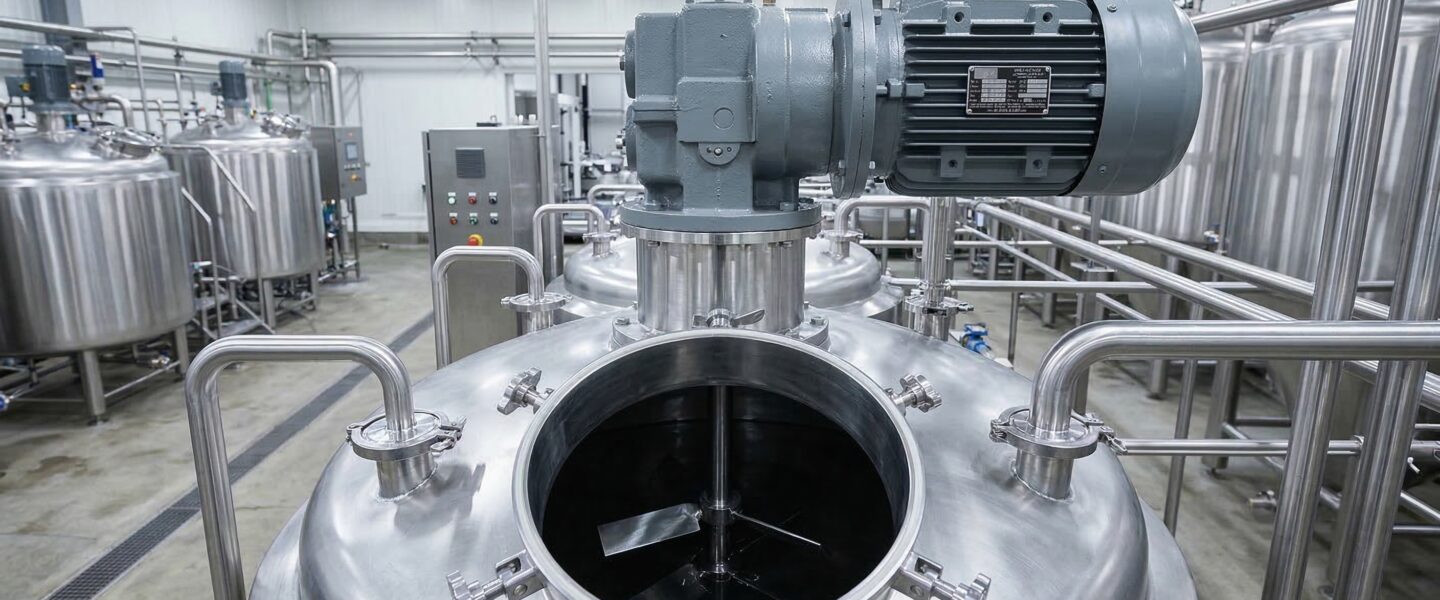
Mixer agitator maintenance is a discipline that demands attention to both the mechanical drive system and the unique process-side forces that make these machines particularly challenging to keep running reliably. Unlike standard rotating equipment that operates in a controlled mechanical environment, mixers and agitators work submerged in — or directly coupled to — process fluids that impose variable hydraulic loads, corrosive attack, abrasive wear, and thermal cycling on every component from the impeller to the motor. At Forge Reliability, we have seen firsthand how mixer failures cascade through batch processes, causing lost product, schedule disruption, and contamination events that dwarf the cost of the mechanical repair. A proactive approach to mixer agitator maintenance protects both the equipment and the process it serves.
Mixer Agitator | Forge Reliability

The diversity of mixer applications across industries adds another layer of complexity. A high-shear disperser running at 3,000+ RPM in a coatings plant faces entirely different failure modes than a slow-speed anchor agitator turning at 20 RPM in a reactor vessel. Side-entry mixers in storage tanks, top-entry agitators in chemical reactors, bottom-entry magnetic drive mixers in sanitary applications — each configuration presents distinct mechanical challenges and requires a maintenance strategy tailored to its specific operating context.


What Are the Common Reliability Challenges in Mixer and Agitator Applications?

Mixers and agitators operate under conditions that accelerate mechanical degradation in ways that many general-purpose maintenance programs fail to anticipate. Understanding these challenges is the first step toward building a maintenance strategy that actually prevents failures rather than simply reacting to them.

Mechanical Seal and Packing Failures

The shaft seal is often the most maintenance-intensive component on a mixer. Mechanical seals on agitator applications face harsh conditions — process fluid exposure, thermal cycling between batch operations, and shaft deflection from hydraulic side loads on the impeller. Seal failures account for a significant portion of mixer maintenance costs, and in many facilities, seal replacements are treated as routine consumable events rather than investigated as symptoms of underlying mechanical problems.

Shaft deflection is a primary driver of premature seal failure that is frequently overlooked. When impeller hydraulic loads push the shaft laterally, the seal faces experience uneven loading that accelerates wear on one side. If the deflection exceeds the seal’s designed tracking capability, the faces separate and the seal leaks. The root cause is not the seal itself but the combination of impeller design, operating speed, fluid density, and shaft stiffness that produces the deflection. Addressing seal reliability without measuring and managing shaft deflection treats the symptom while ignoring the disease.

Studies of mixer reliability data indicate that shaft deflection-related issues contribute to roughly 30% of premature mechanical seal failures in agitator applications — a root cause that standard PM inspections rarely evaluate.

Gearbox and Drive System Wear

Most industrial agitators above fractional horsepower are gear-driven, and the gearbox is the heart of the mechanical system. Agitator gearboxes operate under conditions that differ meaningfully from standard industrial gear drives. The output shaft is oriented vertically in most configurations, which changes bearing load distribution compared to horizontal applications. The impeller creates variable hydraulic thrust and radial loads that transmit directly through the output shaft bearings into the gear train. Batch processes may subject the gearbox to frequent starts, speed changes, and load reversals that create fatigue stresses absent in steady-state applications.

Gear tooth wear, bearing degradation, and oil seal leakage are the dominant gearbox failure modes. Internal oil contamination — either from process fluid leaking past the lower shaft seal into the gearbox, or from external contamination entering through breathers and seals — accelerates all three. A gearbox that shows elevated iron and chromium wear metals in its oil analysis may be experiencing accelerated gear wear driven by particulate contamination rather than simple age-related degradation.

Impeller and Shaft Erosion

Process-side degradation of impellers and shafts is a category of failure that mechanical monitoring alone cannot fully address. Corrosion, erosion, and cavitation attack the wetted surfaces progressively, reducing impeller diameter, thinning blade cross-sections, and creating stress concentrators that can lead to fatigue cracking. In applications mixing abrasive slurries, impeller life may be measured in months rather than years, and the performance degradation is gradual enough that operators may not notice the declining mixing efficiency until product quality is affected.


How Does Condition Monitoring Apply to Mixers and Agitators?

Condition monitoring for mixers and agitators requires adapting standard predictive maintenance technologies to account for the variable operating conditions and process-side influences that characterize these machines.

Vibration Analysis Considerations

Vibration analysis is highly effective on mixer drive systems, but the interpretation requires awareness of factors unique to agitator applications. Variable fluid levels, changing viscosities between batch stages, and the presence of solids or gas in the process fluid all influence vibration signatures in ways that can mimic or mask mechanical faults. A mixer that shows elevated vibration at a specific frequency during one batch stage but not another is likely responding to a process condition rather than a mechanical defect — but distinguishing between the two requires an analyst who understands agitator dynamics.

For gear-driven agitators, vibration monitoring on the gearbox housing captures bearing condition, gear mesh quality, and shaft alignment data. Baseline measurements should be collected during a defined operating condition — same fluid level, same speed, same batch stage — so that trend comparisons are meaningful. On variable-speed drives, order tracking analysis normalizes vibration data against shaft speed so that speed-dependent signatures can be properly tracked.

Oil Analysis for Agitator Gearboxes

Gearbox oil analysis is particularly valuable on agitators because it detects both internal wear and external contamination ingression. A quarterly oil sampling program that includes elemental spectroscopy, particle counting, viscosity, and moisture testing provides early warning of gear wear trends, bearing material in the oil, and process fluid contamination from seal leakage. Finding process-specific chemicals or unusual elements in the gearbox oil is a strong indicator that the lower shaft seal has failed and process fluid is migrating into the gearbox — a condition that accelerates gear and bearing wear dramatically if not corrected promptly.

Implementing vibration monitoring combined with gearbox oil analysis on critical agitators typically provides three to six months of advance warning before bearing or gear failures reach a severity that forces unplanned shutdown.

Motor Current Analysis and Power Monitoring

Motor current signature analysis is an underutilized technique for agitator monitoring that can reveal both electrical and mechanical faults without requiring access to the rotating assembly. Current analysis detects rotor bar defects, air gap eccentricity, and load-related anomalies from the motor control center — which is particularly valuable when the agitator is mounted on a vessel that is difficult or hazardous to access during operation. Power trending over time also reveals impeller degradation: as an impeller erodes and loses diameter, the power draw at a given speed decreases proportionally. A 10-15% decline in power draw at constant speed is a reliable indicator that the impeller has lost enough material to warrant inspection.


Maintenance Strategies That Work for Mixers and Agitators

Effective mixer agitator maintenance integrates condition monitoring data with process knowledge and a structured maintenance plan that addresses both the mechanical system and the process interface.

The maintenance plan should define tasks and intervals for each major subsystem. Gearbox oil changes should be condition-based, driven by oil analysis results rather than fixed calendars. Mechanical seal inspection and replacement intervals should be informed by seal leak rate tracking and shaft deflection measurements rather than arbitrary time or production-hour triggers. Impeller inspections should be scheduled based on the corrosion and erosion rate for the specific process fluid, with thickness measurements documented to establish wear trends.

Alignment and Installation Quality

Many mixer reliability problems originate at installation or reinstallation. Agitator mounting flange flatness, shaft concentricity to the vessel nozzle, coupling alignment between the motor and gearbox, and gearbox-to-vessel mounting bolt torque all affect the mechanical loads that the drive system experiences in operation. A gearbox mounted to a vessel nozzle that is out of flat by even 0.002 inches per foot can impose bending loads on the output shaft that accelerate bearing wear and increase shaft deflection at the seal. Post-installation and post-maintenance alignment verification — including shaft runout measurement and mounting flange flatness checks — should be a standard requirement, not an optional step.

Expected Results from a Structured Program

Facilities that implement comprehensive mixer agitator maintenance programs see tangible improvements across equipment availability and maintenance cost metrics. Mechanical seal life typically extends by 40-60% when shaft deflection is managed and seal flush systems are properly maintained. Gearbox overhaul intervals extend as oil analysis catches contamination events early and condition-based oil management replaces conservative change-out schedules. Unplanned mixer downtime — which often carries production consequences far exceeding the repair cost because it interrupts batch processes — declines as monitoring provides the advance warning needed to plan repairs during scheduled batch transitions or turnarounds.

The return on investment is strongest on critical-path agitators where an unplanned failure halts a batch process or risks product contamination. For these assets, the combination of vibration monitoring, oil analysis, and structured mechanical maintenance typically delivers payback within the first year through avoided failures and extended component life. The maintenance team gains confidence that critical mixers are healthy — and gains the lead time to plan repairs when they are not.

Failure Modes

Common Mixer & Agitator Reliability & Maintenance Failure Modes

Engineers often arrive searching for specific failures. Here are the most common issues we diagnose and resolve.

Mechanical Seal Failure

Mechanical seals on agitator shafts fail from dry running during tank fill and drain cycles, abrasive particle ingestion from the process fluid, and thermal shock from rapid batch temperature changes, causing product leakage and environmental hazards.

Key symptom: Visible leakage at the shaft seal area with increasing flush water consumption or seal pot level changes

Get Help With This →

Gearbox Gear Tooth Wear

Helical and bevel gear sets in agitator drives develop pitting, scoring, and tooth root cracking from sustained torque loading, misalignment, and lubricant degradation, eventually causing tooth breakage and catastrophic gearbox failure.

Key symptom: Increasing gearbox noise with metallic debris visible in oil samples and rising vibration at gear mesh frequencies

Get Help With This →

Shaft Deflection and Whip

Long agitator shafts operating near critical speed or under asymmetric fluid loading develop excessive deflection and whip, accelerating bearing wear, damaging seals, and in severe cases contacting baffles or tank walls.

Key symptom: Visible shaft runout at the seal area with cyclic vibration patterns at sub-synchronous frequencies

Get Help With This →

Impeller Erosion and Damage

Impeller blades erode from abrasive slurries, cavitation, or chemical attack, reducing mixing efficiency and creating imbalance that drives vibration through the entire drivetrain.

Key symptom: Declining process mixing quality with increasing vibration amplitude at 1X running speed

Get Help With This →

Upper Bearing Failure

The upper shaft bearing in top-entry agitators carries radial and thrust loads from the impeller and shaft weight, failing from misalignment, inadequate lubrication, or excessive shaft deflection.

Key symptom: Elevated temperature and vibration at the upper bearing housing with audible rumbling during operation

Get Help With This →

Diagnostic Methods

Diagnostic Techniques We Use

Vibration Analysis on Gearbox and Bearings

Accelerometers mounted on gearbox housings and upper bearing pedestals detect gear mesh anomalies, bearing defect frequencies, and shaft imbalance, providing early warning of mechanical degradation months before functional failure.

Oil Analysis with Particle Counting

Regular sampling of gearbox lubricant for wear metals (iron, copper, chromium), particle count distributions, viscosity, and moisture content tracks gear and bearing wear rates and identifies contamination before damage accelerates.

Shaft Deflection Monitoring

Proximity probes installed near the seal area measure shaft runout and orbital patterns, detecting excessive deflection from fluid loading, imbalance, or operation near critical speed before seal and bearing damage occurs.

Seal Flush System Monitoring

Pressure, temperature, and flow monitoring of mechanical seal flush systems detects seal face wear, flush line restrictions, and thermal management failures that precede seal leakage and process contamination.

Services

Services for Mixer & Agitator Reliability & Maintenance

Service

Asset Management for Mixers & Agitators

Asset Management programs for Mixers & Agitators, targeting common failure modes and degradation mechanisms.

Learn More →
Service

CMMS Implementation for Mixers & Agitators

CMMS Implementation programs for Mixers & Agitators, targeting common failure modes and degradation mechanisms.

Learn More →
Service

Condition Monitoring for Mixers and Agitators

Our team establishes continuous condition monitoring programs for mixers and agitators, targeting impeller erosion, mechanical seal failures, and related...

Learn More →
Service

Dynamic Balancing for Mixers & Agitators

Dynamic Balancing programs for Mixers & Agitators, targeting common failure modes and degradation mechanisms.

Learn More →
Service

Equipment Condition Assessment for Mixers and Agitators

Our team provides comprehensive condition assessments for mixers and agitators, targeting impeller erosion, mechanical seal failures, and related...

Learn More →
Service

Equipment Maintenance for Mixers & Agitators

Equipment Maintenance programs for Mixers & Agitators, targeting common failure modes and degradation mechanisms.

Learn More →
Service

FMEA for Mixers & Agitators

FMEA programs for Mixers & Agitators, targeting common failure modes and degradation mechanisms.

Learn More →
Service

Maintenance Outsourcing for Mixers & Agitators

Maintenance Outsourcing programs for Mixers & Agitators, targeting common failure modes and degradation mechanisms.

Learn More →
Service

Maintenance Planning for Mixers & Agitators

Maintenance Planning programs for Mixers & Agitators, targeting common failure modes and degradation mechanisms.

Learn More →
Service

Motor Current Analysis for Mixers & Agitators

Motor Current Analysis programs for Mixers & Agitators, targeting common failure modes and degradation mechanisms.

Learn More →
Service

Oil & Lubrication Analysis for Mixers & Agitators

Oil & Lubrication Analysis programs for Mixers & Agitators, targeting common failure modes and degradation mechanisms.

Learn More →
Service

Plant Optimization for Mixers & Agitators

Plant Optimization programs for Mixers & Agitators, targeting common failure modes and degradation mechanisms.

Learn More →
Service

Precision Shaft Alignment for Mixers & Agitators

Precision Shaft Alignment programs for Mixers & Agitators, targeting common failure modes and degradation mechanisms.

Learn More →
Service

Predictive Maintenance for Mixers and Agitators

Our team applies predictive maintenance technologies to mixers and agitators, targeting impeller erosion, mechanical seal failures, and related degradation...

Learn More →
Service

Preventive Maintenance for Mixers & Agitators

Preventive Maintenance programs for Mixers & Agitators, targeting common failure modes and degradation mechanisms.

Learn More →
Service

RCM for Mixers & Agitators

RCM programs for Mixers & Agitators, targeting common failure modes and degradation mechanisms.

Learn More →
Service

Reliability Consulting for Mixers and Agitators

Our team applies reliability consulting methodology to mixers and agitators, targeting impeller erosion, mechanical seal failures, and related degradation...

Learn More →
Service

Root Cause Analysis for Mixers and Agitators

Our team investigates failures in mixers and agitators, targeting impeller erosion, mechanical seal failures, and related degradation mechanisms before they...

Learn More →
Service

Thermographic Inspection for Mixers & Agitators

Thermographic Inspection programs for Mixers & Agitators, targeting common failure modes and degradation mechanisms.

Learn More →
Service

Ultrasonic Testing for Mixers & Agitators

Ultrasonic Testing programs for Mixers & Agitators, targeting common failure modes and degradation mechanisms.

Learn More →
Service

Vibration Analysis for Mixers & Agitators

Vibration Analysis programs for Mixers & Agitators, targeting common failure modes and degradation mechanisms.

Learn More →

Industries

Industries That Rely on Mixer & Agitator Reliability & Maintenance

Industry

Mixers & Agitators Reliability for Automotive

Mixers & Agitators reliability and predictive maintenance programs designed for automotive operating environments and compliance requirements.

Learn More →
Industry

Mixers & Agitators Reliability for Cement & Aggregates

Mixers & Agitators reliability and predictive maintenance programs designed for cement & aggregates operating environments and compliance requirements.

Learn More →
Industry

Mixers & Agitators Reliability for Chemical Processing

Mixers & Agitators reliability and predictive maintenance programs designed for chemical processing operating environments and compliance requirements.

Learn More →
Industry

Mixers & Agitators Reliability for Food & Beverage

Mixers & Agitators reliability and predictive maintenance programs designed for food & beverage operating environments and compliance requirements.

Learn More →
Industry

Mixers & Agitators Reliability for Industrial Refrigeration

Mixers & Agitators reliability and predictive maintenance programs designed for industrial refrigeration operating environments and compliance requirements.

Learn More →
Industry

Mixers & Agitators Reliability for Logistics & Distribution

Mixers & Agitators reliability and predictive maintenance programs designed for logistics & distribution operating environments and compliance requirements.

Learn More →
Industry

Mixers & Agitators Reliability for Manufacturing

Mixers & Agitators reliability and predictive maintenance programs designed for manufacturing operating environments and compliance requirements.

Learn More →
Industry

Mixers & Agitators Reliability for Metals & Steel

Mixers & Agitators reliability and predictive maintenance programs designed for metals & steel operating environments and compliance requirements.

Learn More →
Industry

Mixers & Agitators Reliability for Mining

Mixers & Agitators reliability and predictive maintenance programs designed for mining operating environments and compliance requirements.

Learn More →
Industry

Mixers & Agitators Reliability for Oil & Gas

Mixers & Agitators reliability and predictive maintenance programs designed for oil & gas operating environments and compliance requirements.

Learn More →
Industry

Mixers & Agitators Reliability for Pharmaceutical

Mixers & Agitators reliability and predictive maintenance programs designed for pharmaceutical operating environments and compliance requirements.

Learn More →
Industry

Mixers & Agitators Reliability for Plastics & Rubber

Mixers & Agitators reliability and predictive maintenance programs designed for plastics & rubber operating environments and compliance requirements.

Learn More →
Industry

Mixers & Agitators Reliability for Power Generation

Mixers & Agitators reliability and predictive maintenance programs designed for power generation operating environments and compliance requirements.

Learn More →
Industry

Mixers & Agitators Reliability for Pulp & Paper

Mixers & Agitators reliability and predictive maintenance programs designed for pulp & paper operating environments and compliance requirements.

Learn More →
Industry

Mixers & Agitators Reliability for Water & Wastewater

Mixers & Agitators reliability and predictive maintenance programs designed for water & wastewater operating environments and compliance requirements.

Learn More →

Technical Reference

Technical Overview

Mixers and agitators operate under varying load conditions with complex fluid dynamics. Common failure modes include seal wear, bearing degradation from radial loads, impeller erosion, and gearbox issues. Vibration analysis, oil analysis, and thermography provide comprehensive condition monitoring for these critical process assets.

Common Questions

FAQ

The most common causes are dry running during tank filling and draining when the seal faces lose lubrication, abrasive particles in the process fluid scoring the seal faces, and thermal shock from rapid batch temperature changes that crack seal face materials. Proper seal flush system design per API 682 Plan configurations, combined with level interlocks to prevent dry running, eliminates the majority of premature seal failures. Selecting appropriate face materials for the process chemistry and temperature range is equally critical.

Limited Availability
We onboard a limited number of new facilities each quarter. Secure your assessment slot before our current availability closes. Reserve Your Spot →

Get Started

Request a Free Reliability Assessment

Tell us about your equipment and facility. Our reliability team will review your situation and recommend a tailored reliability program — no obligation.

Free initial assessment
Response within 1 business day
No obligation or commitment

No obligation. Typical response within 24 hours.

Having Problems With Your Mixers & Agitators?

Claim Your Free Assessment →