
Industrial gearboxes are precision mechanical assemblies that transmit power, change speed, and multiply torque between prime movers and driven equipment across virtually every sector of heavy industry. From the massive gearboxes driving cement mills and sugar cane crushers to the precision gear reducers on packaging lines and extruders, these units absorb enormous mechanical loads while maintaining the speed and torque relationships that keep processes running. Industrial gearbox maintenance is a discipline where the stakes are high and the margins for error are slim — a single undetected gear tooth defect or bearing fault can progress to a catastrophic failure that destroys internal components, contaminates the lubricant with metal debris, and takes a critical production asset offline for weeks while replacement gears are manufactured or a new gearbox is sourced.
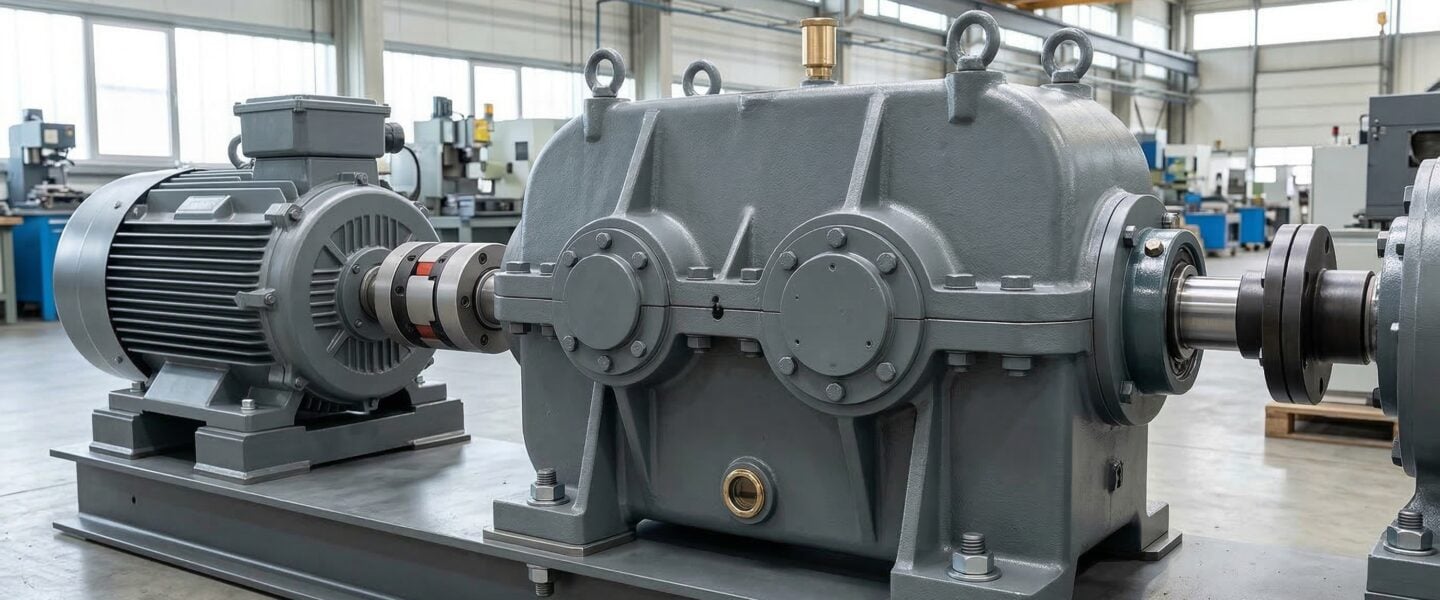
The challenge with gearboxes is that they are enclosed systems. Unlike a pump seal leak or a motor bearing noise that an operator might notice during a walkthrough, gearbox degradation happens inside a steel housing where it cannot be seen, heard, or felt until it has progressed to an advanced stage. By the time a gear defect is audible or a bearing fault is detectable by touch, the damage is typically extensive and the remaining useful life is short. This makes gearboxes one of the equipment categories where condition monitoring delivers the greatest value — the ability to detect internal faults months before they become externally apparent is the difference between a planned gear replacement during a scheduled outage and an emergency teardown that disrupts production and destroys capital.
What Are the Common Reliability Challenges in Industrial Gearbox Operations?
Gearbox failures stem from a combination of gear tooth damage, bearing deterioration, lubrication degradation, and the operating conditions imposed by the application. Understanding these failure drivers is essential to building an effective maintenance program.
Gear Tooth Damage
Gear teeth are subject to multiple damage mechanisms that can occur independently or in combination. Pitting — the formation of small craters on the tooth contact surface — results from contact fatigue as the subsurface stress from repeated loading exceeds the material’s endurance limit. Micropitting appears as a frosted or matte finish on the tooth surface and is driven by inadequate lubricant film thickness relative to the surface roughness of the gear teeth. Scuffing is adhesive wear caused by lubricant film breakdown under high contact pressures and sliding velocities, resulting in material transfer between mating tooth surfaces. Tooth root cracking from bending fatigue, particularly at stress concentration points, can lead to tooth breakage if not detected. Misalignment, overloading, and inadequate lubrication are the three factors most frequently identified as root causes behind accelerated gear tooth damage in industrial applications.
Bearing Deterioration
Gearbox bearings support the gear shafts while maintaining the precise shaft positions that keep gear tooth contact patterns within design limits. As bearings wear, shaft positions shift, contact patterns change, and gear tooth loading becomes uneven — accelerating both bearing and gear damage simultaneously. Gearbox bearings operate in a shared lubrication environment with the gears, which means that metal particles generated by gear tooth wear circulate through the bearings, and bearing wear debris contaminates the gear mesh. This cross-contamination creates a feedback loop where damage in one component accelerates damage in others unless the contamination is controlled through filtration and oil management.
Oil analysis data from industrial gearbox populations consistently shows that contamination-related failures outnumber pure fatigue failures by a ratio of approximately 3 to 1 — confirming that lubricant condition management is the single highest-leverage maintenance activity for gearbox reliability.
Lubrication System Issues
Industrial gearboxes depend on their lubricant to reduce friction, transfer heat, protect surfaces from corrosion, and flush debris away from contact zones. When the lubricant degrades — through oxidation, thermal breakdown, water contamination, or particle contamination — every internal component suffers. Water contamination is particularly damaging: even 0.1% water content in gear oil can reduce bearing fatigue life by 50%, and higher concentrations promote corrosion and accelerate oxidation of the base oil. Thermal degradation from operating above the lubricant’s recommended temperature range accelerates oxidation, depletes additives, and produces sludge and varnish that can restrict oil flow through passages and nozzles. For gearboxes with forced lubrication systems, pump wear, filter bypass, cooler fouling, and control valve malfunctions all affect lubricant delivery and condition.
Alignment and Mounting
The connection between the gearbox and both its driver (motor, engine, turbine) and its driven equipment (mill, crusher, conveyor, agitator) must maintain proper alignment under all operating conditions including thermal growth. Misalignment between the driver and gearbox input shaft or between the gearbox output shaft and driven equipment creates additional bearing loads and changes gear tooth contact patterns, concentrating stress on portions of the tooth face that were not designed to carry the full load. Foundation settlement, thermal expansion of piping or structural members, and loose mounting bolts can all introduce misalignment that was not present at installation.
How Does Condition Monitoring Apply to Industrial Gearboxes?
Industrial gearboxes are ideally suited to condition monitoring because they contain multiple interacting components — gears, bearings, shafts, seals, and lubricant — each generating distinct signatures that can be detected and trended using established monitoring technologies.
Vibration Analysis
Vibration analysis is the primary tool for detecting and diagnosing mechanical faults in industrial gearboxes. Gear mesh frequencies — calculated from shaft speeds and tooth counts — and their harmonics and sidebands provide direct insight into gear tooth condition. Changes in sideband patterns around gear mesh frequencies are among the earliest indicators of distributed gear tooth damage, often detectable months before the damage is visible during an internal inspection. Bearing defect frequencies identify which specific bearing is developing a fault and which component (inner race, outer race, rolling element, or cage) is affected. Advanced analysis techniques including cepstrum analysis, time synchronous averaging, and order tracking for variable-speed gearboxes extend the diagnostic capability to complex multi-stage gearboxes where the interaction of multiple gear mesh frequencies and bearing signatures in a single spectrum can be challenging to interpret.
Oil Analysis
Oil analysis is the complementary cornerstone of gearbox condition monitoring. Wear metal analysis (spectrometric and ferrographic) identifies the type and rate of internal wear and can distinguish between gear wear (iron), bearing wear (iron and chromium), and bronze bushing or thrust washer wear (copper and tin). Particle counting quantifies contamination levels and tracks the effectiveness of filtration. Water content testing detects moisture ingress before it reaches damaging concentrations. Viscosity and oxidation testing confirm that the lubricant itself is still performing its protective function. Analytical ferrography — microscopic examination of wear particles separated from the oil — provides the most detailed diagnostic information, identifying specific wear mechanisms (cutting, fatigue, sliding, corrosion) from particle morphology.
The combination of vibration analysis and oil analysis on industrial gearboxes provides a fault detection rate exceeding 95% for gear and bearing defects, with typical lead times of 3-9 months between initial detection and the point where repair becomes urgent.
Thermographic Inspection
External thermal imaging of gearbox casings reveals abnormal heat generation from bearing problems, gear mesh issues, or lubrication system deficiencies. Temperature distribution patterns on the casing surface can help localize internal heat sources. Thermal imaging of the lubrication system — oil coolers, pumps, filters, and piping — identifies cooler fouling, flow restrictions, and pump performance degradation. While thermography alone is not diagnostic for gearbox internals, it provides valuable screening and trending data that complements vibration and oil analysis findings.
Maintenance Strategies That Work for Industrial Gearboxes
Effective industrial gearbox maintenance centers on three pillars: lubricant management, condition-based inspection and repair planning, and alignment and loading control.
Lubricant Management
The gearbox lubricant is both a working fluid and a diagnostic medium, and managing it properly delivers dual benefits — extended component life and better condition monitoring data. A comprehensive lubricant management program includes selection of the correct oil type and viscosity for the specific gear set, load, speed, and operating temperature; contamination control through proper breather specification (desiccant breathers for humid environments), shaft seal maintenance, and oil handling practices that prevent introduction of external contamination; filtration through kidney-loop systems or in-line filters sized to maintain target cleanliness levels; and regular oil analysis at intervals of monthly for critical gearboxes and quarterly for general-purpose units. Oil change intervals should be condition-based — driven by oil analysis results rather than fixed time schedules — which typically extends oil life well beyond the conservative calendar intervals recommended by manufacturers while ensuring that degraded oil is identified and replaced before it causes damage.
Condition-Based Inspection and Repair Planning
Vibration and oil analysis data inform the timing and scope of gearbox internal inspections. When monitoring data indicates a developing fault — increasing gear mesh sideband activity, rising wear metal concentrations, or abnormal bearing frequencies — the data should drive a decision sequence: increase monitoring frequency to confirm the trend, estimate severity and remaining useful life, plan the repair scope and parts procurement, and schedule the repair to coincide with a production window that minimizes operational impact. This approach replaces the two most common alternatives — ignoring the gearbox until it fails (maximum cost and disruption) or performing calendar-based teardown inspections regardless of condition (unnecessary cost and risk of maintenance-induced failures from reassembly errors).
Alignment and Loading Control
Proper alignment between the gearbox and its connected equipment should be verified at installation, after any maintenance activity that disturbs the mounting, and periodically during operation using thermal growth checks. Laser shaft alignment is the preferred method for precision installations. Operating loads should be monitored to ensure they remain within the gearbox’s design ratings — overloading is a root cause of accelerated gear tooth fatigue and bearing wear that no amount of oil analysis or vibration monitoring can prevent. For applications where process conditions can impose shock loads or overloads, torque monitoring or power measurement can provide the data needed to correlate condition monitoring findings with actual loading history.
What Results Can You Expect?
Facilities that implement a condition-based industrial gearbox maintenance program combining vibration analysis, oil analysis, and disciplined lubricant management consistently achieve significant improvements in gearbox reliability and maintenance cost control. Gearbox service life extends as contamination is controlled, lubrication is optimized, and developing faults are detected early enough to plan repairs before secondary damage occurs. The cost per repair decreases because catching faults early means replacing individual bearings or addressing localized gear damage rather than rebuilding entire gear trains after catastrophic failures.
Typical results include gearbox mean time between failures increasing by 40-70%, a shift from emergency repairs to planned maintenance that reduces both parts cost and labor cost per event, and elimination of the secondary damage — destroyed gear sets, damaged housings, contaminated lubrication systems — that multiplies the cost of every failure that is allowed to run to completion. For large, expensive gearboxes in critical applications, a single prevented catastrophic failure can justify several years of monitoring program costs.
Forge Reliability provides the monitoring technology, analytical expertise, and maintenance planning support that industrial gearbox reliability demands. From establishing baseline condition on your gearbox population to building the ongoing monitoring and analysis program that keeps your gear drives running reliably, we deliver the data and the insights you need to manage gearbox health proactively and keep your maintenance spending focused on planned work rather than emergency response.