Home Equipment Turbines & Generators Gas Turbines

Gas Turbines

Performance monitoring, borescope inspection planning, and hot section life management for industrial gas turbines.

Gas turbines represent some of the highest-value rotating assets in any industrial operation, with individual units valued from several hundred thousand dollars to tens of millions depending on size and application. Whether driving generators in power plants, compressors in oil and gas pipelines, or mechanical loads in petrochemical facilities, gas turbines operate at extreme temperatures, high rotational speeds, and tight engineering tolerances that leave little margin for undetected degradation. Effective gas turbine maintenance is not simply about preventing failures — it is about managing the controlled degradation of hot section components, optimizing maintenance intervals to capture maximum component life, and ensuring that every maintenance intervention returns the machine to a condition that supports reliable, efficient operation until the next planned event.
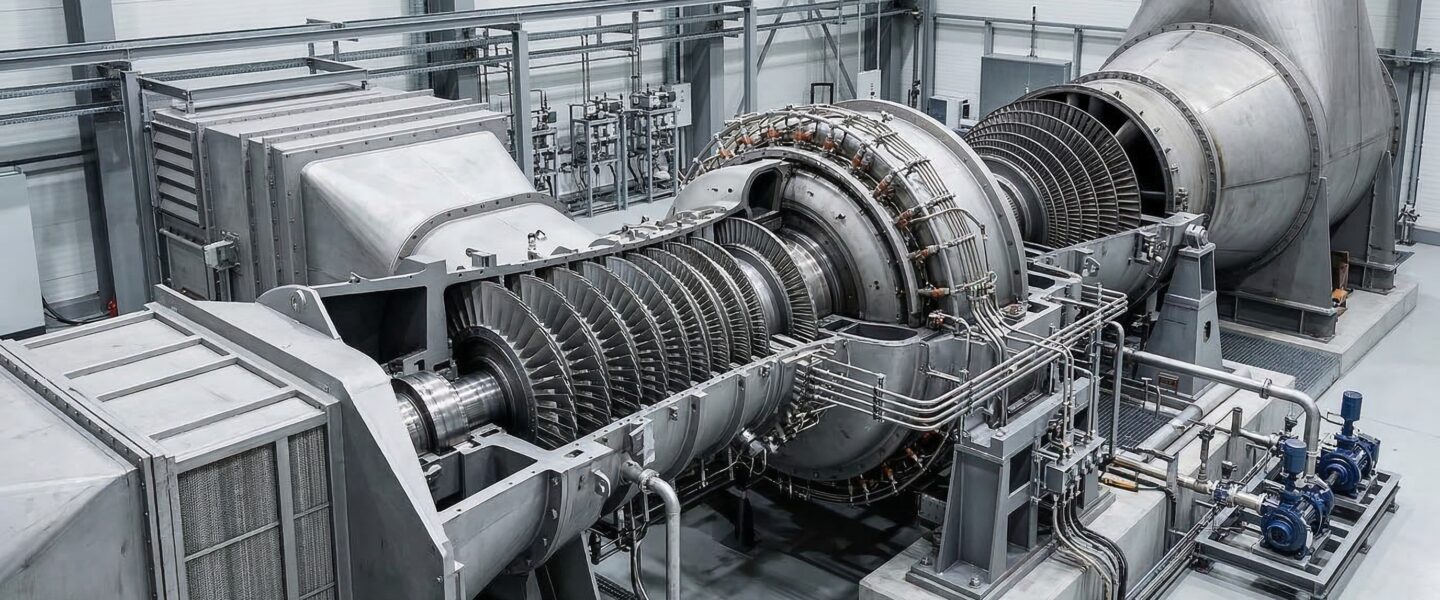
Gas Turbine Reliability & Maintenance — industrial maintenance and reliability services

The Reliability Landscape of Gas Turbines

Gas turbines operate on the Brayton thermodynamic cycle, compressing ambient air, mixing it with fuel, combusting the mixture, and expanding the hot gas through turbine stages that extract mechanical work. The combination of firing temperatures exceeding 2,000 degrees Fahrenheit in modern machines, compressor discharge pressures above 250 PSI, and rotor speeds ranging from 3,600 RPM for large frame units to over 25,000 RPM for aeroderivative machines creates an operating environment where component degradation is not a question of if, but how fast.

The hot gas path — combustion liners, transition pieces, first-stage turbine nozzles, and first-stage turbine buckets — experiences the most severe conditions and drives the maintenance planning cycle. These components operate at temperatures that approach the metallurgical limits of the nickel-based superalloys and thermal barrier coatings from which they are constructed. Creep deformation, thermal fatigue cracking, oxidation, hot corrosion, and coating degradation all progress as functions of operating hours, starts (thermal cycles), and fuel quality. Original equipment manufacturers define maintenance intervals in terms of factored fired hours and factored starts, with adjustment factors for fuel type, load profile, trip events, and environmental conditions. Understanding and correctly applying these factors is fundamental to gas turbine maintenance planning.

A single unplanned gas turbine trip can consume 10-20 equivalent factored starts worth of hot section component life, making trip reduction one of the most impactful reliability investments a facility can make.

Compressor Section Challenges

While the hot section receives the most attention in gas turbine maintenance planning, the compressor section has its own significant reliability challenges. Compressor blade fouling from airborne contaminants — salt, hydrocarbons, agricultural dust, industrial particulate — reduces compressor efficiency and mass flow, which directly reduces power output and increases heat rate. A fouled compressor operating at 3-5% below design efficiency can cost a facility hundreds of thousands of dollars annually in reduced output and increased fuel consumption. Compressor blade erosion, foreign object damage, and in severe cases, compressor blade liberation events add mechanical integrity concerns to the performance degradation challenge.


Condition Monitoring for Gas Turbines

Gas turbine condition monitoring combines performance analysis, mechanical monitoring, and fluid analysis into an integrated health management approach. The stakes are high — both the cost of unplanned failures and the cost of premature maintenance interventions on these expensive machines justify sophisticated monitoring programs.

Performance Monitoring and Thermodynamic Analysis

Gas turbine performance monitoring uses the machine’s own operating data — compressor inlet and discharge pressures and temperatures, exhaust temperature, fuel flow, power output, and ambient conditions — to calculate key performance parameters including compressor efficiency, turbine efficiency, heat rate, and power output corrected to reference conditions. Trending these corrected parameters over time reveals degradation patterns that identify specific maintenance needs. Declining compressor efficiency with stable turbine section performance indicates compressor fouling or blade damage. Increasing exhaust temperature spread — the variation among individual exhaust thermocouples — indicates combustion system or first-stage nozzle deterioration. Performance monitoring provides continuous health assessment without any physical contact with the machine, making it the foundation of any gas turbine maintenance program.

Vibration Monitoring

Gas turbines are equipped with factory-installed vibration monitoring systems — typically proximity probes on the rotor bearings measuring shaft-relative vibration per API 670 standards. Continuous monitoring of shaft vibration amplitude, phase, and frequency content detects rotor imbalance from blade damage or deposits, bearing wear, misalignment, and rotor thermal distortion. Startup and shutdown transient analysis using Bode and polar plots reveals changes in rotor dynamics that indicate developing problems not visible at steady-state operating speed. Casing-mounted accelerometers supplement proximity probe data by detecting bearing housing vibration and structural response that shaft-relative measurements may not capture.

Exhaust Gas Analysis

Exhaust gas analysis provides a direct window into combustion quality and hot section component condition. Individual exhaust thermocouple monitoring reveals temperature spreads that indicate uneven combustion, failed or degraded combustion liners, or nozzle passage blockage. In some advanced monitoring programs, exhaust gas spectral analysis can detect trace metals in the exhaust stream that indicate hot section component material loss — an early indicator of coating failure or base metal distress. Trending exhaust temperature patterns against fuel flow and load provides a sensitive indicator of combustion system health.

Facilities that implement comprehensive gas turbine condition monitoring — combining performance analysis, vibration trending, and exhaust gas monitoring — typically extend hot section inspection intervals by 10-15% while maintaining or improving reliability, recovering significant value from deferred maintenance costs.


Maintenance Strategy: Navigating the Inspection Cycle

Gas turbine maintenance is structured around a hierarchy of planned inspection intervals — combustion inspection (CI), hot gas path inspection (HGPI), and major overhaul — each with increasing scope and cost. The specific intervals depend on the machine model, operating profile, and OEM recommendations, but a typical heavy-frame gas turbine might follow a pattern of combustion inspections at 8,000 factored fired hours, hot gas path inspections at 24,000 hours, and major overhauls at 48,000 hours. Aeroderivative machines follow different patterns based on their modular design philosophy.

Combustion Inspection Planning

The combustion inspection is the most frequent planned maintenance event and focuses on the combustion liners, transition pieces, fuel nozzles, and crossfire tubes. These components operate in the hottest region of the gas path and are designed as replaceable wear items. Effective gas turbine maintenance planning for combustion inspections includes trending combustion dynamics data (pressure pulsations in the combustion chambers) to detect incipient liner cracking, monitoring exhaust temperature spread trends to identify deteriorating combustion hardware, and using borescope inspections between planned events to visually assess component condition. The goal is to arrive at each combustion inspection with a clear understanding of expected component conditions, allowing parts and repair services to be staged in advance to minimize outage duration.

Hot Gas Path and Major Overhaul Management

Hot gas path inspections address the first-stage turbine nozzles and buckets in addition to combustion components, while major overhauls extend the scope to include the full turbine section, compressor, rotor, and bearings. These are high-cost events — a major overhaul on a large frame gas turbine can cost several million dollars in parts, labor, and lost production. Condition-based extension of these intervals using monitoring data, borescope findings, and trending analysis can defer millions in maintenance costs when the data supports it. Conversely, ignoring warning signs and running components beyond their safe operational limit risks catastrophic failures that dwarf the cost of a planned overhaul.


Fuel and Inlet Air Quality Management

Gas turbine component life is heavily influenced by fuel quality and inlet air quality — two factors that are often under the facility’s direct control. Natural gas fuel quality variations including hydrogen sulfide content, moisture, and heavy hydrocarbon liquids affect combustion dynamics, hot section corrosion rates, and emissions compliance. Liquid fuel operations introduce additional concerns including trace metal contamination (vanadium, sodium, potassium, lead) that causes accelerated hot corrosion of turbine components at rates many times greater than clean fuel operation.

Inlet air filtration system maintenance directly impacts compressor section reliability and performance. Filter efficiency, pressure drop, and bypass seal integrity determine how much ambient contamination reaches the compressor. A filter system operating with degraded seals or damaged filter elements allows particulate ingestion that erodes compressor blades and fouls surfaces, reducing both efficiency and component life. Inlet air filtration system maintenance should be integrated into the gas turbine maintenance program rather than treated as a separate, lower-priority activity.

Compressor water wash programs — both online and offline — recover compressor performance lost to fouling. Online water wash performed during operation slows the rate of fouling-related performance loss. Offline (crank) water wash performed during shutdowns provides more thorough cleaning. The economics of compressor washing are compelling — a properly executed wash program on a 40 MW gas turbine can recover $200,000-500,000 annually in fuel savings and additional power output compared to allowing the compressor to foul between planned maintenance events.


What Results Can You Expect?

Implementing a comprehensive gas turbine maintenance program built on condition monitoring, planned inspection management, and operational best practices delivers significant financial and reliability improvements. Based on our experience with industrial and power generation gas turbines, the following outcomes are representative.

  • Unplanned outage frequency reduced by 50-65% through comprehensive condition monitoring that detects developing problems with sufficient lead time for planned intervention
  • Maintenance cost per fired hour reduced by 15-25% through condition-based inspection interval optimization that captures full component life without exceeding safe operational limits
  • Hot section component life extended by 10-20% through trip reduction programs, fuel quality management, and operational practices that minimize thermal cycling and peak temperature excursions
  • Compressor performance maintained within 1-2% of new-and-clean baseline through optimized wash programs and inlet filtration system maintenance
  • Heat rate improvement of 1-3% from maintained compressor efficiency, optimized combustion tuning, and corrected mechanical conditions that affect thermodynamic performance
  • Outage duration reduced by 20-30% through pre-outage condition assessment that enables accurate scope definition, advance parts staging, and elimination of scope surprises during the event

Gas turbines are unique among industrial assets in that the cost of both undermaintenance and overmaintenance is exceptionally high. Running hot section components to failure risks catastrophic damage to downstream components that multiplies repair costs by an order of magnitude. Replacing components too early discards millions of dollars in remaining useful life. The discipline of gas turbine maintenance is finding the precise balance — using monitoring data, inspection findings, and engineering analysis to extract maximum value from every component while maintaining the safety and reliability margins that these high-energy machines demand.

Failure Modes

Common Gas Turbine Reliability & Maintenance Failure Modes

Engineers often arrive searching for specific failures. Here are the most common issues we diagnose and resolve.

Hot Section Component Degradation

Turbine blades, nozzles, and shrouds degrade from oxidation, hot corrosion, creep, and thermal fatigue at sustained high temperatures, causing material loss, coating degradation, and airfoil distortion that reduces output and efficiency.

Key symptom: Declining power output and heat rate with increasing exhaust temperature spread

Get Help With This →

Compressor Blade Fouling and Erosion

Compressor blade surfaces accumulate deposits from inlet air contaminants and erode from ingested particulate, increasing surface roughness that reduces compressor efficiency and shifts the surge line closer to the operating point.

Key symptom: Reduced compressor pressure ratio with increased fuel consumption at constant load

Get Help With This →

Bearing and Seal Oil System Contamination

Lube and seal oil contamination from water ingress, varnish formation, and particulate allows bearing wear, seal degradation, and control system valve sticking that threaten turbine availability and protection system reliability.

Key symptom: Elevated bearing vibration with oil analysis showing increased wear metals and varnish

Get Help With This →

Combustor Liner Cracking

Combustor liners develop thermal fatigue cracks from repeated start-stop cycling and flame impingement, which can propagate to liberation of liner pieces that cause downstream hot section damage.

Key symptom: Increased exhaust temperature spread between thermocouples with visible flame distortion

Get Help With This →

Diagnostic Methods

Diagnostic Techniques We Use

Exhaust Gas Temperature Monitoring

Individual exhaust thermocouple monitoring detects combustor can-to-can imbalance, hot section damage, and fuel nozzle problems through temperature spread analysis and comparison against baseline profiles at equivalent load conditions.

Compressor Performance Mapping

Tracking compressor pressure ratio, mass flow, and efficiency against corrected speed and ambient conditions quantifies fouling-induced degradation and determines optimal compressor wash intervals for performance recovery.

Borescope Inspection

Regular borescope insertion through access ports in compressor, combustor, and turbine sections allows visual assessment of blade condition, coating integrity, combustor liner cracks, and foreign object damage without major disassembly.

Vibration and Bearing Monitoring

Proximity probe vibration monitoring at bearing locations combined with bearing drain oil temperature and chip detectors provides continuous mechanical health assessment during operation and critical data during startup and shutdown transients.

Services

Services for Gas Turbine Reliability & Maintenance

Service

Asset Management for Gas Turbines

Asset Management programs for Gas Turbines, targeting common failure modes and degradation mechanisms.

Learn More →
Service

CMMS Implementation for Gas Turbines

CMMS implementation for gas turbines with equivalent operating hour tracking, serialized combustion part life management, and borescope finding records.

Learn More →
Service

Condition Monitoring for Gas Turbines

Condition Monitoring programs for Gas Turbines, targeting common failure modes and degradation mechanisms.

Learn More →
Service

Dynamic Balancing for Gas Turbines

Our gas turbine balancing covers rotor assembly shop balancing and field trim balance using proximity probe data and multi-plane influence coefficients.

Learn More →
Service

Equipment Condition Assessment for Gas Turbines

Condition assessment for gas turbines including borescope evaluation, heat rate performance analysis, combustion system health review, and EOH accounting.

Learn More →
Service

Equipment Maintenance for Gas Turbines

Equipment Maintenance programs for Gas Turbines, targeting common failure modes and degradation mechanisms.

Learn More →
Service

FMEA for Gas Turbines

Our gas turbine FMEA evaluates hot-section, compressor, bearing, and control system failure modes with life-consumption-based occurrence scoring.

Learn More →
Service

Maintenance Outsourcing for Gas Turbines

Maintenance Outsourcing programs for Gas Turbines, targeting common failure modes and degradation mechanisms.

Learn More →
Service

Maintenance Planning for Gas Turbines

Maintenance planning for gas turbines covering hot section inspection schedules, combustion hardware service intervals, and borescope exam procedures.

Learn More →
Service

Motor Current Analysis for Gas Turbines

Our MCSA services cover gas turbine starter motors, lube oil pump motors, and accessory drive motors to safeguard gas turbine auxiliary reliability.

Learn More →
Service

Oil Analysis for Gas Turbines

We monitor gas turbine lube oil for varnish formation, bearing wear metals, and thermal degradation products to protect bearings and extend oil life.

Learn More →
Service

Plant Optimization for Gas Turbines

Plant Optimization programs for Gas Turbines, targeting common failure modes and degradation mechanisms.

Learn More →
Service

Precision Shaft Alignment for Gas Turbines

We align gas turbine packages with thermal growth modeling for turbine casing expansion and load gear output, meeting OEM and API 613 requirements.

Learn More →
Service

Predictive Maintenance for Gas Turbines

We apply exhaust gas temperature analysis, vibration monitoring, borescope trending, and performance tracking to predict gas turbine degradation.

Learn More →
Service

Preventive Maintenance for Gas Turbines

Our gas turbine PM programs optimize hot-section intervals, combustion inspections, and auxiliary system maintenance using factored operating hour data.

Learn More →
Service

RCM for Gas Turbines

RCM analysis for gas turbines evaluating combustion hardware, hot gas path coating, compressor fouling, and protection system failure modes per SAE JA1011.

Learn More →
Service

Reliability Consulting for Gas Turbines

We deliver gas turbine reliability consulting covering hot section life consumption tracking, equivalent operating hours modeling, and train RAM analysis.

Learn More →
Service

Root Cause Analysis for Gas Turbines

We investigate gas turbine failures through hot-section metallurgy, combustion system analysis, and trip event reconstruction per OEM and API protocols.

Learn More →
Service

Thermographic Inspection for Gas Turbines

We thermally image gas turbine enclosures, exhaust systems, and lube oil components to detect hot-section leaks, insulation faults, and bearing heat.

Learn More →
Service

Ultrasonic Testing for Gas Turbines

Our ultrasonic testing detects fuel gas leaks, casing joint leaks, and lube oil faults on gas turbines through systematic acoustic emission scanning.

Learn More →
Service

Vibration Analysis for Gas Turbines

We analyze gas turbine shaft vibration, blade health, and combustion dynamics to identify rotor faults, bearing wear, and hot-section degradation.

Learn More →

Industries

Industries That Rely on Gas Turbine Reliability & Maintenance

Industry

Chemical Processing Gas Turbines Reliability

We optimize gas turbine reliability in chemical plant CHP installations, addressing hot section wear, compressor fouling, and emissions compliance.

Learn More →
Industry

Food & Beverage Gas Turbines Reliability

We optimize gas turbine CHP reliability for food and beverage plants, ensuring stable power and waste heat for process heating and drying systems.

Learn More →
Industry

Gas Turbine Reliability for Automotive Plant CHP Systems

Forge Reliability provides gas turbine monitoring for automotive CHP plants, addressing hot section wear, HRSG steam output, and on-site power uptime.

Learn More →
Industry

Gas Turbines Reliability for Cement & Aggregates

Forge Reliability maintains gas turbines used for on-site power generation and direct kiln drive applications at cement manufacturing facilities worldwide.

Learn More →
Industry

Gas Turbines Reliability for Industrial Refrigeration

Forge Reliability maintains gas turbine generators providing primary and backup power for cold storage and ammonia refrigeration facility operations.

Learn More →
Industry

Gas Turbines Reliability for Logistics & Distribution

Forge Reliability maintains gas turbine generators for on-site power and emergency backup at distribution centers with high uptime operation demands.

Learn More →
Industry

Gas Turbine Reliability for Metals & Steel Plant Power Generation

Forge Reliability provides gas turbine monitoring for metals and steel plants, addressing BFG fuel quality challenges, hot section wear, and power uptime.

Learn More →
Industry

Gas Turbine Reliability for Mining Site Power Systems

Forge Reliability provides gas turbine monitoring for mining site power, addressing hot section wear, altitude derating, and remote site maintenance needs.

Learn More →
Industry

Gas Turbine Reliability for Pharmaceutical CHP Systems

Forge Reliability provides gas turbine monitoring for pharmaceutical CHP plants, addressing hot section wear, emissions, and site power reliability.

Learn More →
Industry

Gas Turbines Reliability for Plastics & Rubber

Forge Reliability maintains gas turbine generators for on-site power and CHP at plastics and rubber manufacturing plants with high electricity consumption.

Learn More →
Industry

Gas Turbine Reliability for Pulp & Paper Mill Cogeneration

Forge Reliability provides gas turbine monitoring for pulp and paper mill cogeneration, covering hot section wear, HRSG integration, and power output.

Learn More →
Industry

Gas Turbines Reliability for Water & Wastewater

Forge Reliability maintains gas turbine generators in wastewater CHP systems burning digester biogas, optimizing heat rate and hot-section protection.

Learn More →
Industry

Manufacturing Gas Turbines Reliability

We optimize gas turbine reliability in manufacturing CHP plants through combustion tuning, hot section inspections, and performance trend analysis.

Learn More →
Industry

Oil & Gas Gas Turbines Reliability

We optimize gas turbine reliability on pipeline compressor drives, offshore power generation, and refinery CHP through hot section and control programs.

Learn More →
Industry

Power Generation Gas Turbines Reliability

We optimize gas turbine heat rate and availability through hot section, combustion, and compressor programs for baseload and peaking power generation.

Learn More →

Technical Reference

Technical Overview

Hot section inspections should follow OEM-specified fired hours and starts equivalents — typically 8,000 equivalent operating hours or 400 starts for aero-derivative units. Exhaust gas temperature spread across thermocouples should not exceed 30 degrees F; a wider spread indicates combustion liner distress or fuel nozzle fouling. Vibration monitoring with proximity probes per API 616 requires tracking both synchronous (1X) and sub-synchronous components, with alarm at 2.0 mil pk-pk displacement. Compressor fouling reduces output by 2-5% per year if online washing intervals exceed 1,000 hours.

Common Questions

FAQ

Gas turbine maintenance intervals are determined by equivalent operating hours (EOH) that factor in fired hours, number of starts (each start typically equals 10-20 equivalent hours), fuel type, and peak firing temperature. OEMs publish inspection interval recommendations for combustion (8,000-12,000 EOH), hot gas path (24,000-32,000 EOH), and major overhaul (48,000-64,000 EOH). Condition-based monitoring data can justify extending or shortening these intervals.

Limited Availability
We onboard a limited number of new facilities each quarter. Secure your assessment slot before our current availability closes. Reserve Your Spot →

Get Started

Request a Free Reliability Assessment

Tell us about your equipment and facility. Our reliability team will review your situation and recommend a tailored reliability program — no obligation.

Free initial assessment
Response within 1 business day
No obligation or commitment

No obligation. Typical response within 24 hours.

Track Hot Section Degradation and Compressor Fouling Between Overhauls

Connect with our turbine reliability specialists to develop an inspection and monitoring program that maximizes availability.

Claim Your Free Assessment →