Home Equipment Electric Motors Induction Motors

Induction Motors

Vibration analysis, motor current signature analysis, and insulation testing for AC induction motor reliability.

Induction motors are the most widely deployed prime movers in industrial facilities worldwide, converting electrical energy into mechanical rotation for pumps, fans, compressors, conveyors, and virtually every other type of driven equipment found in manufacturing and process operations. Their reputation for rugged simplicity is well earned — an induction motor has no brushes, no commutator, and no permanent magnets to demagnetize — but that simplicity can create a false sense of invulnerability. Induction motor maintenance is not optional, and the facilities that treat it as an afterthought pay the price in premature bearing failures, winding insulation breakdowns, and unplanned production outages that could have been avoided with a structured monitoring and service program.
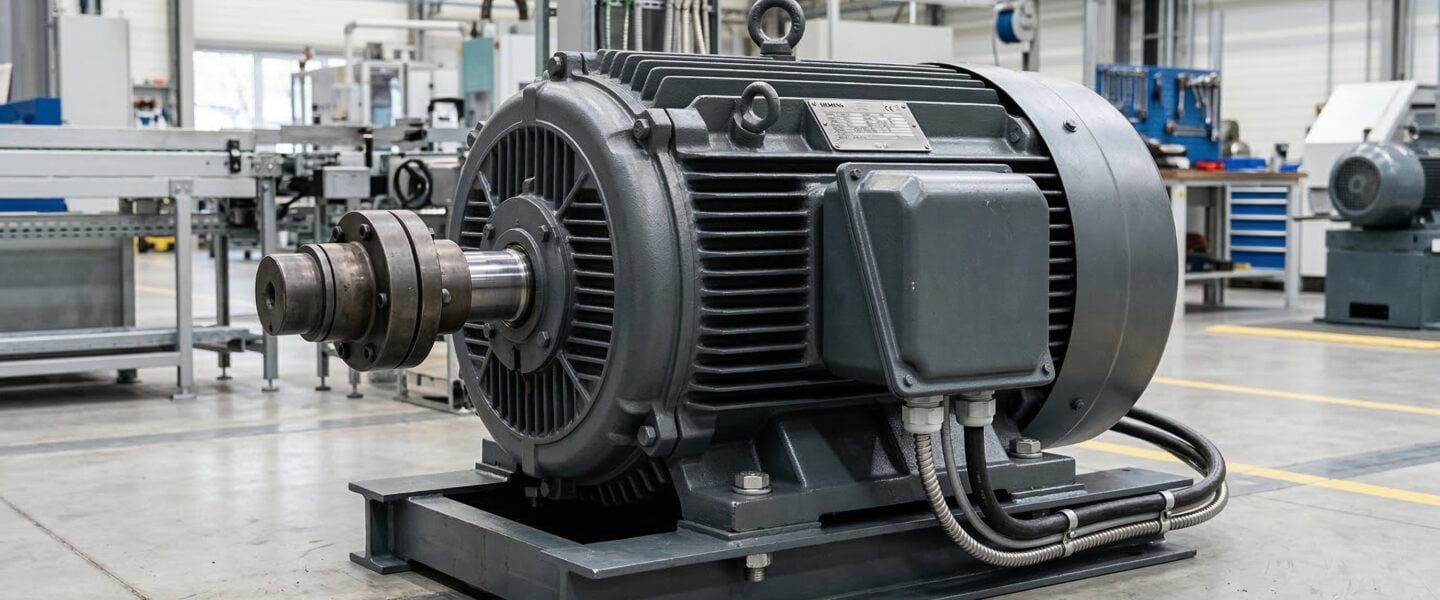
Induction Motor Reliability & Maintenance — industrial maintenance and reliability services

The economic case for proactive induction motor maintenance is compelling at every scale. A failed motor on a critical process pump or air handling unit does not just cost the price of a rewind or replacement — it costs every dollar of lost production, expedited parts, emergency labor, and downstream process disruption that accumulates between failure and restoration. For large motors above 200 horsepower, a single unplanned failure can easily exceed $50,000-$150,000 in total impact when all direct and consequential costs are captured. Multiplied across a motor population of hundreds or thousands of units, the difference between a reactive approach and a condition-based approach represents a significant fraction of a facility’s total maintenance budget.


What Are the Common Reliability Challenges in Induction Motor Operations?

Induction motor failures fall into three broad categories: bearing failures, stator winding failures, and rotor defects. Each category has distinct root causes, progression rates, and monitoring strategies, and a comprehensive induction motor maintenance program must address all three.

Bearing Failures

Bearing failures account for the largest share of induction motor forced outages, with industry studies consistently attributing 40-50% of motor failures to bearing-related causes. The root causes behind bearing failures are diverse: inadequate or excessive lubrication, contamination ingress, shaft current damage from variable frequency drives, misalignment with the driven equipment, and improper installation practices including incorrect bearing fits and inadequate preload. What makes bearing failures particularly costly is that a bearing defect left undetected can progress to a catastrophic failure that damages the shaft, bearing housing, and — in the worst case — the stator winding, turning a bearing replacement into a full motor rewind or replacement.

Stator Winding Insulation Degradation

Stator winding insulation is subject to thermal, electrical, mechanical, and environmental stress throughout its service life. Thermal degradation is cumulative and follows the Arrhenius relationship — for every 10 degrees Celsius above the insulation class rating, insulation life is approximately halved. Electrical stress from voltage spikes, particularly from VFD-driven applications where reflected wave voltages at the motor terminals can reach twice the DC bus voltage, accelerates insulation breakdown between turns and between phases. Mechanical stress from starts, load cycling, and electromagnetic forces loosens windings in the slots over time. Contamination from moisture, oil, dust, and chemical exposure degrades insulation resistance and can create tracking paths that lead to turn-to-turn or phase-to-phase faults.

Research across large motor populations shows that approximately 80% of stator winding failures originate as turn-to-turn faults — small insulation breakdowns between adjacent conductors that can be detected months before they progress to a ground fault or phase-to-phase failure.

Rotor Defects

Rotor problems — cracked or broken rotor bars in squirrel cage motors, and high-resistance joints between rotor bars and end rings — are less common than bearing and stator failures but can be difficult to detect with conventional monitoring techniques. A broken rotor bar creates localized heating, induces vibration at characteristic frequencies related to the number of rotor bars and slip frequency, and increases current draw. As additional bars crack, the motor’s ability to produce torque degrades, starting current increases, and the thermal stress on remaining bars accelerates the failure progression.


How Does Condition Monitoring Apply to Induction Motors?

Induction motors are among the most thoroughly monitored equipment types in industrial reliability programs, and for good reason — multiple proven technologies exist that can detect and diagnose each major failure mode with high confidence when applied correctly.

Vibration Analysis for Mechanical Condition

Vibration analysis is the primary tool for monitoring bearing condition, mechanical balance, alignment, and structural integrity of induction motors. Route-based vibration data collection on a monthly interval is sufficient for most general-purpose motors, with more frequent collection or continuous online monitoring justified for critical and large motors. Spectral analysis identifies bearing defect frequencies, imbalance at running speed, misalignment signatures at running speed harmonics, and electrical frequencies (line frequency and twice line frequency) that can indicate electromagnetic problems including rotor eccentricity, stator looseness, and uneven air gap. Envelope analysis using high-frequency demodulation provides early-stage bearing defect detection well before defects are visible in the velocity spectrum.

Motor Current Analysis for Electrical and Rotor Condition

Motor current signature analysis (MCSA) and related current-based techniques provide a non-invasive window into the motor’s electrical and mechanical condition through analysis of the stator current waveform. Broken rotor bars produce characteristic sidebands around the line frequency at intervals equal to the slip frequency multiplied by the number of poles. Eccentricity faults produce current signatures at predictable frequencies related to the number of rotor slots. The significant advantage of current analysis is that it requires only a current clamp on one supply lead — no access to the motor or its bearings is required, making it ideal for motors in hazardous or inaccessible locations.

Insulation Testing for Winding Condition

Offline insulation testing during planned outages provides direct assessment of winding insulation condition. Insulation resistance (megger) testing screens for gross insulation degradation and moisture contamination. Polarization index testing evaluates the ratio of insulation resistance at 10 minutes to 1 minute, providing insight into insulation condition independent of temperature effects. Surge comparison testing detects turn-to-turn insulation weaknesses by applying fast-rise-time voltage pulses and comparing the resulting waveforms between phases — a difference indicates a weakness even when conventional insulation resistance values are still acceptable. For medium-voltage motors, partial discharge testing can detect insulation degradation while the motor is energized and under load.

Facilities combining vibration analysis with motor current analysis and periodic insulation testing achieve fault detection rates above 90% for the three major motor failure categories — bearing, stator, and rotor — with typical lead times of 3-6 months between initial detection and functional failure.


Maintenance Strategies That Work for Induction Motors

An effective induction motor maintenance strategy integrates condition monitoring data with sound preventive maintenance practices and addresses the full lifecycle from installation through operation to end-of-life decisions.

Lubrication Management

Proper bearing lubrication is the single most impactful preventive maintenance activity for induction motors. This means using the correct grease type and quantity specified by the motor manufacturer, applying it at intervals calculated from bearing size, speed, and operating temperature rather than arbitrary calendar schedules, and using proper technique — including running the motor during or immediately after regreasing to distribute grease through the bearing and purging excess through drain ports. Over-greasing is as damaging as under-greasing: excessive grease causes churning, overheating, and accelerated cage wear. Ultrasonic-assisted lubrication, where grease is applied while monitoring bearing acoustic emission levels, provides real-time feedback on lubrication condition and eliminates the guesswork from grease quantity decisions.

Alignment and Installation Quality

Precision alignment of the motor to the driven equipment is a high-return investment that pays dividends through reduced bearing loads, lower vibration, decreased coupling wear, and extended seal life. Laser alignment to tolerances of 0.05 mm or better for both offset and angularity should be the standard for all motor installations and reinstallations. Soft foot — the condition where one or more motor feet are not in full contact with the base — must be corrected before alignment, as it introduces frame distortion that affects internal air gap uniformity and bearing loading.

Shaft Current Mitigation for VFD Applications

Variable frequency drives generate common-mode voltages that induce circulating currents through motor bearings, causing electrical discharge machining (EDM) damage that pits bearing raceways and leads to premature fluting failures. For VFD-driven motors, shaft grounding rings, insulated bearings, or a combination of both should be specified at installation. Existing motors being retrofitted with VFDs should be evaluated for shaft current risk, and mitigation should be installed before damage accumulates.

Motor Population Management

Effective induction motor maintenance extends beyond individual motor care to population-level management. This includes maintaining a motor inventory with nameplate data, criticality rankings, and condition history for every motor; establishing spare motor strategies that ensure critical applications have tested and ready spares; tracking repair history to identify chronic problem motors that should be replaced rather than repeatedly repaired; and making informed repair-versus-replace decisions based on motor efficiency, repair cost, remaining insulation life, and energy savings from modern premium-efficiency replacements. For motors below 50 horsepower, replacement with a new premium-efficiency motor is often more cost-effective than rewinding, particularly when energy savings over the remaining installation life are factored into the analysis.


What Results Can You Expect?

Implementing a structured induction motor maintenance program built on condition monitoring, disciplined lubrication, precision installation, and population management produces results that are both measurable and substantial. Bearing-related failures decrease as lubrication practices improve and condition monitoring catches developing defects before catastrophic failure. Winding failures decrease as insulation condition is tracked and motors with degrading insulation are scheduled for proactive repair or replacement. Rotor defects are identified early enough to plan orderly replacements rather than emergency responses.

Facilities that commit to a comprehensive approach typically see unplanned motor failures reduced by 50-70% within the first two years of program maturity. The benefits compound over time as baseline data accumulates, trending becomes more precise, and the maintenance team gains confidence in condition-based decision-making. Energy savings from improved alignment, proper lubrication, and strategic replacement of inefficient motors provide an additional financial return that in some facilities rivals the maintenance cost savings.

Forge Reliability builds induction motor maintenance programs that are scaled to your facility’s motor population, criticality distribution, and existing maintenance capabilities. Whether you need a comprehensive monitoring program for a large motor population or targeted support for your most critical drives, we deliver the condition data, diagnostic expertise, and practical recommendations that keep your motors running reliably and your maintenance spending focused where it matters most.

Failure Modes

Common Induction Motor Reliability & Maintenance Failure Modes

Engineers often arrive searching for specific failures. Here are the most common issues we diagnose and resolve.

Stator Winding Insulation Failure

Thermal aging, voltage transients, and contamination degrade stator winding insulation, eventually causing turn-to-turn or phase-to-ground faults that produce localized heating, arcing, and potential motor burnout.

Key symptom: Increasing partial discharge activity with elevated winding temperature

Get Help With This →

Bearing Lubrication Degradation

Lubricant oxidation, contamination, or incorrect application causes bearing film breakdown, leading to metal-to-metal contact, elevated temperatures, and accelerated bearing wear that progresses to seizure.

Key symptom: Elevated bearing temperature with audible noise changes

Get Help With This →

Rotor Bar Cracking

Thermal cycling stress and high starting currents initiate fatigue cracks in die-cast or fabricated rotor bars, causing localized heating, increased slip, and torque pulsations that create vibration and noise.

Key symptom: Sidebands around slip frequency in motor current spectrum

Get Help With This →

Shaft Seal and Cooling System Failure

Shaft seal wear allows contaminants and moisture to enter the motor enclosure, while cooling fan or duct blockage reduces heat dissipation, both contributing to accelerated insulation aging and bearing degradation.

Key symptom: Elevated winding temperatures with visible contamination at shaft seals

Get Help With This →

Diagnostic Methods

Diagnostic Techniques We Use

Motor Circuit Analysis

Offline MCA testing measures winding resistance, inductance, impedance balance, insulation resistance, and polarization index to detect turn-to-turn shorts, contamination, and insulation degradation while the motor is de-energized.

Online Partial Discharge Monitoring

Continuous PD sensors installed at motor terminals detect partial discharge pulses within the stator winding insulation system, providing trending data that tracks insulation deterioration under operating voltage and thermal conditions.

Motor Current Signature Analysis

MCSA captures and demodulates stator current to detect rotor bar cracks (slip frequency sidebands), air gap eccentricity, and driven load anomalies without requiring sensors on the motor itself.

Infrared Thermography

Thermal imaging of motor frame, bearing housings, terminal boxes, and cooling air paths identifies hot spots from winding faults, bearing distress, connection resistance, and cooling deficiencies.

Services

Services for Induction Motor Reliability & Maintenance

Service

Asset Management for Induction Motors

Asset Management programs for Induction Motors, targeting common failure modes and degradation mechanisms.

Learn More →
Service

CMMS Implementation for Induction Motors

CMMS implementation for induction motors with criticality-tiered PM task libraries, insulation resistance test tracking fields, and rewind history records.

Learn More →
Service

Condition Monitoring for Induction Motors

Condition Monitoring programs for Induction Motors, targeting common failure modes and degradation mechanisms.

Learn More →
Service

Dynamic Balancing for Induction Motors

We balance induction motor rotors in-shop and perform field trim balancing at the installation, meeting NEMA MG1 and ISO 1940 balance specifications.

Learn More →
Service

Equipment Condition Assessment for Induction Motors

Condition assessment for induction motors with insulation resistance testing per IEEE 43, bearing vibration evaluation, and efficiency performance checks.

Learn More →
Service

Equipment Maintenance Programs for Electric Motors

Forge Reliability delivers structured maintenance programs for electric motors, targeting winding insulation breakdown, bearing failures, rotor bar cracking...

Learn More →
Service

FMEA for Induction Motors

Our FMEA for induction motors categorizes bearing, winding, and rotor failure modes per IEEE 1415 and assigns tasks using RCM criticality analysis.

Learn More →
Service

Maintenance Outsourcing for Electric Motors

Forge Reliability delivers outsourced maintenance for electric motors, targeting winding insulation breakdown, bearing failures, rotor bar cracking through...

Learn More →
Service

Maintenance Planning for Induction Motors

Maintenance planning for induction motors covering insulation resistance testing schedules, bearing lubrication job plans, and rewind trigger criteria.

Learn More →
Service

Motor Current Analysis for Induction Motors

We perform comprehensive MCSA and ESA on induction motors to detect broken rotor bars, air-gap eccentricity, stator winding faults, and bearing defects.

Learn More →
Service

Oil Analysis for Induction Motors

Our oil analysis programs detect bearing wear metals, contamination, and grease degradation in induction motors to prevent bearing-related failures.

Learn More →
Service

Plant Optimization for Electric Motors

Forge Reliability delivers plant-level optimization for electric motors, targeting winding insulation breakdown, bearing failures, rotor bar cracking...

Learn More →
Service

Precision Shaft Alignment for Induction Motors

Our laser alignment program for induction motors includes thermal growth compensation, soft-foot correction, and ANSI/API coupling tolerance verification.

Learn More →
Service

Predictive Maintenance for Induction Motors

Our induction motor PdM programs use MCSA, vibration analysis, insulation testing, and thermal imaging per IEEE and NEMA standards to find faults.

Learn More →
Service

Preventive Maintenance for Induction Motors

Our induction motor PM optimization balances lubrication, insulation testing, and alignment checks against actual failure data per NEMA and IEEE guides.

Learn More →
Service

RCM for Induction Motors

RCM analysis for induction motors applying JA1011 decision logic to bearing, insulation, rotor bar, and cooling system failure modes and their effects.

Learn More →
Service

Reliability Consulting for Induction Motors

Our motor reliability consulting includes winding insulation life modeling, bearing failure analysis, and fleet-wide MTBF tracking with bad actors.

Learn More →
Service

Root Cause Analysis for Induction Motors

Our induction motor RCA combines winding failure pattern analysis, bearing forensics, and electrical data review per IEEE and NEMA failure classifications.

Learn More →
Service

Thermographic Inspection for Induction Motors

Our thermal imaging detects winding hot spots, bearing overheating, and cooling system faults in induction motors per NFPA 70B and NETA MTS guidelines.

Learn More →
Service

Ultrasonic Testing for Induction Motors

Our ultrasonic testing detects bearing lubrication breakdown, electrical arcing, and cooling fan faults in induction motors via acoustic emission data.

Learn More →
Service

Vibration Analysis for Induction Motors

We identify rotor bar defects, eccentricity, and bearing faults in induction motors through vibration spectra and motor current signature analysis.

Learn More →

Industries

Industries That Rely on Induction Motor Reliability & Maintenance

Industry

Chemical Processing Induction Motors Reliability

We detect winding insulation faults, bearing wear, and hazardous area compliance issues on induction motors throughout chemical processing facilities.

Learn More →
Industry

Food & Beverage Induction Motors Reliability

We detect winding, bearing, and contamination faults on induction motors driving pumps, conveyors, mixers, and fans across food and beverage plants.

Learn More →
Industry

Induction Motor Reliability for Automotive Production Equipment

Forge Reliability provides induction motor reliability for automotive plants, covering press line motors, conveyor drives, and HVAC fan motors system-wide.

Learn More →
Industry

Induction Motors Reliability for Cement & Aggregates

Our engineers protect induction motors driving kiln systems, mills, and fans in cement plants from dust contamination, thermal stress, and vibration.

Learn More →
Industry

Induction Motors Reliability for Industrial Refrigeration

We maintain induction motor reliability on compressor drives, evaporator fans, and condenser fan arrays across ammonia and cascade refrigeration systems.

Learn More →
Industry

Induction Motors Reliability for Logistics & Distribution

We protect induction motors on conveyor drives, sortation systems, and ASRS equipment with condition monitoring for high-uptime distribution centers.

Learn More →
Industry

Induction Motor Reliability for Metals & Steel Mill Drives

Forge Reliability provides induction motor reliability for metals and steel mills, covering crane motors, mill drives, and extreme temperature service.

Learn More →
Industry

Induction Motor Reliability for Mining Mill and Crusher Drives

Forge Reliability provides induction motor reliability for mining operations, covering SAG mill drives, crusher motors, and conveyor drives site-wide.

Learn More →
Industry

Induction Motor Reliability for Pharmaceutical Manufacturing

Forge Reliability provides induction motor reliability for pharma plants, covering winding insulation, bearing wear, and GMP documentation needs.

Learn More →
Industry

Induction Motors Reliability for Plastics & Rubber

We protect induction motors on extruder drives, injection molding hydraulics, Banbury mixers, and granulators at plastics and rubber processing plants.

Learn More →
Industry

Induction Motor Reliability for Pulp & Paper Mill Equipment

Forge Reliability provides induction motor reliability for pulp and paper mills, covering refiner drives, fan motors, and wet environment winding care.

Learn More →
Industry

Induction Motors Reliability for Water & Wastewater

We protect induction motors driving pumps, blowers, and mixers at water and wastewater plants with winding analysis and vibration-based monitoring.

Learn More →
Industry

Manufacturing Induction Motors Reliability

We diagnose winding insulation, bearing, and shaft alignment faults on induction motors driving pumps, fans, conveyors, and presses in manufacturing.

Learn More →
Industry

Oil & Gas Induction Motors Reliability

We detect winding degradation and bearing faults on induction motors in hazardous classified areas across oil and gas production and refining facilities.

Learn More →
Industry

Power Generation Induction Motors Reliability

We detect winding, bearing, and cooling system faults on induction motors driving critical boiler feed pumps, fans, and conveyors at power plants.

Learn More →

Technical Reference

Technical Overview

Motor current signature analysis (MCSA) detects broken rotor bars by identifying sidebands at line frequency plus or minus pole pass frequency — sidebands within 40 dB of the fundamental indicate developing bar cracks per IEEE 9547. Insulation resistance testing per IEEE 43 should yield a polarization index above 2.0 for Class F insulation. Bearing vibration velocity should remain below 2.8 mm/s RMS per ISO 10816-1 Zone B for motors above 15 kW. Winding temperature rise should not exceed the insulation class rating — 105 degrees C rise for Class F at 1.0 service factor.

Common Questions

FAQ

Bearing failure accounts for approximately 50% of all electric motor failures in industrial applications. Improper lubrication practices, including both over-greasing and under-greasing, are the primary root cause. Implementing ultrasonic-assisted greasing to achieve the correct fill amount, using the proper grease type, and maintaining clean storage and handling practices dramatically reduce bearing failure rates.

Limited Availability
We onboard a limited number of new facilities each quarter. Secure your assessment slot before our current availability closes. Reserve Your Spot →

Get Started

Request a Free Reliability Assessment

Tell us about your equipment and facility. Our reliability team will review your situation and recommend a tailored reliability program — no obligation.

Free initial assessment
Response within 1 business day
No obligation or commitment

No obligation. Typical response within 24 hours.

Assess Your Motor Fleet With Vibration, MCSA, and Thermography

Contact our motor reliability team to implement condition-based monitoring that catches winding and bearing issues early.

Claim Your Free Assessment →