Home Equipment Compressors Centrifugal Compressors

Centrifugal Compressors

Continuous monitoring and performance analysis for centrifugal compressors — protecting against surge, fouling, and bearing distress.

Centrifugal compressors are high-value, high-performance assets found at the heart of critical processes in refineries, petrochemical plants, gas processing facilities, and large-scale industrial operations. These machines operate at extreme speeds, handle enormous volumes of gas, and represent capital investments that can reach into the millions of dollars. When a centrifugal compressor trips or fails unexpectedly, the financial impact is immediate and severe, often measured in hundreds of thousands of dollars per day in lost production. At Forge Reliability, we help operators protect these critical assets through advanced condition monitoring and maintenance strategies that maximize availability and extend service life.
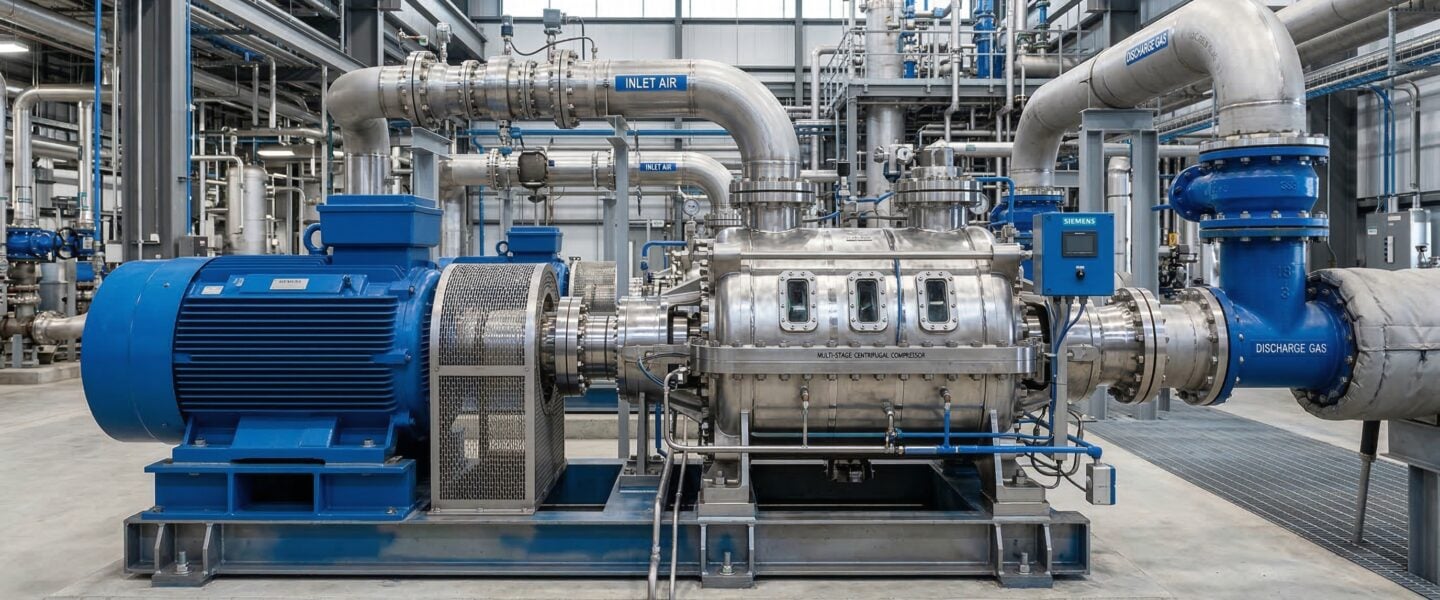
Centrifugal Compressor Reliability & Maintenance — industrial maintenance and reliability services

The Importance of Centrifugal Compressor Reliability

Centrifugal compressors differ fundamentally from their reciprocating and rotary screw counterparts. Operating at shaft speeds that can exceed 30,000 RPM in some applications, these machines depend on precision engineering, tight clearances, and carefully controlled operating conditions. The aerodynamic design of their impellers and diffusers means that even minor changes in gas composition, inlet conditions, or operating point can significantly affect performance and reliability.

The critical nature of centrifugal compressors in process operations means that most facilities cannot tolerate unplanned outages. Process compressors in refineries and chemical plants are often single-train assets with no installed spare, making reliability absolutely essential. Even in applications with parallel units, losing a compressor forces the remaining machines to operate at higher loads, accelerating their own degradation and increasing the risk of a cascading failure event.

The complexity of these machines also means that repairs are expensive and time-consuming. Major overhauls require specialized tooling, factory-trained technicians, and rotor components with lead times measured in months. An unplanned centrifugal compressor failure that damages the rotor bundle can result in a repair timeline stretching six months or longer if spare components are not available.

Industry benchmarks indicate that top-quartile centrifugal compressor reliability exceeds 99 percent availability, while bottom-quartile performers struggle to maintain 95 percent. Closing this gap through improved monitoring and maintenance practices translates directly into millions of dollars in additional production capacity annually.


What Are the Common Reliability Challenges?

Centrifugal compressors face unique reliability challenges driven by their high-speed operation, precise internal clearances, and the process conditions they serve. Understanding these challenges is essential for designing effective monitoring and maintenance strategies.

Rotor Dynamics Issues

High-speed rotors are sensitive to balance condition, bearing health, seal clearances, and aerodynamic forces. Fouling deposits that accumulate unevenly on impellers create imbalance that produces vibration and bearing loads. Coupling misalignment, even within manufacturer tolerances, can excite rotor dynamic modes that cause elevated vibration and reduce bearing life. Lateral and torsional vibration problems must be understood in the context of the machine’s rotor dynamic characteristics to be effectively diagnosed and resolved.

Surge and Operating Point Instability

Surge is the most destructive operating condition for a centrifugal compressor, producing violent pressure pulsations and reverse flow that can damage impellers, seals, and thrust bearings within seconds. Even operation near the surge line creates aerodynamic instabilities that increase vibration and accelerate wear. Anti-surge control system performance is critical, and degradation of the control system or its instrumentation directly threatens compressor integrity.

Fouling and Erosion

Process gas contaminants including polymers, salts, coke, and particulate matter deposit on internal surfaces, reducing aerodynamic efficiency and creating imbalance. Fouling narrows flow passages, shifts the compressor operating map, and can push the machine toward surge at normal operating conditions. Erosion from entrained particles or liquid droplets damages impeller blades and labyrinth seals, degrading performance and increasing internal recirculation losses.

Seal System Degradation

Dry gas seals, oil film seals, and labyrinth seals all play critical roles in centrifugal compressor operation. Seal degradation leads to process gas leakage, lube oil contamination, and in some cases hazardous emissions. Dry gas seal failures in particular can be sudden and consequential, requiring compressor shutdown and seal replacement. Monitoring seal health through leakage rates, buffer gas consumption, and temperature trending is essential for avoiding unplanned seal-related outages.


Condition Monitoring for Centrifugal Compressors

Given the critical nature and high value of centrifugal compressors, comprehensive condition monitoring is not optional but essential. Forge Reliability designs monitoring programs that provide early warning of developing problems and support informed decisions about maintenance timing and scope.

Vibration Monitoring and Analysis

Continuous online vibration monitoring is standard practice for centrifugal compressors, with proximity probes measuring shaft displacement at each bearing location and accelerometers capturing casing vibration. Monitoring shaft orbit patterns, synchronous and subsynchronous vibration components, and axial position provides detailed insight into rotor condition, bearing health, and developing mechanical issues. Correlating vibration data with operating parameters including speed, load, and gas conditions is essential for accurate diagnosis.

Performance Monitoring

Tracking polytropic head, efficiency, and power consumption against reference conditions reveals internal degradation from fouling, erosion, and seal wear. Performance monitoring detects efficiency losses of 1 to 2 percent that would be invisible to vibration monitoring but represent significant energy waste and early signs of internal condition changes. Automated performance calculations integrated with the plant historian enable continuous trending without manual data collection.

Lube Oil and Seal Gas Monitoring

Oil analysis for centrifugal compressor lube systems focuses on wear metal trending, contamination detection, and lubricant condition. Elevated bearing metal concentrations provide early warning of bearing distress. Monitoring seal gas differential pressures, seal leakage rates, and seal vent temperatures tracks seal health continuously. Changes in these parameters often provide the first indication of developing seal problems.

Thermodynamic and Process Monitoring

Monitoring interstage temperatures, discharge temperatures, and cooling system performance reveals changes in compressor internal condition and operating efficiency. Temperature deviations from baseline values at consistent operating conditions indicate fouling, internal recirculation, or valve issues that warrant investigation. Integrating thermodynamic monitoring with vibration and performance data creates a comprehensive picture of machine health.

Organizations that implement integrated condition monitoring programs combining vibration, performance, and process parameter analysis on centrifugal compressors typically achieve 40 to 60 percent reductions in unplanned shutdowns while extending overhaul intervals based on actual equipment condition.


Maintenance Strategies for Centrifugal Compressors

Centrifugal compressor maintenance strategy must balance the high cost of downtime against the consequences of operating with degraded components. Forge Reliability helps clients develop approaches that optimize this balance based on condition data and risk assessment.

Condition-Based Overhaul Planning

Rather than overhauling centrifugal compressors on fixed time intervals, condition-based approaches use monitoring data to determine optimal overhaul timing. This strategy avoids both the risk of running to failure and the waste of opening machines that are still in good condition. Condition data also guides the overhaul scope, ensuring that inspection and replacement activities focus on the components that actually need attention.

Online Washing Programs

For compressors that experience fouling, regular online solvent washing restores aerodynamic performance without requiring a shutdown. Developing an effective wash program requires understanding the fouling mechanism, selecting appropriate solvents, and establishing wash frequency based on performance monitoring data. A well-optimized wash program can defer overhauls by maintaining acceptable efficiency and operating margins between major maintenance events.

Spare Rotor Management

For the most critical centrifugal compressors, maintaining a spare rotor bundle dramatically reduces outage duration when overhauls are required. The operating rotor is removed and replaced with the spare, and the removed rotor is sent for shop refurbishment at a controlled pace. This approach minimizes downtime while ensuring that rotors are thoroughly inspected and restored to like-new condition.


What Results Can You Expect?

Facilities that work with Forge Reliability to optimize their centrifugal compressor maintenance programs see measurable improvements across every performance dimension. Compressor availability increases toward or above 99 percent as unplanned trips and shutdowns are eliminated through proactive monitoring and intervention. Energy efficiency improves as fouling is managed proactively and internal clearances are maintained within optimal ranges.

Overhaul costs decrease as condition-based planning eliminates unnecessary work and focuses resources on actual deficiencies. The predictability of maintenance activities improves turnaround planning and reduces the risk of overruns. Over time, the accumulated condition monitoring data builds a knowledge base that supports increasingly refined maintenance decisions and continuous improvement in reliability performance.

Forge Reliability brings specialized expertise in centrifugal compressor diagnostics, rotor dynamics, and performance analysis. Our consultants have direct experience with compressors from all major manufacturers across refining, petrochemical, gas processing, and industrial applications. We deliver practical, actionable recommendations that translate monitoring data into reliability results.

Failure Modes

Common Centrifugal Compressor Reliability & Maintenance Failure Modes

Engineers often arrive searching for specific failures. Here are the most common issues we diagnose and resolve.

Impeller Blade Fatigue Cracking

High-cycle fatigue from gas-induced blade excitation at resonant frequencies initiates cracks at blade root fillets that propagate under continued operation, risking blade liberation and catastrophic rotor damage.

Key symptom: Subsynchronous vibration with blade-pass frequency harmonics

Get Help With This →

Thrust Bearing Pad Wiping

Rapid load changes, surge events, or lubrication film disruption cause babbitt material on tilting-pad thrust bearings to smear or wipe, resulting in excessive axial movement and potential internal rub contact.

Key symptom: Sudden axial position shift with elevated thrust bearing temperature

Get Help With This →

Labyrinth Seal Degradation

Labyrinth seal fins bend, wear, or break from rotor excursions during surge events or thermal transients, increasing internal gas recirculation that reduces stage efficiency and shifts the operating curve.

Key symptom: Declining polytropic efficiency with surge margin reduction

Get Help With This →

Rotor Fouling and Imbalance

Process gas contaminants deposit on impeller and diffuser surfaces, creating mass imbalance and aerodynamic disruption that increases vibration, reduces head output, and narrows the stable operating range.

Key symptom: Gradually increasing synchronous vibration with declining head at constant speed

Get Help With This →

Diagnostic Methods

Diagnostic Techniques We Use

Proximity Probe Vibration Monitoring

Eddy current proximity probes installed at each bearing in X-Y configuration measure shaft orbit, synchronous amplitude, and subsynchronous activity to detect imbalance, misalignment, instability, and bearing wear.

Axial Position Measurement

Thrust position probes continuously track rotor axial location relative to the stator, providing immediate alarm on thrust bearing distress or labyrinth seal rub before damage escalates to internal contact.

Aerodynamic Performance Mapping

Comparing actual head, flow, and power against original equipment manufacturer performance curves at equivalent conditions quantifies fouling impact, seal degradation, and stage efficiency loss over time.

Online Wash Effectiveness Tracking

Monitoring polytropic head recovery and vibration reduction after online washing verifies wash effectiveness and determines optimal wash intervals and solvent injection rates for each service.

Services

Services for Centrifugal Compressor Reliability & Maintenance

Service

Asset Management for Centrifugal Compressors

Asset Management programs for Centrifugal Compressors, targeting common failure modes and degradation mechanisms.

Learn More →
Service

CMMS Implementation for Centrifugal Compressors

CMMS implementation for centrifugal compressors with seal gas system monitoring fields, performance data capture templates, and overhaul history records.

Learn More →
Service

Condition Monitoring for Centrifugal Compressors

Condition Monitoring programs for Centrifugal Compressors, targeting common failure modes and degradation mechanisms.

Learn More →
Service

Dynamic Balancing for Centrifugal Compressors

We provide multi-plane rotor balancing for centrifugal compressors to API 617 standards, including component and stack balancing on high-speed machines.

Learn More →
Service

Equipment Condition Assessment for Centrifugal Compressors

Condition assessment for centrifugal compressors including vibration analysis, seal gas health evaluation, and performance map comparison test results.

Learn More →
Service

Equipment Maintenance for Centrifugal Compressors

Equipment Maintenance programs for Centrifugal Compressors, targeting common failure modes and degradation mechanisms.

Learn More →
Service

FMEA for Centrifugal Compressors

Our FMEA for centrifugal compressors evaluates impeller, bearing, seal, and control system failure modes with consequence-driven RPN prioritization.

Learn More →
Service

Maintenance Outsourcing for Centrifugal Compressors

Maintenance Outsourcing programs for Centrifugal Compressors, targeting common failure modes and degradation mechanisms.

Learn More →
Service

Maintenance Planning for Centrifugal Compressors

Maintenance planning for centrifugal compressors addressing dry gas seal service intervals, bundle pull job plans, and rotor balancing per API 617.

Learn More →
Service

Motor Current Analysis for Centrifugal Compressors

Our MCSA program detects centrifugal compressor surge conditions, bearing degradation, and rotor faults by analyzing motor current spectral signatures.

Learn More →
Service

Oil Analysis for Centrifugal Compressors

Our oil analysis monitors journal bearing wear, seal oil contamination, and lube oil system cleanliness in centrifugal compressors per API 614 standards.

Learn More →
Service

Plant Optimization for Centrifugal Compressors

Plant Optimization programs for Centrifugal Compressors, targeting common failure modes and degradation mechanisms.

Learn More →
Service

Precision Shaft Alignment for Centrifugal Compressors

Our centrifugal compressor alignment services include multi-element train alignment, thermal growth modeling, and API 617 tolerance verification.

Learn More →
Service

Predictive Maintenance for Centrifugal Compressors

Our centrifugal compressor PdM programs leverage proximity probe vibration analysis, performance mapping, and surge margin monitoring to prevent failures.

Learn More →
Service

Preventive Maintenance for Centrifugal Compressors

Our centrifugal compressor PM optimization aligns overhaul intervals with condition data, consolidates auxiliary system tasks, and reduces outage time.

Learn More →
Service

RCM for Centrifugal Compressors

RCM analysis for centrifugal compressors addressing dry gas seal, impeller, bearing, and anti-surge system functional failure modes per SAE JA1011.

Learn More →
Service

Reliability Consulting for Centrifugal Compressors

Our reliability consulting for centrifugal compressors includes RAM studies, availability modeling, and failure analysis for high-criticality trains.

Learn More →
Service

Root Cause Analysis for Centrifugal Compressors

Our centrifugal compressor RCA uses rotor dynamics analysis, bearing forensics, and performance data to identify the origin of high-value failures.

Learn More →
Service

Thermographic Inspection for Centrifugal Compressors

Our IR inspections detect bearing temperature anomalies, seal system faults, and casing thermal distortion in centrifugal compressors under load.

Learn More →
Service

Ultrasonic Testing for Centrifugal Compressors

Our ultrasonic testing detects seal gas leakage, casing joint leaks, and bearing issues on centrifugal compressors using airborne and contact methods.

Learn More →
Service

Vibration Analysis for Centrifugal Compressors

We monitor centrifugal compressor shaft vibration, surge precursors, and bearing health using proximity probes and casing-mounted accelerometers.

Learn More →

Industries

Industries That Rely on Centrifugal Compressor Reliability & Maintenance

Industry

Centrifugal Compressor Reliability for Automotive Plants

Our centrifugal compressor reliability for automotive plants addresses surge risk, paint booth air demands, and plant-wide instrument air stability.

Learn More →
Industry

Centrifugal Compressors Reliability for Cement & Aggregates

Forge Reliability provides centrifugal compressor monitoring for pneumatic conveying and process air systems at high-capacity cement production facilities.

Learn More →
Industry

Centrifugal Compressors Reliability for Industrial Refrigeration

Forge Reliability provides centrifugal compressor monitoring for large-tonnage ammonia and R-134a refrigeration systems at cold storage facilities.

Learn More →
Industry

Centrifugal Compressors Reliability for Logistics & Distribution

Forge Reliability provides centrifugal compressor monitoring for refrigerated distribution center chiller systems maintaining cold chain temperature.

Learn More →
Industry

Centrifugal Compressor Reliability for Metals & Steel Plants

Our centrifugal compressor reliability for metals and steel plants addresses surge risk, dust fouling, and oxygen plant air separation unit supply.

Learn More →
Industry

Centrifugal Compressor Reliability for Mining Process Plants

Our centrifugal compressor reliability for mining process plants addresses surge risk, dust fouling, and flotation air supply for mineral recovery.

Learn More →
Industry

Centrifugal Compressor Reliability for Pharmaceutical Plants

Our centrifugal compressor reliability services for pharma plants address surge events, oil-free air quality, and cleanroom pressurization control.

Learn More →
Industry

Centrifugal Compressors Reliability for Plastics & Rubber

Forge Reliability provides centrifugal compressor monitoring for large plastics plants with high-volume pneumatic conveying and process air demands.

Learn More →
Industry

Centrifugal Compressor Reliability for Pulp & Paper Plants

Our centrifugal compressor reliability for pulp and paper plants addresses surge risk, fouling from mill dust, and instrument air pressure stability.

Learn More →
Industry

Centrifugal Compressors Reliability for Water & Wastewater

We deliver centrifugal compressor reliability programs for aeration blower systems, protecting dissolved oxygen control and treatment process quality.

Learn More →
Industry

Chemical Processing Centrifugal Compressors Reliability

Our programs address surge protection, fouling, and seal gas system reliability on centrifugal compressors in chemical process gas and refrigeration duty.

Learn More →
Industry

Food & Beverage Centrifugal Compressors Reliability

Our reliability programs address surge and oil contamination on centrifugal compressors in food plant ammonia and CO2 refrigeration booster systems.

Learn More →
Industry

Manufacturing Centrifugal Compressors Reliability

Our programs address surge events, fouling, and bearing wear on centrifugal compressors providing high-volume plant air in manufacturing facilities.

Learn More →
Industry

Oil & Gas Centrifugal Compressors Reliability

Our programs address surge control, dry gas seal reliability, and fouling on API 617 centrifugal compressors in gas processing and refinery operations.

Learn More →
Industry

Power Generation Centrifugal Compressors Reliability

Our programs address surge, fouling, and bearing reliability on centrifugal compressors in power plant fuel gas boosting and air separation applications.

Learn More →

Technical Reference

Technical Overview

Centrifugal compressor vibration should be monitored on both bearing housings with proximity probes per API 617 — alert at 1.0 mil pk-pk and trip at 1.5 mil pk-pk or 0.5 mil above running baseline, whichever is less. Surge events cause rapid axial thrust reversals that damage thrust bearings; anti-surge valve response should stay under 2 seconds from detection to full open. Oil analysis should track particle counts to ISO 4406 cleanliness code 16/14/11 and watch for babbitt metal content above 5 ppm as an indicator of bearing distress.

Common Questions

FAQ

Surge occurs when flow decreases below the minimum stable operating point, causing periodic flow reversal through the impeller that generates violent pressure pulsations and axial thrust excursions. Anti-surge control systems use flow and pressure measurements to modulate recycle valves that maintain minimum flow above the surge limit. Proper anti-surge controller tuning and regular validation testing are essential to prevent surge-induced damage.

Limited Availability
We onboard a limited number of new facilities each quarter. Secure your assessment slot before our current availability closes. Reserve Your Spot →

Get Started

Request a Free Reliability Assessment

Tell us about your equipment and facility. Our reliability team will review your situation and recommend a tailored reliability program — no obligation.

Free initial assessment
Response within 1 business day
No obligation or commitment

No obligation. Typical response within 24 hours.

Implement API 670 Monitoring on Your Centrifugal Compressors

Contact our team to assess your centrifugal compressor reliability and prevent surge-related damage and unplanned outages.

Claim Your Free Assessment →