Home Equipment Pumps Centrifugal Pumps

Centrifugal Pumps

Reliability programs for centrifugal pumps — addressing seal failures, bearing wear, cavitation, and off-BEP operation.

Centrifugal pumps are the workhorses of virtually every industrial process, and their reliability has an outsized impact on facility uptime, energy consumption, and maintenance budgets. A single facility may operate hundreds of centrifugal pumps across process, utility, and auxiliary services — making centrifugal pump maintenance one of the highest-volume and highest-impact maintenance activities in any industrial operation. Despite their ubiquity, centrifugal pumps are frequently run to failure or maintained on rigid calendar schedules that waste resources and miss developing faults. Forge Reliability helps facilities implement condition-based pump maintenance programs that extend equipment life, prevent unplanned failures, and reduce total maintenance costs.
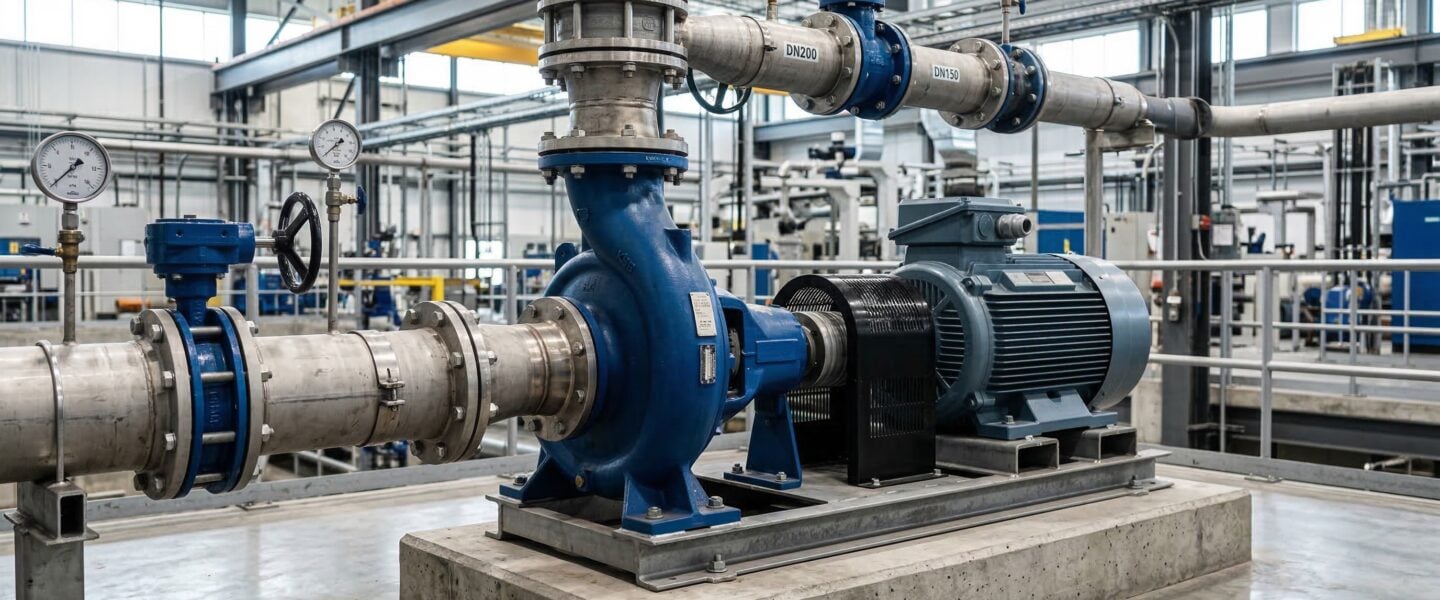
Centrifugal Pump Reliability & Maintenance — industrial maintenance and reliability services

Why Is Reliability Critical for Centrifugal Pumps?

Centrifugal pumps account for a disproportionate share of industrial maintenance spending. Industry data consistently shows that pumps represent 30-40% of rotating equipment maintenance costs in process industries — a figure that reflects both the sheer number of pumps in service and the frequency at which they require intervention. Much of this spending is avoidable. Studies of pump failure patterns reveal that a significant percentage of failures are caused by operating conditions and maintenance practices rather than inherent equipment deficiencies: running pumps away from their best efficiency point, inadequate seal flush systems, improper installation, and reactive maintenance approaches that allow minor issues to escalate into major repairs.

The energy dimension adds urgency to the reliability conversation. Centrifugal pumps consume approximately 20% of the world’s electrical energy produced by motors, and pumps operating with worn impellers, excessive internal clearances, or throttled discharge valves waste a substantial portion of that energy. A pump operating at 50% of its best efficiency point consumes nearly twice the energy per unit of useful hydraulic work compared to the same pump operating at its design point. Reliability and energy efficiency are inseparable in centrifugal pump management.

Centrifugal pumps maintained using condition-based strategies achieve mean time between repairs 2-3 times longer than identical pumps maintained on fixed calendar intervals.


What Are the Common Reliability Challenges in Centrifugal Pumps?

Effective centrifugal pump maintenance begins with understanding the operating conditions and system interactions that drive pump degradation. Pumps do not operate in isolation — they are embedded in fluid systems, and the behavior of that system has a profound influence on pump reliability.

Operating Away from Best Efficiency Point

The single most common cause of premature centrifugal pump failure is sustained operation away from the best efficiency point. When a pump operates at flows significantly above or below its design flow, hydraulic forces within the impeller and volute become unbalanced. At low flows, recirculation develops at the impeller eye and discharge, generating broadband vibration, pressure pulsations, and localized heating. At high flows, cavitation risk increases and shaft deflection from radial thrust loads accelerates seal and bearing wear. Industry guidelines recommend keeping centrifugal pumps within 70-120% of BEP flow to maintain acceptable hydraulic stability and component life.

The challenge is that many pumps are oversized for their actual service conditions — a consequence of conservative design practices and safety factors applied during engineering. An oversized pump operating against a throttled discharge valve wastes energy, generates excess heat, and subjects seals and bearings to unnecessary loading. Identifying and correcting these off-design operating conditions is one of the highest-return reliability improvements available.

Mechanical Seal Failures

Mechanical seals are the most frequently replaced component on centrifugal pumps in most facilities. Seal life is strongly influenced by operating conditions — shaft deflection, vibration, temperature, flush quality, and face pressure — rather than calendar time. A pump with excessive vibration from misalignment or hydraulic instability will destroy seals regardless of the seal type or material selection. Addressing the root cause of seal failures, rather than simply replacing seals faster, is where condition monitoring delivers its greatest value for centrifugal pump reliability.

Bearing and Lubrication Degradation

Centrifugal pump bearings are designed for long service lives under proper operating conditions, but actual bearing life is frequently cut short by contaminated lubricant, incorrect lubricant selection, over-lubrication, moisture ingress, and excessive loading from misalignment or pipe strain. Oil-lubricated pump bearings operating with moisture contamination above 200 ppm experience dramatically reduced fatigue life — a contamination level that is easily reached in humid environments without effective bearing housing seals and proper oil management practices.


How Does Condition Monitoring Apply to Centrifugal Pumps?

Centrifugal pumps are excellent candidates for condition monitoring because their dominant failure modes produce detectable signatures well in advance of functional failure. A comprehensive pump monitoring program integrates multiple technologies to provide complete visibility into mechanical, hydraulic, and electrical condition.

Vibration Analysis for Pump Monitoring

Vibration analysis is the cornerstone of centrifugal pump condition monitoring. Monthly route-based vibration data collection captures bearing condition, alignment quality, balance state, structural integrity, and hydraulic stability in a single measurement set. Spectral analysis identifies specific fault conditions — bearing defect frequencies indicate which bearing component is degrading, elevated vane-pass frequency amplitude indicates internal wear or recirculation, and broadband energy increases indicate cavitation or turbulent flow conditions.

For critical process pumps, online vibration monitoring systems provide continuous surveillance with automated alerting. These systems are particularly valuable on pumps that experience variable operating conditions — changing flow rates, pressures, or fluid properties — where periodic route-based data may not capture the operating condition that generates the highest vibration. Online systems with process parameter integration can correlate vibration behavior with operating conditions to distinguish between load-dependent vibration changes and genuine mechanical degradation.

Oil Analysis and Lubrication Monitoring

Oil analysis provides critical visibility into lubricant condition and wear particle generation in oil-lubricated pump bearings. Routine oil sampling at quarterly intervals tracks moisture content, particle count, viscosity, oxidation, and wear metal concentrations. Trending wear metal concentrations — particularly iron, chromium, and copper — provides early warning of bearing and gear coupling wear. Moisture monitoring is especially important because water is the most common and most damaging contaminant in pump bearing oil, and its presence indicates seal, vent, or housing integrity issues that need corrective action.

Integrating vibration analysis with oil analysis on critical centrifugal pumps provides complementary detection capabilities that reduce the probability of undetected failures to near zero for bearing and lubrication-related fault modes.

Thermographic and Ultrasonic Methods

Infrared thermography identifies bearing overheating, coupling misalignment thermal patterns, seal chamber temperature anomalies, and motor electrical issues. On pumps handling hot fluids, thermal imaging of the bearing housing can reveal inadequate thermal barriers or cooling deficiencies. Ultrasonic testing provides early detection of bearing lubrication breakdown and cavitation — the high-frequency acoustic emissions from these conditions are often detectable before vibration amplitudes rise above baseline levels.


Maintenance Strategies That Work for Centrifugal Pumps

The most effective centrifugal pump maintenance strategies address both the mechanical condition of the pump and the system conditions that drive premature wear. This dual focus distinguishes a reliability-centered approach from a traditional maintenance approach that treats each repair as an isolated event.

Precision Maintenance Practices

Precision maintenance — performing every maintenance task to a defined standard with verification — delivers substantial improvements in pump reliability. Precision shaft alignment to tolerances tighter than 0.002 inches offset and 0.5 mils per inch angularity reduces coupling, bearing, and seal loading. Proper pipe strain management ensures that piping forces do not distort the pump casing and create internal clearance problems. Precision impeller clearance setting maximizes hydraulic efficiency and minimizes recirculation-driven vibration. Each of these practices costs little additional time during a repair but significantly extends the interval before the next repair is needed.

System Optimization

Addressing system-level issues that force pumps to operate away from their design conditions is one of the most impactful reliability improvements. This may involve impeller trimming to match actual system head requirements, variable-frequency drive installation for variable-demand services, bypass line modification or removal, and control valve resizing. Forge Reliability’s equipment assessments include hydraulic operating point evaluation to identify pumps that are operating in reliability-damaging flow regimes and recommend system-level corrections.

Spare Parts and Repair Standardization

Standardizing spare parts — particularly mechanical seals, bearings, and coupling elements — across pump populations reduces inventory costs and ensures that the correct parts are available when condition monitoring indicates a repair is needed. Standardization also reduces installation errors that occur when maintenance technicians work with unfamiliar components. Facilities that standardize pump spare parts and develop detailed repair procedures with torque specifications, clearance values, and assembly sequences see measurable reductions in infant mortality failures after maintenance.


What Results Can You Expect?

Industrial facilities that implement condition-based centrifugal pump maintenance with Forge Reliability’s support achieve results that are both measurable and sustainable. Mean time between pump repairs increases significantly as alignment, lubrication, and operating point issues are identified and corrected. Mechanical seal life typically improves by 40-60% when seal failures driven by excessive vibration and shaft deflection are eliminated. Energy consumption decreases as pumps are restored to efficient operating conditions and oversized pumps are identified for impeller trimming or drive modifications.

The maintenance cost reduction compounds over time. As the condition monitoring program matures and the equipment baseline stabilizes, the maintenance team spends less time on emergency repairs and more time on planned, precision maintenance activities that prevent future failures. Forge Reliability provides the monitoring infrastructure, diagnostic expertise, and reliability engineering support to build and sustain this transformation across your entire pump population.

Failure Modes

Common Centrifugal Pump Reliability & Maintenance Failure Modes

Engineers often arrive searching for specific failures. Here are the most common issues we diagnose and resolve.

Bearing Inner Race Spalling

Cyclic fatigue causes bearing inner race material to flake away in patches, leading to increased clearance and eventual catastrophic bearing seizure if left unaddressed.

Key symptom: Elevated vibration at BPFI harmonics with modulation sidebands

Get Help With This →

Impeller Erosion and Cavitation Damage

Cavitation vapor bubble collapse erodes impeller vane surfaces and volute walls, reducing hydraulic efficiency and increasing vibration as material is removed unevenly.

Key symptom: Crackling noise at suction with unstable discharge pressure

Get Help With This →

Mechanical Seal Failure

Seal face degradation from dry running, thermal shock, or contaminated flush fluid allows process fluid to leak along the shaft, creating safety hazards and environmental concerns.

Key symptom: Visible leakage at seal gland with increasing flush water consumption

Get Help With This →

Shaft Misalignment Wear

Angular or offset misalignment between pump and driver shafts generates excessive radial loads on bearings and coupling, accelerating wear on both components.

Key symptom: Elevated 2x running speed vibration with axial movement

Get Help With This →

Diagnostic Methods

Diagnostic Techniques We Use

Vibration Spectrum Analysis

Spectral analysis of bearing housing vibration identifies specific bearing defect frequencies (BPFI, BPFO, BSF, FTF) and tracks severity progression from early defect through advanced degradation.

Ultrasonic Emission Monitoring

High-frequency ultrasonic sensors detect cavitation, internal recirculation, and early seal face contact that falls below the range of conventional accelerometers.

Infrared Thermography

Thermal imaging of bearing housings, seal chambers, and discharge piping identifies abnormal heat patterns from friction, internal recirculation, or blocked cooling lines.

Motor Current Signature Analysis

Demodulated motor current spectra reveal rotor bar eccentricity and load-related torque variations that indicate hydraulic imbalance or impeller damage.

Services

Services for Centrifugal Pump Reliability & Maintenance

Service

Asset Management for Centrifugal Pumps

Asset Management programs for Centrifugal Pumps, targeting common failure modes and degradation mechanisms.

Learn More →
Service

CMMS Implementation for Centrifugal Pumps

CMMS implementation for centrifugal pumps with asset hierarchy design, ISO 14224 failure coding for seals and bearings, and PM task library configuration.

Learn More →
Service

Condition Monitoring for Centrifugal Pumps

Condition Monitoring programs for Centrifugal Pumps, targeting common failure modes and degradation mechanisms.

Learn More →
Service

Dynamic Balancing for Centrifugal Pumps

We perform single-plane and multi-plane impeller balancing on centrifugal pumps to ISO 1940 G2.5 or better, reducing vibration and extending seal life.

Learn More →
Service

Equipment Condition Assessment for Centrifugal Pumps

Condition assessment for centrifugal pumps including vibration baseline surveys, mechanical seal condition grading, and remaining useful life estimation.

Learn More →
Service

Equipment Maintenance Programs for Centrifugal Pumps

Forge Reliability delivers structured maintenance programs for centrifugal pumps, targeting impeller erosion, seal failures, bearing degradation through...

Learn More →
Service

FMEA for Centrifugal Pumps

Our FMEA for centrifugal pumps identifies dominant failure modes, assigns RPN scores, and selects the optimal maintenance task per RCM methodology.

Learn More →
Service

Maintenance Outsourcing for Centrifugal Pumps

Forge Reliability delivers outsourced maintenance for centrifugal pumps, targeting impeller erosion, seal failures, bearing degradation through proven...

Learn More →
Service

Maintenance Planning for Centrifugal Pumps

Structured maintenance plans for centrifugal pumps covering detailed job plans, kitting lists, and scheduling optimization aligned to API 610 intervals.

Learn More →
Service

Motor Current Analysis for Centrifugal Pumps

Our MCSA services detect centrifugal pump defects including impeller damage, cavitation, and bearing wear through detailed motor current spectrum analysis.

Learn More →
Service

Oil Analysis for Centrifugal Pumps

Our oil analysis programs detect bearing wear metals, seal contamination, and lubricant degradation in centrifugal pumps to extend bearing service life.

Learn More →
Service

Plant Optimization for Centrifugal Pumps

Forge Reliability delivers plant-level optimization for centrifugal pumps, targeting impeller erosion, seal failures, bearing degradation through proven...

Learn More →
Service

Precision Shaft Alignment for Centrifugal Pumps

We perform precision laser alignment on centrifugal pump-motor couplings, compensating for thermal growth and piping strain to meet API 610 tolerances.

Learn More →
Service

Predictive Maintenance for Centrifugal Pumps

We apply vibration analysis, oil sampling, and infrared thermography to detect centrifugal pump degradation well before functional failure occurs.

Learn More →
Service

Preventive Maintenance for Centrifugal Pumps

We optimize centrifugal pump PM programs by aligning task intervals with actual wear patterns, reducing unnecessary work and preventing failures.

Learn More →
Service

RCM for Centrifugal Pumps

RCM analysis for centrifugal pumps applying SAE JA1011 decision logic to seal, bearing, impeller, and coupling functional failure modes and their effects.

Learn More →
Service

Reliability Consulting for Centrifugal Pumps

Our reliability consulting services for centrifugal pumps include Weibull analysis, bad actor programs, MTBF improvement, and pump system RAM modeling.

Learn More →
Service

Root Cause Analysis for Centrifugal Pumps

Our RCA methodology for centrifugal pumps uses fault trees, metallurgical evidence, and operating data to identify true failure origins precisely.

Learn More →
Service

Thermographic Inspection for Centrifugal Pumps

Our thermographic inspections identify bearing overheating, seal failures, and cavitation-induced heat patterns in centrifugal pumps using IR imaging.

Learn More →
Service

Ultrasonic Testing for Centrifugal Pumps

Our ultrasonic testing detects cavitation, bearing defects, and internal leakage in centrifugal pumps using airborne and structure-borne acoustic methods.

Learn More →
Service

Vibration Analysis for Centrifugal Pumps

Our vibration analysts identify vane-pass frequency anomalies, bearing defects, and cavitation signatures in centrifugal pumps before failures occur.

Learn More →

Industries

Industries That Rely on Centrifugal Pump Reliability & Maintenance

Industry

Centrifugal Pump Reliability for Automotive Manufacturing

We deliver centrifugal pump reliability for automotive plants, addressing paint booth water curtain systems, coolant supply, and wastewater treatment.

Learn More →
Industry

Centrifugal Pumps Reliability for Cement & Aggregates

We maintain centrifugal pump reliability in slurry transport, kiln cooling water, and dust suppression systems across cement and aggregate operations.

Learn More →
Industry

Centrifugal Pumps Reliability for Industrial Refrigeration

We optimize centrifugal pump reliability in glycol recirculation, condenser water, and chilled water systems across industrial refrigeration facilities.

Learn More →
Industry

Centrifugal Pumps Reliability for Logistics & Distribution

We maintain centrifugal pump reliability in HVAC chilled water, fire suppression, and refrigerated warehouse cooling loops across distribution facilities.

Learn More →
Industry

Centrifugal Pump Reliability for Metals & Steel Operations

We deliver centrifugal pump reliability for metals and steel plants, addressing scale-laden cooling water, descaling pumps, and high-temperature service.

Learn More →
Industry

Centrifugal Pump Reliability for Mining Operations

We deliver centrifugal pump reliability for mining operations, addressing slurry pump erosion, dewatering systems, and process water distribution needs.

Learn More →
Industry

Centrifugal Pump Reliability for Pharmaceutical Manufacturing

We deliver centrifugal pump reliability programs for pharma facilities, addressing WFI loop degradation, CIP cycle wear, and FDA validation needs.

Learn More →
Industry

Centrifugal Pumps Reliability for Plastics & Rubber

We maintain centrifugal pump reliability in cooling tower circuits, mold temperature control, and process water systems across plastics and rubber plants.

Learn More →
Industry

Centrifugal Pump Reliability for Pulp & Paper Mills

We deliver centrifugal pump reliability for pulp and paper mills, addressing stock pump erosion, white water service, and seal flush optimization.

Learn More →
Industry

Centrifugal Pumps Reliability for Water & Wastewater

Forge Reliability keeps lift station and process centrifugal pumps running efficiently, reducing energy costs and protecting NPDES permit compliance.

Learn More →
Industry

Chemical Processing Centrifugal Pumps Reliability

Our reliability programs reduce seal leakage and corrosion-driven failures on centrifugal pumps in corrosive and hazardous chemical process service.

Learn More →
Industry

Food & Beverage Centrifugal Pumps Reliability

We improve centrifugal pump reliability in food and beverage plants, addressing sanitary seal failures, CIP erosion, and product contamination risks.

Learn More →
Industry

Manufacturing Centrifugal Pumps Reliability

Our reliability programs for manufacturing centrifugal pumps reduce seal failures and bearing degradation across coolant, wash-down, and process loops.

Learn More →
Industry

Oil & Gas Centrifugal Pumps Reliability

Our programs reduce seal failures and bearing wear on API 610 centrifugal pumps in upstream production, midstream pipelines, and refinery processes.

Learn More →
Industry

Power Generation Centrifugal Pumps Reliability

Our reliability programs reduce seal and bearing failures on boiler feed, condensate, and circulating water centrifugal pumps at power generation plants.

Learn More →

Technical Reference

Technical Overview

Pump vibration per ISO 10816-7 should not exceed 4.5 mm/s RMS velocity for standard process pumps. Cavitation produces broadband high-frequency vibration above 5 kHz and can erode impeller material at rates exceeding 0.5 mm per month in severe cases. Mechanical seal flush plan selection per API 682 is critical — Plan 11 recirculation should maintain flush flow rates specified by the seal manufacturer. BEP operation within 80-110% of rated flow prevents recirculation and extends MTBF from a typical 24 months to over 48 months.

Common Questions

FAQ

Bearing failure and mechanical seal degradation are the two most common centrifugal pump failure modes. Bearing failures are often driven by misalignment, inadequate lubrication, or contamination, while seal failures result from dry running, improper flush plans, or thermal shock. Addressing these root causes through proper installation practices and condition monitoring can extend pump MTBF significantly.

Limited Availability
We onboard a limited number of new facilities each quarter. Secure your assessment slot before our current availability closes. Reserve Your Spot →

Get Started

Request a Free Reliability Assessment

Tell us about your equipment and facility. Our reliability team will review your situation and recommend a tailored reliability program — no obligation.

Free initial assessment
Response within 1 business day
No obligation or commitment

No obligation. Typical response within 24 hours.

Get a Vibration Baseline on Your Centrifugal Pump Fleet

Talk to our reliability team about optimizing your pump maintenance strategy and extending mean time between failures.

Claim Your Free Assessment →