Home Equipment Compressors Reciprocating Compressors

Reciprocating Compressors

Valve temperature monitoring, rod drop measurement, and PV analysis for reciprocating compressor reliability.

Why Does Reciprocating Compressor Maintenance Demand a Different Approach?

Reciprocating compressors are among the most mechanically complex rotating machines in any industrial facility, and they are also among the most failure-prone when maintenance programs rely on fixed schedules rather than actual equipment condition. Every stroke of a reciprocating compressor involves dozens of moving components subjected to cyclic loading, pressure reversals, thermal gradients, and gas forces that vary with process conditions. The result is a machine where multiple failure modes develop simultaneously on different timelines, and where a single missed indicator can cascade into damage that costs ten times what the original repair would have required. Effective reciprocating compressor maintenance is not about following a standard checklist — it is about understanding which degradation mechanisms are active in your specific operating context and monitoring the right parameters at the right frequency to intervene before failures compound.
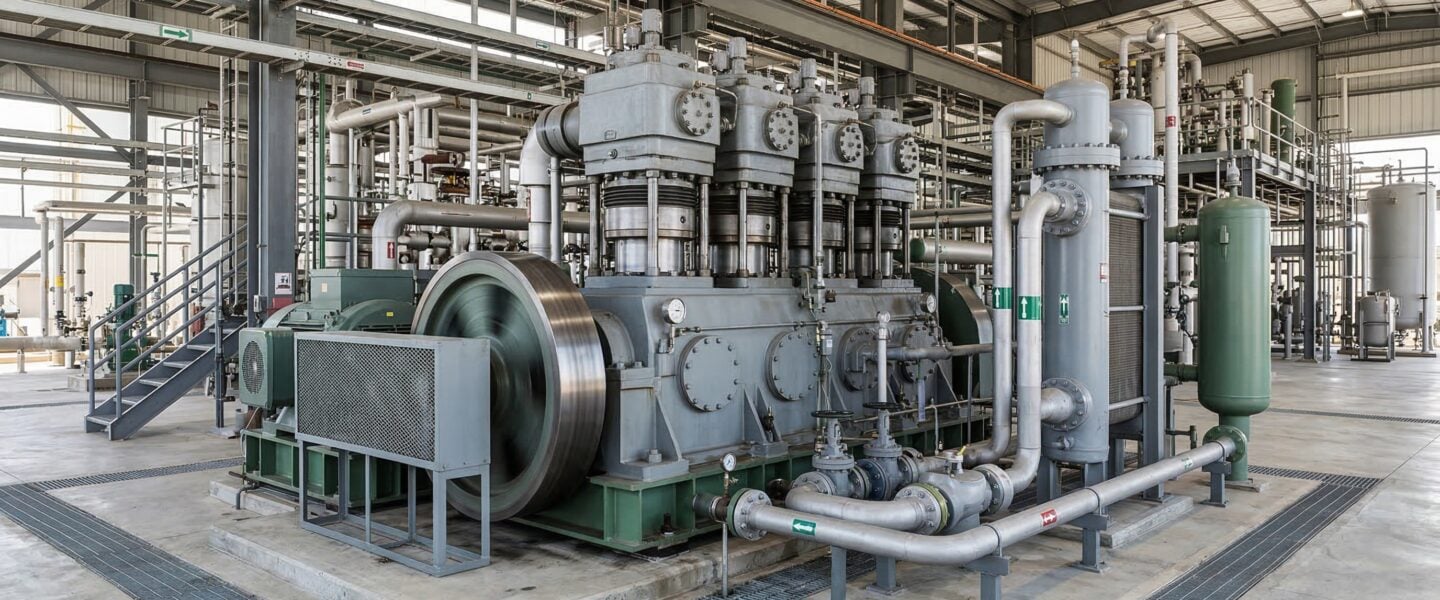
Reciprocating Compressor Reliability & Maintenance — industrial maintenance and reliability services

At Forge Reliability, we work with facilities that operate reciprocating compressors across a wide range of services — natural gas gathering and transmission, process gas boosting, hydrogen and synthesis gas compression, refrigeration, and instrument air supply. Despite the diversity of applications, the reliability challenges share common patterns. Valve degradation, packing wear, lubrication breakdown, and alignment-related bearing distress account for the majority of unplanned downtime events. The difference between facilities that manage these issues effectively and those that struggle with chronic compressor problems almost always comes down to the quality of their condition monitoring program and the discipline of their maintenance planning process.

Industry data shows that over 60% of reciprocating compressor failures originate in valves and packing — two components where degradation is highly detectable through condition monitoring weeks or months before functional failure occurs.


What Are the Common Reliability Challenges in Reciprocating Compressor Operations?

The fundamental reliability challenge with reciprocating compressors is that they have an unusually high number of wear components relative to other machine types. A single double-acting cylinder may contain eight to twelve individual valve assemblies, each with plates, springs, and seats that degrade independently. Multiply that across a multi-stage, multi-cylinder compressor, and the total number of wear components that require monitoring attention can exceed a hundred per machine. This component density is why calendar-based maintenance strategies consistently underperform — the probability that all components will reach their wear limits on the same schedule is effectively zero.

Valve Failures and Efficiency Loss

Compressor valve failures are the single largest contributor to reciprocating compressor downtime across virtually every industry sector. Valve degradation follows a predictable progression: springs weaken or break, sealing elements develop leakage paths, and valve plates crack or fragment. Each stage produces measurable changes in cylinder pressure profiles, discharge temperatures, and compressor efficiency that a structured monitoring program can detect. The critical insight is that a leaking valve does not just reduce compressor throughput — it creates a recirculation path that generates localized heating, accelerates wear on adjacent components, and increases power consumption. A valve that could have been replaced during a planned shutdown for $500 to $2,000 in parts can generate secondary damage costing $15,000 to $50,000 if allowed to run to failure.

Packing Degradation and Emissions Exposure

Piston rod packing serves as the primary seal between the pressurized cylinder and the crankcase environment. As packing rings wear, process gas leaks past the rod, creating both a reliability issue and an environmental compliance exposure. In facilities handling hazardous or regulated gases, packing leakage can trigger reportable emissions events, safety alarms, and regulatory scrutiny. Monitoring packing condition through rod drop measurements, packing case temperature trending, and distance piece pressure tracking allows maintenance teams to schedule packing replacements during planned outages rather than responding to leakage events that may require emergency shutdown.

Bearing and Crosshead Distress

Main bearings, connecting rod bearings, and crosshead components experience cyclic loading that produces fatigue-related degradation over thousands of operating hours. Unlike valve and packing issues, bearing distress often develops more gradually but carries higher consequence when it reaches the failure threshold. A failed main bearing or connecting rod bearing can cause catastrophic crankcase damage with repair costs exceeding $100,000 and downtime measured in weeks or months rather than days. Vibration monitoring, oil analysis, and bearing temperature trending provide complementary detection capabilities that, when combined, offer reliable early warning of bearing degradation.


How Does Condition Monitoring Apply to Reciprocating Compressors?

Reciprocating compressors require a multi-technology monitoring approach because no single measurement captures all of the active failure modes. The dynamic forces, pressure events, and thermal effects generated by reciprocating motion produce complex diagnostic signatures that require different measurement techniques to isolate and interpret. At Forge Reliability, our reciprocating compressor maintenance programs typically integrate four to six monitoring technologies depending on the criticality of the machine and the operating context.

Cylinder Pressure Analysis

Pressure-volume (PV) and pressure-time (PT) analysis provides the most direct insight into cylinder condition. By measuring dynamic pressure inside each cylinder end, analysts can identify valve leakage, ring wear, incorrect valve timing, and capacity control system malfunctions. PV diagrams reveal volumetric efficiency losses, re-expansion anomalies, and pressure drop patterns that directly correlate to specific mechanical faults. This technique is particularly valuable because it detects efficiency degradation in the early stages — often identifying problems that have not yet produced noticeable changes in throughput or discharge temperature at the process instrumentation level.

Vibration and Ultrasonic Monitoring

Vibration analysis on reciprocating machines requires specialized techniques that account for the inherently impulsive nature of piston motion. Unlike centrifugal machinery where spectral analysis dominates, reciprocating compressor diagnostics rely heavily on time-domain waveform analysis, synchronous averaging, and envelope detection to separate mechanical faults from normal operational signatures. Crosshead knock, loose connecting rod bearings, and valve impact events each produce characteristic waveform patterns that experienced analysts can identify and trend over time. Ultrasonic monitoring complements vibration data by detecting high-frequency emissions from valve leakage and gas blow-by that may not appear in lower-frequency vibration measurements.

Thermographic and Oil Analysis Integration

Infrared thermography applied to valve covers, cylinder walls, and packing cases reveals temperature anomalies associated with internal leakage, inadequate cooling, and lubrication breakdown. A valve cover running 30 to 50 degrees above its neighbors indicates internal leakage that warrants investigation. Oil analysis — including wear metals, particle counting, viscosity trending, and contamination analysis — provides insight into bearing wear rates, cylinder lubrication effectiveness, and process gas contamination of the lubricant that can accelerate wear across multiple components simultaneously.

Facilities that combine cylinder pressure analysis with vibration monitoring and oil analysis on reciprocating compressors typically detect 85-90% of developing failures with enough lead time to plan corrective maintenance without production interruption.


Maintenance Strategies That Deliver Results

The most effective reciprocating compressor maintenance programs combine condition-based intervention with strategic time-based activities for components where monitoring technology cannot provide adequate warning. This hybrid approach acknowledges that while most high-frequency failure modes are detectable through monitoring, certain degradation mechanisms — particularly internal corrosion, elastomer aging, and fatigue in non-instrumented components — still benefit from periodic inspection at defined intervals.

Condition-Based Valve Management

Moving valve replacements from fixed intervals to condition-based triggers is typically the highest-impact change a facility can make in its reciprocating compressor maintenance program. Instead of replacing all valves at a predetermined hour count — which invariably means replacing some valves too early and others too late — condition-based valve management uses pressure analysis and temperature trending to identify which specific valves require attention and when. This approach reduces valve-related parts consumption by 20-35% while simultaneously reducing valve-related forced outages because no valve is allowed to operate beyond its actual degradation threshold.

Structured Overhaul Planning

Major overhauls on reciprocating compressors — involving piston and rod replacement, cylinder re-boring, crankshaft inspection, and bearing renewal — represent significant capital expenditure and extended downtime. Condition monitoring data accumulated between overhauls enables maintenance planners to develop accurate work scopes based on actual component condition rather than conservative assumptions. This scoping precision reduces overhaul duration by eliminating unnecessary work, ensures that all components requiring attention are addressed in a single intervention, and minimizes the risk of infant mortality failures from unnecessary component disturbance.

Results to Expect

Facilities that implement structured, condition-based reciprocating compressor maintenance programs consistently achieve measurable improvements across several performance indicators. Unplanned downtime reductions of 40-55% within the first 18 months are typical, driven primarily by the elimination of run-to-failure valve and packing events. Maintenance cost reductions of 15-25% follow as parts consumption decreases and emergency labor premiums are replaced by planned maintenance execution. Compressor efficiency improvements of 3-8% are common as monitoring identifies and corrects conditions — valve leakage, ring wear, and incorrect clearance settings — that waste energy without producing obvious symptoms at the process control level. Perhaps most importantly, the mean time between forced outages extends significantly, giving operations teams the predictability they need to plan production commitments with confidence.

Failure Modes

Common Reciprocating Compressor Reliability & Maintenance Failure Modes

Engineers often arrive searching for specific failures. Here are the most common issues we diagnose and resolve.

Valve Plate Fatigue Failure

Suction and discharge valve plates fail from fatigue cracking caused by repeated high-frequency impact cycling, leading to broken valve fragments that can damage cylinders and cause catastrophic downstream contamination.

Key symptom: Elevated valve temperature with increased cylinder pressure ratio

Get Help With This →

Piston Ring and Rider Band Wear

Piston rings and rider bands wear against cylinder bore walls, increasing blow-by gas leakage past the piston that reduces stage efficiency and elevates interstage pressures and temperatures.

Key symptom: Rising interstage pressure with declining capacity at constant speed

Get Help With This →

Crosshead and Wrist Pin Bearing Failure

Crosshead pin and bushing wear from cyclic loading and lubrication deficiencies causes excessive mechanical clearance that generates impact forces, accelerating wear on connecting rod bearings and crosshead guides.

Key symptom: Audible knocking at crosshead with increased rod runout

Get Help With This →

Packing Ring Leakage

Packing ring sets degrade from thermal cycling, gas contaminant attack, and normal radial wear, allowing pressurized process gas to leak along the piston rod toward the distance piece and creating environmental and safety concerns.

Key symptom: Increasing distance piece pressure with elevated packing case temperature

Get Help With This →

Diagnostic Methods

Diagnostic Techniques We Use

Valve Temperature Monitoring

Continuous thermocouple monitoring of each valve cover temperature detects broken or leaking valves through temperature rise relative to adjacent valves and historical baselines on the same cylinder.

Rod Drop Measurement

Proximity probes measuring piston rod vertical position detect rider band wear progression, providing trend data for scheduling ring replacement before metal-to-metal contact damages the cylinder bore.

Pressure-Volume Diagram Analysis

PV diagrams generated from in-cylinder pressure transducers and crank angle encoders reveal valve leakage, ring blow-by, and compression efficiency in each cylinder end, enabling targeted maintenance.

Vibration Impact Detection

Accelerometer-based impact detection on crosshead guides, frame, and cylinder identifies loose mechanical components, valve impacts, and liquid carryover events through time-domain waveform analysis.

Services

Services for Reciprocating Compressor Reliability & Maintenance

Service

Asset Management for Reciprocating Compressors

Asset Management programs for Reciprocating Compressors, targeting common failure modes and degradation mechanisms.

Learn More →
Service

CMMS Implementation for Reciprocating Compressors

CMMS implementation for reciprocating compressors with valve-by-position tracking, packing leak rate records, and ISO 14224 failure coding structures.

Learn More →
Service

Condition Monitoring for Reciprocating Compressors

Condition Monitoring programs for Reciprocating Compressors, targeting common failure modes and degradation mechanisms.

Learn More →
Service

Dynamic Balancing for Reciprocating Compressors

We balance reciprocating compressor crankshafts and flywheels, verifying counterweight adequacy and reducing torsional and inertial vibration forces.

Learn More →
Service

Equipment Condition Assessment for Reciprocating Compressors

Condition assessment for reciprocating compressors covering valve temperature surveys, packing leak rate evaluation, and frame vibration analysis results.

Learn More →
Service

Equipment Maintenance Programs for Industrial Compressors

Forge Reliability delivers structured maintenance programs for industrial compressors, targeting valve failures, piston ring wear, intercooler fouling...

Learn More →
Service

FMEA for Reciprocating Compressors

We perform FMECA on reciprocating compressors covering valve, ring, packing, and crosshead failure modes with RPN-based maintenance task selection.

Learn More →
Service

Maintenance Outsourcing for Industrial Compressors

Forge Reliability delivers outsourced maintenance for industrial compressors, targeting valve failures, piston ring wear, intercooler fouling through proven...

Learn More →
Service

Maintenance Planning for Reciprocating Compressors

Maintenance planning for reciprocating compressors with detailed job plans for valve service, piston ring replacement, and crosshead clearance inspections.

Learn More →
Service

Motor Current Analysis for Reciprocating Compressors

We use MCSA to identify reciprocating compressor valve failures, piston ring wear, and unloader malfunctions through detailed current waveform analysis.

Learn More →
Service

Oil Analysis for Reciprocating Compressors

We analyze crankcase and cylinder lubricants in reciprocating compressors to detect crosshead wear, bearing distress, and gas-induced oil degradation.

Learn More →
Service

Plant Optimization for Industrial Compressors

Forge Reliability delivers plant-level optimization for industrial compressors, targeting valve failures, piston ring wear, intercooler fouling through...

Learn More →
Service

Precision Shaft Alignment for Reciprocating Compressors

We perform crankshaft-to-motor alignment and web deflection checks on reciprocating compressors, addressing frame distortion and foundation issues.

Learn More →
Service

Predictive Maintenance for Reciprocating Compressors

We use pressure-volume diagram analysis, crosshead vibration monitoring, and oil diagnostics to predict reciprocating compressor failures accurately.

Learn More →
Service

Preventive Maintenance for Reciprocating Compressors

We optimize reciprocating compressor PM by aligning valve, packing, and rider band replacement intervals with actual wear data per API 618 guidance.

Learn More →
Service

RCM for Reciprocating Compressors

RCM analysis for reciprocating compressors evaluating valve, packing, piston ring, and crosshead bearing failure modes per SAE JA1011 decision logic.

Learn More →
Service

Reliability Consulting for Reciprocating Compressors

We provide reliability consulting for reciprocating compressors with valve life analysis, packing wear modeling, and component-level MTBF tracking.

Learn More →
Service

Root Cause Analysis for Reciprocating Compressors

We investigate reciprocating compressor failures using valve forensics, fracture analysis, and operating data to trace faults to their true root cause.

Learn More →
Service

Thermographic Inspection for Reciprocating Compressors

We use infrared imaging to identify valve failures, cylinder temperature imbalances, and cooling system faults in reciprocating compressors per-cylinder.

Learn More →
Service

Ultrasonic Testing for Reciprocating Compressors

We detect compressor valve leakage, packing blow-by, and cylinder liner wear in reciprocating compressors using per-cylinder ultrasonic emission analysis.

Learn More →
Service

Vibration Analysis for Reciprocating Compressors

Our vibration programs detect valve failures, crosshead wear, and piston rod packing leaks in reciprocating compressors using time-domain analysis.

Learn More →

Industries

Industries That Rely on Reciprocating Compressor Reliability & Maintenance

Industry

Chemical Processing Reciprocating Compressors Reliability

We reduce valve failures and packing emissions on reciprocating compressors handling process gases in chemical reactors and gas recovery systems.

Learn More →
Industry

Food & Beverage Reciprocating Compressors Reliability

We reduce valve wear and oil carryover on reciprocating compressors in food and beverage CO2 recovery, ammonia refrigeration, and plant air systems.

Learn More →
Industry

Manufacturing Reciprocating Compressors Reliability

We reduce valve, packing, and piston ring failures on manufacturing reciprocating compressors serving pneumatic tool networks and process air systems.

Learn More →
Industry

Oil & Gas Reciprocating Compressors Reliability

We reduce valve failures, packing emissions, and rider band wear on API 618 reciprocating compressors across oil and gas production and gas processing.

Learn More →
Industry

Power Generation Reciprocating Compressors Reliability

We reduce valve failures and air quality issues on reciprocating compressors supplying instrument and service air at power generation facilities safely.

Learn More →
Industry

Reciprocating Compressor Reliability in Automotive Manufacturing

Forge Reliability provides reciprocating compressor programs for automotive plants, targeting valve failures, air quality, and assembly tool air supply.

Learn More →
Industry

Reciprocating Compressors Reliability for Cement & Aggregates

We monitor reciprocating compressors powering pneumatic systems, baghouse pulse cleaning, and process air at cement and aggregate processing plants.

Learn More →
Industry

Reciprocating Compressors Reliability for Industrial Refrigeration

We deliver reciprocating compressor reliability programs for ammonia and cascade refrigeration systems, meeting IIAR standards and PSM requirements.

Learn More →
Industry

Reciprocating Compressors Reliability for Logistics & Distribution

We deliver reciprocating compressor reliability for pneumatic sortation, dock door systems, and packaging equipment at high-throughput distribution.

Learn More →
Industry

Reciprocating Compressor Reliability in Metals & Steel Mills

Forge Reliability provides reciprocating compressor programs for metals and steel mills, targeting valve failures, air purity, and furnace air supply.

Learn More →
Industry

Reciprocating Compressor Reliability in Mining Operations

Forge Reliability provides reciprocating compressor programs for mining operations, targeting valve wear, drill air supply, and remote site maintenance.

Learn More →
Industry

Reciprocating Compressor Reliability in Pharmaceutical Manufacturing

Forge Reliability provides reciprocating compressor programs for pharma plants, targeting valve failures, oil-free air purity, and GMP standards.

Learn More →
Industry

Reciprocating Compressors Reliability for Plastics & Rubber

We deliver reciprocating compressor reliability for blow molding air, pneumatic conveying, and instrument air systems at plastics and rubber manufacturing.

Learn More →
Industry

Reciprocating Compressor Reliability in Pulp & Paper Mills

Forge Reliability provides reciprocating compressor programs for pulp and paper mills, targeting valve wear, capacity loss, and instrument air quality.

Learn More →
Industry

Reciprocating Compressors Reliability for Water & Wastewater

Our team monitors reciprocating compressors powering pneumatic systems and biogas handling at water and wastewater treatment plants for peak uptime.

Learn More →

Technical Reference

Technical Overview

Valve condition monitoring using pressure-volume (PV) diagrams per API 618 is the single most effective diagnostic for reciprocating compressors — suction valve leakage shows as a characteristic re-expansion loop. Rod drop measurements should be trended monthly; a 30% increase above baseline indicates rider band or piston ring wear. Packing leakage rates should stay below OEM specifications, typically 1-5 CFM per packing case depending on pressure and gas service. Crosshead vibration monitoring detects developing wrist pin and crosshead guide wear before piston rod failure.

Common Questions

FAQ

Valve maintenance is the single most critical task for reciprocating compressor reliability. Valves account for nearly 40% of all reciprocating compressor failures and directly affect efficiency, capacity, and safety. Implementing continuous valve temperature monitoring and maintaining proper valve lift and spring tension during overhauls prevents the majority of unplanned shutdowns.

Limited Availability
We onboard a limited number of new facilities each quarter. Secure your assessment slot before our current availability closes. Reserve Your Spot →

Get Started

Request a Free Reliability Assessment

Tell us about your equipment and facility. Our reliability team will review your situation and recommend a tailored reliability program — no obligation.

Free initial assessment
Response within 1 business day
No obligation or commitment

No obligation. Typical response within 24 hours.

Trend Valve and Packing Condition on Your Reciprocating Compressors

Contact us to discuss valve monitoring and condition-based maintenance strategies for your reciprocating compressors.

Claim Your Free Assessment →