Home Equipment Electric Motors DC Motors

DC Motors

Commutator surface analysis, brush wear monitoring, and armature winding diagnostics for DC motor reliability.

DC motors remain critical workhorses across industries that demand precise speed control, high starting torque, and variable-speed operation without complex drive electronics. From steel mill rolling stands and paper machine winders to crane hoists and mining conveyors, DC motors handle some of the most demanding mechanical duty cycles in any facility. Yet their unique construction — with commutators, brushes, wound field coils, and armature windings — introduces reliability challenges that AC motors simply do not face. Effective dc motor maintenance requires understanding these distinct failure mechanisms and applying condition monitoring strategies that address both the electrical and mechanical degradation pathways that shorten motor life.
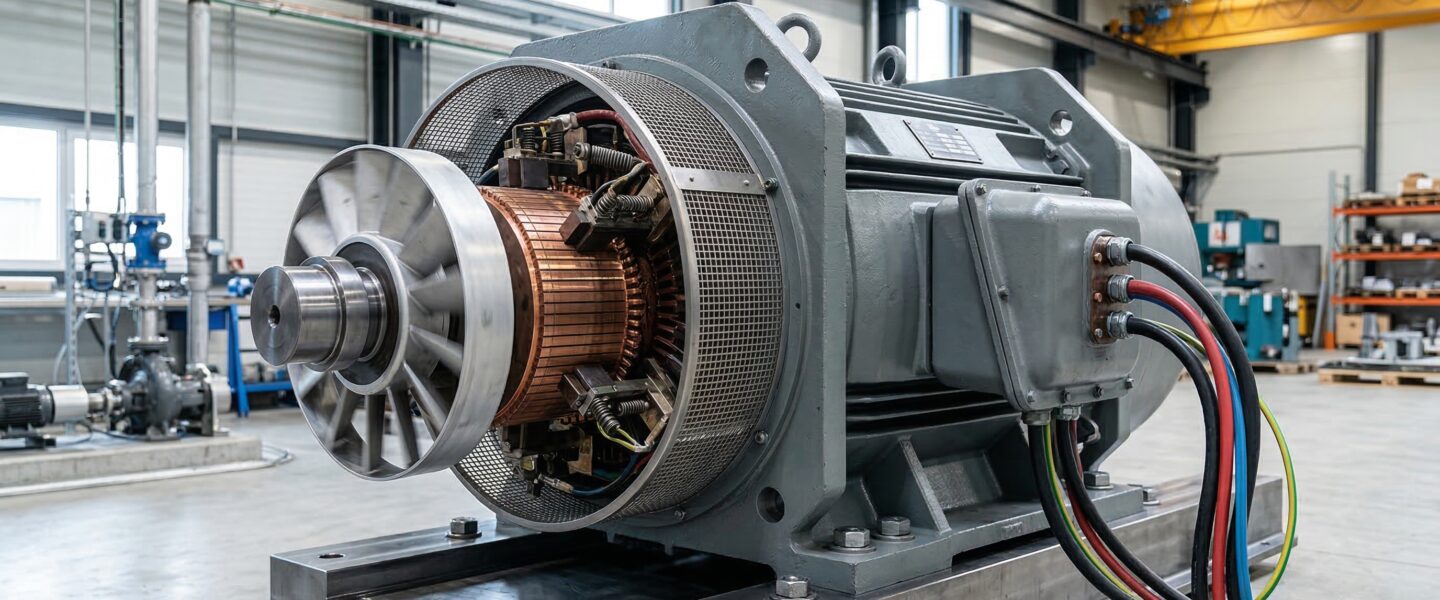
DC Motor Reliability & Maintenance — industrial maintenance and reliability services

Why Do DC Motors Present Unique Reliability Challenges?

The fundamental reliability challenge with DC motors is the commutation system. Unlike AC induction motors that have no physical contact between the rotor and stator, DC motors rely on carbon brushes sliding against a rotating copper commutator to transfer current to the armature windings. This sliding electrical contact operates under significant mechanical stress, electrical arcing, and thermal loading simultaneously. The commutator surface must maintain a smooth, concentric profile with a stable oxide film — called the patina — that provides both lubrication and controlled electrical resistance at the brush-commutator interface. When this patina is disrupted by contamination, humidity changes, overloading, or electrical imbalance, the result is accelerated brush wear, increased sparking, commutator bar erosion, and in severe cases, flashover events that can destroy the motor in seconds.

Beyond the commutation system, DC motors share many of the mechanical failure modes common to all rotating machines — bearing degradation, shaft misalignment, structural looseness, and rotor imbalance. However, the interaction between electrical and mechanical conditions in DC motors is more pronounced than in AC machines. A slight bearing defect that allows the armature to shift eccentrically within the field changes the air gap geometry, alters the magnetic flux distribution, increases circulating currents, and accelerates commutator wear. Mechanical and electrical health are deeply interconnected, and dc motor maintenance programs must address both simultaneously to be effective.

Studies across heavy industry show that commutation system failures account for approximately 35-40% of all DC motor failures, making brush and commutator condition the single most important factor in DC motor reliability.


Condition Monitoring Strategies for DC Motors

Effective dc motor maintenance relies on a multi-technology condition monitoring approach that captures both electrical and mechanical degradation before it progresses to failure. No single monitoring technique provides complete visibility into DC motor health — the combination of technologies is what delivers reliable early warning.

Vibration Analysis

Vibration monitoring on DC motors follows many of the same principles as AC motor monitoring, with some important distinctions. Standard bearing condition monitoring using spectral analysis and envelope demodulation applies directly. However, DC motors often operate at variable speeds, which means vibration analysis must account for speed changes when trending data over time. Order-based analysis — where vibration data is normalized to shaft speed rather than fixed frequency — is essential for meaningful trending on variable-speed DC drives. Characteristic vibration patterns to monitor include 1X running speed for imbalance and eccentricity, multiples of running speed for mechanical looseness, bearing defect frequencies, and commutator bar pass frequency, which can indicate commutator surface irregularities when elevated.

Thermographic Inspection

Infrared thermography is particularly valuable for DC motors because of the multiple heat-generating interfaces that signal developing problems. The brush rigging area should be surveyed regularly — uneven temperature distribution across brush holders indicates unequal current sharing among brushes, which accelerates wear on the hotter brushes and can lead to commutator damage. Field connection temperatures reveal loose or corroded terminations. Bearing housing temperatures confirm lubrication adequacy. Armature surface temperatures after shutdown, when accessible, can indicate shorted turns or ventilation blockages. A thermal survey of a DC motor under load provides more actionable diagnostic information per inspection dollar than almost any other single technique.

Motor Current Analysis and Electrical Testing

Motor current signature analysis adapted for DC applications can detect armature winding faults, field winding degradation, and commutation irregularities through the current waveform. Armature current ripple analysis reveals commutation quality — excessive ripple at the commutator bar pass frequency indicates poor brush contact, bar-to-bar resistance variation, or interpole timing issues. Field current monitoring detects shorted field turns that reduce motor torque capability and increase armature current draw. Periodic insulation resistance testing and polarization index measurements on both armature and field windings track insulation degradation over time, providing months of advance warning before a winding failure occurs. Facilities that perform quarterly insulation testing on critical DC motors reduce unexpected winding failures by 60-70% compared to those that test only during scheduled overhauls.


Developing a DC Motor Maintenance Strategy

A structured dc motor maintenance program balances time-based preventive tasks with condition-based interventions to maximize motor life while minimizing unnecessary intrusive maintenance. The strategy must account for the motor’s duty cycle, operating environment, and criticality to production.

Brush and Commutator Management

Brush inspection and replacement is the most frequent maintenance activity on DC motors, and the one most often performed poorly. Effective brush management goes beyond simply replacing brushes when they reach minimum length. It requires monitoring brush wear rates to detect changes that indicate commutator surface problems, verifying that brush spring pressure remains within the manufacturer’s specified range as brushes wear down, ensuring that brush grade and material match the application requirements, and confirming that the brush holder positioning maintains the correct standoff distance from the commutator surface. Commutator surface condition should be assessed during every brush change — checking for bar marking, threading, grooving, flat spots, and patina condition. Many facilities lose thousands of hours of motor life annually from commutator damage that started as a minor surface condition detectable during routine brush inspection.

Bearing and Mechanical Maintenance

DC motor bearings operate under the same mechanical principles as any rotating equipment bearing, but the consequences of bearing degradation are amplified by the tight air gap tolerances and the sensitivity of the commutation system to armature position changes. Bearing lubrication programs should follow manufacturer recommendations with particular attention to avoiding overlubrication — excess grease that migrates into the motor interior can contaminate the commutator and brushes, disrupting the patina and accelerating electrical wear. Vibration-based bearing condition monitoring with monthly data collection on critical motors provides the trending data needed to plan bearing replacements before degradation affects commutation quality.

Facilities that integrate vibration monitoring, thermography, and electrical testing into a unified DC motor condition monitoring program typically extend mean time between failures by 40-50% compared to time-based maintenance alone.

Electrical Maintenance and Testing

Scheduled electrical maintenance for DC motors includes insulation resistance testing, winding resistance measurements to detect shorted turns or high-resistance connections, and interpole air gap verification. The interpole (commutating pole) circuit is critical to commutation quality — incorrect interpole air gaps or damaged interpole windings directly cause brush sparking and commutator damage. Many DC motor reliability problems that appear to be commutator issues are actually interpole circuit problems in disguise. A thorough dc motor maintenance program includes interpole circuit testing at every major maintenance interval.


Environmental and Operational Factors

DC motor reliability is significantly influenced by the operating environment and duty cycle. Motors operating in dusty environments require more frequent brush inspection and commutator cleaning because conductive dust on the commutator surface can cause tracking between bars and disrupt the patina. Motors in high-humidity environments may experience patina instability that increases brush wear rates by 2-3 times normal. Applications with frequent speed reversals, high inertia loads, or regenerative braking duty impose severe electrical stress on the commutation system that must be accounted for in maintenance intervals.

Variable-speed operation through SCR or thyristor drives introduces additional considerations. The chopped waveform produced by these drives contains current ripple that increases commutator heating and accelerates brush wear compared to clean DC power. The severity of this effect depends on the drive topology, firing angle, and filtering. Motors paired with drives that produce high ripple content may require brush grades specifically formulated for drive applications and more frequent commutator maintenance. Monitoring armature current waveform quality as part of the dc motor maintenance program helps identify when drive-related issues are contributing to accelerated motor wear.


What Results Can You Expect?

Implementing a comprehensive dc motor maintenance program that combines condition monitoring with structured preventive maintenance delivers measurable improvements across several key metrics. Based on our experience across heavy industrial applications, facilities typically achieve the following outcomes within the first 12-18 months of program implementation.

  • Commutator-related failures reduced by 50-65% through early detection of patina deterioration, brush wear anomalies, and interpole circuit problems before they progress to commutator damage
  • Brush life extended by 25-35% through proper brush grade selection, spring pressure management, and commutator surface maintenance that reduces abnormal wear mechanisms
  • Unplanned DC motor downtime reduced by 40-55% as condition monitoring provides sufficient lead time to plan repairs during scheduled production stops rather than responding to emergency failures
  • Motor rewind frequency reduced by 30-40% through insulation condition tracking that allows targeted intervention before winding degradation reaches the failure point
  • Spare motor inventory optimization of 15-25% as condition-based monitoring provides confidence in motor health status, reducing the need to stock emergency spares for motors whose condition is unknown
  • Secondary damage costs reduced by 60-70% by catching bearing and commutation problems before they escalate to armature damage, shaft scoring, or catastrophic flashover events

DC motors may represent an older technology, but they remain irreplaceable in many high-demand applications. The facilities that achieve the best reliability from their DC motor fleets are those that recognize the unique maintenance requirements these machines demand and invest in monitoring and maintenance programs designed specifically for DC motor failure modes. A reactive approach to DC motor care is consistently the most expensive strategy — the commutation system provides ample warning of developing problems to those equipped to listen.

Failure Modes

Common DC Motor Reliability & Maintenance Failure Modes

Engineers often arrive searching for specific failures. Here are the most common issues we diagnose and resolve.

Commutator Surface Deterioration

Commutator bar surfaces develop uneven wear, grooving, and loss of the protective oxide film from arcing, contamination, and brush pressure imbalance, leading to increased sparking and accelerated brush and bar wear.

Key symptom: Visible bar marking and increased brush dust accumulation at commutator

Get Help With This →

Brush Wear and Sparking

Brush material erodes from electrical and mechanical contact with the commutator, while improper brush grade, spring tension, or commutator condition causes excessive sparking that generates electromagnetic interference and bar damage.

Key symptom: Excessive sparking visible at brush-commutator interface

Get Help With This →

Armature Winding Failure

Armature winding insulation fails from thermal overload, centrifugal stress at high speeds, and commutator connection looseness, causing turn-to-turn shorts, ground faults, and localized hotspots that can melt conductors.

Key symptom: Elevated armature temperature with irregular current draw patterns

Get Help With This →

Field Pole Insulation Breakdown

Field pole winding insulation degrades from thermal aging, vibration, and contamination, reducing field strength and causing control instability or loss of motor torque capability.

Key symptom: Declining torque output with increased field current requirement

Get Help With This →

Diagnostic Methods

Diagnostic Techniques We Use

Commutator Profile Measurement

Bar-to-bar commutator height variation and surface runout measurement using dial indicators or laser profilometry identifies high bars, flat spots, and eccentricity that cause brush bounce and sparking.

Brush Current Distribution Analysis

Individual brush shunt current measurement identifies unequal current sharing caused by brush fit problems, spring pressure variations, or brush grade mixing that creates localized overheating and accelerated wear.

Armature Winding Resistance Testing

Measuring resistance between adjacent commutator bars (bar-to-bar test) detects shorted turns, open coils, and high-resistance connections in the armature winding that cause hot spots and performance degradation.

Infrared Thermography

Thermal imaging of field poles, armature surface, commutator, and brush rigging during loaded operation identifies insulation hot spots, uneven brush heating, and cooling deficiencies.

Services

Services for DC Motor Reliability & Maintenance

Service

Asset Management for DC Motors

Asset Management programs for DC Motors, targeting common failure modes and degradation mechanisms.

Learn More →
Service

CMMS Implementation for DC Motors

CMMS implementation for DC motors with commutator diameter tracking, brush life management by holder position, and armature winding test history records.

Learn More →
Service

Condition Monitoring for DC Motors

Condition Monitoring programs for DC Motors, targeting common failure modes and degradation mechanisms.

Learn More →
Service

Dynamic Balancing for DC Motors

We balance DC motor armatures with attention to commutator mass distribution and band wire integrity, maintaining concentricity for brush contact quality.

Learn More →
Service

Equipment Condition Assessment for DC Motors

Condition assessment for DC motors including commutator surface evaluation, brush contact area grading, and armature winding insulation resistance testing.

Learn More →
Service

Equipment Maintenance for DC Motors

Equipment Maintenance programs for DC Motors, targeting common failure modes and degradation mechanisms.

Learn More →
Service

FMEA for DC Motors

Our FMEA for DC motors covers commutation, brush, armature, and field winding failure modes with RPN scoring tailored to DC motor-specific risks.

Learn More →
Service

Maintenance Outsourcing for DC Motors

Maintenance Outsourcing programs for DC Motors, targeting common failure modes and degradation mechanisms.

Learn More →
Service

Maintenance Planning for DC Motors

Maintenance planning for DC motors with structured job plans for commutator resurfacing, brush inspection schedules, and armature winding test procedures.

Learn More →
Service

Motor Current Analysis for DC Motors

We analyze DC motor armature and field current waveforms to detect commutator defects, brush wear, and armature winding faults in your DC drives.

Learn More →
Service

Oil Analysis for DC Motors

Our oil analysis detects armature bearing wear, commutator carbon contamination, and lubricant breakdown in DC motors operating under variable-speed loads.

Learn More →
Service

Plant Optimization for DC Motors

Plant Optimization programs for DC Motors, targeting common failure modes and degradation mechanisms.

Learn More →
Service

Precision Shaft Alignment for DC Motors

Our alignment services for DC motors address frame-specific thermal growth, commutator-end bearing loads, and brush rigging clearance requirements.

Learn More →
Service

Predictive Maintenance for DC Motors

Our DC motor predictive maintenance programs monitor commutator condition, brush wear rates, armature insulation, and field winding integrity closely.

Learn More →
Service

Preventive Maintenance for DC Motors

Our DC motor PM programs address commutator care, brush replacement scheduling, and armature insulation testing with intervals tuned to your service.

Learn More →
Service

RCM for DC Motors

RCM analysis for DC motors evaluating commutator surface, brush wear, armature winding, and interpole failure modes through SAE JA1011 decision logic.

Learn More →
Service

Reliability Consulting for DC Motors

We deliver reliability consulting for DC motor fleets, analyzing commutator wear patterns, brush life data, and armature winding failure distributions.

Learn More →
Service

Root Cause Analysis for DC Motors

Our DC motor RCA examines commutator damage patterns, brush failure evidence, and armature winding faults to trace failures to their true origin.

Learn More →
Service

Thermographic Inspection for DC Motors

Our infrared inspections identify commutator hot spots, brush contact faults, and field winding anomalies in DC motors through detailed thermal mapping.

Learn More →
Service

Ultrasonic Testing for DC Motors

Our ultrasonic testing detects bearing lubrication issues, commutator arcing, and brush bounce in DC motors through structure-borne acoustic methods.

Learn More →
Service

Vibration Analysis for DC Motors

We detect commutator segment defects, brush bounce, and armature imbalance in DC motors using vibration analysis tuned to SCR-driven speed profiles.

Learn More →

Industries

Industries That Rely on DC Motor Reliability & Maintenance

Industry

Chemical Processing DC Motors Reliability

Forge Reliability solves commutator and armature faults on DC motors in chemical processing extruder drives, mixer controls, and winder tension systems.

Learn More →
Industry

DC Motor Reliability for Automotive Plant Legacy Equipment

We provide DC motor reliability for automotive plants, addressing commutator wear on legacy press drives, transfer lines, and material handling systems.

Learn More →
Industry

DC Motors Reliability for Cement & Aggregates

We extend DC motor life on legacy kiln drives, bucket elevators, and feeder systems in cement plants through commutator and brush monitoring programs.

Learn More →
Industry

DC Motors Reliability for Industrial Refrigeration

Our team maintains DC motors on legacy compressor drives and variable-speed conveyor systems in industrial refrigeration cold storage and processing.

Learn More →
Industry

DC Motors Reliability for Logistics & Distribution

Our team maintains DC motors on legacy conveyor systems, sortation equipment, and material handling drives in logistics and distribution center operations.

Learn More →
Industry

DC Motor Reliability for Metals & Steel Mill Drives

We provide DC motor reliability for metals and steel mills, addressing commutator degradation on reversing mill drives and crane duty applications.

Learn More →
Industry

DC Motor Reliability for Mining Hoist and Mill Drives

We provide DC motor reliability for mining operations, addressing hoist motor commutator wear, shovel drives, and legacy mill drive speed control systems.

Learn More →
Industry

DC Motor Reliability for Pharmaceutical Processing Equipment

We provide DC motor reliability for pharmaceutical processing, addressing commutator wear, brush degradation, and speed control on legacy systems.

Learn More →
Industry

DC Motors Reliability for Plastics & Rubber

Our team maintains DC motors on legacy extruders, Banbury mixers, and calender drives in plastics and rubber plants through commutator condition programs.

Learn More →
Industry

DC Motor Reliability for Pulp & Paper Mill Drives

We provide DC motor reliability for pulp and paper mills, addressing commutator wear on winder drives, dryer section motors, and coating applicators.

Learn More →
Industry

DC Motors Reliability for Water & Wastewater

Our engineers maintain DC motor reliability on chemical feed systems, sludge collectors, and variable-speed drives at water treatment facilities.

Learn More →
Industry

Food & Beverage DC Motors Reliability

Forge Reliability solves commutator and brush faults on DC motors controlling winder tension, extruder screws, and mixer speeds in food processing.

Learn More →
Industry

Manufacturing DC Motors Reliability

Forge Reliability solves commutator wear, brush arcing, and field winding faults on DC motors in manufacturing winding, extrusion, and press drives.

Learn More →
Industry

Oil & Gas DC Motors Reliability

Forge Reliability addresses commutator and brush issues on DC motors controlling drilling drawworks, mud pumps, and legacy refinery pump drives safely.

Learn More →
Industry

Power Generation DC Motors Reliability

Forge Reliability addresses commutator and winding faults on DC motors controlling turbine turning gear, valve actuators, and exciter drives at stations.

Learn More →

Technical Reference

Technical Overview

Brush wear rate should be tracked monthly — replace brushes at 50% of original length to prevent commutator scoring. Commutator surface condition is assessed by measuring bar-to-bar resistance variation, which should stay within 5% per EASA AR100. Insulation resistance testing per IEEE 43 should yield a minimum of 5 megohms at 40 degrees C for motors rated above 460V. Armature vibration trending with specific attention to commutator bar pass frequency and its harmonics detects developing bar and riser joint failures before catastrophic flashover.

Common Questions

FAQ

DC motors require significantly more hands-on maintenance than AC motors due to their commutator and brush systems. Regular brush inspection and replacement, commutator surface maintenance, and brush rigging alignment are essential tasks that have no equivalent in AC motor maintenance. The mechanical commutation system is inherently a wearing component that demands consistent attention to maintain reliable operation.

Limited Availability
We onboard a limited number of new facilities each quarter. Secure your assessment slot before our current availability closes. Reserve Your Spot →

Get Started

Request a Free Reliability Assessment

Tell us about your equipment and facility. Our reliability team will review your situation and recommend a tailored reliability program — no obligation.

Free initial assessment
Response within 1 business day
No obligation or commitment

No obligation. Typical response within 24 hours.

Assess Commutator Condition and Brush Wear on Your DC Motors

Our engineers specialize in DC motor reliability programs that prevent commutator damage and extend service life.

Claim Your Free Assessment →