Home Equipment Thermal Equipment Chillers & Cooling Systems

Chillers & Cooling Systems

Condition monitoring for centrifugal, screw, and reciprocating chillers — tracking compressor health, refrigerant integrity, and thermal performance.

Chillers and cooling systems are critical infrastructure assets that support process temperature control, product quality, building comfort, and equipment protection across virtually every industrial sector. When a chiller fails, the consequences cascade rapidly — production lines halt, sensitive equipment overheats, product quality suffers, and emergency repairs consume premium budgets. Effective chiller maintenance requires a systematic approach that addresses the mechanical, electrical, and thermodynamic complexity of these machines. Forge Reliability provides the condition monitoring expertise and maintenance strategy development that keeps chiller systems operating reliably and efficiently throughout their service life.
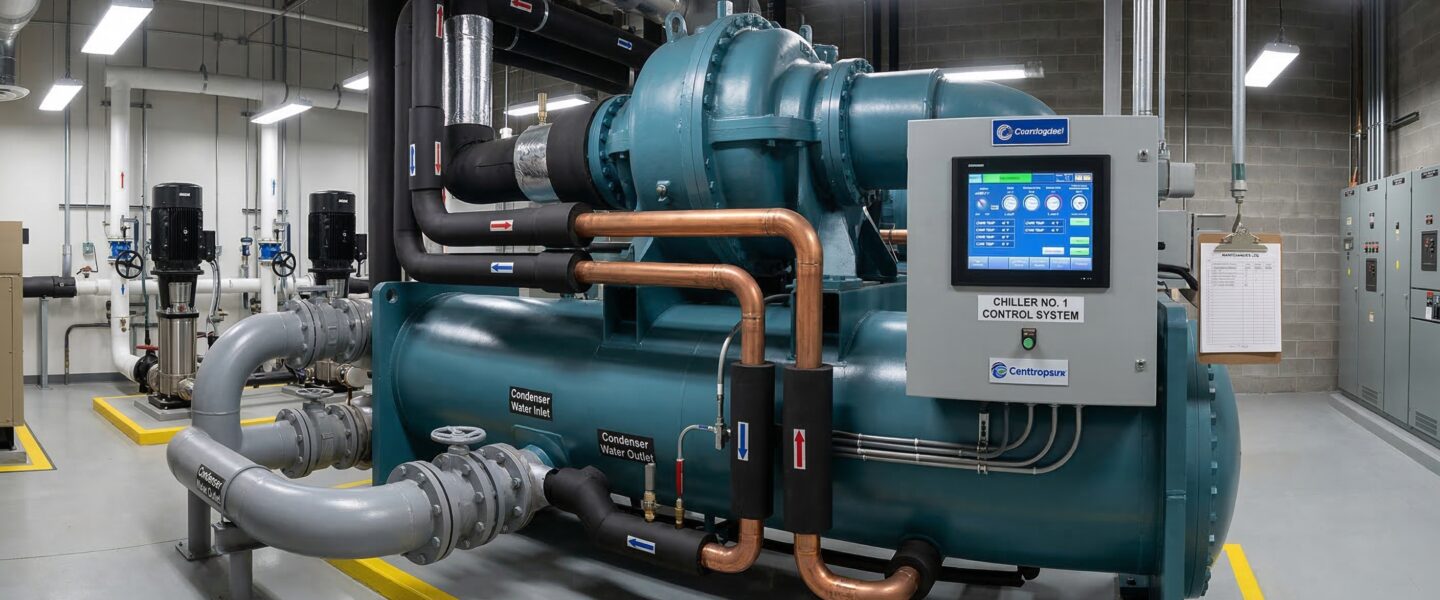
Chiller Cooling System | Forge Reliability

Why Does Chiller Reliability Matter More Than Most Facilities Realize?

Chillers are among the most energy-intensive assets in any facility. A single large centrifugal chiller can consume 500 kW or more at full load, and chiller plants collectively account for a substantial portion of total facility energy costs. When chiller efficiency degrades — from fouled heat exchanger tubes, low refrigerant charge, compressor wear, or poor water treatment — energy consumption increases while cooling capacity decreases. A chiller operating at just 10% below its rated efficiency can add tens of thousands of dollars annually in excess energy costs, and the degradation often progresses undetected until the system can no longer maintain setpoint temperatures during peak load conditions.

The capital cost of chiller systems also demands reliability attention. Large centrifugal and screw chillers represent six- and seven-figure investments with expected service lives of 20-30 years. Achieving that design life requires consistent maintenance that addresses the specific degradation mechanisms active in each installation. Facilities that defer chiller maintenance to reduce short-term costs frequently discover that the accumulated degradation results in a major overhaul or premature replacement — costs that dwarf the savings from deferred maintenance by orders of magnitude.

Facilities with structured chiller maintenance programs consistently achieve 20-25 year chiller service lives, while facilities with reactive approaches often face major overhauls or replacements within 12-15 years.


What Are the Common Reliability Challenges in Chiller Systems?

Chiller reliability challenges span mechanical, electrical, thermodynamic, and water chemistry domains. Understanding these challenges provides the foundation for a monitoring and maintenance strategy that addresses root causes rather than symptoms.

Compressor Wear and Degradation

The compressor is the heart of any vapor-compression chiller, and its condition determines both the capacity and efficiency of the entire system. Centrifugal compressor impellers and diffusers experience erosion from refrigerant-entrained oil droplets and particulate contamination over thousands of operating hours. Screw compressor rotors experience progressive wear at the rotor tips and sealing surfaces, increasing internal leakage and reducing volumetric efficiency. Reciprocating compressors experience valve wear, piston ring degradation, and crankcase oil dilution. In each case, the degradation is gradual and often imperceptible in daily operation until efficiency has declined significantly or the compressor can no longer meet load demands.

Oil system health is inseparable from compressor reliability. Compressor oil provides lubrication, sealing, and cooling functions, and its condition directly influences bearing life, internal clearance wear rates, and heat transfer effectiveness. Oil that has degraded through thermal breakdown, moisture contamination, or acid formation accelerates compressor wear and can damage hermetic motor windings in semi-hermetic and hermetic compressor designs.

Heat Exchanger Fouling and Degradation

Evaporator and condenser performance depends on effective heat transfer across tube surfaces, and fouling is the most common mechanism that degrades this performance. Condenser tubes exposed to open-loop cooling tower water accumulate scale, biological growth, and sediment that insulates the tube surface and reduces heat transfer coefficients. Even a 0.001-inch layer of scale on condenser tubes can increase compressor energy consumption by 10% or more because the compressor must work harder to reject heat through the fouled surface. Evaporator tubes in closed-loop chilled water systems are less susceptible to fouling but can still accumulate corrosion products, biological growth, and sediment from inadequate water treatment.

Refrigerant Charge and Integrity Issues

Refrigerant charge has a direct impact on chiller capacity and efficiency. Low charge reduces evaporator flooding, decreases capacity, and can cause compressor overheating. Overcharge increases condenser pressure, reduces efficiency, and can cause liquid slugging in some compressor types. Refrigerant leaks — from tube corrosion, joint fatigue, seal degradation, or vibration-induced cracking — are a persistent concern, particularly on older systems. Modern leak detection methods including ultrasonic detection and refrigerant-specific electronic sensors can identify leaks that were previously undetectable, but only when applied as part of a systematic inspection program.


How Does Condition Monitoring Apply to Chillers?

Chiller condition monitoring combines mechanical monitoring technologies with thermodynamic performance analysis to provide a complete picture of system health. This dual approach is essential because some chiller degradation modes produce mechanical symptoms detectable by vibration and oil analysis, while others manifest only as efficiency losses detectable through performance trending.

Vibration Analysis for Chiller Compressors

Vibration analysis is the primary tool for monitoring the mechanical condition of chiller compressors, motors, and associated rotating components. For centrifugal chillers, vibration monitoring tracks bearing condition, impeller balance, shaft alignment, and gear mesh quality in gear-driven designs. Screw chiller vibration monitoring focuses on rotor bearing condition and rotor engagement quality. Route-based vibration data collection at monthly intervals provides adequate detection margin for most mechanical fault modes, while critical chillers serving high-consequence applications benefit from online continuous monitoring that captures transient events during startup, load changes, and shutdown sequences.

Oil Analysis for Compressor Health

Compressor oil analysis provides visibility into internal wear, oil degradation, refrigerant dilution, and moisture contamination. Wear metal trending — particularly iron, copper, lead, and tin concentrations — tracks bearing and rotor wear progression. Acid number monitoring detects oil degradation that can damage motor windings and accelerate bearing corrosion. Moisture content analysis identifies seal leaks and system integrity issues. A well-structured oil analysis program with quarterly sampling intervals serves as an early warning system for compressor health issues that may not produce detectable vibration signatures until they have progressed significantly.

Combining vibration analysis with oil analysis and thermodynamic performance trending creates a monitoring framework that detects over 90% of chiller degradation modes before they result in unplanned downtime.

Thermodynamic Performance Monitoring

Performance monitoring tracks key thermodynamic parameters — approach temperatures, compressor lift, kW per ton, condenser and evaporator pressure differentials, and subcooling and superheat values — to identify efficiency degradation trends. A chiller with clean heat exchangers, correct refrigerant charge, and a healthy compressor will produce consistent performance metrics at consistent load and ambient conditions. Deviations from established baselines indicate specific degradation modes: rising approach temperatures point to heat exchanger fouling, increasing compressor lift at constant load suggests internal wear, and changing subcooling values may indicate charge loss. Logging these parameters and trending them over time reveals degradation that progresses too slowly to notice in daily snapshots.


Maintenance Strategies That Work for Chiller Systems

Effective chiller maintenance integrates condition-based monitoring with targeted preventive tasks that address the known degradation mechanisms in each system. The strategy must account for the seasonal operating patterns of many chiller installations — extended periods of heavy operation followed by standby or shutdown periods that introduce their own reliability risks.

Annual Inspection and Overhaul Planning

Annual inspections during the off-season or low-demand period provide an opportunity to perform tasks that require the chiller to be out of service: eddy current testing of heat exchanger tubes to detect wall thinning and pitting, condenser tube cleaning and treatment, compressor oil change and filter replacement, electrical connection inspection and retorquing, and control system calibration verification. The scope of each annual inspection should be informed by condition monitoring data collected during the operating season. A chiller with stable vibration trends, clean oil analysis results, and consistent performance metrics needs a different inspection scope than one showing bearing wear trends or declining efficiency.

Water Treatment Integration

Condenser water treatment quality has a direct and measurable impact on chiller reliability and efficiency. Scale formation, biological growth, and corrosion all degrade heat transfer and can cause tube failures. Maintaining condenser water below 150 ppm hardness and controlling biological growth with appropriate treatment programs prevents the fouling that drives efficiency losses and tube degradation. Forge Reliability works with facility water treatment providers to ensure that treatment programs are delivering the water quality that chiller reliability requires.

Seasonal Startup and Shutdown Procedures

Chillers that sit idle for months during the heating season face startup risks that proper procedures can mitigate. Oil heaters should maintain compressor oil temperature to prevent refrigerant migration into the oil sump. Pre-startup checklists that verify water flow, electrical supply, control setpoints, and safety device function prevent damage from operating with inadequate support systems. Post-startup vibration and performance baseline checks confirm that the chiller has returned to service in acceptable condition.


What Results Can You Expect?

Facilities that implement structured chiller maintenance programs with Forge Reliability see measurable improvements across multiple dimensions. Chiller availability increases as unplanned failures decrease — critical during peak cooling demand when every ton of capacity matters. Energy efficiency improves as fouling is controlled, refrigerant charge is maintained, and compressor condition is preserved, with typical energy savings of 10-20% compared to poorly maintained systems. Equipment life extends toward the design expectation of 20-plus years rather than the shortened life that reactive maintenance produces.

The financial impact is substantial. For a large chiller plant, the combined savings from reduced energy consumption, avoided emergency repairs, extended equipment life, and improved production continuity typically return three to five times the annual program investment. Forge Reliability provides the monitoring technology, analytical expertise, and maintenance program structure to realize these returns and sustain them year after year.

Failure Modes

Common Chiller & Cooling System Reliability & Maintenance Failure Modes

Engineers often arrive searching for specific failures. Here are the most common issues we diagnose and resolve.

Compressor Bearing Degradation

Compressor bearings in centrifugal and screw chillers wear from oil contamination, refrigerant dilution of lubricant, surge operation, and normal fatigue, eventually causing rotor contact, efficiency loss, and catastrophic compressor failure requiring major overhaul.

Key symptom: Increasing vibration and noise from compressor with elevated oil temperature and bearing temperature trending upward

Get Help With This →

Condenser Tube Fouling

Scale deposits, biological growth, and debris accumulate on condenser tube surfaces, reducing heat transfer and increasing condensing temperature and pressure, which raises compressor power consumption and reduces available cooling capacity.

Key symptom: Rising condenser approach temperature with increasing compressor head pressure for the same cooling load and water flow rate

Get Help With This →

Refrigerant Leak and Charge Loss

Refrigerant escapes through tube corrosion pits, brazed joint failures, shaft seal wear, and vibration-induced piping cracks, reducing system charge, lowering capacity, and potentially introducing moisture and air into the circuit.

Key symptom: Declining cooling capacity with low suction pressure and subcooling readings below design values

Get Help With This →

Evaporator Tube Freeze Damage

Low-load operation, control valve malfunction, or flow switch failure allows evaporator water temperature to drop below freezing, rupturing tubes and causing refrigerant-water cross-contamination that damages the compressor and contaminates the chilled water loop.

Key symptom: Sudden loss of refrigerant charge with chilled water loop contamination and compressor oil analysis showing moisture ingression

Get Help With This →

Oil System Degradation

Compressor oil degrades from moisture absorption, acid formation, and thermal breakdown, losing lubricity and causing accelerated bearing and rotor wear in screw and centrifugal compressors.

Key symptom: Oil analysis showing rising acid number and moisture content with increasing bearing temperatures and declining oil pressure

Get Help With This →

Diagnostic Methods

Diagnostic Techniques We Use

Approach Temperature Trending

Monitoring the temperature difference between leaving fluid and refrigerant saturation temperature at both the evaporator and condenser quantifies heat exchanger performance degradation from fouling, allowing cleaning to be scheduled before capacity is significantly impacted.

Vibration Analysis on Compressor and Motor

Accelerometers on compressor and motor bearings detect bearing defect frequencies, rotor imbalance, gear mesh anomalies in screw compressors, and surge events in centrifugal units, providing early warning of mechanical degradation.

Oil Analysis with Acid Number Trending

Regular sampling of compressor lubricant for acid number, moisture content, viscosity, wear metals, and refrigerant dilution tracks oil condition and compressor wear, detecting chemical degradation before it accelerates bearing damage.

Eddy Current Tube Testing

Electromagnetic eddy current probes inserted through condenser and evaporator tubes detect wall thinning, pitting, and cracking from corrosion, identifying tubes that require plugging before in-service failure causes refrigerant-water cross-contamination.

Refrigerant Analysis

Laboratory analysis of refrigerant samples for moisture, acid content, non-condensable gases, and oil contamination detects system contamination and chemical degradation that accelerate compressor wear and reduce system efficiency.

Services

Services for Chiller & Cooling System Reliability & Maintenance

Service

Asset Management for Chillers & Cooling Systems

Asset Management programs for Chillers & Cooling Systems, targeting common failure modes and degradation mechanisms.

Learn More →
Service

CMMS Implementation for Chillers & Cooling Systems

CMMS Implementation programs for Chillers & Cooling Systems, targeting common failure modes and degradation mechanisms.

Learn More →
Service

Condition Monitoring for Chillers and Cooling Systems

Our team establishes continuous condition monitoring programs for chillers and cooling systems, targeting refrigerant leaks, compressor bearing wear, and...

Learn More →
Service

Dynamic Balancing for Chillers & Cooling Systems

Dynamic Balancing programs for Chillers & Cooling Systems, targeting common failure modes and degradation mechanisms.

Learn More →
Service

Equipment Condition Assessment for Chillers and Cooling Systems

Our team provides comprehensive condition assessments for chillers and cooling systems, targeting refrigerant leaks, compressor bearing wear, and related...

Learn More →
Service

Equipment Maintenance for Chillers & Cooling Systems

Equipment Maintenance programs for Chillers & Cooling Systems, targeting common failure modes and degradation mechanisms.

Learn More →
Service

FMEA for Chillers & Cooling Systems

FMEA programs for Chillers & Cooling Systems, targeting common failure modes and degradation mechanisms.

Learn More →
Service

Maintenance Outsourcing for Chillers & Cooling Systems

Maintenance Outsourcing programs for Chillers & Cooling Systems, targeting common failure modes and degradation mechanisms.

Learn More →
Service

Maintenance Planning for Chillers & Cooling Systems

Maintenance Planning programs for Chillers & Cooling Systems, targeting common failure modes and degradation mechanisms.

Learn More →
Service

Motor Current Analysis for Chillers & Cooling Systems

Motor Current Analysis programs for Chillers & Cooling Systems, targeting common failure modes and degradation mechanisms.

Learn More →
Service

Oil & Lubrication Analysis for Chillers & Cooling Systems

Oil & Lubrication Analysis programs for Chillers & Cooling Systems, targeting common failure modes and degradation mechanisms.

Learn More →
Service

Plant Optimization for Chillers & Cooling Systems

Plant Optimization programs for Chillers & Cooling Systems, targeting common failure modes and degradation mechanisms.

Learn More →
Service

Precision Shaft Alignment for Chillers & Cooling Systems

Precision Shaft Alignment programs for Chillers & Cooling Systems, targeting common failure modes and degradation mechanisms.

Learn More →
Service

Predictive Maintenance for Chillers and Cooling Systems

Our team applies predictive maintenance technologies to chillers and cooling systems, targeting refrigerant leaks, compressor bearing wear, and related...

Learn More →
Service

Preventive Maintenance for Chillers & Cooling Systems

Preventive Maintenance programs for Chillers & Cooling Systems, targeting common failure modes and degradation mechanisms.

Learn More →
Service

RCM for Chillers & Cooling Systems

RCM programs for Chillers & Cooling Systems, targeting common failure modes and degradation mechanisms.

Learn More →
Service

Reliability Consulting for Chillers and Cooling Systems

Our team applies reliability consulting methodology to chillers and cooling systems, targeting refrigerant leaks, compressor bearing wear, and related...

Learn More →
Service

Root Cause Analysis for Chillers and Cooling Systems

Our team investigates failures in chillers and cooling systems, targeting refrigerant leaks, compressor bearing wear, and related degradation mechanisms...

Learn More →
Service

Thermographic Inspection for Chillers & Cooling Systems

Thermographic Inspection programs for Chillers & Cooling Systems, targeting common failure modes and degradation mechanisms.

Learn More →
Service

Ultrasonic Testing for Chillers & Cooling Systems

Ultrasonic Testing programs for Chillers & Cooling Systems, targeting common failure modes and degradation mechanisms.

Learn More →
Service

Vibration Analysis for Chillers & Cooling Systems

Vibration Analysis programs for Chillers & Cooling Systems, targeting common failure modes and degradation mechanisms.

Learn More →

Industries

Industries That Rely on Chiller & Cooling System Reliability & Maintenance

Industry

Chillers & Cooling Systems Reliability for Automotive

Chillers & Cooling Systems reliability and predictive maintenance programs designed for automotive operating environments and compliance requirements.

Learn More →
Industry

Chillers & Cooling Systems Reliability for Cement & Aggregates

Chillers & Cooling Systems reliability and predictive maintenance programs designed for cement & aggregates operating environments and compliance requirements.

Learn More →
Industry

Chillers & Cooling Systems Reliability for Chemical Processing

Chillers & Cooling Systems reliability and predictive maintenance programs designed for chemical processing operating environments and compliance requirements.

Learn More →
Industry

Chillers & Cooling Systems Reliability for Food & Beverage

Chillers & Cooling Systems reliability and predictive maintenance programs designed for food & beverage operating environments and compliance requirements.

Learn More →
Industry

Chillers & Cooling Systems Reliability for Industrial Refrigeration

Chillers & Cooling Systems reliability and predictive maintenance programs designed for industrial refrigeration operating environments and compliance...

Learn More →
Industry

Chillers & Cooling Systems Reliability for Logistics & Distribution

Chillers & Cooling Systems reliability and predictive maintenance programs designed for logistics & distribution operating environments and compliance...

Learn More →
Industry

Chillers & Cooling Systems Reliability for Manufacturing

Chillers & Cooling Systems reliability and predictive maintenance programs designed for manufacturing operating environments and compliance requirements.

Learn More →
Industry

Chillers & Cooling Systems Reliability for Metals & Steel

Chillers & Cooling Systems reliability and predictive maintenance programs designed for metals & steel operating environments and compliance requirements.

Learn More →
Industry

Chillers & Cooling Systems Reliability for Mining

Chillers & Cooling Systems reliability and predictive maintenance programs designed for mining operating environments and compliance requirements.

Learn More →
Industry

Chillers & Cooling Systems Reliability for Oil & Gas

Chillers & Cooling Systems reliability and predictive maintenance programs designed for oil & gas operating environments and compliance requirements.

Learn More →
Industry

Chillers & Cooling Systems Reliability for Pharmaceutical

Chillers & Cooling Systems reliability and predictive maintenance programs designed for pharmaceutical operating environments and compliance requirements.

Learn More →
Industry

Chillers & Cooling Systems Reliability for Plastics & Rubber

Chillers & Cooling Systems reliability and predictive maintenance programs designed for plastics & rubber operating environments and compliance requirements.

Learn More →
Industry

Chillers & Cooling Systems Reliability for Power Generation

Chillers & Cooling Systems reliability and predictive maintenance programs designed for power generation operating environments and compliance requirements.

Learn More →
Industry

Chillers & Cooling Systems Reliability for Pulp & Paper

Chillers & Cooling Systems reliability and predictive maintenance programs designed for pulp & paper operating environments and compliance requirements.

Learn More →
Industry

Chillers & Cooling Systems Reliability for Water & Wastewater

Chillers & Cooling Systems reliability and predictive maintenance programs designed for water & wastewater operating environments and compliance requirements.

Learn More →

Technical Reference

Technical Overview

Chillers and cooling systems manage critical thermal loads across facility operations. Key failure modes include refrigerant leaks, compressor wear, condenser fouling, and control system drift. Vibration analysis, thermography, and refrigerant analysis help maintain optimal cooling performance and energy efficiency.

Common Questions

FAQ

The most common causes of declining chiller efficiency are condenser fouling that raises head pressure, evaporator fouling that lowers suction pressure, reduced refrigerant charge from leaks, and compressor wear that reduces volumetric efficiency. A 1 degree F increase in condensing temperature raises compressor energy consumption by approximately 1.5% in centrifugal chillers. Regular approach temperature monitoring and condenser cleaning maintain design efficiency. Variable-speed drives on centrifugal compressors provide significant energy savings at part-load conditions that dominate actual operating hours.

Limited Availability
We onboard a limited number of new facilities each quarter. Secure your assessment slot before our current availability closes. Reserve Your Spot →

Get Started

Request a Free Reliability Assessment

Tell us about your equipment and facility. Our reliability team will review your situation and recommend a tailored reliability program — no obligation.

Free initial assessment
Response within 1 business day
No obligation or commitment

No obligation. Typical response within 24 hours.

Having Problems With Your Chillers & Cooling Systems?

Claim Your Free Assessment →