Home Equipment Mechanical Systems Crushers & Mills

Crushers & Mills

Low-speed vibration analysis and oil monitoring for crushers, ball mills, SAG mills, and grinding circuits.

Crushers and mills are among the most demanding rotating assets in industrial operations, subjected to extreme impact loads, abrasive materials, and continuous heavy-duty service cycles that test the limits of every mechanical component. In mining, cement, aggregate, and mineral processing operations, crusher and mill reliability directly determines plant throughput and profitability — a single day of unplanned downtime on a primary crusher or grinding mill can cost hundreds of thousands of dollars in lost production. Forge Reliability helps facilities operating crushers and mills implement condition-based maintenance programs that detect developing faults early, prevent catastrophic failures, and maximize the productive availability of these critical assets.
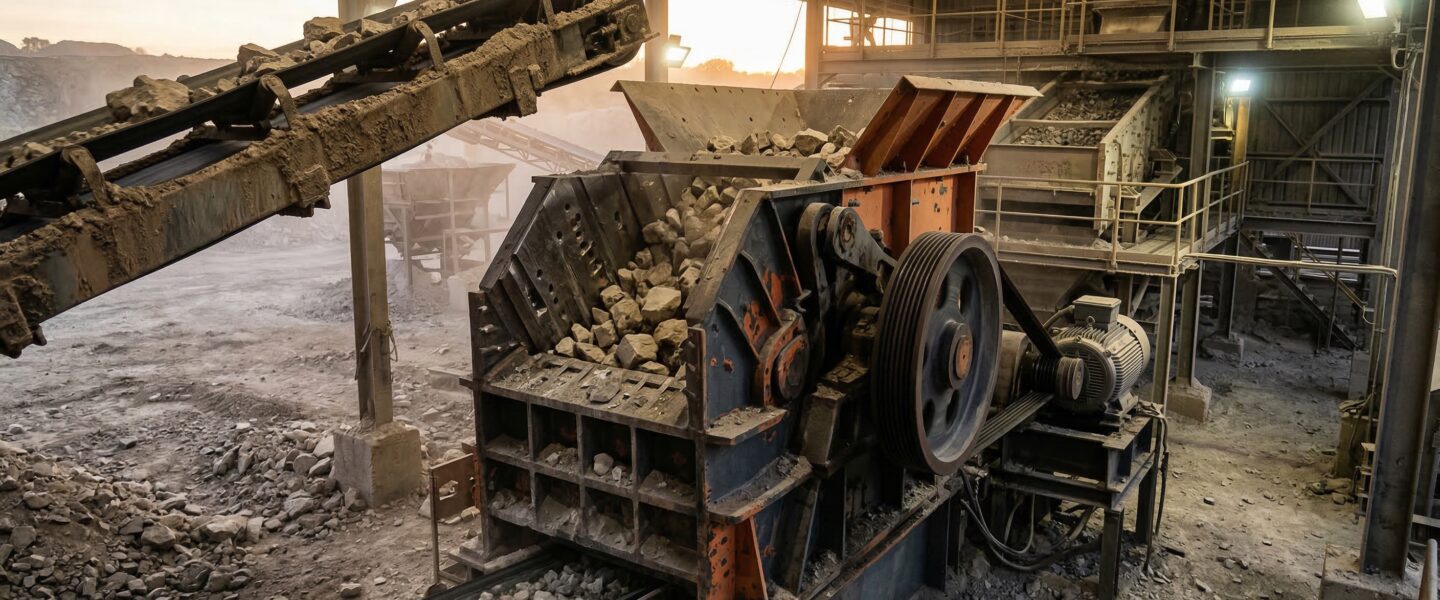
Crusher Mill | Forge Reliability

The Reliability Stakes for Crushers and Mills

Crushers and mills occupy a unique position in the reliability hierarchy of process industries. They are typically the throughput bottleneck — every ton of material that the downstream process handles must first pass through the crushing and grinding circuit. When a crusher or mill goes down unexpectedly, there is rarely enough surge capacity or alternate processing capability to maintain production. The facility either slows down or stops, and the production loss begins accumulating immediately.

The financial exposure extends beyond lost production. Catastrophic failures in crushers and mills frequently cause extensive secondary damage. A main bearing failure in a ball mill can damage the trunnion, shell, and gear drive. A toggle plate failure in a jaw crusher can damage the frame and swing jaw. A gearbox failure in a vertical roller mill can cascade into damage to the grinding table and roller assemblies. These secondary damage scenarios transform what would have been a planned repair measured in days into an emergency rebuild measured in weeks, with repair costs that can reach seven figures for large equipment.

Facilities with condition-based crusher and mill maintenance programs report 30-50% reductions in unplanned downtime and 20-35% reductions in total maintenance costs compared to reactive or calendar-based approaches.


What Are the Common Reliability Challenges in Crushers and Mills?

The operating environment of crushers and mills creates reliability challenges that are fundamentally different from those encountered in conventional rotating equipment. The combination of extreme mechanical loads, abrasive process materials, large physical scale, and continuous operation demands maintenance approaches specifically adapted to these conditions.

Bearing System Challenges

Bearings in crushers and mills operate under conditions that would be considered extreme by any rotating equipment standard. Main bearings in cone crushers and gyratory crushers support the full weight of the mantle assembly while absorbing enormous radial and axial forces from the crushing action. Ball mill trunnion bearings support loads measured in hundreds of tons while operating at low speeds that make conventional vibration analysis more challenging. These bearings are expensive, with lead times that can extend to months for large-format bearings used in primary crushers and large grinding mills.

Lubrication system reliability is inseparable from bearing reliability in these applications. Large crushers and mills use circulating oil lubrication systems with dedicated pumps, coolers, filters, and reservoirs. Any interruption in oil supply — from pump failure, filter blockage, cooler fouling, or control system malfunction — can result in bearing damage within minutes. Contamination ingress is a constant threat because the operating environment is inherently dusty, and seal systems must prevent abrasive particulate from entering the bearing housings despite the extreme operating conditions.

Structural and Liner Wear

Crusher liners, mill liners, and grinding media are consumable components that wear predictably but at rates influenced by feed material hardness, moisture content, size distribution, and operating parameters. The challenge is monitoring wear progression accurately enough to plan liner changes during scheduled maintenance windows rather than discovering excessive wear during an unplanned inspection after a performance decline. Worn liners not only reduce crushing or grinding efficiency — they also expose the underlying structural components (shells, frames, and mantles) to direct material contact, which can cause damage that is far more costly and time-consuming to repair than a planned liner replacement.

Structural cracking in crusher frames and mill shells is a high-consequence failure mode that develops from cyclic loading, thermal stress, and weld quality deficiencies. Regular structural inspections using ultrasonic testing and visual methods are essential for detecting cracks before they propagate to the point of catastrophic structural failure.

Drive System Reliability

Crusher and mill drive systems — encompassing motors, couplings, gearboxes, and pinion-gear assemblies — transmit enormous power under shock-loading conditions. Gearbox failures in grinding mills are among the most costly single-point failures in mineral processing. The gear teeth experience high contact stresses combined with shock loads from the grinding process, and the gearbox housing and bearing system must maintain precise alignment despite the dynamic forces transmitted through the structure. Drive motor reliability is equally critical, with motors in these applications frequently operating at 95% or more of rated capacity for extended periods, leaving minimal thermal margin for overload events.


How Does Condition Monitoring Apply to Crushers and Mills?

Condition monitoring for crushers and mills requires technologies and techniques adapted to the unique characteristics of this equipment class — low operating speeds, high background noise, extreme mechanical loads, and large physical scale. Standard monitoring approaches must be supplemented with specialized techniques to provide adequate fault detection coverage.

Vibration Analysis Adapted for Heavy Equipment

Vibration analysis remains the foundational monitoring technology for crushers and mills, but the analysis techniques differ from those used on conventional rotating equipment. Low-speed equipment — ball mills operating at 12-18 RPM, for example — generates vibration at frequencies too low for standard accelerometers to resolve reliably. Low-frequency accelerometers with extended bandwidth and higher sensitivity are required, along with longer data collection times to achieve the frequency resolution needed to identify bearing defect signatures at these low rotational speeds.

For gearbox monitoring on mills, spectral analysis focused on gear mesh frequency and its sidebands provides early detection of tooth wear, pitting, and cracking. Envelope analysis tuned to bearing defect frequencies detects early-stage bearing degradation in both the gearbox and the main trunnion or roller bearing assemblies. Online continuous monitoring is strongly recommended for primary crushers and large grinding mills because the P-F interval for some failure modes in these machines can be short relative to monthly route-based collection intervals, and the consequences of missing a developing fault are severe.

Online vibration monitoring on primary crushers and grinding mills typically pays for itself with a single avoided catastrophic failure — an event that can cost 10-50 times the monitoring system investment in lost production and repair costs.

Oil Analysis for Lubrication System Health

Oil analysis is indispensable for crusher and mill maintenance because the circulating oil system serves as both a lubrication medium and a diagnostic window into the health of every component it contacts. Wear metal analysis tracks bearing, gear, and bushing wear with element-specific resolution — iron from gears and bearings, copper and tin from bushings and thrust washers, chromium from hardened surfaces. Particle count and cleanliness class monitoring ensures that the filtration system is maintaining the oil cleanliness required for component longevity. Viscosity and oxidation trending detects oil degradation that reduces its load-carrying and heat-dissipation capabilities. Monthly oil sampling is recommended for critical crushers and mills, with more frequent sampling when analysis trends indicate developing issues.

Structural Monitoring and Inspection

Ultrasonic thickness testing of crusher frames, mill shells, and liners provides quantitative wear data that supports replacement planning and structural integrity assessment. Acoustic emission monitoring detects the high-frequency stress waves produced by crack initiation and propagation in structural components — providing detection of structural cracking earlier than conventional vibration analysis or visual inspection. Thermographic inspection identifies hot spots in electrical systems, bearing housings, and drive components that indicate developing thermal anomalies.


Maintenance Strategies That Work for Crushers and Mills

Crusher and mill maintenance strategies must balance the need for maximum availability against the practical constraints of maintaining large, heavily loaded equipment that operates in harsh environments. The most effective programs integrate condition-based monitoring with structured shutdown maintenance that addresses liner wear, structural condition, and drive system health.

Planned Shutdown Optimization

Planned shutdowns for liner changes, inspections, and component replacements are unavoidable in crusher and mill maintenance. The key is maximizing the productive work accomplished during each shutdown while minimizing shutdown duration. Condition monitoring data drives shutdown scope decisions — if vibration trends and oil analysis indicate that a gearbox bearing is approaching its replacement threshold, the bearing can be staged and the work included in the next planned shutdown rather than forcing a separate unplanned event. Effective shutdown planning based on condition data can reduce total annual shutdown hours by 15-25% by eliminating unnecessary work and consolidating necessary work into fewer, well-planned events.

Lubrication System Management

The circulating oil lubrication system requires its own maintenance program that addresses pump condition, filter element replacement, cooler cleaning, reservoir cleanliness, and oil condition management. Backup pumps and automatic switchover systems should be tested regularly to confirm they will function when needed. Oil condition should be managed through filtration and contamination control rather than time-based oil changes — maintaining clean, dry oil at the correct viscosity maximizes bearing and gear life regardless of calendar age.

Liner Management Programs

Liner wear monitoring using physical measurements, laser scanning, or embedded wear sensors tracks wear progression and supports optimized replacement timing. Changing liners too early wastes consumable life. Changing liners too late risks structural damage and unplanned downtime. The optimal replacement point balances remaining liner life against the next available maintenance window, the lead time for liner procurement, and the acceptable risk tolerance for the operation. Condition monitoring data from vibration and process parameters can supplement physical liner measurements by detecting the vibration signature changes and performance indicators that correlate with advancing liner wear.


What Results Can You Expect?

Facilities that partner with Forge Reliability for crusher and mill maintenance programs achieve results that directly impact the bottom line. Unplanned downtime decreases as condition monitoring provides the early warning needed to schedule repairs before failures occur — with typical reductions of 30-50% in unplanned downtime hours. Catastrophic failures and the secondary damage they cause become rare events rather than recurring crises. Maintenance costs decrease as planned, precision repairs replace emergency rebuilds, and spare parts are staged in advance rather than purchased on emergency procurement.

The throughput impact is equally significant. Every hour of avoided unplanned downtime translates directly to additional tons processed and additional revenue generated. For a primary crusher or large grinding mill, the production value of a single avoided failure event frequently exceeds the entire annual cost of the monitoring and maintenance program. Forge Reliability provides the specialized monitoring technology, diagnostic expertise, and maintenance program structure required to achieve and sustain these results on the most demanding equipment in your operation.

Failure Modes

Common Crusher & Mill Reliability & Maintenance Failure Modes

Engineers often arrive searching for specific failures. Here are the most common issues we diagnose and resolve.

Crusher Liner and Mantle Wear

Manganese steel liners and mantles in cone and gyratory crushers erode from abrasive ore contact, developing uneven wear profiles that reduce crushing efficiency, alter product gradation, and in severe cases allow tramp material to damage the crushing chamber.

Key symptom: Declining crusher throughput with coarsening product gradation and increasing power draw per ton of feed

Get Help With This →

Mill Trunnion Bearing Degradation

Trunnion bearings supporting the rotating mill shell carry enormous radial loads and degrade from inadequate oil film thickness, contamination, and thermal cycling, eventually scoring bearing surfaces and risking catastrophic mill shell drop.

Key symptom: Rising trunnion bearing temperature with increasing oil drain temperature and metallic debris in oil samples

Get Help With This →

Gear and Pinion Tooth Damage

The open girth gear and pinion drive on grinding mills develop tooth pitting, root cracking, and scoring from misalignment, overloading, and lubricant film breakdown, with tooth breakage forcing extended outages for field repair or replacement.

Key symptom: Audible gear noise changes with vibration spectrum showing sidebands around gear mesh frequency and visual tooth surface damage

Get Help With This →

Crusher Hydraulic System Failure

Hydraulic systems controlling crusher tramp iron release, setting adjustment, and clamping pressure degrade from fluid contamination, seal wear, and accumulator precharge loss, causing the crusher to pass tramp material or lose setting control.

Key symptom: Crusher setting drift with hydraulic pressure fluctuations and visible oil leaks at cylinder seals

Get Help With This →

Mill Shell Liner Bolt Failure

Shell liner bolts secure grinding media containment liners to the mill shell, failing from fatigue, corrosion, and impact loading, allowing liners to shift or detach and causing catastrophic damage to the mill shell and downstream equipment.

Key symptom: Loose liner movement audible during mill rotation with liner bolt heads visible in mill discharge

Get Help With This →

Diagnostic Methods

Diagnostic Techniques We Use

Vibration Analysis on Drive Components

Accelerometers on mill and crusher drive motors, gearboxes, pinion bearings, and trunnion housings detect bearing defects, gear mesh anomalies, imbalance, and structural looseness that precede mechanical failures.

Oil Analysis for Lubrication Systems

Sampling trunnion bearing oil, gearbox lubricant, and hydraulic fluid for wear metals, particle counts, viscosity, moisture, and contaminant levels tracks component wear and lubricant condition across the comminution circuit.

Acoustic Emission Monitoring

High-frequency acoustic sensors on mill shells detect changes in grinding media charge condition, liner wear patterns, and ball-on-liner impacts that indicate media loading adjustments are needed to maintain grinding efficiency.

Power Draw and Energy Trending

Continuous monitoring of crusher and mill power consumption relative to feed tonnage and product size quantifies comminution efficiency and detects mechanical issues like worn liners, ball charge depletion, or classification circuit upsets.

Laser Scanning for Liner Wear Profiles

3D laser scanning of crusher and mill liners during brief operational pauses generates wear profile maps that predict remaining liner life, optimize change-out timing, and identify abnormal wear patterns indicating feed distribution problems.

Services

Services for Crusher & Mill Reliability & Maintenance

Service

Asset Management for Crushers & Mills

Asset Management programs for Crushers & Mills, targeting common failure modes and degradation mechanisms.

Learn More →
Service

CMMS Implementation for Crushers & Mills

CMMS Implementation programs for Crushers & Mills, targeting common failure modes and degradation mechanisms.

Learn More →
Service

Condition Monitoring for Crushers and Mills

Our team establishes continuous condition monitoring programs for crushers and mills, targeting liner wear, bearing overheating, and related degradation...

Learn More →
Service

Dynamic Balancing for Crushers & Mills

Dynamic Balancing programs for Crushers & Mills, targeting common failure modes and degradation mechanisms.

Learn More →
Service

Equipment Condition Assessment for Crushers and Mills

Our team provides comprehensive condition assessments for crushers and mills, targeting liner wear, bearing overheating, and related degradation mechanisms...

Learn More →
Service

Equipment Maintenance for Crushers & Mills

Equipment Maintenance programs for Crushers & Mills, targeting common failure modes and degradation mechanisms.

Learn More →
Service

FMEA for Crushers & Mills

FMEA programs for Crushers & Mills, targeting common failure modes and degradation mechanisms.

Learn More →
Service

Maintenance Outsourcing for Crushers & Mills

Maintenance Outsourcing programs for Crushers & Mills, targeting common failure modes and degradation mechanisms.

Learn More →
Service

Maintenance Planning for Crushers & Mills

Maintenance Planning programs for Crushers & Mills, targeting common failure modes and degradation mechanisms.

Learn More →
Service

Motor Current Analysis for Crushers & Mills

Motor Current Analysis programs for Crushers & Mills, targeting common failure modes and degradation mechanisms.

Learn More →
Service

Oil & Lubrication Analysis for Crushers & Mills

Oil & Lubrication Analysis programs for Crushers & Mills, targeting common failure modes and degradation mechanisms.

Learn More →
Service

Plant Optimization for Crushers & Mills

Plant Optimization programs for Crushers & Mills, targeting common failure modes and degradation mechanisms.

Learn More →
Service

Precision Shaft Alignment for Crushers & Mills

Precision Shaft Alignment programs for Crushers & Mills, targeting common failure modes and degradation mechanisms.

Learn More →
Service

Predictive Maintenance for Crushers and Mills

Our team applies predictive maintenance technologies to crushers and mills, targeting liner wear, bearing overheating, and related degradation mechanisms...

Learn More →
Service

Preventive Maintenance for Crushers & Mills

Preventive Maintenance programs for Crushers & Mills, targeting common failure modes and degradation mechanisms.

Learn More →
Service

RCM for Crushers & Mills

RCM programs for Crushers & Mills, targeting common failure modes and degradation mechanisms.

Learn More →
Service

Reliability Consulting for Crushers and Mills

Our team applies reliability consulting methodology to crushers and mills, targeting liner wear, bearing overheating, and related degradation mechanisms...

Learn More →
Service

Root Cause Analysis for Crushers and Mills

Our team investigates failures in crushers and mills, targeting liner wear, bearing overheating, and related degradation mechanisms before they cause...

Learn More →
Service

Thermographic Inspection for Crushers & Mills

Thermographic Inspection programs for Crushers & Mills, targeting common failure modes and degradation mechanisms.

Learn More →
Service

Ultrasonic Testing for Crushers & Mills

Ultrasonic Testing programs for Crushers & Mills, targeting common failure modes and degradation mechanisms.

Learn More →
Service

Vibration Analysis for Crushers & Mills

Vibration Analysis programs for Crushers & Mills, targeting common failure modes and degradation mechanisms.

Learn More →

Industries

Industries That Rely on Crusher & Mill Reliability & Maintenance

Industry

Crushers & Mills Reliability for Automotive

Crushers & Mills reliability and predictive maintenance programs designed for automotive operating environments and compliance requirements.

Learn More →
Industry

Crushers & Mills Reliability for Cement & Aggregates

Crushers & Mills reliability and predictive maintenance programs designed for cement & aggregates operating environments and compliance requirements.

Learn More →
Industry

Crushers & Mills Reliability for Chemical Processing

Crushers & Mills reliability and predictive maintenance programs designed for chemical processing operating environments and compliance requirements.

Learn More →
Industry

Crushers & Mills Reliability for Food & Beverage

Crushers & Mills reliability and predictive maintenance programs designed for food & beverage operating environments and compliance requirements.

Learn More →
Industry

Crushers & Mills Reliability for Industrial Refrigeration

Crushers & Mills reliability and predictive maintenance programs designed for industrial refrigeration operating environments and compliance requirements.

Learn More →
Industry

Crushers & Mills Reliability for Logistics & Distribution

Crushers & Mills reliability and predictive maintenance programs designed for logistics & distribution operating environments and compliance requirements.

Learn More →
Industry

Crushers & Mills Reliability for Manufacturing

Crushers & Mills reliability and predictive maintenance programs designed for manufacturing operating environments and compliance requirements.

Learn More →
Industry

Crushers & Mills Reliability for Metals & Steel

Crushers & Mills reliability and predictive maintenance programs designed for metals & steel operating environments and compliance requirements.

Learn More →
Industry

Crushers & Mills Reliability for Mining

Crushers & Mills reliability and predictive maintenance programs designed for mining operating environments and compliance requirements.

Learn More →
Industry

Crushers & Mills Reliability for Oil & Gas

Crushers & Mills reliability and predictive maintenance programs designed for oil & gas operating environments and compliance requirements.

Learn More →
Industry

Crushers & Mills Reliability for Pharmaceutical

Crushers & Mills reliability and predictive maintenance programs designed for pharmaceutical operating environments and compliance requirements.

Learn More →
Industry

Crushers & Mills Reliability for Plastics & Rubber

Crushers & Mills reliability and predictive maintenance programs designed for plastics & rubber operating environments and compliance requirements.

Learn More →
Industry

Crushers & Mills Reliability for Power Generation

Crushers & Mills reliability and predictive maintenance programs designed for power generation operating environments and compliance requirements.

Learn More →
Industry

Crushers & Mills Reliability for Pulp & Paper

Crushers & Mills reliability and predictive maintenance programs designed for pulp & paper operating environments and compliance requirements.

Learn More →
Industry

Crushers & Mills Reliability for Water & Wastewater

Crushers & Mills reliability and predictive maintenance programs designed for water & wastewater operating environments and compliance requirements.

Learn More →

Technical Reference

Technical Overview

Crushers and mills experience extreme impact loading and abrasive wear conditions. Key failure modes include liner wear, bearing failures from shock loads, drive system degradation, and structural fatigue. Vibration monitoring, oil analysis, and regular inspection programs are essential for maintaining reliable operation.

Common Questions

FAQ

Uneven liner wear is most commonly caused by asymmetric feed distribution into the crushing chamber, segregation of fines and coarse material in the feed, and worn or damaged feed distributor plates. Improper crusher setting for the feed material characteristics and operating with a partially choke-fed chamber also accelerate localized wear. Regular liner profile measurement using laser scanning identifies uneven patterns early, allowing feed system corrections before liner life is significantly reduced.

Limited Availability
We onboard a limited number of new facilities each quarter. Secure your assessment slot before our current availability closes. Reserve Your Spot →

Get Started

Request a Free Reliability Assessment

Tell us about your equipment and facility. Our reliability team will review your situation and recommend a tailored reliability program — no obligation.

Free initial assessment
Response within 1 business day
No obligation or commitment

No obligation. Typical response within 24 hours.

Having Problems With Your Crushers & Mills?

Claim Your Free Assessment →