Home Equipment Fans & Blowers Dust Collection Systems

Dust Collection Systems

Fan vibration analysis, differential pressure monitoring, and filter performance tracking for dust collection systems.

Dust collection systems protect worker health, maintain regulatory compliance, and preserve product quality across manufacturing, processing, and materials handling operations. When these systems perform well, they are invisible — quietly capturing airborne particulate before it reaches breathing zones, accumulates on equipment, or contaminates products. When they fail, the consequences are immediate and costly: regulatory citations, production shutdowns, accelerated equipment wear throughout the facility, and in the worst cases, combustible dust explosions that threaten lives. Effective dust collection maintenance is not optional housekeeping — it is a core reliability and safety discipline that demands the same structured approach applied to any critical production asset.
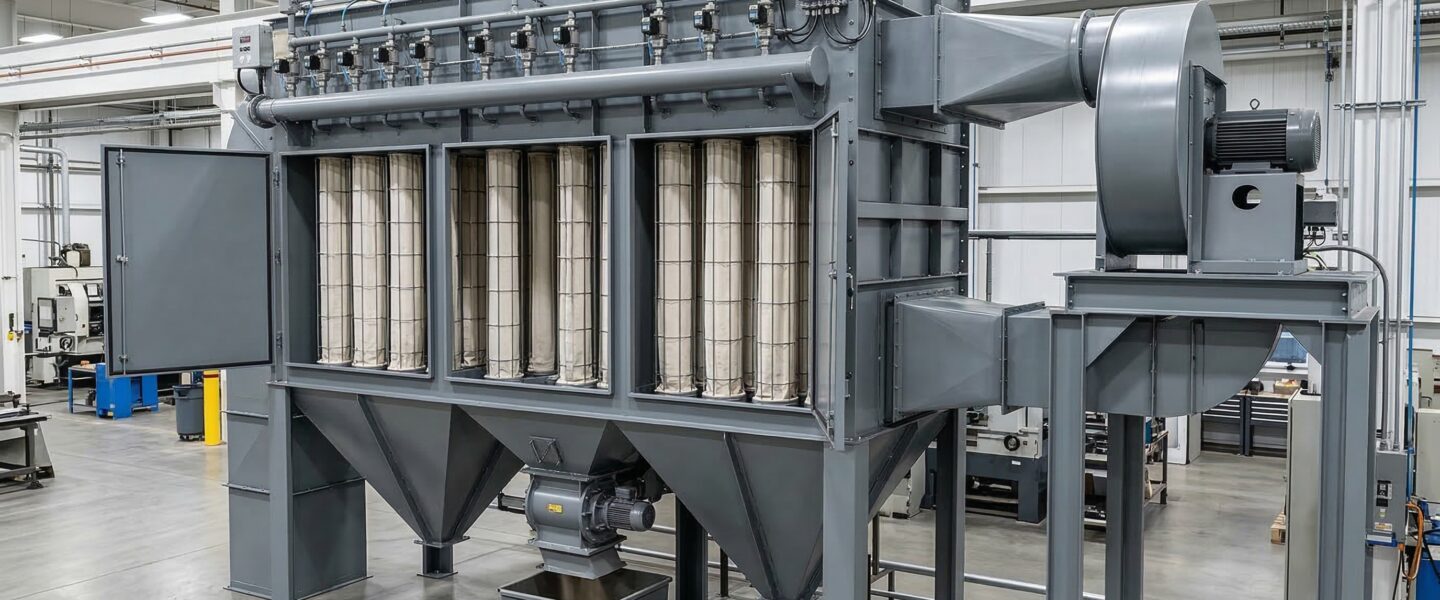
Dust Collection System Reliability & Maintenance — industrial maintenance and reliability services

Understanding Dust Collection System Reliability Challenges

Dust collection systems face a combination of mechanical, aerodynamic, and materials-handling challenges that make them uniquely difficult to maintain. The system must move large volumes of air through ductwork at velocities high enough to keep particulate entrained — typically 3,500 to 4,500 feet per minute for most industrial dusts — while maintaining sufficient negative pressure at each pickup point to capture dust at the source. Any degradation in system performance — a worn fan impeller, a leaking duct joint, blinded filter media, a malfunctioning rotary airlock — shifts the balance and reduces capture efficiency at the points furthest from the fan.

The abrasive nature of the material being collected is a primary wear driver. Systems handling silica,ite,ite, or mineral dusts experience accelerated erosion on ductwork elbows, fan impellers, and any component where the airstream changes direction. A dust collection fan handling abrasive material may lose 10-15% of its airflow capacity within 18-24 months due to impeller erosion alone if not monitored. This degradation is gradual — operators rarely notice the slow decline in capture velocity until dust begins escaping at collection hoods or accumulating in work areas.

NFPA 652 requires facilities handling combustible dust to perform a dust hazard analysis, and maintaining dust collection system performance is a direct compliance requirement — system degradation is not just a maintenance issue, it is a regulatory and safety liability.

Filter Media and Cleaning System Degradation

Baghouse and cartridge collector performance depends entirely on the condition and cleaning effectiveness of the filter media. New filter media operates with low pressure drop and high filtration efficiency. Over time, the media loads with particulate that is not fully removed by the pulse-jet or reverse-air cleaning system, and the baseline pressure drop — the pressure drop immediately after a cleaning cycle — gradually increases. This phenomenon, called residual pressure drop buildup, is the primary indicator of filter media aging. When residual pressure drop exceeds the system’s design capacity, airflow decreases, capture velocity at hoods drops below effective levels, and the system can no longer perform its function regardless of fan condition.

The cleaning system itself requires ongoing dust collection maintenance. Pulse-jet systems depend on compressed air delivered at the correct pressure, through properly functioning solenoid valves, with the correct pulse duration and sequencing timing. A single failed solenoid valve means one row of bags or cartridges is not being cleaned, which accelerates media blinding in that section and increases the load on adjacent sections. Compressed air quality is critical — oil and moisture in the pulse air contaminate filter media and permanently reduce its permeability. Facilities that invest in proper compressed air treatment for their dust collectors consistently achieve 30-50% longer filter media life compared to those using untreated plant air.


Condition Monitoring for Dust Collection Systems

Dust collection maintenance is most effective when it transitions from calendar-based filter changes and annual inspections to a condition-driven approach that uses real operating data to guide maintenance decisions.

Differential Pressure Monitoring

The single most important parameter in dust collector health is differential pressure across the filter media — the difference between the dirty air plenum pressure and the clean air plenum pressure. Trending this value over time reveals both the short-term cleaning cycle effectiveness and the long-term media aging trajectory. Effective monitoring requires capturing both the peak pressure (just before cleaning) and the residual pressure (just after cleaning) to distinguish between normal dust cake loading and irreversible media blinding. Establishing baseline differential pressure values when new media is installed provides the reference point against which all future readings are compared. When residual pressure approaches 70-80% of the maximum allowable differential pressure, filter replacement should be planned regardless of calendar age.

Airflow and Velocity Monitoring

Transport velocity in ductwork is the second critical parameter. Pitot tube traverses at key locations in the duct system — particularly at the main trunk line and at branch entries serving the most distant or most critical pickup points — provide direct measurement of whether the system is maintaining adequate conveying velocity. Velocities that drop below the minimum transport velocity for the specific dust being handled result in material settling in the ductwork, which further restricts airflow in a self-reinforcing cycle of degradation. Periodic velocity measurements at quarterly or semi-annual intervals catch this decline before duct accumulation becomes a significant cleaning or safety problem.

Vibration Analysis on Fans and Drives

The fan is the heart of the dust collection system, and its mechanical condition directly determines system performance. Vibration monitoring on dust collection fans is essential because these fans operate under conditions that promote rapid mechanical degradation — abrasive particulate erodes the impeller unevenly, creating imbalance that worsens progressively. Monthly vibration data collection with spectral analysis detects developing imbalance, bearing wear, shaft misalignment, and structural looseness. Fan impeller erosion specifically manifests as increasing 1X vibration amplitude with a change in phase angle that tracks the progressive mass loss from erosion. Catching this early enough allows planned impeller repair or replacement rather than catastrophic fan failure.

A well-instrumented dust collection system with differential pressure trending, periodic velocity surveys, and fan vibration monitoring provides 3-6 months of advance warning for the failure modes that most commonly cause system shutdowns.


Maintenance Strategies That Deliver Results

The most effective dust collection maintenance programs combine preventive maintenance tasks performed on fixed intervals with condition-based interventions triggered by monitoring data. Neither approach alone is sufficient — some components require calendar-based attention regardless of measured condition, while others should be maintained based on actual deterioration rather than arbitrary schedules.

Preventive Maintenance Essentials

Certain dust collection maintenance tasks should be performed on a fixed schedule because the failure modes they address do not provide measurable warning signs through condition monitoring. These include visual inspection of ductwork joints, access doors, and expansion joints for air leaks — even small leaks reduce system performance and can create uncontrolled dust emission points. Rotary airlock inspection for wear on vanes, housing, and shaft seals prevents air ingress that reduces collector efficiency and can create combustible dust hazards. Compressed air system maintenance including dryer function verification, filter element replacement, and pressure regulator calibration ensures the pulse cleaning system operates at design parameters. Hopper level monitoring system verification confirms that the material discharge system is functioning and hoppers are not accumulating material that can bridge and overload the filter media.

Condition-Based Filter Management

Replacing filter bags or cartridges on a fixed annual or biannual schedule is one of the most common and most expensive mistakes in dust collection maintenance. Some filter sets last three to five years under favorable conditions, while others may require replacement within six months in aggressive applications. Condition-based replacement using differential pressure trending, opacity monitoring, and periodic media sampling eliminates both premature replacement of serviceable media and continued operation with degraded media that compromises system performance. The cost savings from optimized filter replacement timing alone often justifies the investment in proper monitoring instrumentation.


Safety and Compliance Considerations

Dust collection system maintenance carries significant safety implications that extend beyond normal equipment reliability concerns. Combustible dust hazards are present in any system collecting organic materials, metals, or other combustible particulate. NFPA 652 and the material-specific NFPA standards (NFPA 61 for agricultural dusts, NFPA 484 for combustible metals, NFPA 654 for chemical and plastics dusts) establish requirements for dust collection system design, maintenance, and inspection that are enforceable by OSHA under the General Duty Clause.

Explosion protection systems — including explosion vents, suppression systems, and isolation devices — require inspection, testing, and maintenance on manufacturer-specified intervals. These are life-safety systems, and their maintenance must be documented, performed by qualified personnel, and verified through functional testing. A dust collector with a malfunctioning explosion vent or a suppression system with expired agent is not just a maintenance deficiency — it is a regulatory violation and a serious hazard. Integrating explosion protection system maintenance into the dust collection maintenance program ensures these critical safety devices receive the attention they require.

Emissions monitoring compliance adds another layer of maintenance responsibility. Facilities operating under air permits typically have opacity limits or particulate emission rate limits that require the dust collection system to perform at or above its design efficiency. Bag leak detection systems or continuous opacity monitors provide real-time compliance assurance and early warning of media failures that could result in permit exceedances. Maintaining these monitoring instruments is itself a maintenance requirement — a non-functional bag leak detector can result in regulatory penalties even if the collector is operating properly.


What Results Can You Expect?

Transitioning from reactive or calendar-based dust collection maintenance to a condition-monitored, reliability-focused approach produces measurable improvements in system performance, maintenance cost, and compliance posture. Based on our experience across manufacturing, processing, and materials handling facilities, the following outcomes are typical within the first 12-18 months of program implementation.

  • Filter media costs reduced by 20-35% through condition-based replacement that eliminates premature changeouts while preventing operation with degraded media
  • System downtime reduced by 40-55% as fan degradation, cleaning system faults, and airflow restrictions are detected and corrected before they cause system shutdowns
  • Capture efficiency improved by 10-20% through systematic identification and correction of ductwork leaks, velocity deficiencies, and hood design inadequacies
  • Fan energy consumption reduced by 8-15% by maintaining clean filter media, eliminating ductwork restrictions, and correcting fan mechanical conditions that reduce aerodynamic efficiency
  • Regulatory compliance incidents eliminated or reduced by 70-85% through proactive monitoring of emissions performance and explosion protection system readiness
  • Ductwork cleaning frequency reduced by 25-40% by maintaining proper transport velocities that prevent material accumulation in the first place

Dust collection systems are among the most maintenance-sensitive assets in any facility. Their performance degrades gradually and across multiple components simultaneously, which makes them easy to neglect until a compliance event or safety incident forces attention. A proactive dust collection maintenance program reverses this pattern — transforming the dust collection system from a chronic source of problems into a reliable, compliant, and cost-effective operation that protects both workers and production.

Failure Modes

Common Dust Collection System Reliability & Maintenance Failure Modes

Engineers often arrive searching for specific failures. Here are the most common issues we diagnose and resolve.

Filter Media Blinding and Failure

Bag and cartridge filter media blind from fine particle depth penetration, moisture absorption, and oil mist exposure. Over time, cleaning can no longer restore acceptable differential pressure, and continued operation risks bag rupture from excessive pressure loading.

Key symptom: Differential pressure across collector rising steadily with cleaning system operating normally and emissions visible at stack

Get Help With This →

Pulse Cleaning System Malfunction

Solenoid valves stick or fail closed, compressed air header pressure drops below minimum, diaphragm valves leak, and pulse timer circuits fail — reducing or eliminating the cleaning pulses that remove the dust cake from filter surfaces.

Key symptom: Differential pressure rising above normal range with pulse valves not firing audibly or air header pressure below specification

Get Help With This →

Fan Bearing and Impeller Degradation

Collection system fans operate in abrasive dust-laden air streams that erode impeller blades, wear inlet cones, and contaminate bearings. Erosion causes progressive imbalance while bearing contamination leads to accelerated fatigue.

Key symptom: Increasing fan vibration at 1x running speed with declining airflow at system ductwork hoods

Get Help With This →

Ductwork Erosion and Leakage

Abrasive particulate erodes duct walls at bends, transitions, and branch entries. Leaking ductwork reduces capture velocity at hoods and allows dust to deposit in low-velocity sections where it creates fire and explosion hazards.

Key symptom: Visible dust escape at hood openings with audible air leaks at duct joints and material accumulation in duct sections

Get Help With This →

Rotary Airlock Valve Failure

Rotary airlock valves at collector hoppers maintain the pressure seal while discharging collected material. Rotor tip wear, bearing failure, and material bridging in the hopper allow air leakage that reduces collection efficiency and can cause re-entrainment.

Key symptom: Dust leaking past airlock into discharge conveyor with visible air leakage and material bridging above the valve

Get Help With This →

Diagnostic Methods

Diagnostic Techniques We Use

Differential Pressure Monitoring

Continuous measurement of pressure drop across the filter media tracks dust cake buildup, cleaning effectiveness, and filter media condition. Trending differential pressure over time predicts filter replacement timing and detects cleaning system faults.

Stack Emissions Monitoring

Opacity monitors or particulate concentration sensors at the collector exhaust detect bag failures, filter bypass, and cleaning system problems through real-time emissions measurement that directly indicates compliance status.

Fan Vibration Analysis

Vibration monitoring on collection system fan bearings detects imbalance from erosion and buildup, bearing defects from contamination, and structural looseness from foundation degradation in the high-vibration dust collection environment.

Compressed Air System Monitoring

Monitoring pulse header pressure, solenoid valve function, and air consumption rate verifies that the cleaning system delivers adequate pulse energy to each row of filters and identifies failed valves or leaking diaphragms.

Services

Services for Dust Collection System Reliability & Maintenance

Service

Asset Management for Dust Collection Systems

Asset Management programs for Dust Collection Systems, targeting common failure modes and degradation mechanisms.

Learn More →
Service

CMMS Implementation for Dust Collection Systems

CMMS Implementation programs for Dust Collection Systems, targeting common failure modes and degradation mechanisms.

Learn More →
Service

Condition Monitoring for Dust Collection Systems

Our team establishes continuous condition monitoring programs for dust collection systems, targeting filter bag blinding, pulse valve failures, and related...

Learn More →
Service

Dynamic Balancing for Dust Collection Systems

Dynamic Balancing programs for Dust Collection Systems, targeting common failure modes and degradation mechanisms.

Learn More →
Service

Equipment Condition Assessment for Dust Collection Systems

Our team provides comprehensive condition assessments for dust collection systems, targeting filter bag blinding, pulse valve failures, and related...

Learn More →
Service

Equipment Maintenance Programs for Dust Collection Systems

Forge Reliability delivers structured maintenance programs for dust collection systems, targeting filter bag failures, fan bearing wear, ductwork erosion...

Learn More →
Service

FMEA for Dust Collection Systems

FMEA programs for Dust Collection Systems, targeting common failure modes and degradation mechanisms.

Learn More →
Service

Maintenance Outsourcing for Dust Collection Systems

Forge Reliability delivers outsourced maintenance for dust collection systems, targeting filter bag failures, fan bearing wear, ductwork erosion through...

Learn More →
Service

Maintenance Planning for Dust Collection Systems

Maintenance Planning programs for Dust Collection Systems, targeting common failure modes and degradation mechanisms.

Learn More →
Service

Motor Current Analysis for Dust Collection Systems

Motor Current Analysis programs for Dust Collection Systems, targeting common failure modes and degradation mechanisms.

Learn More →
Service

Oil & Lubrication Analysis for Dust Collection Systems

Oil & Lubrication Analysis programs for Dust Collection Systems, targeting common failure modes and degradation mechanisms.

Learn More →
Service

Plant Optimization for Dust Collection Systems

Forge Reliability delivers plant-level optimization for dust collection systems, targeting filter bag failures, fan bearing wear, ductwork erosion through...

Learn More →
Service

Precision Shaft Alignment for Dust Collection Systems

Precision Shaft Alignment programs for Dust Collection Systems, targeting common failure modes and degradation mechanisms.

Learn More →
Service

Predictive Maintenance for Dust Collection Systems

Our team applies predictive maintenance technologies to dust collection systems, targeting filter bag blinding, pulse valve failures, and related...

Learn More →
Service

Preventive Maintenance for Dust Collection Systems

Preventive Maintenance programs for Dust Collection Systems, targeting common failure modes and degradation mechanisms.

Learn More →
Service

RCM for Dust Collection Systems

RCM programs for Dust Collection Systems, targeting common failure modes and degradation mechanisms.

Learn More →
Service

Reliability Consulting for Dust Collection Systems

Our team applies reliability consulting methodology to dust collection systems, targeting filter bag blinding, pulse valve failures, and related degradation...

Learn More →
Service

Root Cause Analysis for Dust Collection Systems

Our team investigates failures in dust collection systems, targeting filter bag blinding, pulse valve failures, and related degradation mechanisms before...

Learn More →
Service

Thermographic Inspection for Dust Collection Systems

Thermographic Inspection programs for Dust Collection Systems, targeting common failure modes and degradation mechanisms.

Learn More →
Service

Ultrasonic Testing for Dust Collection Systems

Ultrasonic Testing programs for Dust Collection Systems, targeting common failure modes and degradation mechanisms.

Learn More →
Service

Vibration Analysis for Dust Collection Systems

Vibration Analysis programs for Dust Collection Systems, targeting common failure modes and degradation mechanisms.

Learn More →

Industries

Industries That Rely on Dust Collection System Reliability & Maintenance

Industry

Dust Collection System Reliability for Automotive

Dust collection reliability for automotive manufacturing managing weld fume exposure, paint booth airflow, and multi-station body shop collection.

Learn More →
Industry

Dust Collection System Reliability for Cement

Dust collection reliability for cement and aggregates managing extreme particulate loading, kiln baghouse performance, and plant-wide emission compliance.

Learn More →
Industry

Dust Collection System Reliability for Chemical Processing

Dust collection reliability for chemical processing managing toxic, combustible, and corrosive dust hazards with integrated safety monitoring.

Learn More →
Industry

Dust Collection System Reliability for Food & Beverage

Dust collection reliability for food and beverage managing combustible dust explosion risk, food safety compliance, and allergen cross-contamination prevention.

Learn More →
Industry

Dust Collection System Reliability for Industrial Refrigeration

Dust collection reliability for industrial refrigeration managing insulation fiber dust, cold-temperature operation effects, and food storage contamination...

Learn More →
Industry

Dust Collection System Reliability for Logistics

Dust collection reliability for logistics and distribution managing cardboard dust, packaging debris, and warehouse air quality across seasonal demand cycles.

Learn More →
Industry

Dust Collection System Reliability for Manufacturing

Dust collection reliability for manufacturing maintaining worker air quality, OSHA compliance, and combustible dust risk management.

Learn More →
Industry

Dust Collection System Reliability for Metals & Steel

Dust collection reliability for metals and steel ensuring EAF fume capture, emission compliance, and filter media management under extreme abrasive loading.

Learn More →
Industry

Dust Collection System Reliability for Mining

Dust collection reliability for mining managing respirable silica exposure, coal dust combustibility, and harsh-environment equipment durability.

Learn More →
Industry

Dust Collection System Reliability for Oil & Gas

Dust collection reliability for oil and gas managing catalyst fines recovery, coke dust combustibility, and hazardous area classified operation.

Learn More →
Industry

Dust Collection System Reliability for Pharmaceutical

Pharmaceutical dust collection reliability ensuring potent compound containment, cross-contamination prevention, and cGMP-compliant operation.

Learn More →
Industry

Dust Collection System Reliability for Plastics

Dust collection reliability for plastics processing managing combustible polymer dust safety, static charge control, and respirable particulate capture.

Learn More →
Industry

Dust Collection System Reliability for Power Generation

Dust collection reliability for power generation ensuring particulate emission compliance, ESP/baghouse performance, and coal dust explosion safety.

Learn More →
Industry

Dust Collection System Reliability for Pulp & Paper

Dust collection reliability for pulp and paper managing combustible wood dust, high-humidity filter performance, and corrosive lime dust collection.

Learn More →
Industry

Dust Collection System Reliability for Water & Wastewater

Dust collection reliability for water and wastewater managing lime dust, combustible biosolids dust, and treatment chemical handling safety.

Learn More →

Technical Reference

Technical Overview

Baghouse differential pressure should typically run 3-6 inches water gauge. Sustained readings above 6" indicate bags blinding off, failed pulse valves, or compressed air supply issues. Fan vibration trending should include both radial and axial measurements — material buildup on fan wheels creates imbalance that shows up in radial vibration first. Rotary airlock valve tip clearance should stay under 0.010" to prevent air leakage that reduces system efficiency.

Common Questions

FAQ

When the collector cannot maintain differential pressure below the manufacturer maximum (typically 6-8 inches WC for baghouses) with the cleaning system operating correctly, the filter media is at end of life and requires replacement. Consistently high residual differential pressure immediately after cleaning pulses — above 3-4 inches WC — indicates that particulate has penetrated the media and cleaning cannot remove it. This is the most reliable indicator that bags or cartridges need replacement.

Limited Availability
We onboard a limited number of new facilities each quarter. Secure your assessment slot before our current availability closes. Reserve Your Spot →

Get Started

Request a Free Reliability Assessment

Tell us about your equipment and facility. Our reliability team will review your situation and recommend a tailored reliability program — no obligation.

Free initial assessment
Response within 1 business day
No obligation or commitment

No obligation. Typical response within 24 hours.

Dust Collection System Reliability Affecting Production?

We'll assess your dust collection equipment and build a monitoring program that prevents compliance issues and unplanned shutdowns.

Claim Your Free Assessment →