Home Equipment Mechanical Systems Industrial Robots

Industrial Robots

Reducer vibration analysis, servo motor diagnostics, and dress package management for industrial robotic cells.

Industrial robots have transformed manufacturing by delivering unmatched speed, precision, and repeatability across welding, assembly, material handling, painting, and inspection applications. Yet these sophisticated electromechanical systems are far from maintenance-free. Gearboxes wear, servo motors degrade, cables fatigue, and calibration drifts — all of which erode the performance advantages that justified the automation investment in the first place. A structured approach to industrial robot maintenance is essential for protecting both the productivity gains and the significant capital tied up in robotic systems.
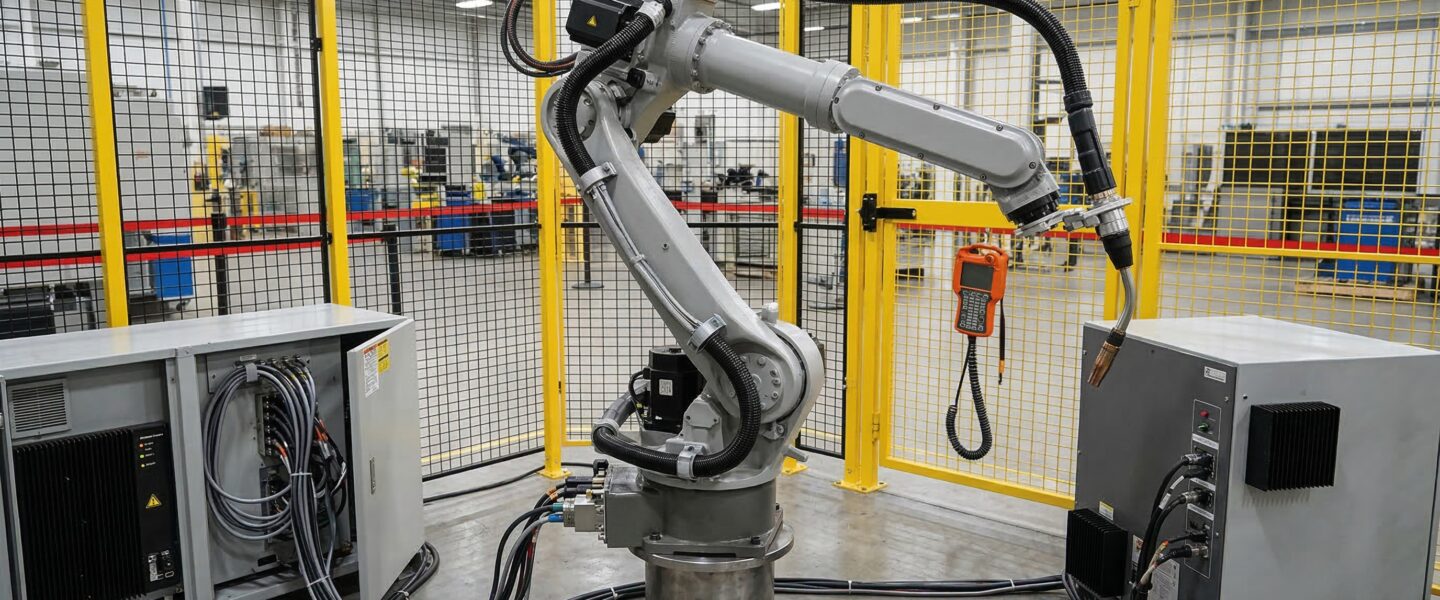
Industrial Robot Reliability & Maintenance — industrial maintenance and reliability services

The True Cost of Robot Downtime

When a robot goes down in a modern manufacturing cell, the impact rarely stops at that single station. Robots are typically integrated into larger production systems where they serve as bottleneck operations — a welding robot feeding an assembly line, a palletizing robot at the end of a packaging line, or a material handling robot feeding a machining center. When that robot stops, everything downstream stops with it.

Automotive manufacturers estimate that unplanned robotic cell downtime costs between $10,000 and $25,000 per hour when factoring in lost production, idle labor, and schedule disruption. Even in lower-volume operations, unplanned robot failures are disproportionately expensive because they require specialized technicians, OEM parts with long lead times, and often involve complex re-teaching and recalibration before the robot can return to production.

The challenge is that many facilities still treat robots as “set and forget” assets, performing only basic cleaning and occasional backup routines. This reactive posture means problems are only discovered when they manifest as production defects, unexpected shutdowns, or catastrophic component failures. By that point, the maintenance cost is many times what a proactive approach would have required.

Unplanned robotic cell downtime can cost $10,000-$25,000 per hour in automotive manufacturing. Proactive industrial robot maintenance programs reduce these incidents by catching mechanical and electrical degradation months before failure.


What Are the Common Reliability Challenges in Robotic Systems?

Industrial robots combine precision mechanical systems, high-performance electrical drives, complex control software, and application-specific tooling. Each layer introduces distinct failure modes that require targeted monitoring approaches.

Gearbox and Reducer Wear

Every robot axis is driven through a precision gearbox — typically harmonic drives, cycloidal reducers, or planetary gear sets. These components endure continuous cyclic loading, often with frequent direction reversals, and their wear directly affects positioning accuracy and repeatability. A gearbox with excessive backlash produces parts that drift out of tolerance, weld seams that wander, or pick-and-place operations that miss their targets. Vibration analysis is the most effective tool for detecting gear wear, bearing degradation, and lubrication issues in robot reducers. Changes in vibration signature often appear 4-8 months before the gearbox reaches a failure state.

Servo Motor and Drive Degradation

Servo motors operate under demanding duty cycles with rapid acceleration, deceleration, and frequent starts. Bearing wear, winding insulation breakdown, encoder degradation, and brake wear all progress over the robot’s service life. Motor current analysis can detect winding faults and rotor bar issues in early stages. Monitoring drive fault logs and following current consumption trends reveals motors that are working harder than normal — often an indicator of mechanical binding, increased friction from gearbox wear, or process loads that have crept above design parameters.

Cable and Harness Fatigue

The cable bundles routed through a robot’s arm endure thousands of flex cycles per day. Power cables, signal wires, encoder cables, and application-specific connections (welding cables, air lines, sensor wiring) all fatigue over time. Intermittent cable faults are among the most frustrating problems to diagnose because they may only manifest under specific arm positions or during particular motion sequences. Cable resistance monitoring and periodic insulation testing can identify degradation before intermittent faults begin disrupting production.

Calibration and Accuracy Drift

Over time, mechanical wear, thermal effects, and minor collisions cause a robot’s actual tool center point (TCP) position to drift from its programmed position. In high-precision applications — such as laser cutting, adhesive dispensing, or electronics assembly — even 0.5 millimeters of drift can produce scrap. Periodic accuracy verification using laser trackers, ball-bar testing, or touch-sensing routines quantifies drift and triggers recalibration when tolerances are approached.


Condition Monitoring for Robotic Assets

An effective industrial robot maintenance program uses a combination of monitoring techniques to track the health of mechanical, electrical, and performance parameters across the robot fleet.

Vibration Analysis

Vibration measurements taken at each axis during standardized test motions provide a repeatable baseline for tracking gearbox and bearing health over time. Spectrum analysis reveals specific defect frequencies associated with gear mesh, bearing races, and rolling elements. Trending overall vibration levels against baseline values provides a straightforward indicator of mechanical health that maintenance teams can act on with confidence.

Oil Analysis for Gearboxes

Gear oil sampling and analysis reveals wear metal generation rates, lubricant condition, and contamination levels. Elevated iron and chromium particles indicate gear and bearing wear. Moisture contamination accelerates corrosion and lubricant degradation. For robots with sealed-for-life gearboxes, oil analysis at specified intervals provides the only window into internal condition without disassembly. Many facilities discover that “sealed for life” actually means “sealed until failure” unless proactive oil management is implemented.

Electrical and Thermal Monitoring

Thermographic inspection of servo drives, power supplies, and controller cabinets identifies overheating components, loose connections, and cooling system degradation. Motor current trending tracks changes in electrical load that correlate with mechanical condition. Insulation resistance testing on motor windings and power cables catches degradation before it causes a ground fault or short circuit.

Vibration analysis can detect robot gearbox degradation 4-8 months before failure, providing ample time to plan component replacement during scheduled production breaks rather than reacting to emergency breakdowns.

Performance Trend Monitoring

Modern robot controllers log extensive data on axis positions, speeds, torques, and faults. Mining this data for trends — increasing axis torque at specific positions, growing following errors, rising motor temperatures — provides condition indicators that complement physical measurements. Many robot OEMs now offer remote monitoring platforms, but the data is only valuable if someone is actively analyzing it and connecting trends to maintenance decisions.


Maintenance Strategies for Robot Reliability

A practical industrial robot maintenance program addresses mechanical, electrical, and performance aspects while respecting the reality that production schedules leave limited windows for maintenance access.

Tiered Maintenance Scheduling

Effective programs organize maintenance tasks into tiers based on frequency and complexity. Daily operator checks (visual inspection, unusual noises, cycle time monitoring) provide a first line of defense. Monthly or quarterly tasks (vibration measurements, thermal surveys, backup verification) build the condition monitoring database. Annual or condition-triggered tasks (oil changes, cable inspections, accuracy verification, major component replacement) are planned during scheduled shutdowns using data gathered throughout the year. This tiered approach maximizes the value of every maintenance minute.

Spare Parts Strategy

Robot spare parts — particularly gearboxes, servo motors, and controller boards — can have lead times of 8-16 weeks from OEMs. A well-managed spare parts strategy uses condition monitoring data to anticipate upcoming needs and maintain critical spares on-site. This strategy eliminates the agonizing wait for parts during an unplanned failure while avoiding the cost of overstocking components that may never be needed.

Lubrication Management

Proper lubrication is fundamental to gearbox and bearing longevity, yet it is frequently overlooked in robot maintenance programs. Each axis has specific lubricant requirements, quantities, and intervals that must be followed precisely. Over-greasing bearings is nearly as damaging as under-greasing. Documenting lubrication requirements for each robot model and integrating them into the maintenance management system ensures consistency across shifts and technicians.

Software and Backup Management

Robot programs, calibration data, and configuration parameters represent significant intellectual property and operational investment. Regular backup verification — confirming that backups are complete, current, and restorable — is a critical but often neglected maintenance activity. A controller failure without a current backup can add days to what would otherwise be a straightforward board swap.


What Results Can You Expect?

Facilities that implement comprehensive industrial robot maintenance programs report substantial and measurable improvements. Robot availability typically increases by 8-15% as unplanned failures decrease. Product quality improves as positioning accuracy is monitored and maintained. Gearbox and motor life extends significantly when lubrication and condition monitoring programs are in place — many facilities see component life improve by 30-50% compared to run-to-failure approaches.

Maintenance costs become more predictable and often decrease in total, even with increased monitoring activity, because the cost of planned replacements is a fraction of emergency repair costs when factoring in expedited parts, overtime labor, lost production, and potential collateral damage. The maintenance team develops deeper expertise in robotic systems, improving both first-time fix rates and the quality of maintenance planning.

Forge Reliability helps manufacturing facilities build robot maintenance programs that are practical, data-driven, and scaled to the size and criticality of their robotic fleet. Whether you operate a handful of welding robots or hundreds of units across multiple facilities, we provide the condition monitoring expertise and maintenance engineering support to maximize the return on your automation investment.

Failure Modes

Common Industrial Robot Reliability & Maintenance Failure Modes

Engineers often arrive searching for specific failures. Here are the most common issues we diagnose and resolve.

Axis Gearbox Wear and Failure

Cycloidal, harmonic, and planetary reducers in robot joints develop internal clearance from roller and gear tooth surface wear, progressing from positioning error to vibration, audible noise, and eventual gear tooth fracture.

Key symptom: Increasing path deviation and positioning error with audible clicking or grinding from affected joint during motion

Get Help With This →

Servo Motor Degradation

Servo motor failures from brake disc wear, encoder contamination, winding insulation breakdown, and bearing fatigue cause axis faults, position loss, and emergency stops.

Key symptom: Intermittent axis following errors with increased motor current at constant load and encoder alarm faults

Get Help With This →

Cable Harness Fatigue and Breakage

Continuous flexing of power and signal cables through the robot arm and wrist causes conductor fatigue, insulation cracking, and intermittent open circuits that produce sporadic faults and signal loss.

Key symptom: Intermittent axis faults or signal loss that correlates with specific robot arm positions or wrist orientations

Get Help With This →

Controller Hardware Failure

Power supply aging, servo amplifier degradation, fan bearing seizure, and capacitor drying cause controller faults ranging from axis errors to complete system shutdowns.

Key symptom: Random controller fault codes with increasing frequency especially during high ambient temperature periods

Get Help With This →

End Effector Wear and Misalignment

Welding torches, grippers, tool changers, and spindles wear from process forces and thermal cycling, causing quality variation before outright tool failure.

Key symptom: Product quality drift with increasing rework rates and tool center point deviation from programmed positions

Get Help With This →

Diagnostic Methods

Diagnostic Techniques We Use

Servo Current and Torque Monitoring

Monitoring servo motor current during standardized test motions detects gearbox friction changes, brake drag, and mechanical binding that indicate internal wear progression in each axis reducer.

Position Accuracy Measurement

Laser tracker, ballbar, or calibration artifact measurement quantifies robot positioning accuracy and repeatability degradation from gearbox wear, structural deflection, and kinematic parameter drift.

Vibration During Test Motions

Accelerometer measurements during standardized axis motions at consistent speeds establish vibration signatures for each gearbox and detect bearing defects, gear mesh anomalies, and structural looseness.

Cable Continuity and Insulation Testing

Resistance measurement and insulation testing of power and signal cables during planned maintenance detects conductor damage from flexing fatigue before intermittent faults cause production stoppages.

Services

Services for Industrial Robot Reliability & Maintenance

Service

Asset Management for Industrial Robots

Asset Management programs for Industrial Robots, targeting common failure modes and degradation mechanisms.

Learn More →
Service

CMMS Implementation for Industrial Robots

CMMS Implementation programs for Industrial Robots, targeting common failure modes and degradation mechanisms.

Learn More →
Service

Condition Monitoring for Industrial Robots

Our team establishes continuous condition monitoring programs for industrial robots, targeting reducer gear wear, servo motor degradation, and related...

Learn More →
Service

Dynamic Balancing for Industrial Robots

Dynamic Balancing programs for Industrial Robots, targeting common failure modes and degradation mechanisms.

Learn More →
Service

Equipment Condition Assessment for Industrial Robots

Our team provides comprehensive condition assessments for industrial robots, targeting reducer gear wear, servo motor degradation, and related degradation...

Learn More →
Service

Equipment Maintenance Programs for Industrial Robots

Forge Reliability delivers structured maintenance programs for industrial robots, targeting servo motor degradation, reducer backlash, cable harness fatigue...

Learn More →
Service

FMEA for Industrial Robots

FMEA programs for Industrial Robots, targeting common failure modes and degradation mechanisms.

Learn More →
Service

Maintenance Outsourcing for Industrial Robots

Forge Reliability delivers outsourced maintenance for industrial robots, targeting servo motor degradation, reducer backlash, cable harness fatigue through...

Learn More →
Service

Maintenance Planning for Industrial Robots

Maintenance Planning programs for Industrial Robots, targeting common failure modes and degradation mechanisms.

Learn More →
Service

Motor Current Analysis for Industrial Robots

Motor Current Analysis programs for Industrial Robots, targeting common failure modes and degradation mechanisms.

Learn More →
Service

Oil & Lubrication Analysis for Industrial Robots

Oil & Lubrication Analysis programs for Industrial Robots, targeting common failure modes and degradation mechanisms.

Learn More →
Service

Plant Optimization for Industrial Robots

Forge Reliability delivers plant-level optimization for industrial robots, targeting servo motor degradation, reducer backlash, cable harness fatigue...

Learn More →
Service

Precision Shaft Alignment for Industrial Robots

Precision Shaft Alignment programs for Industrial Robots, targeting common failure modes and degradation mechanisms.

Learn More →
Service

Predictive Maintenance for Industrial Robots

Our team applies predictive maintenance technologies to industrial robots, targeting reducer gear wear, servo motor degradation, and related degradation...

Learn More →
Service

Preventive Maintenance for Industrial Robots

Preventive Maintenance programs for Industrial Robots, targeting common failure modes and degradation mechanisms.

Learn More →
Service

RCM for Industrial Robots

RCM programs for Industrial Robots, targeting common failure modes and degradation mechanisms.

Learn More →
Service

Reliability Consulting for Industrial Robots

Our team applies reliability consulting methodology to industrial robots, targeting reducer gear wear, servo motor degradation, and related degradation...

Learn More →
Service

Root Cause Analysis for Industrial Robots

Our team investigates failures in industrial robots, targeting reducer gear wear, servo motor degradation, and related degradation mechanisms before they...

Learn More →
Service

Thermographic Inspection for Industrial Robots

Thermographic Inspection programs for Industrial Robots, targeting common failure modes and degradation mechanisms.

Learn More →
Service

Ultrasonic Testing for Industrial Robots

Ultrasonic Testing programs for Industrial Robots, targeting common failure modes and degradation mechanisms.

Learn More →
Service

Vibration Analysis for Industrial Robots

Vibration Analysis programs for Industrial Robots, targeting common failure modes and degradation mechanisms.

Learn More →

Industries

Industries That Rely on Industrial Robot Reliability & Maintenance

Industry

Industrial Robot Reliability for Automotive

Industrial robot reliability for automotive body shop, paint, and assembly operations managing fleet-level condition across hundreds of production robots.

Learn More →
Industry

Industrial Robot Reliability for Cement & Aggregates

Industrial robot reliability for cement and aggregates protecting against cement dust contamination, heavy-duty palletizing wear, and high-temperature...

Learn More →
Industry

Industrial Robot Reliability for Chemical Processing

Industrial robot reliability for chemical processing ensuring hazardous environment durability, explosion-proof compliance, and safety function integrity.

Learn More →
Industry

Industrial Robot Reliability for Food & Beverage

Industrial robot reliability for food and beverage ensuring washdown durability, hygienic design integrity, and high-speed packaging line throughput.

Learn More →
Industry

Industrial Robot Reliability for Industrial Refrigeration

Industrial robot reliability for industrial refrigeration managing extreme cold operation, cold-warm zone condensation, and continuous freezer warehouse...

Learn More →
Industry

Industrial Robot Reliability for Logistics

Industrial robot reliability for logistics and distribution managing fleet-level condition across thousands of AMRs and articulated robots for order...

Learn More →
Industry

Industrial Robot Reliability for Manufacturing

Industrial robot reliability for manufacturing maintaining positioning accuracy, cycle time consistency, and production cell throughput across robot fleets.

Learn More →
Industry

Industrial Robot Reliability for Metals & Steel

Industrial robot reliability for metals and steel addressing radiant heat exposure, heavy-load mechanical wear, and metallic dust contamination.

Learn More →
Industry

Industrial Robot Reliability for Mining

Industrial robot reliability for mining ensuring underground operational safety, harsh-environment durability, and remote-location maintenance sustainability.

Learn More →
Industry

Industrial Robot Reliability for Oil & Gas

Industrial robot reliability for oil and gas ensuring code-quality welding, hazardous area compliance, and reliable NDT inspection positioning.

Learn More →
Industry

Industrial Robot Reliability for Pharmaceutical

Pharmaceutical robot reliability ensuring cleanroom particle control, cGMP validation compliance, and precision performance for drug product manufacturing.

Learn More →
Industry

Industrial Robot Reliability for Plastics

Industrial robot reliability for plastics processing ensuring precise mold-cycle integration, part extraction accuracy, and production throughput consistency.

Learn More →
Industry

Industrial Robot Reliability for Power Generation

Industrial robot reliability for power generation ensuring outage-window readiness for boiler inspection, blade coating, and nuclear remote handling.

Learn More →
Industry

Industrial Robot Reliability for Pulp & Paper

Industrial robot reliability for pulp and paper ensuring heavy roll handling safety, converting line throughput, and humidity-resistant operation.

Learn More →
Industry

Industrial Robot Reliability for Water & Wastewater

Industrial robot reliability for water and wastewater ensuring pipe inspection capability, treatment plant durability, and lab analysis precision.

Learn More →

Technical Reference

Technical Overview

Robot gearboxes (typically cycloidal or harmonic drives) show distinct vibration signatures when wear exceeds acceptable limits. Monitor for increasing backlash by tracking positioning repeatability — most 6-axis robots maintain ±0.05mm repeatability when healthy. Servo motor current draw at specific positions in the work envelope provides a reliable trend for mechanical resistance increases in joints. Dress pack (cable bundle) failures account for 30-40% of robot downtime in welding applications.

Common Questions

FAQ

Servo motor current monitoring during unloaded standardized test motions provides the earliest indication of gearbox friction changes from internal wear. Running the same test motion monthly and trending the current draw for each axis creates a degradation curve that shows when clearance and friction are increasing. Position accuracy measurement using a laser tracker or calibrated artifact quantifies the actual positioning error, which can be compared against process tolerance to determine when intervention is needed.

Limited Availability
We onboard a limited number of new facilities each quarter. Secure your assessment slot before our current availability closes. Reserve Your Spot →

Get Started

Request a Free Reliability Assessment

Tell us about your equipment and facility. Our reliability team will review your situation and recommend a tailored reliability program — no obligation.

Free initial assessment
Response within 1 business day
No obligation or commitment

No obligation. Typical response within 24 hours.

Robot Downtime Disrupting Your Production Line?

Our engineers will assess your robotic systems and design a proactive maintenance program that keeps your automation running.

Claim Your Free Assessment →