Home Equipment Electric Motors Synchronous Motors

Synchronous Motors

Field winding diagnostics, partial discharge monitoring, and brush system management for synchronous motor reliability.

Synchronous motors are the workhorses behind many of the most demanding industrial processes, driving compressors, pumps, mills, and extruders where precise speed control and high power factor correction are essential. These machines represent significant capital investments, often exceeding six figures per unit, and their failure creates cascading production losses that far outweigh the cost of the motor itself. Effective synchronous motor maintenance is not optional for facilities that depend on these assets; it is a fundamental requirement for sustained operational reliability.
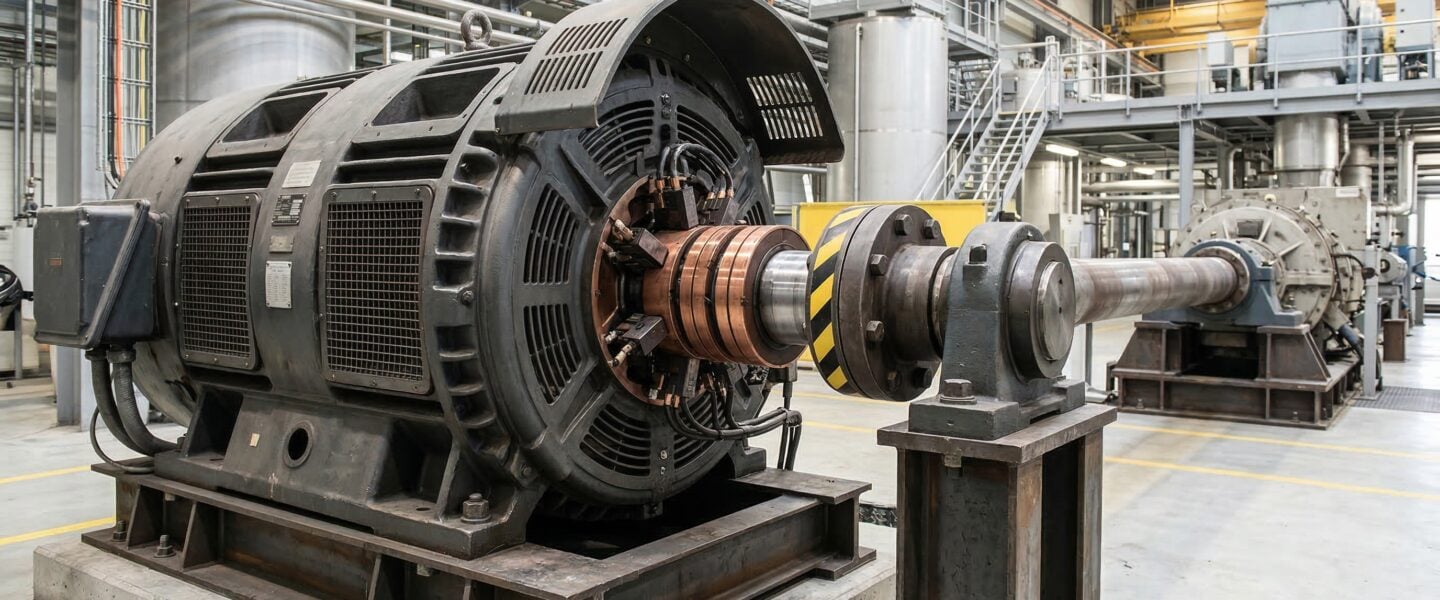
Synchronous Motor Reliability & Maintenance — industrial maintenance and reliability services

At Forge Reliability, we work with heavy industrial clients across mining, petrochemical, steel production, and power generation to maximize the availability and service life of synchronous motor installations. Our approach combines advanced diagnostic technologies with practical maintenance strategies that address the unique failure modes these complex machines present. The result is fewer unplanned outages, lower total cost of ownership, and greater confidence in the equipment that drives your most critical processes.


Understanding Synchronous Motor Reliability Challenges

Synchronous motors differ from their induction counterparts in ways that create distinct reliability concerns. The presence of a DC field winding on the rotor, slip rings or brushless exciter systems, and the requirement for synchronization all introduce failure modes that standard induction motor maintenance programs do not address. Facilities that treat synchronous motors like oversized induction machines inevitably experience preventable failures.

Rotor and Field Winding Degradation

The rotor field winding operates under significant thermal and mechanical stress. Centrifugal forces at operating speed work continuously against winding insulation, while thermal cycling from load variations and starts creates fatigue in conductor connections. Over time, insulation resistance decreases, and shorted turns develop that reduce excitation efficiency and create localized hot spots. Left unaddressed, a single shorted turn can progress to a ground fault that requires a complete rotor rewind, a process that typically takes weeks and costs a substantial fraction of the motor’s replacement value.

Excitation System Issues

Whether the motor uses a brushless exciter or slip ring configuration, the excitation system requires dedicated attention. Brush and slip ring wear generates carbon dust that can track across insulation surfaces, creating ground fault paths. Brushless exciter diode failures reduce available field current and can introduce asymmetric heating in the rotor. In both configurations, loose connections in the field circuit create arcing damage that compounds rapidly.

Analysis of synchronous motor failure records across heavy industry shows that excitation system faults account for approximately 25% of all forced outages, making them the second most common failure category after stator insulation breakdown.

Stator Insulation and Winding Concerns

Large synchronous motors typically operate at medium voltage levels where insulation integrity is paramount. Partial discharge activity within the stator winding is a leading indicator of insulation degradation, and its progression depends heavily on operating temperature, voltage stress, and contamination levels. Endwinding vibration is another concern specific to large machines, where electromagnetic forces can cause relative motion between coils, wearing through insulation at contact points.


Diagnostic Technologies for Synchronous Motor Health Assessment

Effective synchronous motor maintenance relies on diagnostic techniques that can assess the condition of components that are not accessible during normal operation. Forge Reliability deploys a suite of complementary technologies that together provide a comprehensive view of motor health.

Vibration Analysis and Spectral Diagnostics

Vibration monitoring on synchronous motors must account for signatures unique to this machine type. Twice-line-frequency vibration components, for instance, can indicate rotor pole face issues, uneven air gap, or stator looseness. Torsional vibration analysis is particularly important for synchronous motors driving reciprocating compressors, where dynamic torque pulsations can fatigue the shaft and coupling. Continuous online vibration monitoring is strongly recommended for critical synchronous motor installations where the consequences of failure justify the instrumentation investment.

Electrical Testing and Monitoring

Motor current signature analysis (MCSA) adapted for synchronous machines can detect rotor winding asymmetry, damper bar defects, and bearing-related load variations. Partial discharge monitoring, either online using permanently installed sensors or offline during planned outages, provides direct insight into stator insulation condition. Flux probe analysis during operation reveals rotor pole-to-pole variations that indicate developing field winding problems.

Thermal Assessment

Infrared thermography of accessible motor surfaces, junction boxes, and excitation components identifies hot spots caused by loose connections, uneven loading, or cooling deficiencies. Embedded resistance temperature detectors (RTDs) in the stator winding provide continuous thermal data that, when trended over time, reveals insulation aging patterns and cooling system degradation.

Facilities that implement continuous electrical and thermal monitoring on synchronous motors commonly detect developing faults 6 to 18 months before they would cause a forced outage, providing ample time for planned corrective action during scheduled maintenance windows.


Maintenance Strategies That Protect Your Investment

A well-structured synchronous motor maintenance program integrates time-based preventive tasks with condition-based predictive activities, ensuring that each type of maintenance is applied where it delivers the most value.

Preventive Maintenance Essentials

Certain maintenance tasks remain calendar-driven regardless of condition monitoring data. Brush inspection and replacement on slip ring machines should follow manufacturer-recommended intervals, adjusted based on observed wear rates. Cooling system maintenance, including filter cleaning, heat exchanger inspection, and airflow verification, directly impacts winding temperature and insulation life. Lubrication of bearings according to manufacturer specifications prevents a failure mode that is entirely avoidable with disciplined execution.

Condition-Based Intervention Planning

Monitoring data enables maintenance teams to schedule major interventions such as rotor removal, winding testing, and excitation system overhaul based on actual equipment condition rather than arbitrary time intervals. This approach avoids both the risk of running equipment to failure and the waste of performing intrusive maintenance on machines that remain in good condition. Condition-based planning typically reduces major maintenance costs by 20 to 40 percent while simultaneously improving motor availability.

Outage Planning and Execution

When a planned outage for a synchronous motor is warranted, the quality of planning directly determines the outcome. Forge Reliability assists clients in developing comprehensive outage scopes that include all condition-driven and time-based tasks, ensuring that every accessible component receives appropriate attention during the limited maintenance window. Pre-outage procurement of parts, tooling preparation, and crew coordination eliminate delays that extend downtime and escalate costs.


Measurable Outcomes from Proactive Synchronous Motor Maintenance

Clients who engage Forge Reliability for synchronous motor maintenance programs consistently achieve significant improvements in asset performance. Motor availability typically increases to above 97 percent as unplanned outages are replaced by planned maintenance events that are shorter in duration and lower in cost.

Insulation life extension is one of the most valuable outcomes. By maintaining proper operating temperatures, managing partial discharge levels, and addressing contamination proactively, facilities routinely achieve stator winding service lives of 25 years or more, well beyond the point where reactive operators would have required costly rewinds. Rotor field winding life follows a similar trajectory when excitation system health is actively managed.

Energy efficiency improvements also contribute to the business case. A synchronous motor with degraded field excitation operates at reduced power factor, drawing excess reactive current that increases line losses and utility demand charges. Maintaining optimal excitation through monitoring and timely adjustment ensures the motor delivers its designed power factor correction benefit, which can translate to meaningful savings on electricity costs for large installations.

Forge Reliability brings deep expertise in synchronous motor diagnostics and maintenance strategy to every engagement. Whether your facility operates a single critical synchronous motor or manages a fleet across multiple sites, we provide the technical knowledge and program structure needed to maximize the return on these high-value assets.

Failure Modes

Common Synchronous Motor Reliability & Maintenance Failure Modes

Engineers often arrive searching for specific failures. Here are the most common issues we diagnose and resolve.

Field Winding Insulation Failure

Field winding insulation degrades from thermal stress, centrifugal forces, and contamination, eventually causing shorted turns that reduce excitation capability, create thermal asymmetry, and may progress to ground faults.

Key symptom: Increased field current required to maintain rated power factor

Get Help With This →

Brush and Slip Ring Wear

Carbon brushes wear from friction against slip rings while ring surface roughness increases from arcing and contamination, creating uneven current distribution and localized heating that accelerates component degradation.

Key symptom: Visible sparking at brush-ring interface with uneven brush wear patterns

Get Help With This →

Stator Winding Partial Discharge

Partial discharge activity within stator winding insulation gradually erodes organic materials, creating carbonized tracking paths that eventually bridge to adjacent turns or ground, causing winding failure.

Key symptom: Elevated partial discharge pulse magnitudes during online PD monitoring

Get Help With This →

Damper Bar Cracking

Damper (amortisseur) bars crack from thermal cycling stress during starts and load transients, creating rotor thermal asymmetry and vibration that progresses as additional bars fail.

Key symptom: Increasing 2x slip frequency vibration amplitude with rotor thermal sensitivity

Get Help With This →

Diagnostic Methods

Diagnostic Techniques We Use

Field Winding Impedance Testing

Repetitive surge oscillograph (RSO) or impedance testing of the field winding detects shorted turns, ground faults, and insulation degradation by comparing response waveforms against baseline or between poles.

Slip Ring Surface Analysis

Visual inspection and profilometer measurement of slip ring surface condition, combined with brush current distribution monitoring, identifies ring grooving, filming issues, and brush contact problems.

Online Partial Discharge Monitoring

Continuous PD monitoring using coupling capacitors or RFCT sensors at motor terminals tracks discharge activity trends, identifies deteriorating insulation zones, and supports risk-based maintenance decisions.

Shaft Voltage and Current Measurement

Measuring shaft voltage with a voltmeter brush and shaft current with a Rogowski coil detects bearing current paths from magnetic asymmetry or VFD-induced common mode voltage that cause electrical bearing damage.

Services

Services for Synchronous Motor Reliability & Maintenance

Service

Asset Management for Synchronous Motors

Asset Management programs for Synchronous Motors, targeting common failure modes and degradation mechanisms.

Learn More →
Service

CMMS Implementation for Synchronous Motors

CMMS implementation for synchronous motors with excitation system component records, air gap eccentricity tracking, and brush wear data capture fields.

Learn More →
Service

Condition Monitoring for Synchronous Motors

Condition Monitoring programs for Synchronous Motors, targeting common failure modes and degradation mechanisms.

Learn More →
Service

Dynamic Balancing for Synchronous Motors

We balance synchronous motor rotors including salient pole and cylindrical designs, addressing field winding mass distribution and pole piece symmetry.

Learn More →
Service

Equipment Condition Assessment for Synchronous Motors

Condition assessment for synchronous motors including exciter health evaluation, air gap measurement, and field winding insulation testing results.

Learn More →
Service

Equipment Maintenance for Synchronous Motors

Equipment Maintenance programs for Synchronous Motors, targeting common failure modes and degradation mechanisms.

Learn More →
Service

FMEA for Synchronous Motors

We perform FMEA on synchronous motors including field winding, excitation, and pull-out failure modes with RPN scoring for maintenance task selection.

Learn More →
Service

Maintenance Outsourcing for Synchronous Motors

Maintenance Outsourcing programs for Synchronous Motors, targeting common failure modes and degradation mechanisms.

Learn More →
Service

Maintenance Planning for Synchronous Motors

Maintenance planning for synchronous motors with detailed job plans for excitation system service, air gap eccentricity measurement, and brush replacement.

Learn More →
Service

Motor Current Analysis for Synchronous Motors

Our MCSA services for synchronous motors detect field winding faults, damper bar defects, and excitation system issues via current spectrum analysis.

Learn More →
Service

Oil Analysis for Synchronous Motors

We monitor synchronous motor bearing oil for babbitt wear, hydrogen seal oil purity, and lubricant degradation to protect high-value motor investments.

Learn More →
Service

Plant Optimization for Synchronous Motors

Plant Optimization programs for Synchronous Motors, targeting common failure modes and degradation mechanisms.

Learn More →
Service

Precision Shaft Alignment for Synchronous Motors

We align synchronous motors with specialized thermal growth compensation for field winding heating effects and air-gap verification at the coupling plane.

Learn More →
Service

Predictive Maintenance for Synchronous Motors

We monitor synchronous motor health using field winding analysis, vibration trending, and insulation diagnostics to prevent excitation system faults.

Learn More →
Service

Preventive Maintenance for Synchronous Motors

We design synchronous motor PM programs covering excitation systems, field windings, brush maintenance, and insulation testing per IEEE standards.

Learn More →
Service

RCM for Synchronous Motors

RCM analysis for synchronous motors evaluating excitation system, field winding, air gap eccentricity, and brush wear failure modes per SAE JA1011.

Learn More →
Service

Reliability Consulting for Synchronous Motors

We provide reliability consulting for synchronous motors with field winding life analysis, excitation system reliability, and starting duty review.

Learn More →
Service

Root Cause Analysis for Synchronous Motors

We investigate synchronous motor failures by analyzing field winding evidence, excitation system fault logs, and pull-out event data systematically.

Learn More →
Service

Thermographic Inspection for Synchronous Motors

We thermally image synchronous motor stator frames, exciter assemblies, and slip-ring housings to detect winding faults and cooling system inefficiencies.

Learn More →
Service

Ultrasonic Testing for Synchronous Motors

We use ultrasonic testing to assess bearing lubrication, detect partial discharge in windings, and identify brush gear arcing in synchronous motors.

Learn More →
Service

Vibration Analysis for Synchronous Motors

Our analysts detect pole-piece looseness, exciter faults, and bearing degradation in synchronous motors through high-resolution spectral techniques.

Learn More →

Industries

Industries That Rely on Synchronous Motor Reliability & Maintenance

Industry

Chemical Processing Synchronous Motors Reliability

Our team manages excitation and bearing reliability on synchronous motors driving large compressors and extruders in chemical processing operations.

Learn More →
Industry

Food & Beverage Synchronous Motors Reliability

Our team manages excitation system and bearing reliability on synchronous motors driving large ammonia refrigeration compressors in food facilities.

Learn More →
Industry

Manufacturing Synchronous Motors Reliability

Our team addresses excitation, bearing, and power factor issues on large synchronous motors driving compressors and mills in manufacturing plants.

Learn More →
Industry

Oil & Gas Synchronous Motors Reliability

Our team manages excitation and bearing reliability on large synchronous motors driving pipeline compressors and refinery process equipment trains.

Learn More →
Industry

Power Generation Synchronous Motors Reliability

Our team manages excitation and bearing reliability on large synchronous motors driving boiler feed pumps and fans at power generation stations safely.

Learn More →
Industry

Synchronous Motor Reliability in Automotive Plant Operations

Our synchronous motor reliability for automotive plants targets large press drive motors, chiller compressors, and plant power factor correction needs.

Learn More →
Industry

Synchronous Motors Reliability for Cement & Aggregates

Forge Reliability maintains synchronous motors on large cement mill drives and ID fans, protecting field windings and optimizing power factor correction.

Learn More →
Industry

Synchronous Motors Reliability for Industrial Refrigeration

Forge Reliability monitors synchronous motors driving large ammonia compressors, maintaining excitation system health and power factor correction benefits.

Learn More →
Industry

Synchronous Motors Reliability for Logistics & Distribution

Forge Reliability monitors synchronous motors on large refrigeration compressors and chiller systems serving cold chain distribution center operations.

Learn More →
Industry

Synchronous Motor Reliability in Metals & Steel Operations

Our synchronous motor reliability for metals and steel operations targets exciter systems on rolling mill drives, blower motors, and compressor drives.

Learn More →
Industry

Synchronous Motor Reliability in Mining Mill Drives

Our synchronous motor reliability for mining operations targets SAG mill drives, ball mill motors, and large compressor drives at remote mine sites.

Learn More →
Industry

Synchronous Motor Reliability in Pharmaceutical Operations

Our synchronous motor reliability services for pharmaceutical operations target exciter faults, power factor correction, and cleanroom HVAC uptime.

Learn More →
Industry

Synchronous Motors Reliability for Plastics & Rubber

Forge Reliability monitors synchronous motors on large extruder drives and Banbury mixer installations, maintaining power factor and machine uptime.

Learn More →
Industry

Synchronous Motor Reliability in Pulp & Paper Operations

Our synchronous motor reliability for pulp and paper mills targets refiner drive excitation systems, field winding care, and power factor stability.

Learn More →
Industry

Synchronous Motors Reliability for Water & Wastewater

Forge Reliability monitors synchronous motors on large aeration blowers and raw water pumps, maintaining power factor correction and mechanical health.

Learn More →

Technical Reference

Technical Overview

Field winding insulation resistance per IEEE 43 should maintain a minimum polarization index of 2.0 — values below 1.5 indicate contamination or insulation degradation requiring immediate investigation. Brush rigging on brushed excitation systems should be inspected quarterly; brush holder clearance should maintain 1/16 to 1/8 inch above the collector ring surface per NEMA MG1. Vibration at twice slip frequency during pull-in indicates rotor asymmetry or damper winding problems. Power factor correction performance should be verified monthly — a synchronous motor not maintaining leading power factor at rated excitation suggests field winding turn-to-turn faults.

Common Questions

FAQ

Starting imposes severe thermal and mechanical stress on damper bars, stator windings, and bearings due to high inrush currents (5-8x rated) and the torque pulsations during acceleration. Limiting starts to manufacturer recommendations (typically 2-3 consecutive starts with cooling periods) and using reduced voltage or VFD soft starting methods significantly extends motor life. Each start should be logged and tracked against cumulative start limits.

Limited Availability
We onboard a limited number of new facilities each quarter. Secure your assessment slot before our current availability closes. Reserve Your Spot →

Get Started

Request a Free Reliability Assessment

Tell us about your equipment and facility. Our reliability team will review your situation and recommend a tailored reliability program — no obligation.

Free initial assessment
Response within 1 business day
No obligation or commitment

No obligation. Typical response within 24 hours.

Monitor Field Winding and Damper Bar Condition on Synchronous Motors

Talk to our motor reliability specialists about maintaining your synchronous motors at peak performance and power factor.

Claim Your Free Assessment →