Home Equipment Thermal Equipment Boiler Reliability & Maintenance

Boiler Reliability & Maintenance

Condition monitoring and inspection programs for fire-tube and water-tube boilers, economizers, and feedwater systems.

Industrial boilers are critical assets that supply steam and hot water for process heating, power generation, building climate control, and a wide range of manufacturing operations. A boiler failure does not just mean lost production; it can create serious safety hazards, trigger regulatory shutdowns, and result in repair costs that reach into six or seven figures. At Forge Reliability, we help facilities protect these high-value assets through structured maintenance programs that prioritize safety, extend equipment life, and minimize costly unplanned outages.
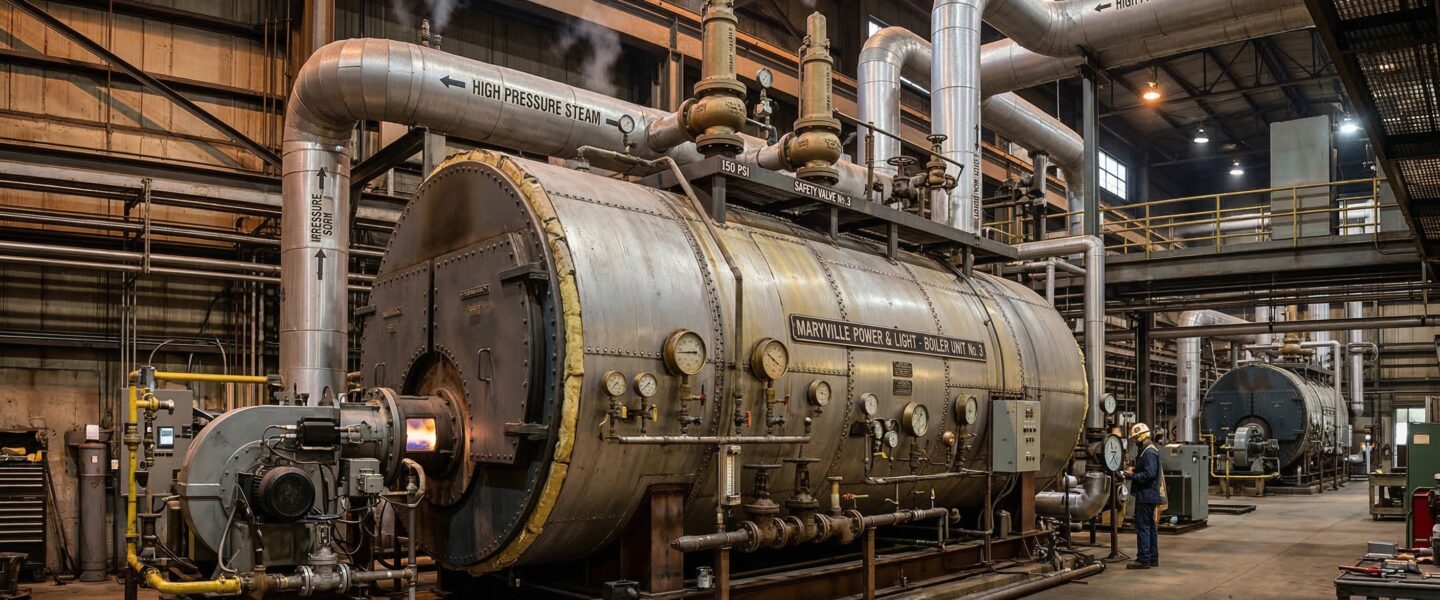
Boiler | Forge Reliability

Why Does Boiler Reliability Demand Attention?

Boilers operate under conditions that make reliability inherently challenging. High pressures, elevated temperatures, corrosive combustion products, and varying water chemistry create an environment where multiple degradation mechanisms are always at work simultaneously. Unlike many other industrial assets, boiler failures carry significant safety implications because of the enormous energy stored in pressurized steam and hot water.

The financial stakes are equally significant. Large industrial boilers represent capital investments of hundreds of thousands to millions of dollars, and their replacement lead times can stretch to 12 months or longer. Emergency tube repairs during unplanned outages typically cost 5 to 10 times more than the same repairs performed during a planned shutdown, due to expedited parts, overtime labor, and the production losses incurred while the boiler is down. Facilities with only one or two boilers face existential risk if they cannot generate steam for critical processes.

Insurance industry data indicates that boiler tube failures account for approximately 60 percent of all forced boiler outages. A proactive tube inspection and water treatment program is the single most effective strategy for improving boiler availability.


What Are the Common Boiler Reliability Challenges?

Boiler degradation is driven by the interaction of thermal, chemical, and mechanical factors that vary based on boiler type, fuel source, operating patterns, and water chemistry. Understanding these mechanisms is essential for designing effective maintenance and monitoring programs.

Tube Degradation and Failure

Boiler tubes are the primary heat transfer surface and the component most vulnerable to failure. Corrosion, erosion, overheating, fatigue cracking, and hydrogen damage all attack tubes from different angles. Waterside scale deposits insulate tube surfaces and cause localized overheating. Fireside erosion from soot blowing and ash particles thins tube walls progressively. Thermal fatigue from cycling operations creates cracks at attachment points and bends. Each mechanism requires a specific monitoring and mitigation strategy.

Water Chemistry Management

Proper feedwater and boiler water chemistry is foundational to boiler reliability. Dissolved oxygen causes pitting corrosion. Hardness minerals form scale that leads to overheating failures. Incorrect pH levels accelerate corrosion or caustic attack. Silica carryover damages downstream turbines and process equipment. Maintaining water chemistry within specified parameters requires continuous monitoring, properly functioning treatment equipment, and knowledgeable operators who understand the consequences of excursions.

Refractory and Insulation Deterioration

Refractory linings in combustion chambers and insulation on boiler casings and piping degrade over time from thermal cycling, mechanical damage, and chemical attack. Deteriorating refractory causes hot spots on the boiler casing, reduces combustion efficiency, and can expose structural components to damaging temperatures. Regular inspection and timely repair of refractory prevents larger problems from developing.

Combustion System Issues

Burner performance directly affects boiler efficiency, emissions compliance, and tube life. Worn or fouled burners produce uneven flame patterns that cause localized overheating on tube surfaces. Improper air-to-fuel ratios waste energy and can create dangerous operating conditions. Combustion system maintenance is both a reliability and a safety imperative.


Condition Monitoring Approaches for Boilers

Boiler condition monitoring combines periodic inspection techniques with continuous operational monitoring to provide comprehensive asset health visibility. Forge Reliability designs programs that integrate these approaches into a cohesive strategy aligned with each facility’s risk profile and operating requirements.

Nondestructive Examination

Ultrasonic thickness testing is the primary tool for assessing tube wall condition, identifying thinning from erosion and corrosion before it reaches critical levels. Magnetic particle and dye penetrant inspection detect surface-breaking cracks in drums, headers, and attachments. Advanced techniques including phased array ultrasonic testing and eddy current inspection enable rapid screening of large tube populations during outage windows. Planning these inspections systematically and trending results over time reveals degradation rates and supports informed decisions about tube replacement timing.

Thermal Performance Monitoring

Tracking boiler efficiency, stack temperature, and heat transfer effectiveness over time reveals internal fouling, scaling, and tube degradation before they cause failures. A gradual increase in stack temperature at constant load, for example, indicates deteriorating heat transfer from waterside deposits or fireside fouling. Performance monitoring data guides cleaning schedules and identifies areas requiring inspection during outages.

Water Chemistry Monitoring

Continuous online monitoring of feedwater and boiler water parameters including dissolved oxygen, pH, conductivity, and hardness provides real-time protection against chemistry-related damage. Automated chemical feed systems maintain treatment within specified ranges, while alarms alert operators to excursions that require immediate attention. Periodic laboratory analysis supplements online monitoring with more detailed characterization of water conditions.

Infrared Thermography

External thermal surveys of the boiler casing, refractory walls, and steam piping identify hot spots caused by refractory failure, insulation damage, and steam leaks. Internal fireside thermography during operation can reveal tube-to-tube temperature variations that indicate internal deposits or flow restrictions. Infrared surveys of electrical systems and control components complete the thermal monitoring picture.

Facilities that implement comprehensive boiler condition monitoring and water treatment programs typically extend intervals between major overhauls by 25 to 40 percent while reducing forced outage rates by 50 percent or more.


Maintenance Strategies for Boiler Longevity

Boiler maintenance must balance operational demands, regulatory requirements, and asset preservation. Forge Reliability develops maintenance strategies that address all three while optimizing the use of limited outage windows and maintenance resources.

Outage Planning and Optimization

Planned boiler outages are the primary opportunity for internal inspections, tube repairs, and refractory maintenance. Effective outage planning ensures that inspection scopes are driven by condition data, that parts and skilled labor are available when needed, and that work is executed efficiently to minimize downtime. Pre-outage condition assessments using operational data and external inspections help focus outage activities on the highest-priority items.

Water Treatment Program Excellence

Maintaining water chemistry within optimal ranges is the most cost-effective boiler maintenance activity. Investing in reliable treatment equipment, continuous monitoring instrumentation, and operator training pays dividends in reduced tube failures, lower chemical cleaning frequency, and extended boiler life. Regular review and optimization of the water treatment program ensures it keeps pace with changes in water supply quality and boiler operating conditions.

Combustion Optimization

Regular burner tuning, fuel system maintenance, and combustion analysis ensure efficient, safe boiler operation. Optimized combustion reduces fuel consumption, minimizes emissions, and eliminates the uneven heat distribution that accelerates tube degradation. Annual combustion assessments should be standard practice for every industrial boiler.


What Results Come from a Proactive Approach?

Facilities that partner with Forge Reliability to implement structured boiler maintenance programs achieve significant improvements in both reliability and cost performance. Forced outage rates decline as tube failures and other unplanned events are prevented through monitoring and proactive intervention. Boiler efficiency improves through optimized combustion and cleaner heat transfer surfaces, delivering ongoing fuel savings that typically amount to 2 to 5 percent of annual fuel costs.

Regulatory compliance becomes straightforward rather than stressful as inspections reveal well-maintained equipment and thorough documentation. Insurance costs often decrease as insurers recognize the reduced risk profile of a well-monitored boiler. Most importantly, the safety risks associated with boiler operation are minimized through systematic attention to the factors that lead to dangerous failures.

Forge Reliability brings extensive experience with firetube and watertube boilers, heat recovery steam generators, and thermal fluid heaters across a wide range of industries and applications. Our team combines deep technical knowledge with practical field experience to deliver boiler reliability programs that protect your assets, your people, and your bottom line.

Failure Modes

Common Boiler Reliability & Maintenance Failure Modes

Engineers often arrive searching for specific failures. Here are the most common issues we diagnose and resolve.

Waterside Tube Corrosion and Pitting

Dissolved oxygen, carbon dioxide, and caustic concentrations attack boiler tube internal surfaces, causing pitting, grooving, and general wall thinning that progresses to tube leaks requiring emergency shutdown and tube plugging or replacement.

Key symptom: Increasing makeup water consumption with boiler water chemistry showing elevated iron and copper concentrations

Get Help With This →

Tube Scaling and Deposit Buildup

Mineral deposits from inadequate water treatment insulate tube surfaces from cooling water flow, causing localized overheating, creep damage, and eventual tube bulging or rupture at the deposit location.

Key symptom: Elevated tube metal temperatures detected by thermography with increasing fuel consumption for the same steam output

Get Help With This →

Fireside Tube Erosion

Soot blower steam impingement, fly ash erosion, and flame impingement wear tube external surfaces, thinning walls in predictable patterns that progress to through-wall penetration if not tracked by periodic thickness measurement.

Key symptom: Tube wall thinning visible in ultrasonic thickness surveys concentrated in soot blower lanes and burner zones

Get Help With This →

Refractory Degradation

Furnace and burner refractory linings deteriorate from thermal cycling, chemical attack, and mechanical damage, allowing hot gases to contact pressure boundary components and structural steel, creating safety hazards and efficiency losses.

Key symptom: Hot spots visible on boiler casing with elevated surface temperatures detected by infrared thermography

Get Help With This →

Safety Valve Failure to Lift

Pressure relief safety valves seize from corrosion, deposits, or improper maintenance, failing to open at set pressure and removing the last line of defense against overpressure, representing the most dangerous boiler failure mode.

Key symptom: Safety valve fails to lift during periodic testing or pop test shows lift pressure outside the allowable tolerance band

Get Help With This →

Diagnostic Methods

Diagnostic Techniques We Use

Non-Destructive Tube Thickness Mapping

Ultrasonic thickness testing on boiler tubes at susceptible locations maps wall thickness trends over time, quantifying corrosion and erosion rates and predicting when tube replacement or boiler re-tubing is required.

Water Chemistry Monitoring and Trending

Continuous and periodic testing of feedwater, boiler water, and condensate for dissolved oxygen, pH, alkalinity, phosphate, silica, iron, and conductivity ensures treatment programs are maintaining protective conditions and detects excursions before tube damage occurs.

Combustion Analysis and Tuning

Stack gas analysis measuring O2, CO, NOx, and combustion efficiency combined with flame scanner diagnostics and burner inspection ensures proper air-fuel ratio, complete combustion, and uniform heat distribution that prevents fireside tube damage.

Infrared Thermography

External surface temperature surveys detect refractory failures, insulation damage, tube deposit hot spots, and steam leak locations that are invisible during normal operation, enabling targeted repairs during planned outages.

Safety Valve Testing and Certification

Periodic pop testing of pressure relief safety valves verifies proper lift pressure, reseat pressure, and blowdown in compliance with ASME Section I and jurisdictional requirements, ensuring overpressure protection functions as designed.

Services

Services for Boiler Reliability & Maintenance

Service

Asset Management for Boilers

Asset Management programs for Boilers, targeting common failure modes and degradation mechanisms.

Learn More →
Service

CMMS Implementation for Boilers

CMMS Implementation programs for Boilers, targeting common failure modes and degradation mechanisms.

Learn More →
Service

Condition Monitoring for Boilers

Our team establishes continuous condition monitoring programs for boilers, targeting tube failures, refractory degradation, and related degradation...

Learn More →
Service

Dynamic Balancing for Boilers

Dynamic Balancing programs for Boilers, targeting common failure modes and degradation mechanisms.

Learn More →
Service

Equipment Condition Assessment for Boilers

Our team provides comprehensive condition assessments for boilers, targeting tube failures, refractory degradation, and related degradation mechanisms...

Learn More →
Service

Equipment Maintenance for Boilers

Equipment Maintenance programs for Boilers, targeting common failure modes and degradation mechanisms.

Learn More →
Service

FMEA for Boilers

FMEA programs for Boilers, targeting common failure modes and degradation mechanisms.

Learn More →
Service

Maintenance Outsourcing for Boilers

Maintenance Outsourcing programs for Boilers, targeting common failure modes and degradation mechanisms.

Learn More →
Service

Maintenance Planning for Boilers

Maintenance Planning programs for Boilers, targeting common failure modes and degradation mechanisms.

Learn More →
Service

Motor Current Analysis for Boilers

Motor Current Analysis programs for Boilers, targeting common failure modes and degradation mechanisms.

Learn More →
Service

Oil & Lubrication Analysis for Boilers

Oil & Lubrication Analysis programs for Boilers, targeting common failure modes and degradation mechanisms.

Learn More →
Service

Plant Optimization for Boilers

Plant Optimization programs for Boilers, targeting common failure modes and degradation mechanisms.

Learn More →
Service

Precision Shaft Alignment for Boilers

Precision Shaft Alignment programs for Boilers, targeting common failure modes and degradation mechanisms.

Learn More →
Service

Predictive Maintenance for Boilers

Our team applies predictive maintenance technologies to boilers, targeting tube failures, refractory degradation, and related degradation mechanisms before...

Learn More →
Service

Preventive Maintenance for Boilers

Preventive Maintenance programs for Boilers, targeting common failure modes and degradation mechanisms.

Learn More →
Service

RCM for Boilers

RCM programs for Boilers, targeting common failure modes and degradation mechanisms.

Learn More →
Service

Reliability Consulting for Boilers

Our team applies reliability consulting methodology to boilers, targeting tube failures, refractory degradation, and related degradation mechanisms before...

Learn More →
Service

Root Cause Analysis for Boilers

Our team investigates failures in boilers, targeting tube failures, refractory degradation, and related degradation mechanisms before they cause unplanned...

Learn More →
Service

Thermographic Inspection for Boilers

Thermographic Inspection programs for Boilers, targeting common failure modes and degradation mechanisms.

Learn More →
Service

Ultrasonic Testing for Boilers

Ultrasonic Testing programs for Boilers, targeting common failure modes and degradation mechanisms.

Learn More →
Service

Vibration Analysis for Boilers

Vibration Analysis programs for Boilers, targeting common failure modes and degradation mechanisms.

Learn More →

Industries

Industries That Rely on Boiler Reliability & Maintenance

Industry

Boilers Reliability for Automotive

Boilers reliability and predictive maintenance programs designed for automotive operating environments and compliance requirements.

Learn More →
Industry

Boilers Reliability for Cement & Aggregates

Boilers reliability and predictive maintenance programs designed for cement & aggregates operating environments and compliance requirements.

Learn More →
Industry

Boilers Reliability for Chemical Processing

Boilers reliability and predictive maintenance programs designed for chemical processing operating environments and compliance requirements.

Learn More →
Industry

Boilers Reliability for Food & Beverage

Boilers reliability and predictive maintenance programs designed for food & beverage operating environments and compliance requirements.

Learn More →
Industry

Boilers Reliability for Industrial Refrigeration

Boilers reliability and predictive maintenance programs designed for industrial refrigeration operating environments and compliance requirements.

Learn More →
Industry

Boilers Reliability for Logistics & Distribution

Boilers reliability and predictive maintenance programs designed for logistics & distribution operating environments and compliance requirements.

Learn More →
Industry

Boilers Reliability for Manufacturing

Boilers reliability and predictive maintenance programs designed for manufacturing operating environments and compliance requirements.

Learn More →
Industry

Boilers Reliability for Metals & Steel

Boilers reliability and predictive maintenance programs designed for metals & steel operating environments and compliance requirements.

Learn More →
Industry

Boilers Reliability for Mining

Boilers reliability and predictive maintenance programs designed for mining operating environments and compliance requirements.

Learn More →
Industry

Boilers Reliability for Oil & Gas

Boilers reliability and predictive maintenance programs designed for oil & gas operating environments and compliance requirements.

Learn More →
Industry

Boilers Reliability for Pharmaceutical

Boilers reliability and predictive maintenance programs designed for pharmaceutical operating environments and compliance requirements.

Learn More →
Industry

Boilers Reliability for Plastics & Rubber

Boilers reliability and predictive maintenance programs designed for plastics & rubber operating environments and compliance requirements.

Learn More →
Industry

Boilers Reliability for Power Generation

Boilers reliability and predictive maintenance programs designed for power generation operating environments and compliance requirements.

Learn More →
Industry

Boilers Reliability for Pulp & Paper

Boilers reliability and predictive maintenance programs designed for pulp & paper operating environments and compliance requirements.

Learn More →
Industry

Boilers Reliability for Water & Wastewater

Boilers reliability and predictive maintenance programs designed for water & wastewater operating environments and compliance requirements.

Learn More →

Technical Reference

Technical Overview

Boilers operate under high pressure and temperature conditions requiring careful monitoring. Common failure modes include tube fouling, refractory degradation, burner efficiency loss, and water treatment issues. Thermography, ultrasonic thickness testing, and water chemistry analysis form the foundation of effective boiler reliability programs.

Common Questions

FAQ

Boiler tube failures result from waterside corrosion (oxygen pitting, caustic attack, under-deposit corrosion), fireside erosion and corrosion (soot blower erosion, fly ash impingement, fuel contaminant corrosion), and stress-related mechanisms (thermal fatigue from cycling, creep from long-term overheating, and stress corrosion cracking at attachment welds). Water chemistry is the single most influential factor in waterside tube life. The Electric Power Research Institute and ASME have published extensive guidance on boiler tube failure classification and root cause analysis methodologies.

Limited Availability
We onboard a limited number of new facilities each quarter. Secure your assessment slot before our current availability closes. Reserve Your Spot →

Get Started

Request a Free Reliability Assessment

Tell us about your equipment and facility. Our reliability team will review your situation and recommend a tailored reliability program — no obligation.

Free initial assessment
Response within 1 business day
No obligation or commitment

No obligation. Typical response within 24 hours.

Having Problems With Your Boilers?

Claim Your Free Assessment →