
Submersible pumps operate in some of the harshest conditions found in any industrial application. Fully submerged in the fluids they move, these critical assets face constant exposure to corrosive media, abrasive particulates, and extreme pressures that accelerate wear and degrade performance over time. Without a disciplined approach to submersible pump maintenance, operators frequently face unplanned failures that halt production, contaminate process streams, and generate repair costs that dwarf the investment required for proactive reliability strategies.
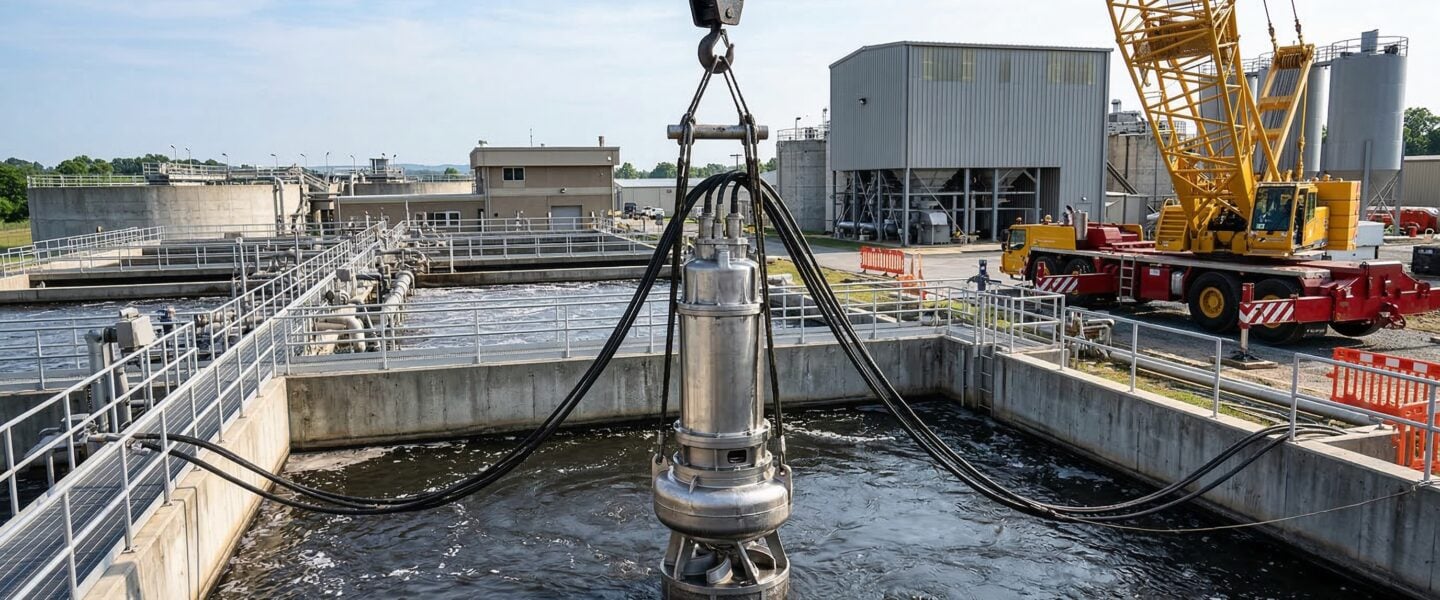
At Forge Reliability, we have supported facilities across mining, water treatment, oil and gas, and municipal infrastructure in extending the operational life of their submersible pump fleets. The challenges are consistent regardless of industry: detecting early-stage degradation is difficult because the equipment is physically inaccessible, and traditional inspection methods require costly pulling and reinstallation cycles. Condition-based monitoring changes that equation entirely, giving maintenance teams the visibility they need to act before a minor issue becomes a catastrophic failure.
Why Do Submersible Pumps Demand a Reliability-First Approach?
The fundamental challenge with submersible pumps is their operating environment. Unlike surface-mounted equipment that can be visually inspected during routine walkthroughs, submersible units are hidden beneath the fluid surface, often at considerable depth. This inaccessibility means that degradation progresses undetected unless operators employ monitoring technologies capable of reaching below the surface.
Seal failures represent one of the most consequential reliability risks. When a mechanical seal begins to degrade, process fluid enters the motor housing, leading to insulation breakdown and eventual electrical failure. A single seal breach can destroy a motor valued at tens of thousands of dollars and trigger secondary contamination issues in the surrounding process. Bearing wear follows a similar pattern of invisible progression, with vibration signatures shifting gradually until a catastrophic seizure occurs.
Industry data indicates that over 60% of submersible pump failures originate from seal degradation or bearing wear, both of which are detectable months in advance through proper condition monitoring techniques.
Impeller erosion from abrasive solids is another persistent concern, particularly in mining dewatering and wastewater applications. As impeller geometry degrades, hydraulic efficiency drops, energy consumption rises, and the pump struggles to meet design flow rates. Operators often compensate by increasing speed or runtime, which only accelerates the wear cycle.
The True Cost of Reactive Maintenance
Facilities that rely on run-to-failure strategies for submersible pumps consistently experience 3 to 5 times higher total maintenance costs compared to those employing predictive approaches. The expense is not limited to the replacement parts and labor for the failed unit. Pulling a submersible pump from a deep well or sump requires specialized rigging equipment and crews, often at premium emergency rates. Production losses during unplanned downtime compound the financial impact, and in regulated industries, an environmental release from a failed pump can trigger penalties and remediation obligations that exceed the cost of the equipment itself.
Condition Monitoring Technologies for Submersible Applications
Modern submersible pump maintenance programs leverage multiple monitoring technologies to build a comprehensive picture of equipment health. No single technique captures every failure mode, which is why Forge Reliability designs integrated monitoring strategies tailored to each installation.
Vibration Analysis
Vibration monitoring remains the cornerstone of rotating equipment diagnostics. For submersible pumps, permanently installed vibration sensors on the discharge head or column pipe capture data that reveals bearing condition, impeller balance, and structural resonance issues. Advanced spectral analysis can distinguish between mechanical and hydraulic sources of vibration, allowing maintenance teams to prioritize interventions accurately.
Motor Current Signature Analysis
Because submersible pump motors are physically inaccessible, motor current signature analysis (MCSA) provides an invaluable diagnostic window. By analyzing the electrical current drawn by the motor, technicians can detect rotor bar defects, air gap eccentricity, and load-related anomalies without ever pulling the pump. MCSA is particularly effective at identifying developing bearing faults that manifest as characteristic sidebands in the current spectrum.
Thermal and Power Monitoring
Tracking motor winding temperature, power consumption, and power factor over time reveals efficiency trends that correlate directly with mechanical condition. A gradual increase in power draw at constant flow conditions, for example, often indicates impeller wear or internal recirculation. Sudden temperature spikes above baseline can signal seal leakage or cooling flow restrictions that require immediate attention.
Facilities implementing comprehensive condition monitoring on submersible pump installations typically achieve pump pull intervals extending from 12 months to over 36 months, dramatically reducing lifecycle maintenance costs and improving asset availability.
Building an Effective Submersible Pump Maintenance Strategy
A robust submersible pump maintenance program goes beyond simply collecting data. It requires clear decision frameworks that translate monitoring results into maintenance actions at the right time.
Baseline and Trending
Every submersible pump installation should begin with a baseline assessment that captures vibration signatures, electrical parameters, and hydraulic performance at known-good conditions. Subsequent monitoring data is then compared against this baseline to identify deviations. Trending analysis is critical because absolute threshold values can vary significantly between pump designs, installation configurations, and operating conditions.
Planned Pull and Refurbishment Cycles
Condition data drives the timing of planned pump pulls, replacing arbitrary calendar-based schedules with evidence-based decisions. When monitoring indicates that a seal is approaching its wear limit or bearings are entering the degradation zone, the pull can be scheduled during a planned outage window with parts and crews pre-arranged. This planned approach typically reduces pull-and-reinstall costs by 30 to 50 percent compared to emergency interventions.
Spare Parts and Inventory Optimization
Predictive insights also improve spare parts management. Rather than maintaining large safety stocks of expensive components, facilities can align inventory levels with the actual condition of installed equipment. When monitoring data shows that a specific pump is likely to need seal replacement within the next quarter, the parts can be procured with standard lead times rather than expedited shipping premiums.
Operating Envelope Management
Many submersible pump failures trace back to operation outside the design envelope. Running a pump at flows significantly below or above its best efficiency point (BEP) induces hydraulic instabilities that accelerate wear on bearings, seals, and impellers. Monitoring systems that track hydraulic operating points help operators maintain pumps within their intended range, extending component life and reducing energy consumption.
What Results Can You Expect?
Organizations that partner with Forge Reliability to implement condition-based submersible pump maintenance programs consistently report measurable improvements across key performance indicators. Unplanned pump failures typically decline by 50 to 70 percent within the first two years of program implementation. Mean time between failures (MTBF) increases as condition data enables interventions at the optimal point in the degradation curve, well before functional failure but not so early that usable remaining life is wasted.
Energy efficiency gains are another significant benefit. By identifying and addressing impeller wear, internal recirculation, and off-BEP operation, facilities commonly achieve energy savings of 10 to 20 percent per pump. Across a fleet of submersible pumps operating continuously, these efficiency improvements translate to substantial annual cost reductions.
Perhaps most importantly, the shift from reactive to predictive maintenance transforms the maintenance team’s relationship with submersible pump assets. Instead of responding to emergencies under pressure, technicians plan and execute interventions with full knowledge of the equipment’s condition, the right parts on hand, and adequate time to perform quality work. This deliberate approach improves repair quality, reduces rework, and builds institutional knowledge that compounds over time.
Forge Reliability brings the diagnostic expertise, monitoring technology, and program design experience needed to make submersible pump maintenance predictable and cost-effective. Whether you are managing a single critical installation or a fleet of pumps across multiple sites, we can help you build a reliability program that delivers measurable results.