Home Equipment Hydraulic Systems Industrial Hydraulic Systems

Industrial Hydraulic Systems

Fluid contamination control, pump efficiency testing, and thermal monitoring for industrial hydraulic power units.

Industrial hydraulic systems are the muscle behind some of the most demanding operations in manufacturing, construction, and heavy industry. From presses and injection molders to mobile equipment and CNC machines, these systems convert fluid power into precise mechanical force — and when they fail, the consequences ripple across entire production lines. Effective hydraulic system maintenance is not just about preventing breakdowns; it is about protecting the performance, safety, and profitability of your operation at every level.
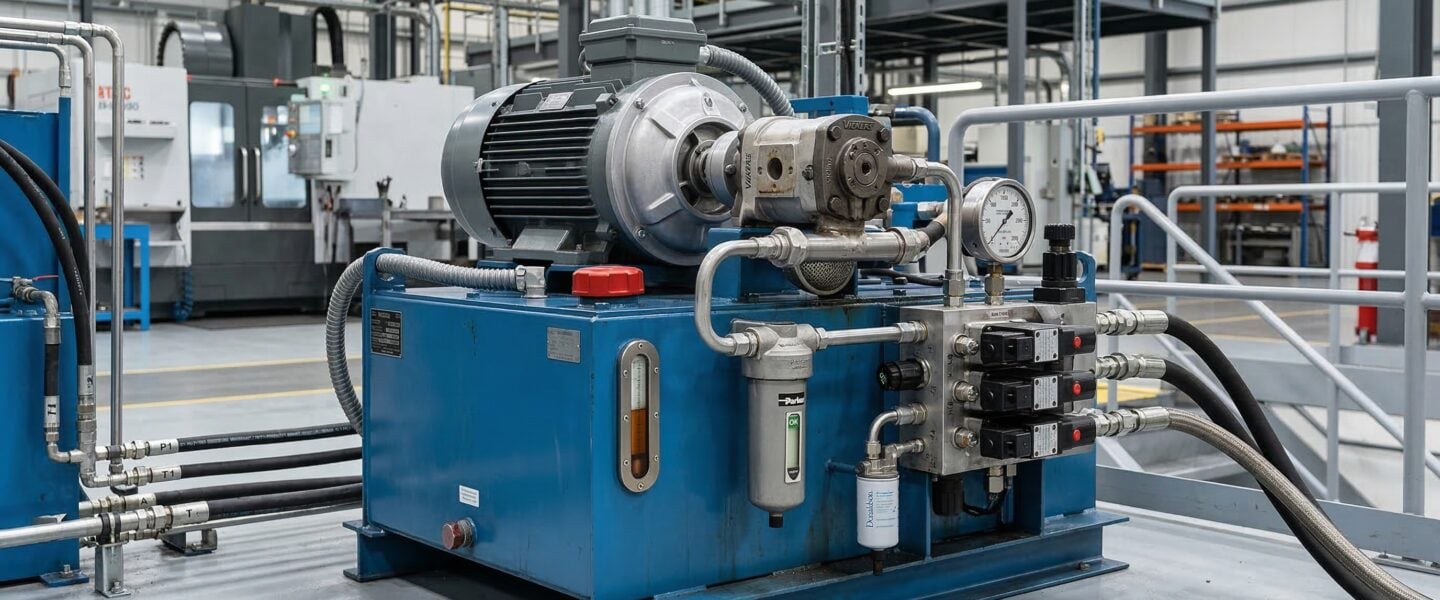
Industrial Hydraulic System Reliability & Maintenance — industrial maintenance and reliability services

Why Do Hydraulic Systems Demand Proactive Maintenance?

Hydraulic systems operate under extreme pressures, often exceeding 3,000 PSI, while maintaining tolerances measured in microns. This combination of high force and fine precision makes them uniquely vulnerable to degradation that is invisible to the naked eye. A contaminated fluid supply, a slowly leaking seal, or a pump operating slightly outside its design envelope can all erode system performance long before an operator notices anything wrong.

The challenge with hydraulic system maintenance is that most failure modes develop gradually. Internal leakage within a cylinder may reduce cycle speed by just a few percent initially, but left unaddressed, it compounds into significant productivity loss. Studies across heavy manufacturing consistently show that over 70% of hydraulic system failures trace back to fluid contamination — a problem that is entirely preventable with the right monitoring and filtration practices.

Fluid contamination is responsible for more than 70% of hydraulic system failures. A structured condition monitoring program can detect contamination issues months before they cause unplanned downtime.

At Forge Reliability, we see this pattern repeatedly: facilities running reactive maintenance programs on hydraulic equipment spend significantly more on emergency repairs, replacement components, and lost production than those with even a basic predictive approach in place.


What Are the Common Reliability Challenges in Hydraulic Equipment?

Understanding where hydraulic systems are most likely to fail is the first step toward building a maintenance strategy that actually works. While every application has its unique demands, several reliability challenges appear consistently across industries.

Fluid Degradation and Contamination

Hydraulic fluid is the lifeblood of the system, serving as the power transmission medium, lubricant, and coolant simultaneously. When fluid quality deteriorates — through moisture ingress, particulate contamination, thermal breakdown, or oxidation — every component in the circuit suffers. Valves stick or respond sluggishly. Pump wear accelerates. Seals degrade faster. Oil analysis is the single most effective tool for catching these issues early, providing clear data on particle counts, moisture levels, viscosity changes, and chemical degradation.

Pump and Motor Wear

Hydraulic pumps and motors are precision components operating under constant load. Vane pumps, piston pumps, and gear pumps each have distinct wear patterns, but all share a common trait: internal clearances increase over time, leading to reduced volumetric efficiency. A pump losing 10-15% of its volumetric efficiency may still technically function, but the system works harder, runs hotter, and cycles slower. Vibration analysis and pressure trending can identify this degradation well before catastrophic failure.

Seal and Hose Failures

Seals and hoses are consumable components, but their failure timing is highly variable. Temperature extremes, chemical incompatibility, and pressure spikes all accelerate degradation. External leaks are obvious, but internal seal bypass — where fluid crosses from the high-pressure side to the low-pressure side within a cylinder or valve — is far more insidious because it wastes energy without any visible evidence. Thermographic inspection can reveal these hidden inefficiencies by identifying abnormal heat patterns across system components.

Valve Performance Degradation

Proportional valves, servo valves, and directional control valves are the brains of a hydraulic circuit. Contamination, silt buildup, and solenoid wear can all compromise valve response times and accuracy. In applications requiring precise positioning or force control, even minor valve degradation translates directly into quality defects or reduced throughput.


How Does Condition Monitoring Apply to Hydraulic Systems?

A well-designed hydraulic system maintenance program integrates multiple condition monitoring technologies to build a complete picture of system health. No single technique captures everything, but together they provide powerful early warning capability.

Oil Analysis

Regular oil sampling and laboratory analysis is the cornerstone of hydraulic reliability. Particle counting reveals contamination levels and filtration effectiveness. Moisture testing catches water ingress before it causes corrosion or cavitation. Spectrometric analysis identifies wear metals that point to specific component degradation — elevated copper may indicate pump wear, while iron particles could signal cylinder or valve body erosion. Trending these results over time transforms oil analysis from a snapshot into a predictive tool.

Vibration and Pressure Monitoring

Vibration sensors mounted on pumps and motors detect bearing wear, cavitation, misalignment, and imbalance. Pressure transducers placed at strategic points in the circuit reveal inefficiencies such as excessive pressure drops across filters, internal leakage in actuators, and relief valve drift. When combined, vibration and pressure data provide a remarkably detailed view of mechanical and hydraulic health.

Thermal Imaging

Infrared thermography is particularly valuable for hydraulic systems because energy losses manifest as heat. A leaking relief valve, an internally bypassing cylinder, or a restricted flow path all generate measurable temperature anomalies. Routine thermal surveys can identify these problems in minutes, often during normal operation without any need to shut down equipment.

Facilities that implement oil analysis, vibration monitoring, and thermal imaging on critical hydraulic assets typically reduce unplanned hydraulic failures by 50-60% within the first two years of the program.


Maintenance Strategies That Deliver Results

Moving from reactive to proactive hydraulic system maintenance requires a structured approach that aligns maintenance activities with actual equipment condition rather than arbitrary calendar intervals.

Contamination Control

The most impactful single improvement most facilities can make is tightening contamination control. This means specifying target cleanliness levels (using ISO 4406 codes) for each system based on component sensitivity, installing appropriate filtration, using sealed reservoir breathers, and following clean oil transfer procedures. Many facilities discover that their new oil deliveries arrive at contamination levels two to four times higher than what their servo valves require — filtering oil before it enters the system is a simple fix with outsized returns.

Condition-Based Fluid Management

Rather than changing hydraulic fluid on a fixed schedule, condition-based fluid management uses oil analysis data to determine when fluid actually needs replacement. This approach frequently extends fluid life by 30-50% compared to time-based intervals while simultaneously improving system protection, because fluid is never left in service beyond its effective life.

Predictive Component Replacement

When condition monitoring identifies a pump approaching its wear limit or a valve losing response accuracy, maintenance can be planned during a scheduled window rather than reacting to an unplanned failure. This planned approach reduces repair costs (emergency parts procurement and overtime labor are expensive), minimizes collateral damage (a catastrophic pump failure sends metal debris throughout the entire circuit), and allows production planning to account for the downtime.

System Optimization

Reliability engineering goes beyond simply maintaining the current state of a hydraulic system. Reviewing system design for opportunities to reduce stress — adding accumulators to dampen pressure spikes, optimizing cooling capacity, upgrading filtration — can fundamentally change the failure profile of the equipment. These improvements often pay for themselves within 6-12 months through reduced maintenance costs and improved uptime.


What Results Can You Expect?

Facilities that commit to a comprehensive, condition-based hydraulic system maintenance program consistently report measurable improvements across multiple performance indicators. Unplanned downtime attributable to hydraulic failures typically drops by 40-60% within the first year. Fluid and component costs decrease as condition-based management eliminates both premature replacements and run-to-failure collateral damage. Energy consumption often improves as well, since a clean, well-maintained hydraulic system operates more efficiently than one suffering from contamination, internal leakage, and worn components.

Perhaps most importantly, the maintenance team shifts from a reactive posture — constantly chasing emergencies — to a proactive one where work is planned, parts are staged, and downtime is scheduled. This transformation improves not just equipment reliability, but workforce morale and safety.

At Forge Reliability, we help facilities build hydraulic reliability programs that are practical, data-driven, and aligned with real operational priorities. Whether you are starting from scratch or looking to strengthen an existing program, the path to better hydraulic system maintenance begins with understanding where your equipment stands today — and building a clear plan to move forward.

Failure Modes

Common Industrial Hydraulic System Reliability & Maintenance Failure Modes

Engineers often arrive searching for specific failures. Here are the most common issues we diagnose and resolve.

Fluid Contamination and Degradation

Particulate contamination, water ingress, and thermal degradation of hydraulic fluid cause accelerated component wear, valve sticking, and reduced system responsiveness, making fluid condition the single most important factor in hydraulic system reliability.

Key symptom: Darkened fluid color with elevated particle counts and water content

Get Help With This →

Pump Wear and Internal Leakage

Hydraulic pump internal surfaces wear from contaminated fluid, cavitation, and normal service, increasing internal leakage that reduces system pressure and flow capacity while generating heat and metallic debris that accelerates downstream component wear.

Key symptom: Declining system pressure with increased pump case drain flow

Get Help With This →

Valve Spool Sticking and Erosion

Directional and proportional valve spools stick from contamination buildup, varnish deposits, and silt-lock, causing erratic control response, and valve seats erode from high-velocity fluid passage, creating internal leakage that reduces actuator force and speed.

Key symptom: Erratic actuator response with position control instability

Get Help With This →

Cylinder Seal Failure

Cylinder rod and piston seals degrade from contamination ingress past worn rod wipers, chemical incompatibility, and excessive temperature, causing external leakage (rod seals) and loss of holding force (piston seals).

Key symptom: Visible oil leakage at cylinder rod glands with cylinder drift under load

Get Help With This →

Diagnostic Methods

Diagnostic Techniques We Use

Fluid Particle Counting and Analysis

Online or offline particle counting to ISO 4406 cleanliness standards combined with fluid analysis for water content, viscosity, acid number, and elemental composition provides the most comprehensive indicator of hydraulic system health and remaining component life.

System Pressure and Flow Testing

Systematic pressure and flow measurements at test points throughout the circuit isolate leaking components by comparing actual performance against design specifications, identifying pumps, valves, or actuators that have degraded beyond acceptable limits.

Thermal Imaging of System Components

Infrared scanning of hydraulic components, piping, and reservoir identifies internal leakage locations through localized heating, restricted flow through partially blocked passages, and cooling deficiencies that accelerate fluid degradation.

Pump Efficiency Testing

Measuring pump flow at rated pressure and comparing against no-load flow calculates volumetric efficiency, which declines as internal wear increases. Tracking efficiency over time provides objective data for scheduling pump rebuild or replacement.

Services

Services for Industrial Hydraulic System Reliability & Maintenance

Service

Asset Management for Industrial Hydraulic Systems

Asset Management programs for Industrial Hydraulic Systems, targeting common failure modes and degradation mechanisms.

Learn More →
Service

CMMS Implementation for Hydraulic Systems

CMMS implementation for hydraulic systems with ISO 4406 fluid cleanliness tracking, component hierarchy design, and filter element life management data.

Learn More →
Service

Condition Monitoring for Industrial Hydraulic Systems

Condition Monitoring programs for Industrial Hydraulic Systems, targeting common failure modes and degradation mechanisms.

Learn More →
Service

Dynamic Balancing for Hydraulic Systems

We balance hydraulic pump motor rotors and coupling assemblies to reduce vibration that accelerates hydraulic pump wear and system pressure pulsations.

Learn More →
Service

Equipment Condition Assessment for Hydraulic Systems

Condition assessment for hydraulic systems including fluid cleanliness analysis per ISO 4406, pump volumetric efficiency testing, and accumulator checks.

Learn More →
Service

Equipment Maintenance Programs for Hydraulic Systems

Forge Reliability delivers structured maintenance programs for hydraulic systems, targeting fluid contamination, seal degradation, pump wear through proven...

Learn More →
Service

FMEA for Hydraulic Systems

Our hydraulic system FMEA covers pump, valve, actuator, and contamination-related failure modes with RPN scores tied to ISO 4406 cleanliness impacts.

Learn More →
Service

Maintenance Outsourcing for Hydraulic Systems

Forge Reliability delivers outsourced maintenance for hydraulic systems, targeting fluid contamination, seal degradation, pump wear through proven...

Learn More →
Service

Maintenance Planning for Hydraulic Systems

Maintenance planning for hydraulic systems covering ISO 4406 fluid analysis schedules, filter element replacement plans, and accumulator pre-charge checks.

Learn More →
Service

Motor Current Analysis for Hydraulic Systems

We analyze hydraulic pump motor current to detect pump wear, valve leakage, and accumulator pre-charge loss through load-related current signature changes.

Learn More →
Service

Oil Analysis for Hydraulic Systems

Our hydraulic fluid analysis tracks pump wear, contamination levels, and fluid degradation to maintain ISO 4406 cleanliness and extend component life.

Learn More →
Service

Plant Optimization for Hydraulic Systems

Forge Reliability delivers plant-level optimization for hydraulic systems, targeting fluid contamination, seal degradation, pump wear through proven...

Learn More →
Service

Precision Shaft Alignment for Hydraulic Systems

We align hydraulic power unit motor-pump couplings and verify bell housing concentricity to prevent shaft seal failure and pump bearing overloading.

Learn More →
Service

Predictive Maintenance for Hydraulic Systems

We monitor hydraulic systems using fluid analysis, pressure trending, thermal imaging, and flow diagnostics to detect pump and valve degradation.

Learn More →
Service

Preventive Maintenance for Hydraulic Systems

We optimize hydraulic system PM programs by aligning fluid changes, filter service, and component inspections with ISO 4406 cleanliness requirements.

Learn More →
Service

RCM for Hydraulic Systems

RCM analysis for hydraulic systems evaluating fluid contamination per ISO 4406, pump internal wear, valve degradation, and accumulator modes per JA1011.

Learn More →
Service

Reliability Consulting for Hydraulic Systems

We provide hydraulic system reliability consulting including component FMEA, fluid contamination impact analysis, and system-level availability modeling.

Learn More →
Service

Root Cause Analysis for Hydraulic Systems

Our hydraulic system RCA investigates pump failures, valve malfunctions, and contamination events by analyzing fluid evidence and system operating data.

Learn More →
Service

Thermographic Inspection for Hydraulic Systems

We thermally image hydraulic power units, valve manifolds, and actuators to detect relief valve leakage, cooler fouling, and component overheating.

Learn More →
Service

Ultrasonic Testing for Hydraulic Systems

Our ultrasonic testing detects internal valve leakage, pressure relief bypass, and fitting leaks in hydraulic systems via airborne and contact methods.

Learn More →
Service

Vibration Analysis for Hydraulic Systems

We identify pump cavitation, valve instabilities, and accumulator precharge loss in hydraulic systems through vibration and pressure pulsation analysis.

Learn More →

Industries

Industries That Rely on Industrial Hydraulic System Reliability & Maintenance

Industry

Chemical Processing Hydraulic Systems Reliability

Forge Reliability manages contamination and seal compatibility in chemical plant hydraulic systems on presses, extruders, and reactor valve actuators.

Learn More →
Industry

Food & Beverage Hydraulic Systems Reliability

Forge Reliability eliminates contamination and leak risks in food plant hydraulic systems on packaging, forming, and material handling equipment lines.

Learn More →
Industry

Hydraulic System Reliability for Automotive Stamping and Assembly

We deliver hydraulic system reliability for automotive stamping and assembly, covering press tonnage accuracy, die cushion control, and clamp systems.

Learn More →
Industry

Hydraulic Systems Reliability for Cement & Aggregates

Our engineers maintain hydraulic system reliability on roller presses, vertical mills, crushers, and kiln thrust systems critical to cement production.

Learn More →
Industry

Hydraulic Systems Reliability for Industrial Refrigeration

Our engineers maintain hydraulic systems on dock levelers, cold storage doors, compressor slide valves, and material handling in refrigeration plants.

Learn More →
Industry

Hydraulic Systems Reliability for Logistics & Distribution

Our engineers maintain hydraulic systems on dock levelers, truck restraints, and ASRS equipment to minimize loading dock and warehouse downtime impacts.

Learn More →
Industry

Hydraulic System Reliability for Metals & Steel Rolling Mills

We deliver hydraulic system reliability for metals and steel rolling mills, covering AGC systems, coiler tension, looper control, and roll gap actuation.

Learn More →
Industry

Hydraulic System Reliability for Mining Equipment

We deliver hydraulic system reliability for mining equipment, covering haul truck systems, shovel crowd and hoist, and crusher tramp iron release circuits.

Learn More →
Industry

Hydraulic System Reliability for Pharmaceutical Manufacturing

We deliver hydraulic system reliability for pharma manufacturing, covering fluid cleanliness, servo valve drift, and tablet press force accuracy.

Learn More →
Industry

Hydraulic Systems Reliability for Plastics & Rubber

Our engineers maintain hydraulic system reliability on injection molding machines, blow molding equipment, and rubber presses at plastics facilities.

Learn More →
Industry

Hydraulic System Reliability for Pulp & Paper Mill Equipment

We deliver hydraulic system reliability for pulp and paper mills, covering press section nip control, headbox slice positioning, and chipper hydraulics.

Learn More →
Industry

Hydraulic Systems Reliability for Water & Wastewater

Our engineers maintain hydraulic system reliability on sluice gates, headworks equipment, and biosolids presses at water and wastewater treatment plants.

Learn More →
Industry

Manufacturing Hydraulic Systems Reliability

Forge Reliability eliminates contamination, overheating, and pressure loss in manufacturing hydraulic systems powering presses, clamps, and molders.

Learn More →
Industry

Oil & Gas Hydraulic Systems Reliability

Forge Reliability manages contamination and fire risk in oil and gas hydraulic systems on BOP stacks, wellhead actuators, and refinery process equipment.

Learn More →
Industry

Power Generation Hydraulic Systems Reliability

Forge Reliability manages contamination and performance in power plant hydraulic systems on turbine controls, coal handling, and dam gate operations.

Learn More →

Technical Reference

Technical Overview

Fluid contamination causes approximately 80% of hydraulic system failures. Maintain ISO 4406 cleanliness codes per component sensitivity — servo valves require 16/14/11, proportional valves 18/16/13, and gear pumps 20/18/15. Oil temperature should stay between 100-140 degrees F for optimal viscosity; every 18 degree F increase above 140 degrees F halves the oil oxidation life. Pump flow degradation testing at rated pressure reveals internal leakage — a flow loss exceeding 10% of rated output indicates the pump is approaching end of useful life. Filter differential pressure alarms should trigger at 75% of bypass valve cracking pressure.

Common Questions

FAQ

Target cleanliness levels depend on component sensitivity. Servo and proportional valve systems require ISO 16/14/11 or cleaner, while standard directional valve systems typically target ISO 18/16/13. Achieving and maintaining these targets through proper filtration (typically 3-6 micron beta-rated filters), contamination exclusion practices, and regular fluid analysis provides the foundation for hydraulic system reliability.

Limited Availability
We onboard a limited number of new facilities each quarter. Secure your assessment slot before our current availability closes. Reserve Your Spot →

Get Started

Request a Free Reliability Assessment

Tell us about your equipment and facility. Our reliability team will review your situation and recommend a tailored reliability program — no obligation.

Free initial assessment
Response within 1 business day
No obligation or commitment

No obligation. Typical response within 24 hours.

Test Your Hydraulic Fluid Cleanliness and Pump Efficiency

Connect with our hydraulic reliability team to implement contamination control and predictive monitoring on your critical hydraulic systems.

Claim Your Free Assessment →