Home Equipment Hydraulic Systems Hydraulic Cylinders

Hydraulic Cylinders

Seal wear monitoring, rod surface inspection, and drift rate testing for hydraulic cylinder reliability.

Hydraulic cylinders are the workhorses behind some of the most demanding force-generation tasks in industrial operations, from pressing and clamping in manufacturing to positioning heavy loads in mobile and structural applications. When a hydraulic cylinder fails, the consequences extend well beyond the cylinder itself — production stops, safety risks escalate, and the costs of emergency repair and unplanned downtime compound rapidly. Effective hydraulic cylinder maintenance is not about waiting for a seal to blow or a rod to score. It is about building a systematic approach to monitoring, inspection, and service that catches degradation early and keeps these critical actuators performing within specification for their full design life.
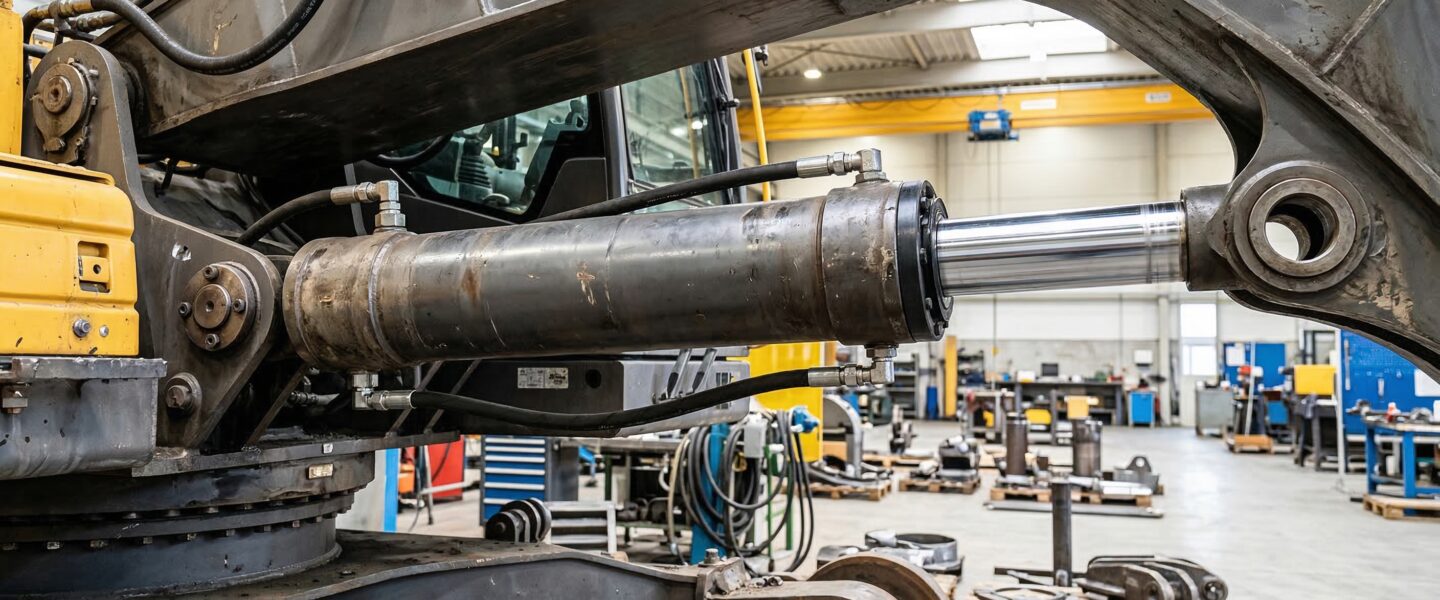
Hydraulic Cylinder Reliability & Maintenance — industrial maintenance and reliability services

Despite their relatively simple mechanical design — a tube, a piston, a rod, and seals — hydraulic cylinders operate under conditions that accelerate wear in ways that are not always obvious from external observation. Internal seal degradation, rod surface damage, bore corrosion, and fluid contamination can all progress silently until performance drops below acceptable thresholds or a sudden failure occurs. The gap between “still working” and “working correctly” is where most hydraulic cylinder reliability problems live, and closing that gap requires a deliberate maintenance strategy grounded in condition data rather than calendar schedules alone.


What Are the Common Reliability Challenges in Hydraulic Cylinder Operations?

The operating environment for hydraulic cylinders is inherently hostile to long service life. Cylinders are exposed to pressure cycling, side loading, contaminated fluids, temperature extremes, and environmental conditions ranging from clean manufacturing floors to abrasive outdoor installations. Understanding the dominant failure drivers is the first step toward managing them.

Seal Degradation and Internal Leakage

Seal failure is the single most common cause of hydraulic cylinder performance loss. Piston seals, rod seals, wiper seals, and buffer seals all degrade over time due to a combination of pressure cycling, fluid compatibility issues, temperature exposure, and contamination. The critical distinction is between external leakage — which is visible and typically prompts immediate attention — and internal leakage past the piston seal, which allows fluid to bypass from the high-pressure side to the low-pressure side of the piston. Internal leakage causes cylinder drift, reduced holding force, slower cycle times, and increased energy consumption without any visible oil on the floor. Many facilities operate cylinders with significant internal leakage for months before the performance loss becomes obvious enough to trigger a repair.

Studies of hydraulic system failures consistently show that over 70% of cylinder seal failures can be traced back to fluid contamination — particles that score sealing surfaces and accelerate wear far beyond what clean-fluid operation would produce.

Rod Surface Damage

The cylinder rod is the most vulnerable external component. Scoring, pitting, corrosion, and surface roughness changes on the rod directly affect rod seal life and leak-tightness. A rod surface that has been scored by contaminated wiper seals, impact damage, or corrosion will chew through new rod seals in a fraction of their normal service life. Replacing seals without addressing rod surface condition is one of the most common — and most wasteful — maintenance errors in hydraulic cylinder work. Rod surface finish should be maintained below 0.2 micrometers Ra for most standard seal configurations, and any visible scoring or corrosion warrants inspection and possible rod repair or replacement before seal installation.

Bore Wear and Corrosion

Cylinder bore condition deteriorates through abrasive wear from contaminated fluid, corrosion from water ingress into the hydraulic system, and erosion from high-velocity fluid flow around worn piston seals. Bore damage creates a cycle of accelerating failure: worn bore surfaces allow more leakage past the piston seal, which increases fluid velocity past the damage, which accelerates erosion. Bore honing or sleeving can restore cylinder performance, but only if the damage is caught before it exceeds repairable limits.


How Does Condition Monitoring Apply to Hydraulic Cylinders?

Condition monitoring for hydraulic cylinders draws on several complementary techniques that together provide a comprehensive picture of cylinder health. No single technique covers all failure modes, which is why an integrated approach produces the best results.

Fluid Analysis and Contamination Control

Because fluid contamination is the dominant root cause of premature seal and component wear, fluid analysis is the single highest-value monitoring activity for hydraulic cylinder reliability. Regular oil sampling with analysis for particle count (ISO 4406 cleanliness code), moisture content, viscosity, and wear metal concentrations provides direct insight into the condition of the fluid that every cylinder in the system is exposed to. Trending particle counts and wear metals over time reveals whether the system is getting cleaner or dirtier, and whether internal wear rates are stable or accelerating. Target cleanliness for most industrial hydraulic systems with proportional or servo valves is ISO 16/14/11 or cleaner, and maintaining that target through proper filtration, breather maintenance, and contamination exclusion practices is the single most effective hydraulic cylinder maintenance investment a facility can make.

Pressure and Performance Testing

Cylinder drift testing and pressure decay testing are direct measures of internal leakage severity. A drift test measures how far a loaded cylinder drifts from its commanded position over a defined time period with the directional valve in the blocked-center or closed position. A pressure decay test isolates the cylinder and monitors pressure drop over time. Both tests quantify internal leakage rate and can be trended over time to track seal condition. Establishing baseline values for new or freshly rebuilt cylinders provides the reference point that makes future trend data meaningful.

Thermal Imaging

Thermographic inspection of hydraulic cylinders can reveal internal leakage by identifying temperature differentials along the cylinder body. Fluid bypassing the piston seal generates heat from throttling, and this heat can produce measurable temperature differences between the pressurized and return sides of the piston. Thermography is particularly valuable as a screening tool for large populations of cylinders where individual pressure testing would be time-prohibitive.

Facilities that implement structured fluid cleanliness programs alongside periodic cylinder performance testing typically see seal life improvements of 3-5 times compared to operations running without contamination control targets.


Maintenance Strategies That Work for Hydraulic Cylinders

Effective hydraulic cylinder maintenance combines proactive contamination control with condition-based service intervals and disciplined rebuild practices. The goal is to maximize the service life of seals and components while avoiding both premature replacement (wasted labor and parts) and run-to-failure (unplanned downtime and secondary damage).

Contamination Exclusion and Fluid Maintenance

The highest-return maintenance activity is keeping the hydraulic fluid clean. This means properly rated filtration on pressure and return lines, desiccant breathers on reservoirs to prevent moisture and particle ingress, kidney-loop filtration for offline polishing, and disciplined practices for adding new fluid (which should always be filtered to target cleanliness before introduction to the system). New hydraulic fluid from drums or bulk delivery is rarely clean enough for direct use — new oil typically arrives at ISO 21/19/16 or dirtier, which is far above the target for most servo and proportional systems.

Condition-Based Seal Replacement

Rather than replacing seals on a fixed calendar or hour-based schedule, a condition-based approach uses drift testing, pressure decay testing, and thermal screening to determine when seal replacement is actually warranted. This approach avoids the waste of replacing seals that still have useful life remaining while catching cylinders that are degrading faster than a calendar schedule would predict. For critical cylinders, establishing maximum allowable drift rates and pressure decay thresholds tied to process performance requirements gives maintenance planners clear, objective criteria for scheduling seal service.

Rod Protection and Surface Maintenance

Protecting the rod surface extends seal life and prevents the contamination-ingress pathway that damaged wiper seals create. Rod boots and bellows should be specified for cylinders operating in dirty, wet, or abrasive environments. Rod inspection during routine maintenance should include surface finish measurement and visual assessment for scoring, pitting, and corrosion. When rod damage is identified, repair options include chrome stripping and replating, grinding and polishing, and rod replacement — the appropriate choice depends on the severity and nature of the damage.

Rebuild Quality Control

Cylinder rebuilds must be performed to standards that restore the cylinder to its original performance specification. This means measuring and documenting bore diameter and surface finish, rod diameter and surface finish, all critical dimensions and tolerances, and seal gland dimensions before selecting replacement seals. Installing new seals in a worn bore or on a scored rod does not constitute a rebuild — it is a temporary patch that will fail prematurely. Facilities that invest in proper rebuild practices and quality verification testing after reassembly see dramatically lower repeat failure rates and longer intervals between service events.


What Results Can You Expect?

Facilities that transition from reactive hydraulic cylinder maintenance to a condition-based approach built on fluid cleanliness management, performance testing, and disciplined rebuild practices consistently report measurable improvements. Seal service life increases because the root causes of premature seal failure — contamination and rod surface damage — are being actively managed rather than tolerated. Unplanned cylinder failures decrease because internal leakage and performance degradation are caught and addressed before they progress to functional failure. Energy consumption drops because cylinders operating with healthy seals do not waste hydraulic power to internal leakage.

The timeline for results is typically 6-12 months for fluid cleanliness improvements to produce measurable reductions in component wear rates, with the full benefit of a mature condition-based program realized over 2-3 years as the cylinder population transitions from unknown condition to a fully baselined and trended state. The investment is modest relative to the returns — the cost of contamination control and periodic condition testing is a fraction of the cost of a single unplanned cylinder failure on a critical production asset.

Forge Reliability works with facilities to build hydraulic cylinder maintenance programs that are practical, measurable, and aligned with production priorities. Whether you are starting from a reactive posture and need a structured path forward, or you have an existing program that is not delivering the results you expected, we can help you close the gap between current performance and what a well-executed condition-based approach delivers.

Failure Modes

Common Hydraulic Cylinder Reliability & Maintenance Failure Modes

Engineers often arrive searching for specific failures. Here are the most common issues we diagnose and resolve.

Rod Seal Extrusion and Wear

Rod seals extrude into the clearance gap between rod and gland from excessive pressure spikes or elevated temperature, causing rapid seal material loss and external leakage that creates environmental and safety concerns.

Key symptom: Visible oil leakage at rod gland increasing over stroke cycles

Get Help With This →

Piston Seal Bypass Leakage

Piston seals wear from contaminated fluid, excessive temperature, and side loading, allowing pressurized fluid to bypass the piston and reducing cylinder force output and position holding capability.

Key symptom: Cylinder drift under load with reduced extend or retract force

Get Help With This →

Rod Surface Damage

Rod surface scratches, corrosion pitting, and chrome plating damage from contamination, wiper failure, or external impact create leak paths past rod seals and accelerate seal wear with each stroke cycle.

Key symptom: Visible surface defects on rod during inspection

Get Help With This →

Cylinder Tube Scoring

Cylinder bore surfaces develop scoring from contaminated fluid, piston ring failure, or side loading that embeds metallic particles, creating abrasive surfaces that destroy replacement seals rapidly if the bore is not repaired.

Key symptom: Recurring seal failure after replacement with shortened seal life

Get Help With This →

Diagnostic Methods

Diagnostic Techniques We Use

Rod Surface Inspection and Measurement

Visual and tactile rod surface inspection combined with surface roughness measurement using portable profilometers verifies that rod condition meets seal manufacturer requirements (typically 8-16 microinch Ra) for achieving rated seal life.

Cylinder Drift Rate Testing

Measuring cylinder position change over a timed interval under constant load quantifies internal leakage rate, which when compared against allowable drift specifications determines whether piston seal replacement is required.

Internal Leakage Measurement

Capturing bypass flow from the low-pressure port while the cylinder is pressurized and stalled provides a direct measurement of piston seal leakage rate that can be trended over time to predict seal replacement timing.

Fluid Cleanliness Verification

Sampling hydraulic fluid at the cylinder inlet and testing particle count against ISO 4406 targets verifies that the fluid cleanliness reaching the cylinder meets the requirements for achieving design seal and component life.

Services

Services for Hydraulic Cylinder Reliability & Maintenance

Service

Asset Management for Hydraulic Cylinders

Asset Management programs for Hydraulic Cylinders, targeting common failure modes and degradation mechanisms.

Learn More →
Service

CMMS Implementation for Hydraulic Cylinders

CMMS implementation for hydraulic cylinders with rebuild history and scope tracking, verified seal kit BOM management, and rod condition grading records.

Learn More →
Service

Condition Monitoring for Hydraulic Cylinders

Condition Monitoring programs for Hydraulic Cylinders, targeting common failure modes and degradation mechanisms.

Learn More →
Service

Dynamic Balancing for Hydraulic Cylinders

We balance rotating components in hydraulic cylinder systems including motor-pump assemblies and rotary actuators to reduce vibration-induced seal wear.

Learn More →
Service

Equipment Condition Assessment for Hydraulic Cylinders

Condition assessment for hydraulic cylinders including rod surface evaluation, seal leak grading, bore condition analysis, and mounting wear checks.

Learn More →
Service

Equipment Maintenance for Hydraulic Cylinders

Equipment Maintenance programs for Hydraulic Cylinders, targeting common failure modes and degradation mechanisms.

Learn More →
Service

FMEA for Hydraulic Cylinders

We perform FMEA on hydraulic cylinders covering seal, rod, bore, and structural failure modes with occurrence ratings linked to fluid cleanliness.

Learn More →
Service

Maintenance Outsourcing for Hydraulic Cylinders

Maintenance Outsourcing programs for Hydraulic Cylinders, targeting common failure modes and degradation mechanisms.

Learn More →
Service

Maintenance Planning for Hydraulic Cylinders

Maintenance planning for hydraulic cylinders with job plans for seal replacement intervals, rod surface condition assessment, and bore wear inspection.

Learn More →
Service

Motor Current Analysis for Hydraulic Cylinders

Our MCSA program detects hydraulic cylinder seal leakage and rod wear by analyzing pump motor current during cylinder actuation and hold operations.

Learn More →
Service

Oil Analysis for Hydraulic Cylinders

We analyze hydraulic fluid for cylinder seal wear debris, rod contamination ingress, and fluid degradation to predict rebuild timing and prevent drift.

Learn More →
Service

Plant Optimization for Hydraulic Cylinders

Plant Optimization programs for Hydraulic Cylinders, targeting common failure modes and degradation mechanisms.

Learn More →
Service

Precision Shaft Alignment for Hydraulic Cylinders

We verify hydraulic cylinder mounting alignment to prevent rod side-loading, uneven seal wear, and premature rod gland and piston seal failure conditions.

Learn More →
Service

Predictive Maintenance for Hydraulic Cylinders

Our hydraulic cylinder PdM programs use seal leak rate monitoring, rod surface inspection, and drift testing to catch degradation before failure.

Learn More →
Service

Preventive Maintenance for Hydraulic Cylinders

Our hydraulic cylinder PM programs schedule seal replacement, rod inspection, and cushion checks based on measured leak rates and operating cycle counts.

Learn More →
Service

RCM for Hydraulic Cylinders

RCM analysis for hydraulic cylinders evaluating seal extrusion and wear, rod surface damage, bore scoring, and cushion failure modes through JA1011 logic.

Learn More →
Service

Reliability Consulting for Hydraulic Cylinders

Our reliability consulting for hydraulic cylinders includes seal life modeling, rod surface analysis, and rebuild interval optimization via Weibull data.

Learn More →
Service

Root Cause Analysis for Hydraulic Cylinders

We investigate hydraulic cylinder failures by analyzing seal damage, rod surface evidence, and bore condition to identify the root cause of leaks or drift.

Learn More →
Service

Thermographic Inspection for Hydraulic Cylinders

Our infrared inspections detect internal bypass heating, rod seal leakage, and cushion faults in hydraulic cylinders through body surface thermal analysis.

Learn More →
Service

Ultrasonic Testing for Hydraulic Cylinders

We detect internal piston seal bypass, rod seal leakage, and cushion valve faults in hydraulic cylinders using ultrasonic emission under pressure load.

Learn More →
Service

Vibration Analysis for Hydraulic Cylinders

Our analysts detect internal leakage, rod seal wear, and piston cushion faults in hydraulic cylinders using vibration and dynamic pressure measurements.

Learn More →

Industries

Industries That Rely on Hydraulic Cylinder Reliability & Maintenance

Industry

Chemical Processing Hydraulic Cylinders Reliability

We prevent seal failures and rod corrosion on hydraulic cylinders in chemical plant filter presses, extruders, and reactor closure applications safely.

Learn More →
Industry

Food & Beverage Hydraulic Cylinders Reliability

We prevent rod seal leaks and drift on food plant hydraulic cylinders in packaging, canning, and material handling equipment above product contact zones.

Learn More →
Industry

Hydraulic Cylinder Reliability in Automotive Production Equipment

Forge Reliability provides hydraulic cylinder monitoring for automotive production, targeting press ram cylinders, transfer mechanisms, and clamp fixtures.

Learn More →
Industry

Hydraulic Cylinders Reliability for Cement & Aggregates

Forge Reliability extends hydraulic cylinder life on roller presses, mill loading systems, and crusher equipment in abrasive cement plant environments.

Learn More →
Industry

Hydraulic Cylinders Reliability for Industrial Refrigeration

Forge Reliability extends hydraulic cylinder life on dock levelers, cold storage doors, and compressor controls in temperature cycling environments.

Learn More →
Industry

Hydraulic Cylinders Reliability for Logistics & Distribution

Forge Reliability extends hydraulic cylinder life on dock levelers, truck restraints, and ASRS lift systems at high-cycle distribution center sites.

Learn More →
Industry

Hydraulic Cylinder Reliability in Metals & Steel Mill Equipment

Forge Reliability provides hydraulic cylinder monitoring for metals and steel mills, targeting roll gap cylinders, shear actuators, and scrap handler arms.

Learn More →
Industry

Hydraulic Cylinder Reliability in Mining Heavy Equipment

Forge Reliability provides hydraulic cylinder monitoring for mining equipment, targeting haul truck suspension, shovel booms, and crusher adjustment rams.

Learn More →
Industry

Hydraulic Cylinder Reliability in Pharmaceutical Production

Forge Reliability provides hydraulic cylinder monitoring for pharma production, addressing seal wear, rod scoring, and positional accuracy drift.

Learn More →
Industry

Hydraulic Cylinders Reliability for Plastics & Rubber

Forge Reliability extends hydraulic cylinder life on injection mold clamps, blow molding stretch systems, and rubber press equipment for plastics use.

Learn More →
Industry

Hydraulic Cylinder Reliability in Pulp & Paper Mill Applications

Forge Reliability provides hydraulic cylinder monitoring for pulp and paper mills, targeting press section nip cylinders, calenders, and chipper feeds.

Learn More →
Industry

Hydraulic Cylinders Reliability for Water & Wastewater

Forge Reliability extends hydraulic cylinder life on sluice gates, filter presses, and headworks rakes with seal monitoring and rod condition assessment.

Learn More →
Industry

Manufacturing Hydraulic Cylinders Reliability

We solve seal wear, rod scoring, and drift problems on manufacturing hydraulic cylinders used in press, clamping, and material handling applications.

Learn More →
Industry

Oil & Gas Hydraulic Cylinders Reliability

We prevent seal failures and drift on hydraulic cylinders in oil and gas BOP rams, wellhead actuators, and refinery valve and damper control systems.

Learn More →
Industry

Power Generation Hydraulic Cylinders Reliability

We prevent seal degradation and drift on hydraulic cylinders controlling turbine valves, dampers, and gate mechanisms at power generation facilities.

Learn More →

Technical Reference

Technical Overview

Internal bypass leakage past piston seals is best detected by monitoring cylinder drift rate under load — drift exceeding 0.5 inches per minute at rated pressure typically indicates seal replacement is needed. Rod surface finish should maintain 8-16 micro-inch Ra per ISO 4287; scoring deeper than 0.002 inches usually requires rod rechroming or replacement. Hydraulic fluid cleanliness per ISO 4406 should be maintained at 18/16/13 or better for standard industrial cylinders. Cushion valve adjustment should limit deceleration forces to prevent seal extrusion at end of stroke.

Common Questions

FAQ

The primary causes of premature seal failure are fluid contamination (particles cut and abrade seal lips), rod surface damage (scratches and corrosion create leak paths), excessive operating temperature (degrades seal material properties and accelerates chemical attack), and pressure spikes beyond seal rated capacity (cause extrusion and permanent deformation). Addressing fluid cleanliness and rod surface condition eliminates the two most common root causes and typically doubles or triples seal service life.

Limited Availability
We onboard a limited number of new facilities each quarter. Secure your assessment slot before our current availability closes. Reserve Your Spot →

Get Started

Request a Free Reliability Assessment

Tell us about your equipment and facility. Our reliability team will review your situation and recommend a tailored reliability program — no obligation.

Free initial assessment
Response within 1 business day
No obligation or commitment

No obligation. Typical response within 24 hours.

Test Cylinder Drift Rates and Inspect Rod Surface Condition

Let us evaluate your hydraulic cylinder condition and build a proactive maintenance program that prevents costly seal failures and leakage.

Claim Your Free Assessment →