
Industrial generators convert mechanical energy into electrical power for facilities that depend on continuous, reliable electricity — whether as the primary power source for remote operations, as standby power for critical processes during utility outages, or as part of a distributed generation or cogeneration system. When a generator fails to start during an outage, or trips offline under load due to an undetected mechanical or electrical fault, the consequences cascade through every system that power supports. Industrial generator maintenance is not simply about keeping a machine in working order — it is about ensuring that electrical power is available when the facility needs it most, including during the high-stress events that generators are specifically installed to handle.
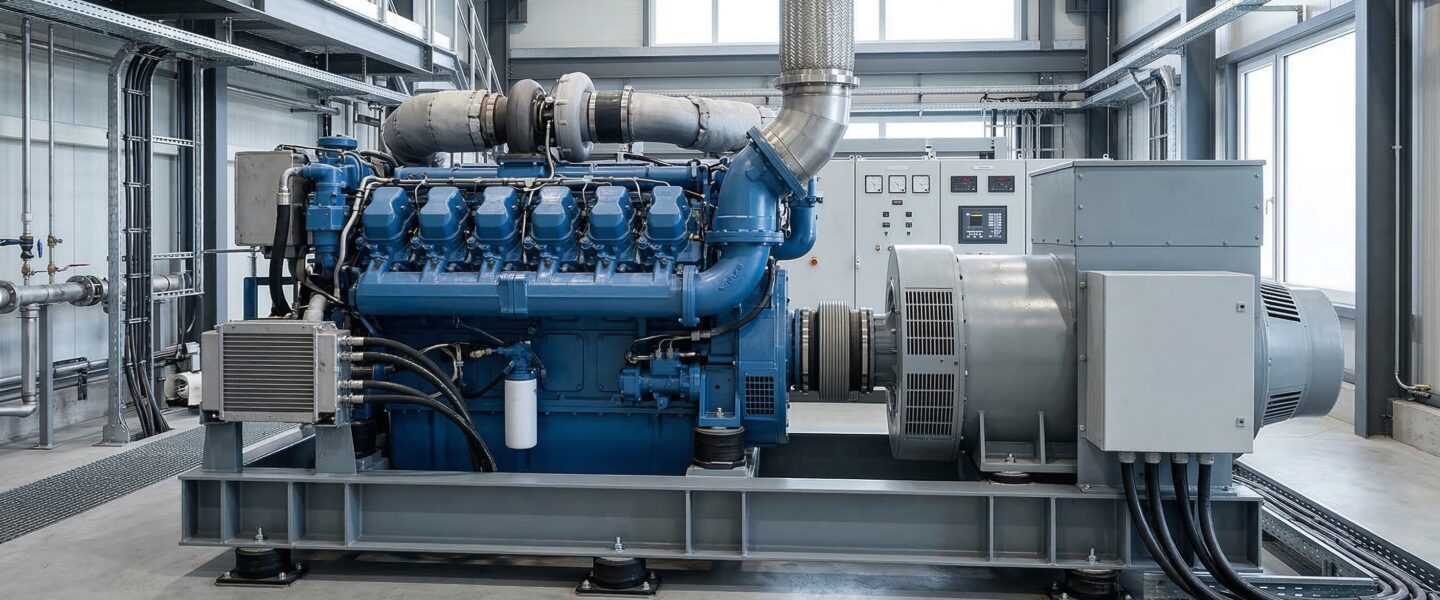
The reliability challenge with generators is compounded by their operating patterns. Standby generators may sit idle for weeks or months between events, which creates a different set of degradation mechanisms than continuously running units. Continuously operating generators in prime power or cogeneration applications accumulate wear and thermal aging at rates determined by load profile, fuel quality, and ambient conditions. Both operating modes require tailored maintenance strategies, and both demand condition monitoring that provides advance warning of developing faults. A generator that fails during its annual transfer test is an inconvenience. A generator that fails during an actual utility outage — when it is the only source of power for life safety systems, process controls, or perishable inventory — is a crisis that effective maintenance prevents.
What Are the Common Reliability Challenges in Industrial Generator Operations?
Generator reliability encompasses the prime mover (engine or turbine), the alternator (generator end), the control and protection systems, and the fuel and cooling support systems. Each subsystem has distinct failure modes and degradation mechanisms that must be addressed by a comprehensive maintenance program.
Prime Mover Degradation
Diesel and gas engine-driven generators are subject to the full range of reciprocating engine wear mechanisms: cylinder liner and piston ring wear, valve train degradation, fuel injection system fouling and wear, turbocharger bearing and seal deterioration, and cooling system degradation. For engines that operate primarily in standby mode, additional concerns include fuel degradation in storage tanks, wet stacking from extended low-load operation during testing, and lubrication oil degradation from condensation and oxidation during idle periods. Wet stacking — the accumulation of unburned fuel and carbon deposits in the exhaust system from running at loads below 30% of rated capacity — is one of the most common and preventable problems in standby generator maintenance, and it stems directly from inadequate load bank testing practices.
Alternator Insulation and Winding Condition
The generator alternator (the electrical machine that converts mechanical rotation to AC power) shares many of the same insulation degradation mechanisms as large induction motors: thermal aging, mechanical stress from electromagnetic forces and vibration, contamination from moisture and dust ingress, and electrical stress from transient loading events. Standby generators face an additional challenge — insulation can absorb moisture during extended idle periods, reducing insulation resistance to levels that would be unacceptable for reliable operation. This is why insulation resistance testing before returning a generator to service after extended idle periods is a critical maintenance practice. For larger generators, stator winding insulation condition is the single most important factor determining remaining electrical life, and tracking insulation resistance, polarization index, and capacitance values over time provides the trending data needed to predict when rewinding will be required.
Industry data on generator failures shows that electrical failures account for approximately 30-40% of generator forced outages, with the majority originating in the stator winding, excitation system, or control and protection circuits — all areas where condition monitoring and preventive testing can identify problems before they cause a failure under load.
Fuel System and Storage Issues
For standby generators, fuel quality and fuel system reliability are critical and frequently overlooked. Diesel fuel degrades in storage through oxidation, microbial growth, and water accumulation from condensation in partially filled tanks. Degraded fuel causes injector fouling, filter plugging, reduced combustion efficiency, and in severe cases, engine damage. Fuel system components — transfer pumps, day tanks, fuel filters, supply and return lines — must be maintained and tested regularly. A generator with a perfectly maintained engine and alternator will fail to perform if the fuel system cannot deliver clean fuel at the required flow rate and pressure when called upon.
Cooling System Degradation
Cooling system failures are a leading cause of generator shutdowns during extended run events. Coolant degradation from additive depletion, contamination, and glycol breakdown reduces corrosion protection and heat transfer efficiency. Radiator and heat exchanger fouling from external debris (in air-cooled radiators) or internal scale and deposits (in jacket water systems) reduces cooling capacity. Thermostat failures, water pump wear, and hose deterioration are age-related degradation mechanisms that can be detected through inspection and testing but are often neglected until they cause an overtemperature shutdown during a loaded run.
How Does Condition Monitoring Apply to Industrial Generators?
Condition monitoring for industrial generators must cover mechanical, electrical, and fluid system health. The monitoring approach should be adapted to the generator’s operating pattern — continuous-duty generators benefit from the same trending approach used for other rotating equipment, while standby generators require a testing and inspection protocol that compensates for the lack of continuous operating data.
Vibration Analysis for Mechanical Condition
Vibration monitoring on the engine and alternator bearings detects mechanical degradation including bearing wear, misalignment between the engine and alternator, structural looseness, and rotating component imbalance. For engine-driven generators, vibration signatures also reflect engine mechanical condition — changes in firing pulse amplitudes and timing can indicate developing problems with individual cylinders. Baseline vibration data should be collected on every generator during commissioning or during the next available loaded run, as this baseline is the reference against which all future measurements are evaluated. For standby generators, vibration data collection during monthly load bank tests provides the operating data needed for trending.
Electrical Testing
Electrical testing for generators includes insulation resistance and polarization index testing on stator and rotor windings, resistance measurements on all windings and connections, excitation system testing, and protective relay verification. For larger generators, partial discharge monitoring can detect stator winding insulation degradation during loaded operation. Winding temperature trending — comparing operating temperatures under similar load conditions over time — reveals insulation degradation and cooling system changes. Surge comparison testing on alternator windings detects turn-to-turn insulation weaknesses that conventional megger testing may not identify, providing an additional layer of detection for the most common winding failure initiation mechanism.
Oil and Coolant Analysis
Engine oil analysis provides insight into engine wear rates, combustion efficiency, coolant leaks (detected through sodium and potassium presence), fuel dilution, and oil condition. Sampling intervals of 250 operating hours or quarterly for standby units (whichever comes first) capture trends while providing enough data points to distinguish between normal wear rates and accelerating degradation. Coolant analysis — including pH, additive concentration, glycol concentration, and contamination levels — should be performed at least annually and whenever the cooling system is serviced. For generators with separate gearbox or accessory drive lubrication, those oil systems require independent analysis.
Standby generators that receive monthly loaded testing at 75% or higher rated load for a minimum of 30 minutes, combined with quarterly oil analysis and annual electrical testing, demonstrate failure-on-demand rates that are five to eight times lower than generators maintained with only visual inspections and unloaded run tests.
Maintenance Strategies That Work for Industrial Generators
Generator maintenance strategies must account for the dual requirements of maintaining mechanical and electrical readiness and verifying that the generator will actually perform when called upon. This is particularly important for standby generators, where the true test of maintenance effectiveness is not whether the generator runs during a test — it is whether it starts, connects, and sustains load during an actual power event.
Load Bank Testing
Regular load bank testing is the single most important operational maintenance practice for standby generators. Running the generator under a substantial load — at least 75% of nameplate rating — exercises the engine, alternator, cooling system, fuel system, and controls under conditions that approximate actual emergency operation. Load bank testing clears wet stacking deposits, verifies cooling system capacity at operating temperatures, confirms fuel system delivery performance, and provides operating data for vibration analysis, oil analysis, and electrical performance trending. Monthly load bank tests of 30-60 minutes duration provide the data and the operational exercise that keeps standby generators in a genuine state of readiness.
Fuel Management
Fuel management for standby generators includes regular fuel sampling and testing for water content, microbial contamination, oxidation stability, and particulate levels; fuel polishing or turnover to prevent long-term degradation in storage; tank inspection for water accumulation, sediment, and microbial growth; and fuel filter replacement based on condition data (differential pressure and fuel analysis results) rather than fixed calendar schedules. For critical installations, maintaining a fuel treatment and stabilization program extends storage life and ensures that the fuel delivered to the engine during an emergency is as clean and combustible as fresh fuel.
Electrical System Maintenance
Generator electrical maintenance includes annual insulation resistance testing on stator and rotor windings, verification of excitation system operation and voltage regulation performance, testing of protective relays and controls, inspection and torquing of all electrical connections (which are subject to thermal cycling and vibration loosening), and verification of automatic transfer switch operation under load. Battery systems for engine starting should be tested under load — not just voltage-checked — on a quarterly basis, with battery replacement driven by load test performance rather than age alone.
Engine and Mechanical Maintenance
Engine maintenance follows the manufacturer’s prescribed service intervals for oil and filter changes, belt replacement, coolant service, valve adjustment, injector service, and turbocharger inspection, with intervals adjusted based on actual operating hours and oil analysis results. The key distinction from general-purpose engine maintenance is the criticality of every component — there is no acceptable level of deferred maintenance on a generator that is expected to perform reliably during emergencies. Every maintenance item that is deferred is a risk that accumulates until the next time the generator is called upon to perform.
What Results Can You Expect?
Facilities that invest in a disciplined industrial generator maintenance program built on regular loaded testing, condition monitoring, and comprehensive preventive maintenance achieve a level of generator reliability that reactive and minimal-maintenance approaches cannot match. The most meaningful metric for standby generators is the failure-on-demand rate — the probability that the generator will fail to start, connect, or sustain load when an actual power event occurs. Well-maintained generators achieve failure-on-demand rates below 2%, while generators maintained with only visual inspections and unloaded run tests commonly show rates of 15% or higher.
For continuously operating generators in prime power and cogeneration applications, a structured maintenance program extends overhaul intervals, reduces forced outage rates, and improves heat rate and fuel efficiency through proper engine tuning and combustion optimization. The economic returns include both direct maintenance cost savings and the avoided costs of power interruptions, production losses, and emergency repairs.
Forge Reliability works with facilities to build industrial generator maintenance programs that are matched to your generators’ operating profiles, criticality classifications, and existing maintenance infrastructure. Whether you operate a single standby generator protecting a critical facility or a fleet of prime power generators supporting distributed operations, we provide the monitoring, testing, and maintenance planning expertise that ensures your generators deliver reliable power when you need it most.