Screw Conveyors

Motor current monitoring, hanger bearing diagnostics, and trough wear measurement for screw conveyor reliability.

Why Does Screw Conveyor Maintenance Require More Than Routine Inspections?

Screw conveyors are deceptively simple machines. A helical flight rotating inside a trough, moving bulk material from one point to another — the mechanical concept could not be more straightforward. But that simplicity masks a set of reliability challenges that consistently surprise facilities operating without a structured maintenance approach. Screw conveyors handle some of the most abrasive, corrosive, and unpredictable materials in industrial processing, and they do so while subjected to loading conditions that change with material moisture content, particle size distribution, feed rate variability, and ambient temperature. A screw conveyor that runs flawlessly for months can seize in hours when material conditions shift, and the damage from a single jamming event can require days of downtime and thousands of dollars in component replacement. Effective screw conveyor maintenance starts with understanding the specific degradation mechanisms active in your application and monitoring the parameters that reveal when those mechanisms are approaching intervention thresholds.
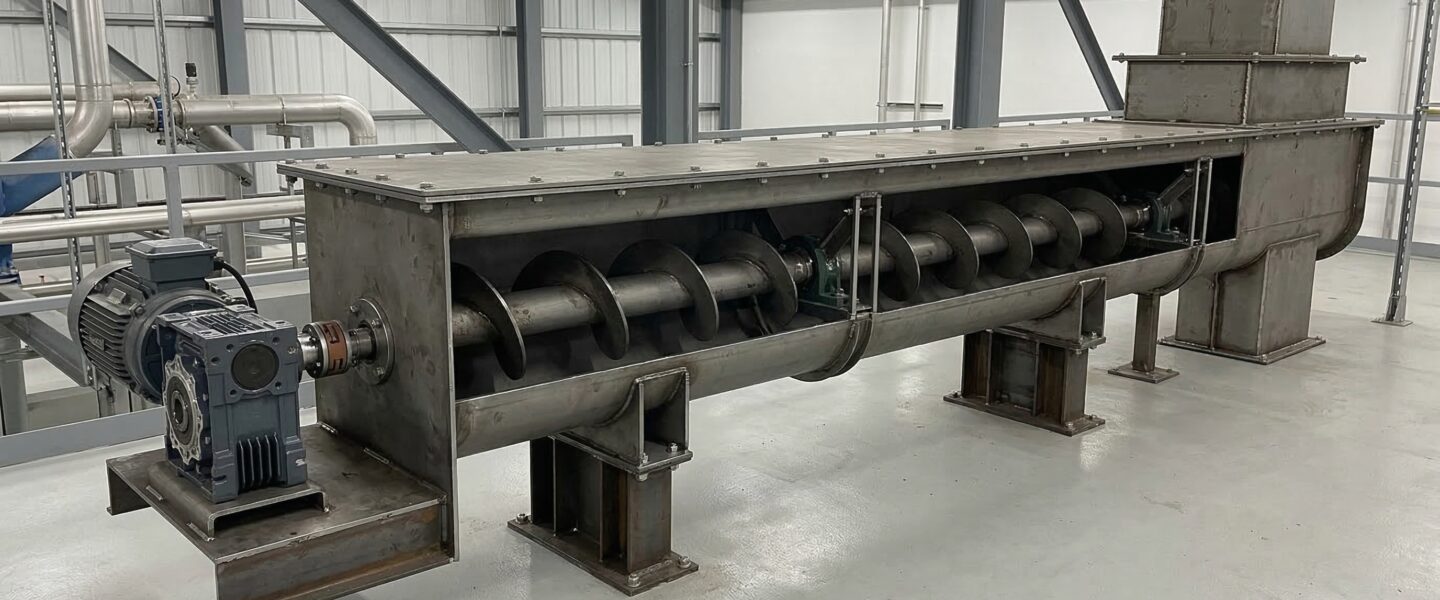
Screw Conveyor Reliability & Maintenance — industrial maintenance and reliability services

At Forge Reliability, we work with facilities across cement and aggregates, food and beverage, mining, chemical processing, and wastewater treatment — all industries where screw conveyors perform essential material transport functions. The equipment may look similar across these sectors, but the failure modes and their timelines vary dramatically depending on what the conveyor is moving, how fast it is running, and what environmental conditions surround it. A screw conveyor handling dry cement clinker faces abrasive wear challenges fundamentally different from one transporting wet grain or dewatered biosolids. Our approach to screw conveyor maintenance begins with a material-specific assessment that identifies which wear mechanisms will dominate and designs the monitoring and maintenance strategy accordingly.

Abrasive material handling applications can reduce screw flight thickness by 25-40% within 12 to 18 months of continuous operation — a rate of wear that demands proactive monitoring to avoid catastrophic flight separation or trough penetration.


What Are the Common Reliability Challenges in Screw Conveyor Operations?

Screw conveyors face a combination of mechanical wear, material interaction, and environmental challenges that make their reliability performance highly dependent on operating context. Unlike rotating machines where bearing condition and alignment dominate the failure profile, screw conveyors distribute their wear across a broader set of components — flights, trough liners, hanger bearings, end bearings, seals, and the screw shaft itself — with the relative importance of each component varying by application.

Flight and Trough Wear

The screw flight and trough liner are the primary wear surfaces in any screw conveyor, and their condition directly determines conveyor efficiency and throughput. As flight edges wear, the clearance between the flight outer diameter and the trough increases, allowing material to bypass the conveying action and reducing volumetric efficiency. In severe cases, flight wear progresses to the point where the flight separates from the shaft entirely, causing immediate loss of conveying function and potential trough damage from the detached flight segment. Trough liner wear follows a similar pattern — the liner thins progressively under abrasive contact, eventually exposing the trough structural material to direct wear and creating a replacement requirement that extends well beyond a simple liner change. Monitoring flight and trough condition through periodic thickness measurements, throughput tracking, and power consumption trending allows facilities to plan component replacements during scheduled outages rather than responding to in-service failures.

Hanger Bearing Failures

Hanger bearings — the intermediate bearings that support long screw assemblies between the end bearings — operate in arguably the worst environment of any bearing in industrial service. They are submerged in or exposed to the conveyed material, subjected to radial loads from the screw weight and material forces, and often located in positions that make inspection and lubrication difficult. In abrasive applications, hanger bearing life can be as short as 2,000 to 4,000 operating hours, and a failed hanger bearing typically causes the screw to deflect, contact the trough, and generate accelerating secondary damage. The selection of hanger bearing type and material — from self-lubricating polymer bearings to hardened steel designs — must match the specific material and operating conditions, and the monitoring strategy must account for the bearing’s location and accessibility.

Material Buildup, Packing, and Jamming

Many screw conveyor reliability problems originate not in mechanical wear but in material behavior. Sticky, hygroscopic, or cohesive materials can build up on the screw flights, inside the trough, and around the discharge opening, progressively reducing conveying efficiency and increasing drive torque until the conveyor stalls or the drive system trips on overload. Material packing in the conveyor housing can create localized pressure zones that accelerate wear, distort the screw assembly, and damage seals. Frozen material in outdoor installations, moisture-induced caking in bulk storage applications, and temperature-related viscosity changes in heated conveyors all contribute to jamming events that produce immediate downtime and potential mechanical damage.


Condition Monitoring Approaches for Screw Conveyors

Screw conveyors present unique monitoring challenges compared to more traditional rotating machinery. The low operating speeds, high torque loads, and material-immersed components limit the applicability of some standard monitoring techniques while creating opportunities for others. The monitoring program must be tailored to the specific conveyor design, material characteristics, and failure mode priorities identified during the initial assessment.

Drive System Monitoring

The drive motor and gearbox represent the most accessible monitoring points on a screw conveyor and provide valuable indirect information about conveyor condition. Motor current trending reveals changes in conveyor loading caused by material buildup, bearing degradation, flight wear, or misalignment. A gradual increase in average motor current at constant throughput indicates increasing mechanical resistance — possibly from bearing wear, material accumulation, or trough contact. Sudden current spikes suggest material slugs, jamming events, or mechanical interference. Gearbox vibration analysis detects gear wear, bearing degradation, and lubrication problems using the same spectral analysis techniques applied to any industrial gearbox. Oil analysis on enclosed gearboxes tracks wear metal generation, contamination ingress, and lubricant condition.

Thermal Monitoring

Infrared thermography provides practical monitoring capability for screw conveyor bearings, drive components, and material interaction zones. Hanger bearing temperatures that exceed baseline values by 20 to 40 degrees indicate lubrication depletion, contamination ingress, or bearing deterioration that warrants investigation. End bearing housings, gearbox cases, and motor frames all produce thermal signatures that correlate with their internal condition. Thermal surveys of the trough exterior can also reveal material buildup patterns, dead zones where material is packing against the trough wall, and areas where heat generation from friction between the screw and trough suggests contact that should not be occurring.

Wear Measurement and Throughput Tracking

Direct measurement of flight thickness, trough liner thickness, and screw-to-trough clearance during planned shutdowns provides the most definitive assessment of conveyor condition and remaining component life. Establishing measurement locations and baseline values at installation or after component replacement enables wear rate calculations that predict when components will reach their replacement threshold. Between shutdowns, throughput monitoring — comparing actual material delivery rates against expected rates at a given screw speed — provides continuous indirect indication of conveyor efficiency that reflects the cumulative effect of flight wear, material buildup, and clearance changes.

Facilities that implement structured monitoring on critical screw conveyors typically reduce unplanned conveyor downtime by 45-60% and extend average component replacement intervals by 20-30% through optimized wear management.


Maintenance Strategies and Expected Outcomes

Effective screw conveyor maintenance programs combine condition-based monitoring of bearings and drive components with scheduled inspection and measurement activities for wear components that require direct assessment. The balance between these approaches depends on conveyor criticality, material characteristics, and the consequences of failure in each specific installation.

Application-Specific Wear Management

The foundation of screw conveyor maintenance is understanding the wear rate for each material and operating condition and planning component replacements accordingly. In highly abrasive applications — cement, slag, sand, or mineral ore — flight and liner replacements may be required every 6 to 18 months, and the maintenance program must include regular thickness measurements to track wear progression and predict replacement timing. In less abrasive applications, the same components may last several years, and the monitoring emphasis shifts toward bearing condition and drive system health. The key is establishing application-specific wear rates through measurement rather than relying on generic manufacturer guidelines that cannot account for the variability in material properties and operating conditions across different installations.

Spare Parts Strategy and Outage Planning

Screw conveyor components — particularly screw sections, trough liners, and hanger bearings — often carry lead times of four to twelve weeks for custom or application-specific designs. A maintenance program that identifies replacement needs through monitoring and measurement provides the lead time required to procure parts before the outage rather than after the failure. This procurement advantage alone frequently justifies the monitoring investment by eliminating expedited shipping costs, avoiding extended downtime while waiting for parts, and enabling competitive sourcing rather than emergency purchasing from the nearest available supplier.

What Results to Expect

Facilities that transition from reactive to condition-based screw conveyor maintenance consistently achieve several measurable outcomes. Unplanned downtime decreases significantly as bearing failures, jamming events, and wear-through incidents are anticipated and addressed proactively. Component life is maximized because replacements occur at the actual wear limit rather than at an arbitrary interval that may be too early or too late. Drive system reliability improves as motor and gearbox problems are detected before they cause secondary damage to the conveyor assembly. Overall conveyor system availability improvements of 10-20% are common in facilities that previously operated their conveyors reactively, with corresponding improvements in upstream and downstream process reliability as conveyor-related production interruptions decrease. For facilities where screw conveyors feed critical process equipment — kilns, dryers, reactors, or packaging lines — the value of improved conveyor reliability extends far beyond the conveyor maintenance budget into overall plant throughput and efficiency.

Failure Modes

Common Screw Conveyor Reliability & Maintenance Failure Modes

Engineers often arrive searching for specific failures. Here are the most common issues we diagnose and resolve.

Hanger Bearing Failure

Intermediate hanger bearings supporting long conveyor shafts fail from material packing, inadequate lubrication access, and abrasive wear, causing shaft deflection, flight-to-trough contact, and potential shaft breakage.

Key symptom: Elevated hanger bearing temperature with visible material leakage

Get Help With This →

Trough and Flight Wear

Conveyor flights and trough liners wear from abrasive material contact, reducing conveying efficiency and allowing material to accumulate in worn areas, increasing power requirements and creating potential blockage conditions.

Key symptom: Declining throughput with increased motor current at constant speed

Get Help With This →

Coupling and Shaft Failure

Coupling bolts and shaft sections fail from torsional overload, fatigue from cyclic loading, and corrosion, particularly at coupling joints and near hanger bearing locations where bending stresses combine with torsional loads.

Key symptom: Visible shaft deflection or audible clicking at coupling locations

Get Help With This →

Drive Component Overload

Drive motors, gear reducers, and chain or belt drives overload from material surge feeding, blockages, or excessive conveyor length, causing thermal trips, coupling failure, or gear damage.

Key symptom: Motor overcurrent trips during startup or surge loading conditions

Get Help With This →

Diagnostic Methods

Diagnostic Techniques We Use

Motor Current Monitoring

Continuous motor current monitoring detects overloading from material blockage, flight-to-trough contact, and bearing seizure through current magnitude and waveform pattern changes that indicate specific fault conditions.

Vibration Analysis at Drive and Hanger Bearings

Vibration measurements on hanger bearing housings, drive bearings, and gear reducers identify bearing degradation, gear mesh problems, and shaft imbalance from worn flights or material buildup.

Trough Wear Measurement

Periodic ultrasonic thickness measurement of trough bottom and sidewalls at wear-prone locations (inlet, discharge, and direction changes) tracks material loss rate and determines replacement timing.

Thermal Monitoring of Bearings and Drive

Infrared scanning of hanger bearings, drive motor, gear reducer, and coupling guards identifies overheating conditions from bearing distress, overloading, and misalignment before they progress to failure.

Services

Services for Screw Conveyor Reliability & Maintenance

Service

Asset Management for Screw Conveyors

Asset Management programs for Screw Conveyors, targeting common failure modes and degradation mechanisms.

Learn More →
Service

CMMS Implementation for Screw Conveyors

CMMS implementation for screw conveyors with flight diameter wear records, hanger bearing condition tracking by position, and trough liner condition data.

Learn More →
Service

Condition Monitoring for Screw Conveyors

Condition Monitoring programs for Screw Conveyors, targeting common failure modes and degradation mechanisms.

Learn More →
Service

Dynamic Balancing for Screw Conveyors

We balance screw conveyor flights and shafts to reduce vibration-induced trough wear and hanger bearing loads caused by screw mass eccentricity issues.

Learn More →
Service

Equipment Condition Assessment for Screw Conveyors

Condition assessment for screw conveyors including flight diameter measurement, trough liner thickness evaluation, and hanger bearing condition inspection.

Learn More →
Service

Equipment Maintenance for Screw Conveyors

Equipment Maintenance programs for Screw Conveyors, targeting common failure modes and degradation mechanisms.

Learn More →
Service

FMEA for Screw Conveyors

We perform FMEA on screw conveyors covering flight wear, hanger bearing, trough, and drive failure modes with service-specific occurrence ratings applied.

Learn More →
Service

Maintenance Outsourcing for Screw Conveyors

Maintenance Outsourcing programs for Screw Conveyors, targeting common failure modes and degradation mechanisms.

Learn More →
Service

Maintenance Planning for Screw Conveyors

Maintenance planning for screw conveyors with job plans for flight wear measurement, hanger bearing service intervals, and trough liner inspection tasks.

Learn More →
Service

Motor Current Analysis for Screw Conveyors

Our MCSA services detect screw conveyor bearing wear, flight damage, and trough wear by analyzing motor current load patterns and spectral content.

Learn More →
Service

Oil Analysis for Screw Conveyors

Our oil analysis detects hanger bearing wear, gearbox degradation, and process contamination in screw conveyor drive lubricants and grease systems.

Learn More →
Service

Plant Optimization for Screw Conveyors

Plant Optimization programs for Screw Conveyors, targeting common failure modes and degradation mechanisms.

Learn More →
Service

Precision Shaft Alignment for Screw Conveyors

We align screw conveyor drive components and verify hanger bearing concentricity to prevent screw-to-trough contact and premature bearing failure.

Learn More →
Service

Predictive Maintenance for Screw Conveyors

We apply vibration monitoring, motor current analysis, and bearing diagnostics to predict screw conveyor failures and prevent material blockages.

Learn More →
Service

Preventive Maintenance for Screw Conveyors

Our screw conveyor PM programs set hanger bearing service, flight inspection, and trough wear check intervals based on material abrasiveness and duty.

Learn More →
Service

RCM for Screw Conveyors

RCM analysis for screw conveyors evaluating flight abrasion wear, hanger bearing seizure, trough liner erosion, and drive component modes per SAE JA1011.

Learn More →
Service

Reliability Consulting for Screw Conveyors

Our screw conveyor reliability consulting covers hanger bearing life analysis, flight wear prediction, and trough liner replacement interval optimization.

Learn More →
Service

Root Cause Analysis for Screw Conveyors

Our screw conveyor RCA examines flight wear patterns, hanger bearing failures, and drive overloads to trace failures back to material or design causes.

Learn More →
Service

Thermographic Inspection for Screw Conveyors

Our infrared inspections detect hanger bearing overheating, trough hot spots, and drive faults in screw conveyors without opening for inspection.

Learn More →
Service

Ultrasonic Testing for Screw Conveyors

We apply ultrasonic testing to screw conveyors to detect hanger bearing lubrication failure, gearbox faults, and housing seal air leaks in service.

Learn More →
Service

Vibration Analysis for Screw Conveyors

Our vibration analysis detects hanger bearing wear, screw flight damage, and drive faults in screw conveyors to prevent material flow interruptions.

Learn More →

Industries

Industries That Rely on Screw Conveyor Reliability & Maintenance

Industry

Chemical Processing Screw Conveyors Reliability

Forge Reliability prevents corrosion-driven flight wear and bearing failures in screw conveyors handling chemical powders, catalysts, and bulk solids.

Learn More →
Industry

Food & Beverage Screw Conveyors Reliability

Forge Reliability prevents screw conveyor trough wear and bearing failures in food plant ingredient handling for flour, sugar, and granular materials.

Learn More →
Industry

Manufacturing Screw Conveyors Reliability

Forge Reliability prevents screw conveyor trough wear, hanger bearing failure, and drive overloads in manufacturing bulk material handling operations.

Learn More →
Industry

Oil & Gas Screw Conveyors Reliability

Forge Reliability prevents flight erosion and bearing failures on screw conveyors handling catalyst, coke, sulfur, and drilling solids across oil and gas.

Learn More →
Industry

Power Generation Screw Conveyors Reliability

Forge Reliability prevents flight erosion and bearing failures on screw conveyors handling fly ash, bottom ash, and limestone at power generation stations.

Learn More →
Industry

Screw Conveyor Reliability for Automotive Plant Operations

We provide screw conveyor reliability for automotive plants, covering metal chip handling, coolant filtration sludge transport, and scrap management.

Learn More →
Industry

Screw Conveyors Reliability for Cement & Aggregates

We maintain screw conveyor reliability for cement transport, kiln feed dosing, and dust reclaim systems where material jamming halts cement production.

Learn More →
Industry

Screw Conveyors Reliability for Industrial Refrigeration

We maintain screw conveyor reliability for ice production systems, frozen product handling, and ingredient delivery at refrigeration processing plants.

Learn More →
Industry

Screw Conveyors Reliability for Logistics & Distribution

We maintain screw conveyor reliability in packaging material delivery, waste handling, and bulk product dispensing at distribution center facilities.

Learn More →
Industry

Screw Conveyor Reliability in Metals & Steel Mill Systems

We provide screw conveyor reliability for metals and steel mills, covering alloy powder feeding, dust handling from baghouse hoppers, and lime injection.

Learn More →
Industry

Screw Conveyor Reliability for Mining Material Handling

We provide screw conveyor reliability for mining operations, covering reagent feed systems, concentrate handling, and filter cake transport from presses.

Learn More →
Industry

Screw Conveyor Reliability for Pharmaceutical Powder Handling

We provide screw conveyor reliability for pharma powder handling, covering screw flight wear, bearing failures, and cross-contamination prevention.

Learn More →
Industry

Screw Conveyors Reliability for Plastics & Rubber

We maintain screw conveyor reliability for resin pellet handling, additive dosing, and regrind transport systems in plastics and rubber processing plants.

Learn More →
Industry

Screw Conveyor Reliability in Pulp & Paper Mill Systems

We provide screw conveyor reliability for pulp and paper mills, covering bark handling, sludge transport, lime mud systems, and chip metering screws.

Learn More →
Industry

Screw Conveyors Reliability for Water & Wastewater

We maintain screw conveyor reliability for grit classifiers, screenings transport, and biosolids handling at water and wastewater treatment plants.

Learn More →

Technical Reference

Technical Overview

Hanger bearing condition is best monitored using ultrasonic techniques — grease-lubricated polymer bearings should read below 30 dB above baseline on demodulated signals. Flight-to-trough clearance should be maintained within 1/8 to 3/16 inch for standard CEMA designs; clearance exceeding 1/4 inch causes material bypassing and reduced throughput. Drive motor current trending under consistent load conditions detects increasing mechanical resistance from bearing wear or material packing. Screw conveyor trough liner thickness should be inspected annually — replace liners at 50% of original thickness to prevent trough penetration.

Common Questions

FAQ

Hanger bearing failure is primarily caused by material packing around the bearing and shaft, which prevents proper lubrication and creates abrasive wear conditions. Poor bearing material selection for the conveyed product, inadequate sealing that allows fine material ingress, and insufficient lubrication frequency also contribute. Self-cleaning bearing designs, improved sealing arrangements, and automatic lubrication systems significantly reduce hanger bearing failure rates.

Limited Availability
We onboard a limited number of new facilities each quarter. Secure your assessment slot before our current availability closes. Reserve Your Spot →

Get Started

Request a Free Reliability Assessment

Tell us about your equipment and facility. Our reliability team will review your situation and recommend a tailored reliability program — no obligation.

Free initial assessment
Response within 1 business day
No obligation or commitment

No obligation. Typical response within 24 hours.

Monitor Hanger Bearings Before They Seize and Damage the Screw

Let our engineers evaluate your screw conveyor systems and design a maintenance plan that prevents hanger bearing failures and throughput losses.

Claim Your Free Assessment →