
Why Does Screw Conveyor Maintenance Require More Than Routine Inspections?
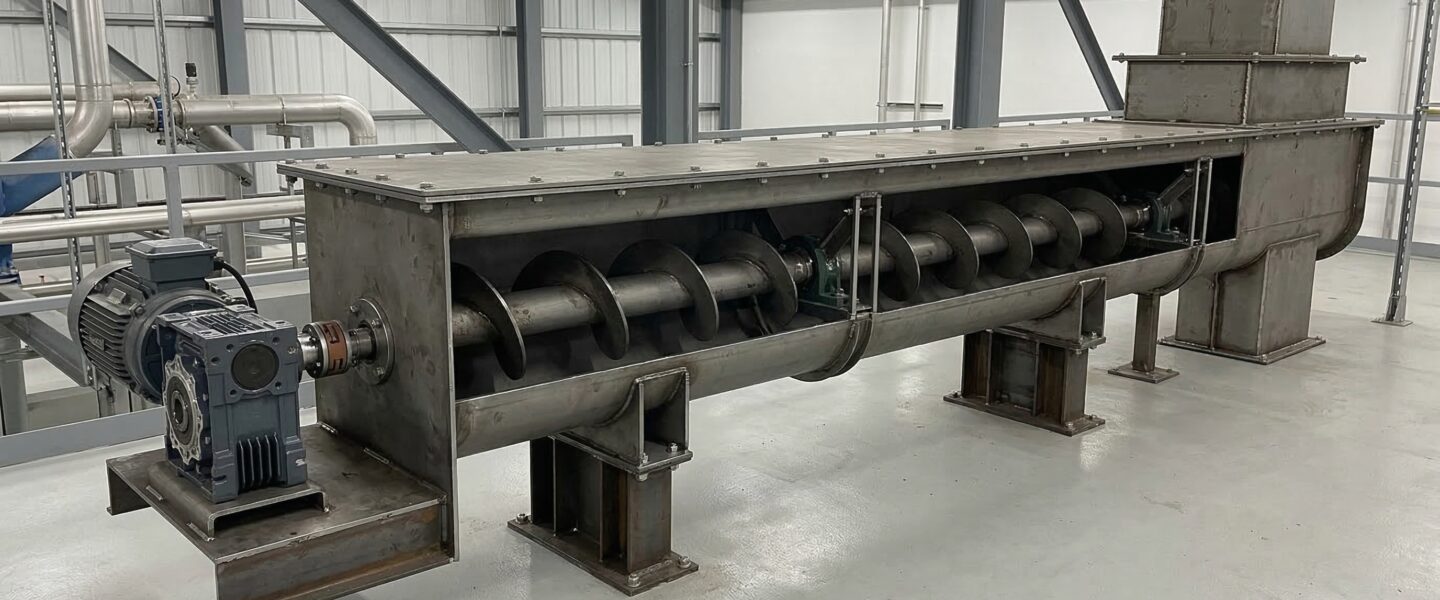
Screw conveyors are deceptively simple machines. A helical flight rotating inside a trough, moving bulk material from one point to another — the mechanical concept could not be more straightforward. But that simplicity masks a set of reliability challenges that consistently surprise facilities operating without a structured maintenance approach. Screw conveyors handle some of the most abrasive, corrosive, and unpredictable materials in industrial processing, and they do so while subjected to loading conditions that change with material moisture content, particle size distribution, feed rate variability, and ambient temperature. A screw conveyor that runs flawlessly for months can seize in hours when material conditions shift, and the damage from a single jamming event can require days of downtime and thousands of dollars in component replacement. Effective screw conveyor maintenance starts with understanding the specific degradation mechanisms active in your application and monitoring the parameters that reveal when those mechanisms are approaching intervention thresholds.
At Forge Reliability, we work with facilities across cement and aggregates, food and beverage, mining, chemical processing, and wastewater treatment — all industries where screw conveyors perform essential material transport functions. The equipment may look similar across these sectors, but the failure modes and their timelines vary dramatically depending on what the conveyor is moving, how fast it is running, and what environmental conditions surround it. A screw conveyor handling dry cement clinker faces abrasive wear challenges fundamentally different from one transporting wet grain or dewatered biosolids. Our approach to screw conveyor maintenance begins with a material-specific assessment that identifies which wear mechanisms will dominate and designs the monitoring and maintenance strategy accordingly.
Abrasive material handling applications can reduce screw flight thickness by 25-40% within 12 to 18 months of continuous operation — a rate of wear that demands proactive monitoring to avoid catastrophic flight separation or trough penetration.
What Are the Common Reliability Challenges in Screw Conveyor Operations?
Screw conveyors face a combination of mechanical wear, material interaction, and environmental challenges that make their reliability performance highly dependent on operating context. Unlike rotating machines where bearing condition and alignment dominate the failure profile, screw conveyors distribute their wear across a broader set of components — flights, trough liners, hanger bearings, end bearings, seals, and the screw shaft itself — with the relative importance of each component varying by application.
Flight and Trough Wear
The screw flight and trough liner are the primary wear surfaces in any screw conveyor, and their condition directly determines conveyor efficiency and throughput. As flight edges wear, the clearance between the flight outer diameter and the trough increases, allowing material to bypass the conveying action and reducing volumetric efficiency. In severe cases, flight wear progresses to the point where the flight separates from the shaft entirely, causing immediate loss of conveying function and potential trough damage from the detached flight segment. Trough liner wear follows a similar pattern — the liner thins progressively under abrasive contact, eventually exposing the trough structural material to direct wear and creating a replacement requirement that extends well beyond a simple liner change. Monitoring flight and trough condition through periodic thickness measurements, throughput tracking, and power consumption trending allows facilities to plan component replacements during scheduled outages rather than responding to in-service failures.
Hanger Bearing Failures
Hanger bearings — the intermediate bearings that support long screw assemblies between the end bearings — operate in arguably the worst environment of any bearing in industrial service. They are submerged in or exposed to the conveyed material, subjected to radial loads from the screw weight and material forces, and often located in positions that make inspection and lubrication difficult. In abrasive applications, hanger bearing life can be as short as 2,000 to 4,000 operating hours, and a failed hanger bearing typically causes the screw to deflect, contact the trough, and generate accelerating secondary damage. The selection of hanger bearing type and material — from self-lubricating polymer bearings to hardened steel designs — must match the specific material and operating conditions, and the monitoring strategy must account for the bearing’s location and accessibility.
Material Buildup, Packing, and Jamming
Many screw conveyor reliability problems originate not in mechanical wear but in material behavior. Sticky, hygroscopic, or cohesive materials can build up on the screw flights, inside the trough, and around the discharge opening, progressively reducing conveying efficiency and increasing drive torque until the conveyor stalls or the drive system trips on overload. Material packing in the conveyor housing can create localized pressure zones that accelerate wear, distort the screw assembly, and damage seals. Frozen material in outdoor installations, moisture-induced caking in bulk storage applications, and temperature-related viscosity changes in heated conveyors all contribute to jamming events that produce immediate downtime and potential mechanical damage.
Condition Monitoring Approaches for Screw Conveyors
Screw conveyors present unique monitoring challenges compared to more traditional rotating machinery. The low operating speeds, high torque loads, and material-immersed components limit the applicability of some standard monitoring techniques while creating opportunities for others. The monitoring program must be tailored to the specific conveyor design, material characteristics, and failure mode priorities identified during the initial assessment.
Drive System Monitoring
The drive motor and gearbox represent the most accessible monitoring points on a screw conveyor and provide valuable indirect information about conveyor condition. Motor current trending reveals changes in conveyor loading caused by material buildup, bearing degradation, flight wear, or misalignment. A gradual increase in average motor current at constant throughput indicates increasing mechanical resistance — possibly from bearing wear, material accumulation, or trough contact. Sudden current spikes suggest material slugs, jamming events, or mechanical interference. Gearbox vibration analysis detects gear wear, bearing degradation, and lubrication problems using the same spectral analysis techniques applied to any industrial gearbox. Oil analysis on enclosed gearboxes tracks wear metal generation, contamination ingress, and lubricant condition.
Thermal Monitoring
Infrared thermography provides practical monitoring capability for screw conveyor bearings, drive components, and material interaction zones. Hanger bearing temperatures that exceed baseline values by 20 to 40 degrees indicate lubrication depletion, contamination ingress, or bearing deterioration that warrants investigation. End bearing housings, gearbox cases, and motor frames all produce thermal signatures that correlate with their internal condition. Thermal surveys of the trough exterior can also reveal material buildup patterns, dead zones where material is packing against the trough wall, and areas where heat generation from friction between the screw and trough suggests contact that should not be occurring.
Wear Measurement and Throughput Tracking
Direct measurement of flight thickness, trough liner thickness, and screw-to-trough clearance during planned shutdowns provides the most definitive assessment of conveyor condition and remaining component life. Establishing measurement locations and baseline values at installation or after component replacement enables wear rate calculations that predict when components will reach their replacement threshold. Between shutdowns, throughput monitoring — comparing actual material delivery rates against expected rates at a given screw speed — provides continuous indirect indication of conveyor efficiency that reflects the cumulative effect of flight wear, material buildup, and clearance changes.
Facilities that implement structured monitoring on critical screw conveyors typically reduce unplanned conveyor downtime by 45-60% and extend average component replacement intervals by 20-30% through optimized wear management.
Maintenance Strategies and Expected Outcomes
Effective screw conveyor maintenance programs combine condition-based monitoring of bearings and drive components with scheduled inspection and measurement activities for wear components that require direct assessment. The balance between these approaches depends on conveyor criticality, material characteristics, and the consequences of failure in each specific installation.
Application-Specific Wear Management
The foundation of screw conveyor maintenance is understanding the wear rate for each material and operating condition and planning component replacements accordingly. In highly abrasive applications — cement, slag, sand, or mineral ore — flight and liner replacements may be required every 6 to 18 months, and the maintenance program must include regular thickness measurements to track wear progression and predict replacement timing. In less abrasive applications, the same components may last several years, and the monitoring emphasis shifts toward bearing condition and drive system health. The key is establishing application-specific wear rates through measurement rather than relying on generic manufacturer guidelines that cannot account for the variability in material properties and operating conditions across different installations.
Spare Parts Strategy and Outage Planning
Screw conveyor components — particularly screw sections, trough liners, and hanger bearings — often carry lead times of four to twelve weeks for custom or application-specific designs. A maintenance program that identifies replacement needs through monitoring and measurement provides the lead time required to procure parts before the outage rather than after the failure. This procurement advantage alone frequently justifies the monitoring investment by eliminating expedited shipping costs, avoiding extended downtime while waiting for parts, and enabling competitive sourcing rather than emergency purchasing from the nearest available supplier.
What Results to Expect
Facilities that transition from reactive to condition-based screw conveyor maintenance consistently achieve several measurable outcomes. Unplanned downtime decreases significantly as bearing failures, jamming events, and wear-through incidents are anticipated and addressed proactively. Component life is maximized because replacements occur at the actual wear limit rather than at an arbitrary interval that may be too early or too late. Drive system reliability improves as motor and gearbox problems are detected before they cause secondary damage to the conveyor assembly. Overall conveyor system availability improvements of 10-20% are common in facilities that previously operated their conveyors reactively, with corresponding improvements in upstream and downstream process reliability as conveyor-related production interruptions decrease. For facilities where screw conveyors feed critical process equipment — kilns, dryers, reactors, or packaging lines — the value of improved conveyor reliability extends far beyond the conveyor maintenance budget into overall plant throughput and efficiency.