Home Equipment Pumps Submersible Pumps

Submersible Pumps

Motor current analysis, insulation resistance trending, and condition-based pull scheduling for submersible pumps.

Submersible pumps operate in some of the harshest conditions found in any industrial application. Fully submerged in the fluids they move, these critical assets face constant exposure to corrosive media, abrasive particulates, and extreme pressures that accelerate wear and degrade performance over time. Without a disciplined approach to submersible pump maintenance, operators frequently face unplanned failures that halt production, contaminate process streams, and generate repair costs that dwarf the investment required for proactive reliability strategies.
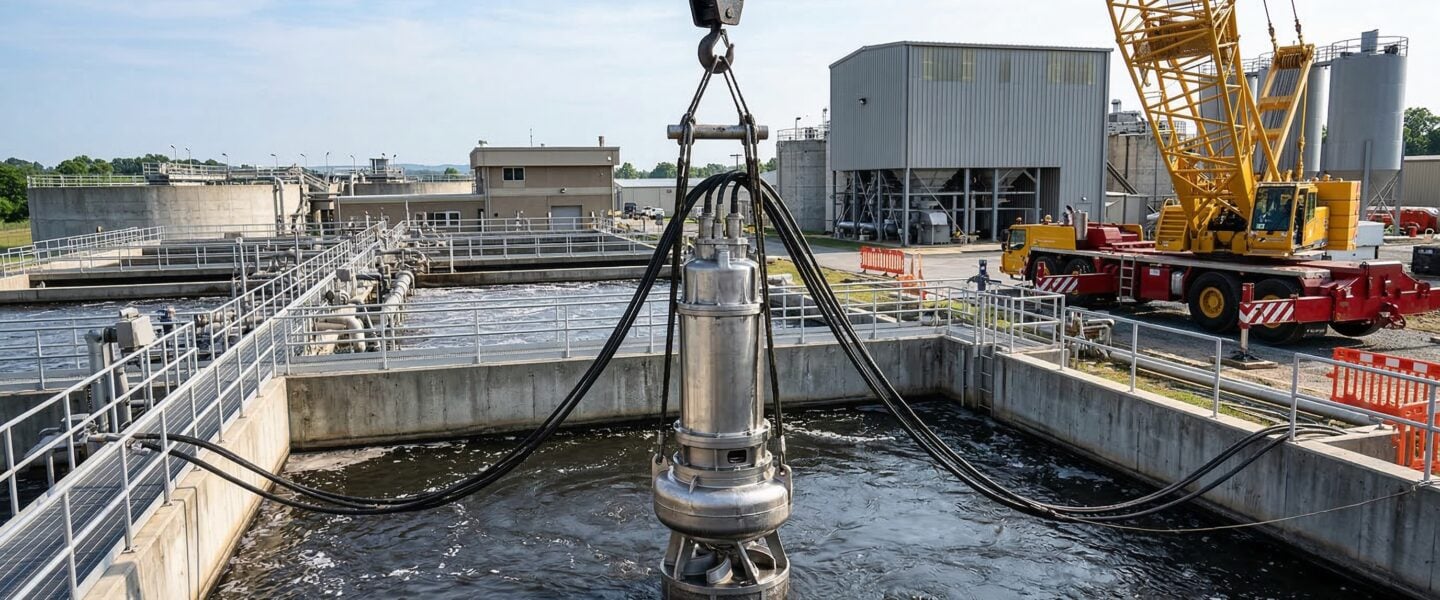
Submersible Pump Reliability & Maintenance — industrial maintenance and reliability services

At Forge Reliability, we have supported facilities across mining, water treatment, oil and gas, and municipal infrastructure in extending the operational life of their submersible pump fleets. The challenges are consistent regardless of industry: detecting early-stage degradation is difficult because the equipment is physically inaccessible, and traditional inspection methods require costly pulling and reinstallation cycles. Condition-based monitoring changes that equation entirely, giving maintenance teams the visibility they need to act before a minor issue becomes a catastrophic failure.


Why Do Submersible Pumps Demand a Reliability-First Approach?

The fundamental challenge with submersible pumps is their operating environment. Unlike surface-mounted equipment that can be visually inspected during routine walkthroughs, submersible units are hidden beneath the fluid surface, often at considerable depth. This inaccessibility means that degradation progresses undetected unless operators employ monitoring technologies capable of reaching below the surface.

Seal failures represent one of the most consequential reliability risks. When a mechanical seal begins to degrade, process fluid enters the motor housing, leading to insulation breakdown and eventual electrical failure. A single seal breach can destroy a motor valued at tens of thousands of dollars and trigger secondary contamination issues in the surrounding process. Bearing wear follows a similar pattern of invisible progression, with vibration signatures shifting gradually until a catastrophic seizure occurs.

Industry data indicates that over 60% of submersible pump failures originate from seal degradation or bearing wear, both of which are detectable months in advance through proper condition monitoring techniques.

Impeller erosion from abrasive solids is another persistent concern, particularly in mining dewatering and wastewater applications. As impeller geometry degrades, hydraulic efficiency drops, energy consumption rises, and the pump struggles to meet design flow rates. Operators often compensate by increasing speed or runtime, which only accelerates the wear cycle.

The True Cost of Reactive Maintenance

Facilities that rely on run-to-failure strategies for submersible pumps consistently experience 3 to 5 times higher total maintenance costs compared to those employing predictive approaches. The expense is not limited to the replacement parts and labor for the failed unit. Pulling a submersible pump from a deep well or sump requires specialized rigging equipment and crews, often at premium emergency rates. Production losses during unplanned downtime compound the financial impact, and in regulated industries, an environmental release from a failed pump can trigger penalties and remediation obligations that exceed the cost of the equipment itself.


Condition Monitoring Technologies for Submersible Applications

Modern submersible pump maintenance programs leverage multiple monitoring technologies to build a comprehensive picture of equipment health. No single technique captures every failure mode, which is why Forge Reliability designs integrated monitoring strategies tailored to each installation.

Vibration Analysis

Vibration monitoring remains the cornerstone of rotating equipment diagnostics. For submersible pumps, permanently installed vibration sensors on the discharge head or column pipe capture data that reveals bearing condition, impeller balance, and structural resonance issues. Advanced spectral analysis can distinguish between mechanical and hydraulic sources of vibration, allowing maintenance teams to prioritize interventions accurately.

Motor Current Signature Analysis

Because submersible pump motors are physically inaccessible, motor current signature analysis (MCSA) provides an invaluable diagnostic window. By analyzing the electrical current drawn by the motor, technicians can detect rotor bar defects, air gap eccentricity, and load-related anomalies without ever pulling the pump. MCSA is particularly effective at identifying developing bearing faults that manifest as characteristic sidebands in the current spectrum.

Thermal and Power Monitoring

Tracking motor winding temperature, power consumption, and power factor over time reveals efficiency trends that correlate directly with mechanical condition. A gradual increase in power draw at constant flow conditions, for example, often indicates impeller wear or internal recirculation. Sudden temperature spikes above baseline can signal seal leakage or cooling flow restrictions that require immediate attention.

Facilities implementing comprehensive condition monitoring on submersible pump installations typically achieve pump pull intervals extending from 12 months to over 36 months, dramatically reducing lifecycle maintenance costs and improving asset availability.


Building an Effective Submersible Pump Maintenance Strategy

A robust submersible pump maintenance program goes beyond simply collecting data. It requires clear decision frameworks that translate monitoring results into maintenance actions at the right time.

Baseline and Trending

Every submersible pump installation should begin with a baseline assessment that captures vibration signatures, electrical parameters, and hydraulic performance at known-good conditions. Subsequent monitoring data is then compared against this baseline to identify deviations. Trending analysis is critical because absolute threshold values can vary significantly between pump designs, installation configurations, and operating conditions.

Planned Pull and Refurbishment Cycles

Condition data drives the timing of planned pump pulls, replacing arbitrary calendar-based schedules with evidence-based decisions. When monitoring indicates that a seal is approaching its wear limit or bearings are entering the degradation zone, the pull can be scheduled during a planned outage window with parts and crews pre-arranged. This planned approach typically reduces pull-and-reinstall costs by 30 to 50 percent compared to emergency interventions.

Spare Parts and Inventory Optimization

Predictive insights also improve spare parts management. Rather than maintaining large safety stocks of expensive components, facilities can align inventory levels with the actual condition of installed equipment. When monitoring data shows that a specific pump is likely to need seal replacement within the next quarter, the parts can be procured with standard lead times rather than expedited shipping premiums.

Operating Envelope Management

Many submersible pump failures trace back to operation outside the design envelope. Running a pump at flows significantly below or above its best efficiency point (BEP) induces hydraulic instabilities that accelerate wear on bearings, seals, and impellers. Monitoring systems that track hydraulic operating points help operators maintain pumps within their intended range, extending component life and reducing energy consumption.


What Results Can You Expect?

Organizations that partner with Forge Reliability to implement condition-based submersible pump maintenance programs consistently report measurable improvements across key performance indicators. Unplanned pump failures typically decline by 50 to 70 percent within the first two years of program implementation. Mean time between failures (MTBF) increases as condition data enables interventions at the optimal point in the degradation curve, well before functional failure but not so early that usable remaining life is wasted.

Energy efficiency gains are another significant benefit. By identifying and addressing impeller wear, internal recirculation, and off-BEP operation, facilities commonly achieve energy savings of 10 to 20 percent per pump. Across a fleet of submersible pumps operating continuously, these efficiency improvements translate to substantial annual cost reductions.

Perhaps most importantly, the shift from reactive to predictive maintenance transforms the maintenance team’s relationship with submersible pump assets. Instead of responding to emergencies under pressure, technicians plan and execute interventions with full knowledge of the equipment’s condition, the right parts on hand, and adequate time to perform quality work. This deliberate approach improves repair quality, reduces rework, and builds institutional knowledge that compounds over time.

Forge Reliability brings the diagnostic expertise, monitoring technology, and program design experience needed to make submersible pump maintenance predictable and cost-effective. Whether you are managing a single critical installation or a fleet of pumps across multiple sites, we can help you build a reliability program that delivers measurable results.

Failure Modes

Common Submersible Pump Reliability & Maintenance Failure Modes

Engineers often arrive searching for specific failures. Here are the most common issues we diagnose and resolve.

Motor Winding Insulation Breakdown

Prolonged exposure to high temperatures and moisture ingress degrades winding insulation resistance, eventually causing turn-to-turn or phase-to-ground short circuits that disable the motor.

Key symptom: Declining insulation resistance readings trending toward minimum threshold

Get Help With This →

Thrust Bearing Overload

Excessive axial thrust from high lift conditions or worn impeller clearances overloads the thrust bearing assembly, leading to elevated temperatures, lubricant breakdown, and bearing seizure.

Key symptom: Elevated motor temperature with increasing power draw at constant conditions

Get Help With This →

Cable and Connector Failure

Mechanical damage, thermal cycling, and chemical attack on submersible power cables and splice connectors causes insulation breakdown that results in ground faults and nuisance trips.

Key symptom: Intermittent ground fault trips with insulation resistance instability

Get Help With This →

Sand and Abrasive Wear

Entrained sand and silt particles erode impeller vanes, wear rings, and diffuser passages, opening clearances that reduce pump efficiency and increase internal recirculation losses.

Key symptom: Declining flow rate with increasing power consumption at constant speed

Get Help With This →

Diagnostic Methods

Diagnostic Techniques We Use

Insulation Resistance Trending

Periodic megohm testing of motor winding insulation tracks degradation trends, with readings below 5 megohms indicating moisture ingress and readings approaching 1 megohm requiring immediate intervention.

Motor Current Demodulation

Demodulated motor current analysis detects rotor eccentricity, broken rotor bars, and load fluctuations caused by internal wear or blockage without requiring physical access to the submerged unit.

Downhole Pressure and Temperature Monitoring

Downhole sensors measuring intake pressure, discharge pressure, motor temperature, and vibration provide continuous condition data that enables real-time performance assessment and early fault detection.

Power Quality Analysis

Monitoring voltage and current waveform quality at the surface identifies harmonic distortion, voltage imbalance, and power factor changes that stress motor windings and reduce service life.

Services

Services for Submersible Pump Reliability & Maintenance

Service

Asset Management for Submersible Pumps

Asset Management programs for Submersible Pumps, targeting common failure modes and degradation mechanisms.

Learn More →
Service

CMMS Implementation for Submersible Pumps

CMMS implementation for submersible pumps with pull history tracking, motor insulation resistance test data fields, and cable integrity trend records.

Learn More →
Service

Condition Monitoring for Submersible Pumps

Condition Monitoring programs for Submersible Pumps, targeting common failure modes and degradation mechanisms.

Learn More →
Service

Dynamic Balancing for Submersible Pumps

We balance submersible pump impeller stacks and rotor assemblies in the shop to tight tolerances before installation in inaccessible well environments.

Learn More →
Service

Equipment Condition Assessment for Submersible Pumps

Condition assessment for submersible pumps with motor insulation resistance evaluation, cable integrity testing, and performance trend analysis results.

Learn More →
Service

Equipment Maintenance for Submersible Pumps

Equipment Maintenance programs for Submersible Pumps, targeting common failure modes and degradation mechanisms.

Learn More →
Service

FMEA for Submersible Pumps

Our FMEA for submersible pumps addresses motor, impeller, and cable failure modes with detection ratings that account for limited access constraints.

Learn More →
Service

Maintenance Outsourcing for Submersible Pumps

Maintenance Outsourcing programs for Submersible Pumps, targeting common failure modes and degradation mechanisms.

Learn More →
Service

Maintenance Planning for Submersible Pumps

Maintenance planning for submersible pumps including condition-based pull schedules, motor insulation testing protocols, and cable inspection job plans.

Learn More →
Service

Motor Current Analysis for Submersible Pumps

MCSA is the primary diagnostic tool for submersible pumps where direct vibration measurement is impractical—we detect motor and pump faults remotely.

Learn More →
Service

Oil Analysis for Submersible Pumps

Our oil analysis programs monitor submersible pump motor oil for moisture ingress, bearing metals, and dielectric fluid breakdown to prevent motor burnout.

Learn More →
Service

Plant Optimization for Submersible Pumps

Plant Optimization programs for Submersible Pumps, targeting common failure modes and degradation mechanisms.

Learn More →
Service

Precision Shaft Alignment for Submersible Pumps

We provide alignment services for submersible pump above-ground drive components including VHS motor mounts and column pipe flange concentricity.

Learn More →
Service

Predictive Maintenance for Submersible Pumps

We monitor submersible pump health using motor current signature analysis, power trending, and vibration to detect faults in inaccessible assets.

Learn More →
Service

Preventive Maintenance for Submersible Pumps

We design submersible pump PM programs around pull-cycle optimization, motor testing protocols, and condition-based rebuild intervals for each unit.

Learn More →
Service

RCM for Submersible Pumps

RCM analysis for submersible pumps addressing motor insulation degradation, cable splice failure modes, and seal system hidden function task requirements.

Learn More →
Service

Reliability Consulting for Submersible Pumps

Our reliability consulting for submersible pumps centers on run-life analysis, Weibull survival modeling, and failure mode identification to extend life.

Learn More →
Service

Root Cause Analysis for Submersible Pumps

Our submersible pump RCA process examines motor windings, impeller condition, and operating data to determine failure origin in inaccessible assets.

Learn More →
Service

Thermographic Inspection for Submersible Pumps

Our thermographic inspections detect motor lead overheating, junction box faults, and cable termination problems in submersible pump electrical systems.

Learn More →
Service

Ultrasonic Testing for Submersible Pumps

Our ultrasonic testing services assess submersible pump discharge check valve tightness and column pipe joint integrity from above-ground access points.

Learn More →
Service

Vibration Analysis for Submersible Pumps

We apply motor current signature analysis and surface-mounted vibration sensing to detect submersible pump wear, bearing faults, and seal failures.

Learn More →

Industries

Industries That Rely on Submersible Pump Reliability & Maintenance

Industry

Chemical Processing Submersible Pumps Reliability

Forge Reliability prevents motor burnout and corrosion failures on submersible pumps in chemical plant sumps, neutralization pits, and waste collection.

Learn More →
Industry

Food & Beverage Submersible Pumps Reliability

Forge Reliability prevents submersible pump failures in food plant wastewater lift stations, effluent pits, and stormwater management applications.

Learn More →
Industry

Manufacturing Submersible Pumps Reliability

Forge Reliability prevents submersible pump motor burnout and impeller blockage in manufacturing sump, pit, and wastewater collection applications.

Learn More →
Industry

Oil & Gas Submersible Pumps Reliability

Forge Reliability extends ESP run life and prevents motor burnout on electrical submersible pumps in oil and gas production and water disposal wells.

Learn More →
Industry

Power Generation Submersible Pumps Reliability

Forge Reliability prevents submersible pump failures in power plant sump dewatering, ash handling, and coal pile runoff collection applications safely.

Learn More →
Industry

Submersible Pump Reliability for Automotive Plant Facilities

We provide submersible pump reliability for automotive plants, covering coolant sump dewatering, wastewater lift stations, and paint sludge handling.

Learn More →
Industry

Submersible Pumps Reliability for Cement & Aggregates

Our team ensures submersible pump reliability in quarry dewatering, settling basin drainage, and process water sumps across cement and aggregate sites.

Learn More →
Industry

Submersible Pumps Reliability for Industrial Refrigeration

Our team manages submersible pump reliability in refrigeration facility sumps, defrost drainage, and below-grade ammonia engine room drainage applications.

Learn More →
Industry

Submersible Pumps Reliability for Logistics & Distribution

Our team ensures submersible pump reliability in distribution center stormwater management, loading dock drainage, and refrigerated warehouse floor drains.

Learn More →
Industry

Submersible Pump Reliability for Metals & Steel Dewatering

We provide submersible pump reliability for metals and steel plants, covering scale pit dewatering, mill sump service, and slag quench pit drainage.

Learn More →
Industry

Submersible Pump Reliability for Mine Dewatering Systems

We provide submersible pump reliability for mine dewatering, covering underground sumps, open pit management, and MSHA-compliant monitoring programs.

Learn More →
Industry

Submersible Pump Reliability for Pharmaceutical Facilities

We provide submersible pump reliability for pharma facilities, covering sump dewatering, wastewater lift stations, and contamination risk prevention.

Learn More →
Industry

Submersible Pumps Reliability for Plastics & Rubber

Our team ensures submersible pump reliability in plastics plant cooling pits, wash water sumps, and stormwater management at rubber processing sites.

Learn More →
Industry

Submersible Pump Reliability for Pulp & Paper Mill Sumps

We provide submersible pump reliability for pulp and paper mills, covering broke pit dewatering, effluent lift stations, and seal water sump pumps.

Learn More →
Industry

Submersible Pumps Reliability for Water & Wastewater

Forge Reliability extends submersible pump life in wet wells and lift stations through insulation monitoring, vibration trending, and seal leak analysis.

Learn More →

Technical Reference

Technical Overview

Motor winding insulation resistance should be tested at least quarterly using a megohmmeter per IEEE 43 — readings below 5 megohms indicate moisture intrusion into the motor housing. Power consumption trending at constant well level provides the best indication of pump wear; a 15% increase above baseline at stable conditions warrants pump pull and inspection. Thrust bearing condition is assessed indirectly by monitoring motor current and discharge pressure relationship — increasing current at decreasing pressure signals impeller wear or check valve leakage. Sand production above 50 ppm causes accelerated abrasive wear on impeller and wear ring surfaces.

Common Questions

FAQ

Submersible pump service life ranges from 3-7 years in clean water applications to 1-3 years in abrasive or corrosive environments. Motor winding quality, thrust bearing design, and sand management are the primary factors determining longevity. Proper sizing to avoid operation outside the best efficiency point range significantly extends achievable service life.

Limited Availability
We onboard a limited number of new facilities each quarter. Secure your assessment slot before our current availability closes. Reserve Your Spot →

Get Started

Request a Free Reliability Assessment

Tell us about your equipment and facility. Our reliability team will review your situation and recommend a tailored reliability program — no obligation.

Free initial assessment
Response within 1 business day
No obligation or commitment

No obligation. Typical response within 24 hours.

Monitor Submersible Pump Motors Without Pulling Them From the Well

Let us design a remote monitoring program for your submersible pumps that detects problems before a costly pull is needed.

Claim Your Free Assessment →