Home Equipment Rotating Equipment Bearing Systems

Bearing Systems

Condition monitoring and precision maintenance for rolling element and plain bearings across all rotating equipment applications.

Bearings are the fundamental building blocks of rotating machinery, and their condition directly determines the reliability of every asset they support. From electric motors and pumps to gearboxes and turbines, bearing failures account for more unplanned downtime than any other single component in most industrial facilities. At Forge Reliability, we specialize in helping organizations move beyond reactive bearing replacements to implement intelligent, data-driven bearing maintenance programs that dramatically extend bearing life and eliminate unexpected failures.
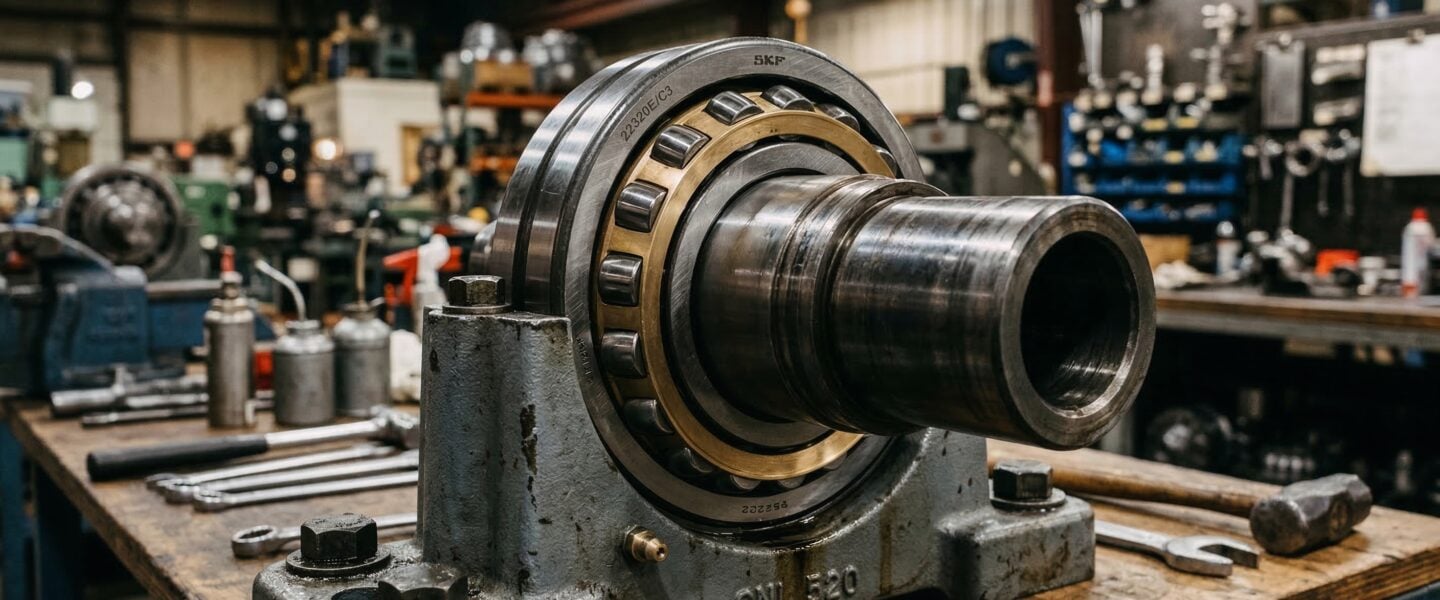
Bearing System | Forge Reliability

The Critical Role of Bearings in Industrial Reliability

Every piece of rotating equipment in your facility depends on bearings to function. Rolling element bearings, plain bearings, and thrust bearings each serve distinct roles, but they all share one characteristic: when they fail, the equipment they support stops. The consequences of bearing failure extend far beyond the cost of the bearing itself. A failed bearing in a critical pump can shut down an entire process line. A seized bearing in a gearbox can cause catastrophic damage to gears, shafts, and housings worth tens or hundreds of thousands of dollars.

What makes bearing maintenance particularly challenging is the gap between theoretical bearing life and actual field performance. Bearing manufacturers calculate L10 life ratings based on ideal conditions, but fewer than 10 percent of bearings actually achieve their rated life in industrial service. The vast majority fail prematurely due to contamination, improper lubrication, misalignment, overloading, or installation errors. Closing this gap between potential and actual bearing life represents one of the largest reliability improvement opportunities in most facilities.

Industry data consistently shows that over 60 percent of premature bearing failures are caused by lubrication-related issues, including insufficient lubrication, over-lubrication, contamination, and use of incorrect lubricants. Addressing lubrication practices alone can dramatically extend bearing life.


What Are the Common Bearing Reliability Challenges?

Understanding why bearings fail prematurely is the first step toward preventing those failures. At Forge Reliability, we see the same root causes appearing across industries and equipment types. Addressing these systemic issues delivers far greater returns than simply replacing bearings faster.

Lubrication Failures

Lubrication is the single most important factor in bearing longevity, yet it is also the most frequently mismanaged. Over-greasing is just as damaging as under-greasing, causing elevated temperatures, seal damage, and churning losses. Many facilities still rely on calendar-based greasing schedules that ignore actual bearing condition. Using the wrong lubricant type or viscosity for the application and operating conditions is another common issue that accelerates wear and shortens bearing life significantly.

Contamination Ingress

Particulate matter, moisture, and process fluids that enter bearing housings cause abrasive wear, corrosion, and lubricant degradation. Even microscopic particles can create surface damage that initiates fatigue spalling. In harsh environments such as mining, cement, and steel production, contamination control through proper sealing, breather systems, and housing maintenance is essential for achieving acceptable bearing life.

Misalignment and Improper Installation

Shaft misalignment, whether angular or offset, creates abnormal loading patterns that concentrate stress on small areas of the bearing raceways. This accelerates fatigue and dramatically reduces bearing life. Similarly, improper installation practices such as driving bearings onto shafts with hammers, failing to achieve proper interference fits, or neglecting to verify clearances after mounting are responsible for a significant percentage of early bearing failures.

Thermal Management

Bearings that operate above their designed temperature range experience accelerated lubricant degradation, reduced internal clearances, and metallurgical changes that weaken the bearing material. Inadequate cooling, restricted airflow, or heat transfer from adjacent process equipment can push bearing temperatures into damaging territory without triggering obvious alarms.


Condition Monitoring for Bearing Systems

Modern condition monitoring technologies provide unprecedented visibility into bearing health, allowing maintenance teams to detect degradation at its earliest stages and plan interventions well before failure occurs. At Forge Reliability, we design monitoring programs that combine multiple technologies for comprehensive bearing protection.

Vibration Analysis

Vibration analysis is the cornerstone of bearing condition monitoring. High-frequency techniques such as enveloping, spike energy, and high-frequency detection can identify bearing defects months before they produce noticeable vibration at running speed frequencies. By analyzing vibration spectra, trained analysts can identify the specific type and location of bearing damage, whether it is on the inner race, outer race, rolling elements, or cage. This specificity allows maintenance planners to order the correct parts and schedule repairs with precision.

Ultrasonic Monitoring

Ultrasonic instruments detect the high-frequency sound emissions produced by bearing friction, impacts, and lubrication film breakdown. This technology is particularly valuable for lubrication management, as it provides real-time feedback on bearing condition during greasing operations. Ultrasonic-assisted lubrication ensures that the right amount of grease reaches each bearing, eliminating both over-greasing and under-greasing.

Temperature Trending

While temperature is a lagging indicator of bearing distress, it remains a valuable monitoring parameter when trended over time. Sudden temperature increases indicate a rapid change in bearing condition, while gradual increases may signal lubricant degradation or contamination buildup. Infrared thermography provides periodic thermal surveys, while embedded temperature sensors offer continuous monitoring for critical applications.

Oil and Grease Analysis

For oil-lubricated bearings, regular oil analysis reveals wear metal trends, contamination levels, and lubricant condition. Ferrography can identify the type and severity of wear occurring within bearings. For grease-lubricated bearings, periodic grease sampling and analysis provides similar insights into bearing health and lubricant performance.

Combining vibration analysis with ultrasonic monitoring and lubrication management creates a bearing reliability program that typically extends average bearing life by 3 to 5 times compared to run-to-failure or simple time-based replacement strategies.


Effective Bearing Maintenance Strategies

A successful bearing maintenance program addresses the entire bearing lifecycle, from selection and procurement through installation, operation, monitoring, and replacement. Forge Reliability works with clients to build comprehensive programs that tackle each phase.

Precision Installation

Proper bearing installation is non-negotiable for achieving design life. This means using induction heaters for interference fits, verifying shaft and housing tolerances, confirming proper clearance settings, and ensuring cleanliness throughout the process. Training maintenance technicians in precision installation practices is one of the highest-return investments a facility can make.

Lubrication Excellence

Moving from calendar-based greasing to condition-based lubrication, guided by ultrasonic monitoring, eliminates the most common cause of premature bearing failure. Establishing lubricant specifications for each application, implementing contamination control measures, and maintaining clean lubricant storage and handling practices all contribute to extended bearing life.

Precision Alignment

Laser alignment of coupled equipment eliminates the abnormal bearing loads caused by misalignment. Establishing alignment tolerances tighter than manufacturer minimums and verifying alignment after any maintenance activity that disturbs the equipment position ensures bearings operate under their designed loading conditions.


What Results Can You Expect?

Organizations that implement comprehensive bearing maintenance programs with Forge Reliability consistently see transformative results. Mean time between bearing failures increases by 200 to 400 percent. Unplanned downtime related to bearing issues drops by 60 to 80 percent. Lubricant consumption often decreases as over-greasing is eliminated. Spare parts inventory requirements shrink as failures become predictable and planned.

Beyond the direct cost savings, improved bearing reliability delivers operational benefits that compound over time. Production schedules become more predictable. Maintenance crews spend less time on emergency repairs and more time on planned, value-adding work. Equipment operates more smoothly, with less vibration and noise, which in turn protects adjacent components and extends the life of the entire machine.

Forge Reliability brings the diagnostic expertise, proven methodologies, and practical field experience needed to help your facility achieve these results. Whether you are dealing with chronic bearing failures on specific equipment or want to elevate your entire bearing maintenance program, we provide the guidance and support to make it happen.

Failure Modes

Common Bearing System Reliability & Maintenance Failure Modes

Engineers often arrive searching for specific failures. Here are the most common issues we diagnose and resolve.

Fatigue Spalling of Races and Rolling Elements

Subsurface fatigue from cyclic contact stress initiates cracks below the race surface that propagate to form spalls, progressively destroying the bearing surface geometry and generating increasing vibration and heat until the bearing seizes or fragments.

Key symptom: Increasing vibration at bearing defect frequencies (BPFO, BPFI, BSF) with progression from narrowband peaks to broadband vibration and elevated temperature

Get Help With This →

Inadequate Lubrication

Insufficient lubricant film thickness from wrong viscosity selection, depleted grease, blocked lubrication paths, or contamination causes metal-to-metal contact between races and rolling elements, generating heat and accelerated surface wear.

Key symptom: Elevated ultrasonic emission levels (dBu) at the bearing housing with increasing temperature and high-frequency vibration energy

Get Help With This →

Electrical Discharge Damage (Fluting)

Stray shaft currents from variable frequency drives discharge through the bearing lubricant film, creating electrical discharge machining of race surfaces that produces characteristic circumferential fluting patterns and eventually excessive clearance.

Key symptom: Audible bearing noise with characteristic fluting pattern visible on removed bearings and broadband vibration floor elevation

Get Help With This →

Misalignment-Induced Overloading

Angular or offset misalignment between shaft and housing bores loads bearing races unevenly, creating localized high-stress zones that accelerate fatigue and cage wear on one side of the bearing while unloading the opposite side.

Key symptom: Axial vibration at 1X and 2X running speed with uneven temperature distribution around the bearing housing

Get Help With This →

Contamination and Seal Failure

Bearing seals and shields deteriorate from heat, chemical exposure, and mechanical damage, allowing process contaminants, moisture, and abrasive particles to enter the bearing cavity and accelerate surface damage.

Key symptom: Bearing grease samples showing discoloration, particle contamination, or moisture with increasing vibration at bearing defect frequencies

Get Help With This →

Diagnostic Methods

Diagnostic Techniques We Use

Vibration Spectrum Analysis

Accelerometers measure vibration across a frequency range that captures bearing defect frequencies, imbalance, misalignment, and looseness, providing the most widely used and proven method for detecting and diagnosing bearing mechanical condition.

Ultrasonic Emission Monitoring

High-frequency ultrasonic sensors (typically 30-40 kHz) detect the stress waves generated by metal-to-metal contact, lubricant film breakdown, and early-stage surface damage that precede changes detectable by conventional vibration analysis.

High-Frequency Enveloping (Demodulation)

Signal processing technique that extracts bearing defect frequency information from the high-frequency resonance band of the bearing housing, providing superior sensitivity to incipient spalling compared to standard vibration spectrum analysis.

Bearing Temperature Monitoring

Contact or infrared temperature measurement on bearing housings detects the thermal effects of friction from lubrication failure, overloading, and advanced mechanical damage, serving as confirmation of fault severity when combined with vibration data.

Lubricant Condition Analysis

Laboratory or field analysis of bearing grease or oil for consistency, contamination, moisture, oxidation, and wear particle content assesses lubricant condition and bearing wear, guiding relubrication decisions and identifying contamination sources.

Services

Services for Bearing System Reliability & Maintenance

Service

Asset Management for Bearing Systems

Asset Management programs for Bearing Systems, targeting common failure modes and degradation mechanisms.

Learn More →
Service

CMMS Implementation for Bearing Systems

CMMS Implementation programs for Bearing Systems, targeting common failure modes and degradation mechanisms.

Learn More →
Service

Condition Monitoring for Bearing Systems

Our team establishes continuous condition monitoring programs for bearing systems, targeting inner race spalling, outer race fatigue, and related...

Learn More →
Service

Dynamic Balancing for Bearing Systems

Dynamic Balancing programs for Bearing Systems, targeting common failure modes and degradation mechanisms.

Learn More →
Service

Equipment Condition Assessment for Bearing Systems

Our team provides comprehensive condition assessments for bearing systems, targeting inner race spalling, outer race fatigue, and related degradation...

Learn More →
Service

Equipment Maintenance for Bearing Systems

Equipment Maintenance programs for Bearing Systems, targeting common failure modes and degradation mechanisms.

Learn More →
Service

FMEA for Bearing Systems

FMEA programs for Bearing Systems, targeting common failure modes and degradation mechanisms.

Learn More →
Service

Maintenance Outsourcing for Bearing Systems

Maintenance Outsourcing programs for Bearing Systems, targeting common failure modes and degradation mechanisms.

Learn More →
Service

Maintenance Planning for Bearing Systems

Maintenance Planning programs for Bearing Systems, targeting common failure modes and degradation mechanisms.

Learn More →
Service

Motor Current Analysis for Bearing Systems

Motor Current Analysis programs for Bearing Systems, targeting common failure modes and degradation mechanisms.

Learn More →
Service

Oil & Lubrication Analysis for Bearing Systems

Oil & Lubrication Analysis programs for Bearing Systems, targeting common failure modes and degradation mechanisms.

Learn More →
Service

Plant Optimization for Bearing Systems

Plant Optimization programs for Bearing Systems, targeting common failure modes and degradation mechanisms.

Learn More →
Service

Precision Shaft Alignment for Bearing Systems

Precision Shaft Alignment programs for Bearing Systems, targeting common failure modes and degradation mechanisms.

Learn More →
Service

Predictive Maintenance for Bearing Systems

Our team applies predictive maintenance technologies to bearing systems, targeting inner race spalling, outer race fatigue, and related degradation...

Learn More →
Service

Preventive Maintenance for Bearing Systems

Preventive Maintenance programs for Bearing Systems, targeting common failure modes and degradation mechanisms.

Learn More →
Service

RCM for Bearing Systems

RCM programs for Bearing Systems, targeting common failure modes and degradation mechanisms.

Learn More →
Service

Reliability Consulting for Bearing Systems

Our team applies reliability consulting methodology to bearing systems, targeting inner race spalling, outer race fatigue, and related degradation...

Learn More →
Service

Root Cause Analysis for Bearing Systems

Our team investigates failures in bearing systems, targeting inner race spalling, outer race fatigue, and related degradation mechanisms before they cause...

Learn More →
Service

Thermographic Inspection for Bearing Systems

Thermographic Inspection programs for Bearing Systems, targeting common failure modes and degradation mechanisms.

Learn More →
Service

Ultrasonic Testing for Bearing Systems

Ultrasonic Testing programs for Bearing Systems, targeting common failure modes and degradation mechanisms.

Learn More →
Service

Vibration Analysis for Bearing Systems

Vibration Analysis programs for Bearing Systems, targeting common failure modes and degradation mechanisms.

Learn More →

Industries

Industries That Rely on Bearing System Reliability & Maintenance

Industry

Bearing Systems Reliability for Automotive

Bearing Systems reliability and predictive maintenance programs designed for automotive operating environments and compliance requirements.

Learn More →
Industry

Bearing Systems Reliability for Cement & Aggregates

Bearing Systems reliability and predictive maintenance programs designed for cement & aggregates operating environments and compliance requirements.

Learn More →
Industry

Bearing Systems Reliability for Chemical Processing

Bearing Systems reliability and predictive maintenance programs designed for chemical processing operating environments and compliance requirements.

Learn More →
Industry

Bearing Systems Reliability for Food & Beverage

Bearing Systems reliability and predictive maintenance programs designed for food & beverage operating environments and compliance requirements.

Learn More →
Industry

Bearing Systems Reliability for Industrial Refrigeration

Bearing Systems reliability and predictive maintenance programs designed for industrial refrigeration operating environments and compliance requirements.

Learn More →
Industry

Bearing Systems Reliability for Logistics & Distribution

Bearing Systems reliability and predictive maintenance programs designed for logistics & distribution operating environments and compliance requirements.

Learn More →
Industry

Bearing Systems Reliability for Manufacturing

Bearing Systems reliability and predictive maintenance programs designed for manufacturing operating environments and compliance requirements.

Learn More →
Industry

Bearing Systems Reliability for Metals & Steel

Bearing Systems reliability and predictive maintenance programs designed for metals & steel operating environments and compliance requirements.

Learn More →
Industry

Bearing Systems Reliability for Mining

Bearing Systems reliability and predictive maintenance programs designed for mining operating environments and compliance requirements.

Learn More →
Industry

Bearing Systems Reliability for Oil & Gas

Bearing Systems reliability and predictive maintenance programs designed for oil & gas operating environments and compliance requirements.

Learn More →
Industry

Bearing Systems Reliability for Pharmaceutical

Bearing Systems reliability and predictive maintenance programs designed for pharmaceutical operating environments and compliance requirements.

Learn More →
Industry

Bearing Systems Reliability for Plastics & Rubber

Bearing Systems reliability and predictive maintenance programs designed for plastics & rubber operating environments and compliance requirements.

Learn More →
Industry

Bearing Systems Reliability for Power Generation

Bearing Systems reliability and predictive maintenance programs designed for power generation operating environments and compliance requirements.

Learn More →
Industry

Bearing Systems Reliability for Pulp & Paper

Bearing Systems reliability and predictive maintenance programs designed for pulp & paper operating environments and compliance requirements.

Learn More →
Industry

Bearing Systems Reliability for Water & Wastewater

Bearing Systems reliability and predictive maintenance programs designed for water & wastewater operating environments and compliance requirements.

Learn More →

Technical Reference

Technical Overview

Bearings are fundamental components in virtually all rotating equipment. Failure modes include fatigue spalling, lubrication starvation, contamination damage, and misalignment-induced wear. Vibration analysis is the primary diagnostic tool, complemented by oil analysis, ultrasonic monitoring, and thermography for comprehensive bearing health assessment.

Common Questions

FAQ

Lubrication-related issues cause an estimated 50-60% of premature bearing failures across all industries. This includes wrong lubricant selection (incorrect viscosity or base oil for the speed and temperature), insufficient quantity, excessive regreasing that causes churning and overheating, and contamination of the lubricant with moisture, particles, or incompatible grease. Implementing precision lubrication practices — correct lubricant selection, calculated regreasing quantities using bearing manufacturer formulas, contamination control, and ultrasonic-guided relubrication — typically reduces bearing failure rates by 40-60% in plants transitioning from time-based to condition-based lubrication.

Limited Availability
We onboard a limited number of new facilities each quarter. Secure your assessment slot before our current availability closes. Reserve Your Spot →

Get Started

Request a Free Reliability Assessment

Tell us about your equipment and facility. Our reliability team will review your situation and recommend a tailored reliability program — no obligation.

Free initial assessment
Response within 1 business day
No obligation or commitment

No obligation. Typical response within 24 hours.

Having Problems With Your Bearing Systems?

Claim Your Free Assessment →