Home Equipment Gearboxes & Drives Variable Speed Drives (VFDs)

Variable Speed Drives (VFDs)

Capacitor health assessment, thermal monitoring, and power quality analysis for VFD reliability and longevity.

Variable speed drives have become indispensable across virtually every industrial sector, delivering precise motor control, substantial energy savings, and the process flexibility that modern operations demand. Yet for all their benefits, VFDs introduce reliability considerations that many facilities underestimate. The power electronics, control boards, cooling systems, and electrical interactions that make variable speed drive maintenance essential are fundamentally different from the mechanical maintenance challenges of the motors they control. Neglecting these systems leads to unexpected shutdowns that ripple through entire production lines.
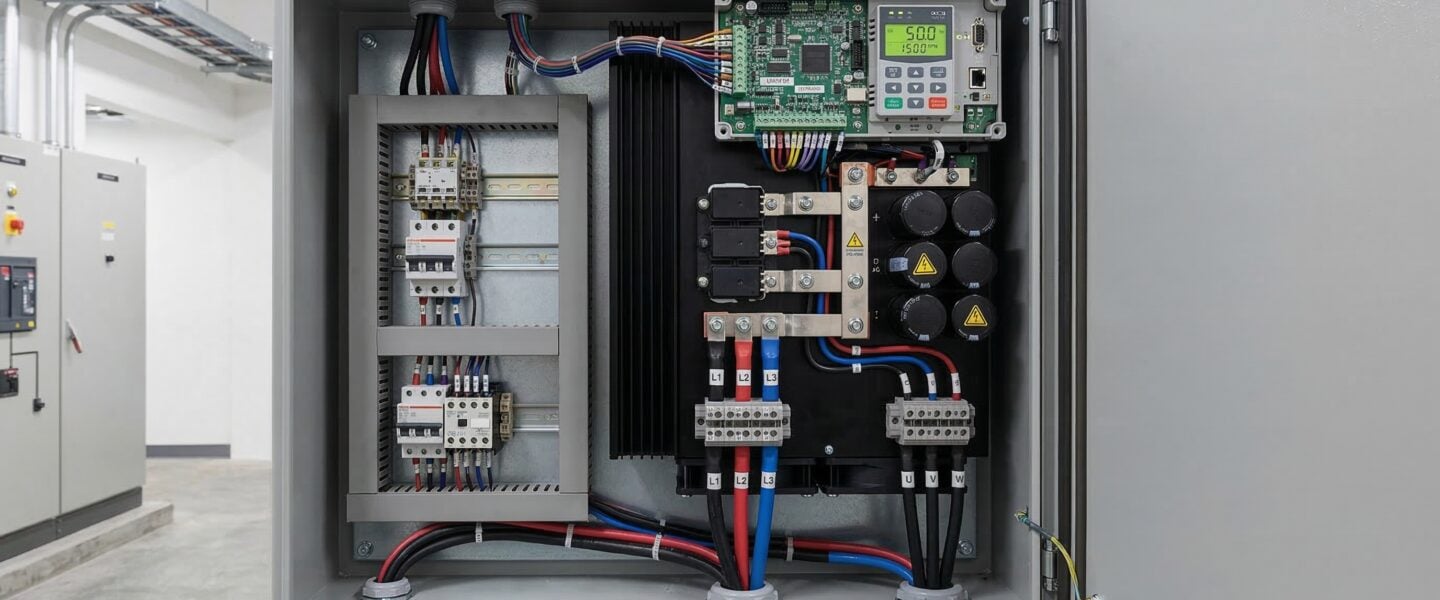
Variable Speed Drive (VFD) Reliability & Maintenance — industrial maintenance and reliability services

Forge Reliability helps industrial operators treat their VFD installations as the critical assets they are. We bring condition monitoring expertise, thermal management strategies, and systematic maintenance frameworks that keep drives running reliably while preserving the energy and process benefits they were installed to deliver. Our experience spans drives from fractional horsepower to multi-megawatt installations across manufacturing, mining, water treatment, and petrochemical applications.


The Reliability Landscape for Variable Speed Drives

Unlike purely mechanical equipment where wear is gradual and often predictable, VFD failures can be abrupt. A capacitor bank degradation that reaches a tipping point, a cooling fan that seizes on a hot afternoon, or a power surge that overwhelms input protection can take a drive offline in seconds. Understanding the primary failure mechanisms is the first step toward preventing them.

DC Bus Capacitor Aging

Electrolytic capacitors in the DC bus are widely recognized as the life-limiting component in most VFD designs. These capacitors degrade through electrolyte evaporation, a process that accelerates exponentially with temperature. For every 10-degree Celsius increase above rated temperature, capacitor life is approximately halved. As capacitance decreases and equivalent series resistance (ESR) increases, the drive becomes less capable of handling transient loads and more susceptible to DC bus voltage instability. Eventually, ripple current exceeds the degraded capacitor’s capability, leading to thermal runaway and failure.

Cooling System Degradation

VFDs generate significant heat from switching losses in the power semiconductors. The cooling system, whether air-cooled with fans and heat sinks or liquid-cooled in larger installations, must maintain junction temperatures within safe operating limits. Dust accumulation on heat sinks and filters, fan bearing wear, and thermal paste degradation on power module interfaces all reduce cooling effectiveness over time. Cooling system deficiency is a contributing factor in an estimated 40% of all VFD failures, making it the single most impactful maintenance focus area.

Thermal surveys of VFD installations consistently reveal that over 30% of drives operate above their recommended ambient temperature limits due to inadequate ventilation, blocked filters, or heat buildup from adjacent equipment in crowded electrical rooms.

Power Quality and Electrical Environment

The electrical environment surrounding a VFD significantly impacts its reliability. Input power quality issues such as voltage sags, swells, harmonics, and transients stress input rectifiers and protection components. On the output side, long cable runs between the drive and motor can generate reflected wave voltage spikes that exceed motor insulation ratings and stress output transistors. Grounding issues and common-mode currents create bearing damage in connected motors and electromagnetic interference that disrupts nearby instrumentation.


Condition Monitoring Approaches for VFD Installations

Effective variable speed drive maintenance programs use a combination of periodic inspection, environmental monitoring, and electrical diagnostics to assess drive health and predict remaining useful life.

Thermal Monitoring and Management

Temperature is the dominant factor in VFD component life. Infrared thermography during operation identifies hot spots on power modules, bus bars, terminal connections, and cooling components. Ambient temperature logging within VFD enclosures and electrical rooms reveals environmental conditions that may not match design assumptions. Many modern drives provide internal temperature data through their communication interfaces, enabling continuous trending that detects gradual cooling degradation before it reaches a critical threshold.

Capacitor Health Assessment

DC bus capacitor condition can be assessed through several methods. Online monitoring of DC bus ripple voltage provides an indirect indicator of capacitance degradation. During planned outages, direct capacitance and ESR measurements using LCR meters provide definitive condition data. Some advanced drive platforms include built-in capacitor health monitoring that estimates remaining useful life based on operating hours and temperature history. Forge Reliability recommends establishing a capacitor replacement program based on condition data rather than fixed time intervals, as actual capacitor life varies widely depending on installation conditions.

Electrical Environment Assessment

Power quality monitoring at VFD input terminals quantifies the voltage disturbances the drive must withstand. Output waveform analysis verifies that switching patterns are producing the expected voltage and current profiles. Bearing current measurements on connected motors detect common-mode voltage issues that indicate grounding or filtering deficiencies. These electrical assessments often reveal installation issues that have been silently degrading reliability since commissioning.

Organizations that perform comprehensive electrical environment assessments on new VFD installations identify correctable installation deficiencies in more than 50% of cases, preventing premature failures that would otherwise occur within the first two years of operation.


Practical Maintenance Strategies for VFD Reliability

A structured variable speed drive maintenance program addresses both the drive hardware and its operating environment, recognizing that the two are inseparable from a reliability perspective.

Environmental Control

Maintaining the VFD operating environment within design specifications is the highest-impact maintenance activity available. This includes regular filter cleaning or replacement on enclosure ventilation systems, verification that room HVAC maintains temperatures below drive ratings, and ensuring that enclosure door seals prevent contamination ingress. In harsh environments, upgrading to sealed enclosures with dedicated cooling units may be justified by the reduction in contamination-related failures.

Preventive Inspection and Cleaning

Periodic inspection should include visual examination of power connections for discoloration indicating overheating, verification of cooling fan operation and airflow, inspection of capacitor cans for bulging or electrolyte leakage, and cleaning of heat sink surfaces. Connection torque verification addresses a common cause of thermal failures: bolted connections that loosen over time due to thermal cycling, allowing resistance to increase and localized heating to develop. Retorquing all power connections annually is a simple practice that prevents a disproportionate number of drive failures.

Firmware and Configuration Management

VFD firmware updates can address known reliability issues, improve fault handling, and enhance diagnostic capabilities. Maintaining current firmware versions and documenting all parameter configurations ensures that drives operate optimally and can be restored quickly after a replacement. Configuration backups should be stored securely and verified periodically to confirm they remain current.

Spare Parts Strategy

VFD spare parts strategy must account for electronic component obsolescence. Drive manufacturers frequently discontinue models, and replacement boards may become unavailable within 7 to 10 years of a product’s end of production. Maintaining critical spares such as power modules, control boards, and cooling fans for installed drive models prevents extended outages when components fail. For large or critical installations, keeping a complete spare drive configured and ready for rapid swap-in provides the fastest possible recovery path.


Expected Results from a Proactive VFD Maintenance Program

Facilities that implement structured variable speed drive maintenance programs with Forge Reliability consistently extend the useful life of their drive installations well beyond industry averages. Where reactive operations typically replace drives every 8 to 12 years, proactive programs regularly achieve service lives exceeding 15 to 20 years through timely component replacement and environmental management.

Unplanned drive failures decrease dramatically as condition monitoring identifies degrading components before they reach the point of functional failure. The shift from emergency replacements to planned component refreshes reduces both direct maintenance costs and the production losses associated with unexpected downtime. Facilities typically report a 40 to 60 percent reduction in VFD-related unplanned downtime within the first 18 months of program implementation.

Beyond the drives themselves, proper VFD maintenance protects the connected motors from bearing currents, voltage stress, and thermal abuse that shorten motor life. This downstream benefit means that investing in drive reliability delivers returns across the entire motor-drive system, compounding the value of the maintenance program.

Forge Reliability provides the technical expertise and program structure to make your VFD fleet a source of operational confidence rather than a recurring reliability concern. From initial installation assessment through ongoing condition monitoring and maintenance execution support, we partner with your team to deliver measurable, sustained results.

Failure Modes

Common Variable Speed Drive (VFD) Reliability & Maintenance Failure Modes

Engineers often arrive searching for specific failures. Here are the most common issues we diagnose and resolve.

Power Semiconductor Failure

IGBT or thyristor modules fail from thermal cycling fatigue, voltage transients, or gate driver faults, causing output phase loss or short circuit conditions that disable the drive and may damage the motor.

Key symptom: Output phase imbalance with motor current distortion

Get Help With This →

DC Bus Capacitor Degradation

Electrolytic DC bus capacitors lose capacitance and increase equivalent series resistance (ESR) over time from thermal aging, leading to increased DC bus ripple, reduced ride-through capability, and eventual capacitor venting or failure.

Key symptom: Increased DC bus voltage ripple with reduced voltage ride-through capability

Get Help With This →

Cooling Fan and Heat Sink Fouling

Cooling fan bearing wear and heat sink fouling from ambient dust and debris reduce thermal dissipation, causing semiconductor junction temperatures to rise and triggering thermal derating or nuisance trips.

Key symptom: Elevated heat sink temperature with thermal derating warnings

Get Help With This →

Control Board Component Aging

Optocouplers, gate driver ICs, and power supply components on control boards degrade over years of thermal cycling, causing intermittent faults, communication failures, and unreliable operation.

Key symptom: Intermittent communication faults and erratic parameter changes

Get Help With This →

Diagnostic Methods

Diagnostic Techniques We Use

DC Bus Capacitor ESR Testing

Measuring DC bus capacitor equivalent series resistance and capacitance with specialized LCR meters during outages detects aging-related degradation before capacitors reach end of life and risk catastrophic failure.

Power Semiconductor Thermal Imaging

Infrared scanning of power module base plates and heat sinks during loaded operation identifies hot spots from deteriorating thermal interface material, uneven module loading, or degraded cooling that increases failure risk.

Cooling System Performance Verification

Measuring cooling airflow velocity, fan current draw, and heat sink-to-ambient temperature differential verifies that the thermal management system maintains adequate cooling capacity for rated operation.

Output Waveform Quality Analysis

Capturing output voltage and current waveforms with a power quality analyzer verifies proper pulse-width modulation switching, detects failed output devices through missing pulses, and identifies harmonic issues affecting motor performance.

Services

Services for Variable Speed Drive (VFD) Reliability & Maintenance

Service

Asset Management for Variable Speed Drives (VFDs)

Asset Management programs for Variable Speed Drives (VFDs), targeting common failure modes and degradation mechanisms.

Learn More →
Service

CMMS Implementation for Variable Speed Drives

CMMS implementation for variable speed drives with capacitor and fan component life tracking, firmware version records, and parameter backup management.

Learn More →
Service

Condition Monitoring for Variable Speed Drives (VFDs)

Condition Monitoring programs for Variable Speed Drives (VFDs), targeting common failure modes and degradation mechanisms.

Learn More →
Service

Dynamic Balancing for Variable Speed Drives

We perform speed-dependent balance assessment and field trim balancing on VFD-driven equipment operating across wide speed ranges with resonance concerns.

Learn More →
Service

Equipment Condition Assessment for Variable Speed Drives

Condition assessment for variable speed drives including capacitor ESR testing, power module thermal imaging, and control parameter audit procedures.

Learn More →
Service

Equipment Maintenance for Variable Speed Drives (VFDs)

Equipment Maintenance programs for Variable Speed Drives (VFDs), targeting common failure modes and degradation mechanisms.

Learn More →
Service

FMEA for Variable Speed Drives

Our VSD FMEA covers IGBT, capacitor, fan, and control board failure modes with RPN scores that account for thermal aging and power quality factors.

Learn More →
Service

Maintenance Outsourcing for Variable Speed Drives (VFDs)

Maintenance Outsourcing programs for Variable Speed Drives (VFDs), targeting common failure modes and degradation mechanisms.

Learn More →
Service

Maintenance Planning for Variable Speed Drives

Maintenance planning for variable speed drives including capacitor inspection schedules, cooling system preventive maintenance, and power module service.

Learn More →
Service

Motor Current Analysis for Variable Speed Drives

We perform specialized ESA on VFD-fed motors, using advanced filtering to extract fault signatures from inverter-modulated current waveforms reliably.

Learn More →
Service

Oil Analysis for Variable Speed Drives

We analyze lubricants in VFD-driven equipment for electrical discharge machining damage particles, bearing wear, and lubricant conductivity degradation.

Learn More →
Service

Plant Optimization for Variable Speed Drives (VFDs)

Plant Optimization programs for Variable Speed Drives (VFDs), targeting common failure modes and degradation mechanisms.

Learn More →
Service

Precision Shaft Alignment for Variable Speed Drives

We align VFD-driven motor shafts with consideration for variable thermal growth profiles across the speed range and coupling resonance avoidance zones.

Learn More →
Service

Predictive Maintenance for Variable Speed Drives

We monitor VSD health through power quality analysis, infrared thermal imaging, capacitor testing, and output waveform diagnostics to prevent failures.

Learn More →
Service

Preventive Maintenance for Variable Speed Drives

Our VSD PM programs schedule capacitor testing, fan replacement, and connection maintenance at intervals matched to component aging and environment.

Learn More →
Service

RCM for Variable Speed Drives

RCM analysis for variable speed drives evaluating DC bus capacitor aging, IGBT thermal degradation, cooling failures, and control fault modes per JA1011.

Learn More →
Service

Reliability Consulting for Variable Speed Drives

We provide VFD reliability consulting including power electronics failure analysis, MTBF prediction, and spare parts optimization for drive uptime.

Learn More →
Service

Root Cause Analysis for Variable Speed Drives

We investigate VSD failures by analyzing fault logs, power quality data, component forensics, and environmental factors to determine the failure origin.

Learn More →
Service

Thermographic Inspection for Variable Speed Drives

Our thermal inspections detect power module overheating, connection faults, and cooling system blockages in VFD cabinets using calibrated infrared imaging.

Learn More →
Service

Ultrasonic Testing for Variable Speed Drives

Our ultrasonic testing detects partial discharge in VFD output cables, arcing in drive connections, and EDM bearing damage on VFD-driven equipment.

Learn More →
Service

Vibration Analysis for Variable Speed Drives

We separate VFD-induced vibration artifacts from genuine mechanical faults in driven equipment through order analysis and electrical noise filtering.

Learn More →

Industries

Industries That Rely on Variable Speed Drive (VFD) Reliability & Maintenance

Industry

Chemical Processing Variable Speed Drives Reliability

Our VSD reliability programs address hazardous area compliance, thermal management, and harmonic issues on drives in chemical processing facilities.

Learn More →
Industry

Food & Beverage Variable Speed Drives Reliability

Our VSD programs address thermal faults, harmonic issues, and washdown damage on drives controlling food and beverage processing and packaging lines.

Learn More →
Industry

Manufacturing Variable Speed Drives Reliability

Our VSD reliability programs address harmonic distortion, thermal faults, and parameter drift on drives controlling manufacturing process equipment.

Learn More →
Industry

Oil & Gas Variable Speed Drives Reliability

Our VSD reliability programs address hazardous area requirements, harmonic distortion, and thermal issues on drives across oil and gas process facilities.

Learn More →
Industry

Power Generation Variable Speed Drives Reliability

Our VSD programs address thermal failures, harmonic distortion, and power quality on drives controlling fans, pumps, and conveyors at generating stations.

Learn More →
Industry

Variable Speed Drives (VSDs) Reliability for Cement & Aggregates

Forge Reliability optimizes VFD performance on kiln ID fans, raw mill separators, and conveyor systems in cement plants for energy and process control.

Learn More →
Industry

Variable Speed Drives (VSDs) Reliability for Industrial Refrigeration

Forge Reliability optimizes VFD systems on compressors, evaporator fans, and condenser fans to reduce energy costs across refrigeration facilities.

Learn More →
Industry

Variable Speed Drives (VSDs) Reliability for Logistics & Distribution

Forge Reliability optimizes VFD performance on conveyor systems, sortation equipment, and ASRS drives in high-throughput logistics distribution centers.

Learn More →
Industry

Variable Speed Drives (VSDs) Reliability for Plastics & Rubber

Forge Reliability optimizes VFD performance on extruders, mixers, granulators, and material handling systems across plastics and rubber processing plants.

Learn More →
Industry

Variable Speed Drives (VSDs) Reliability for Water & Wastewater

Forge Reliability optimizes VFD performance on pump stations and blowers, improving energy efficiency and protecting motors from drive-induced failures.

Learn More →
Industry

Variable Speed Drive Reliability in Automotive Plants

Our VSD reliability for automotive plants addresses drive faults on conveyor lines, paint booth fans, spindle drives, and robotic cell power supplies.

Learn More →
Industry

Variable Speed Drive Reliability in Metals & Steel Mills

Our VSD reliability for metals and steel mills addresses drive thermal management, harmonic distortion, and speed control on rolling mill main drives.

Learn More →
Industry

Variable Speed Drive Reliability in Mining Process Plants

Our VSD reliability for mining operations addresses drive faults on mill drives, crusher feeds, conveyor speed control, and pump VFD applications.

Learn More →
Industry

Variable Speed Drive Reliability in Pharmaceutical Plants

Our VSD reliability services for pharma plants address harmonic distortion, capacitor aging, thermal faults, and validated speed control accuracy.

Learn More →
Industry

Variable Speed Drive Reliability in Pulp & Paper Mills

Our VSD reliability services for pulp and paper mills address drive harmonics, capacitor aging, and speed control on paper machine sectional drives.

Learn More →

Technical Reference

Technical Overview

DC bus electrolytic capacitor ESR (equivalent series resistance) increases with age and temperature — measure annually using an LCR meter and plan replacement when ESR exceeds twice the original specification or at 7-10 years in service. Thermographic surveys should check IGBT heat sinks, bus connections, and cooling fan operation; any junction exceeding 20 degrees F above adjacent components warrants investigation. Input harmonic distortion should comply with IEEE 519 limits — THDi above 35% at the PCC indicates missing or failed line reactors or harmonic filters. Cooling fan replacement should be scheduled preventively at 40,000-50,000 operating hours regardless of condition.

Common Questions

FAQ

VFD service life depends primarily on the electrolytic capacitor and cooling fan life ratings, which are typically 5-10 years under rated thermal conditions. Power semiconductor modules can last 15-20 years with proper cooling. Maintaining clean cooling paths, moderate ambient temperatures, and performing capacitor and fan replacements at recommended intervals allows VFD installations to achieve 20+ years of reliable service.

Limited Availability
We onboard a limited number of new facilities each quarter. Secure your assessment slot before our current availability closes. Reserve Your Spot →

Get Started

Request a Free Reliability Assessment

Tell us about your equipment and facility. Our reliability team will review your situation and recommend a tailored reliability program — no obligation.

Free initial assessment
Response within 1 business day
No obligation or commitment

No obligation. Typical response within 24 hours.

Test DC Bus Capacitors and Power Modules Before They Fail

Contact our drive reliability team to implement a proactive VFD maintenance program that prevents unexpected drive faults and production interruptions.

Claim Your Free Assessment →