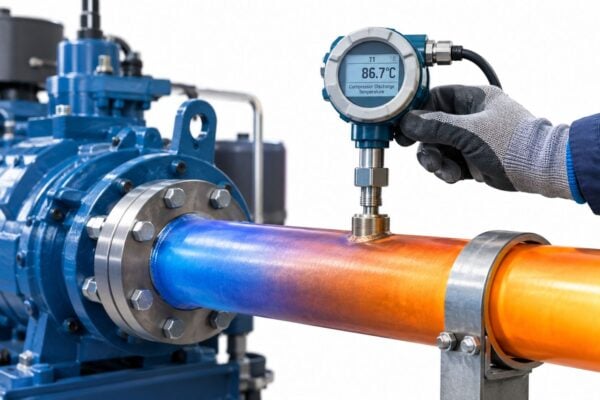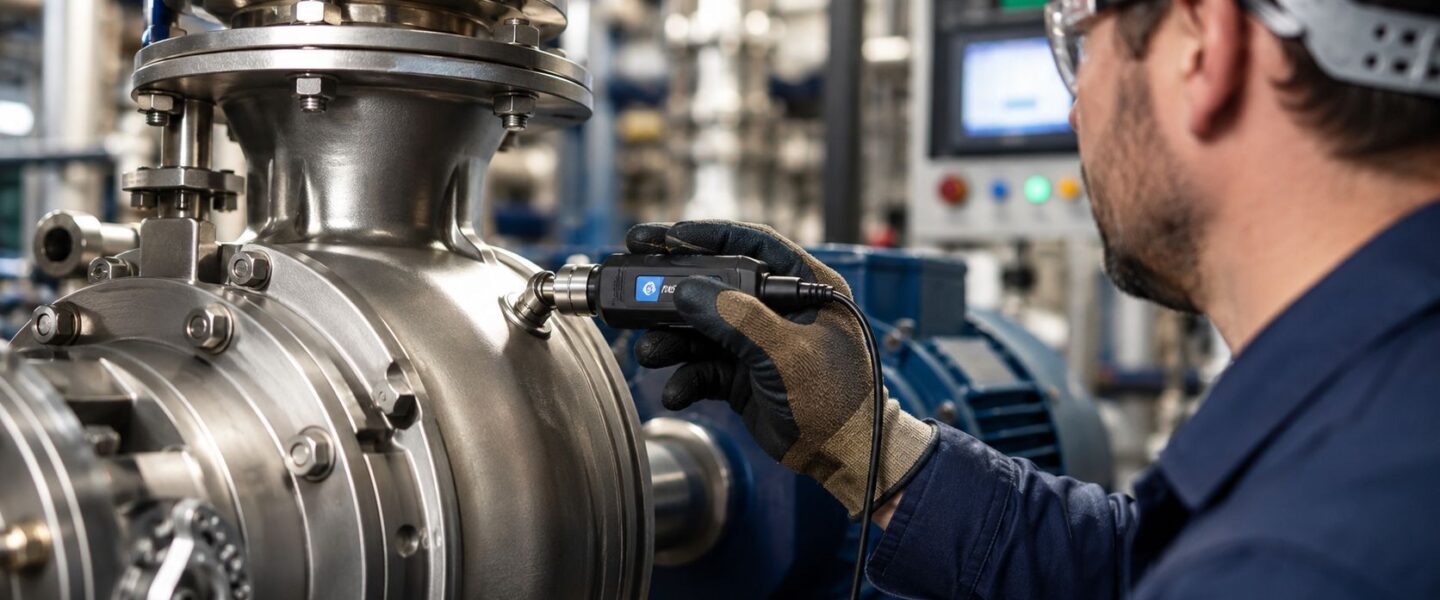
A pump skid can look fine from ten feet away and still be setting up the next outage. The seal is weeping, the bearing housing feels warm, the operator says the noise “comes and goes,” and someone has already ordered parts because the last shutdown looked identical. That's the trap in centrifugal pump troubleshooting, treating the symptom as the diagnosis instead of asking what condition forced the symptom in the first place.
The better move is simple, but it has to be disciplined. Verify the operating point against the pump curve, collect the right field data against baseline, and make decisions from thresholds rather than hunches. On a chemical transfer pump, that often means the visible seal leak is only the end of a longer story, one that started with suction disturbance, recirculation, misalignment, or bearing distress upstream. A team that chases the seal first can spend a shift replacing a part that was never the root cause.
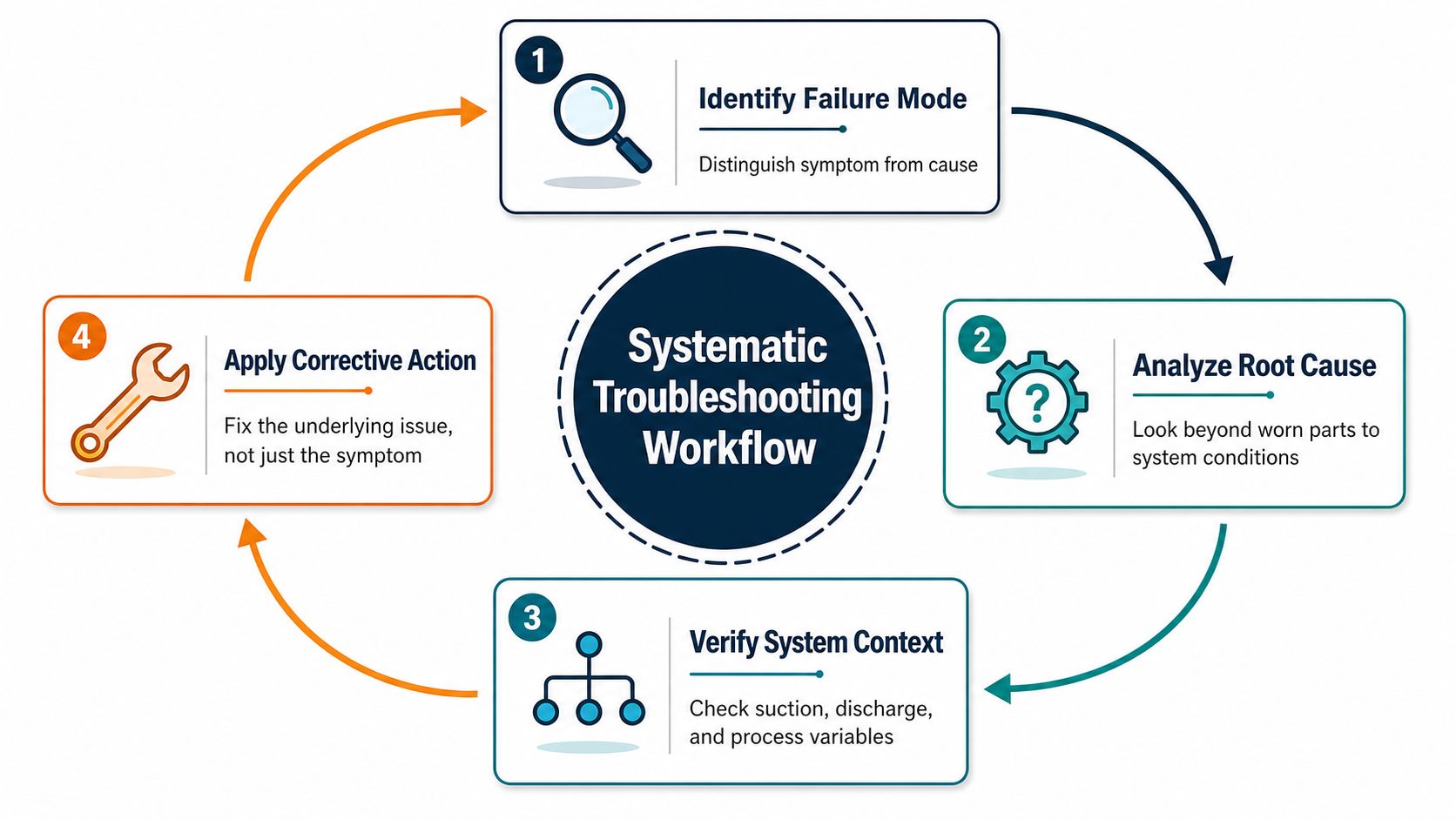
Table of Contents
- How to Approach Centrifugal Pump Troubleshooting Without Chasing Symptoms
- First Pass Checks Every Pump Needs Before Deeper Diagnosis
- Matching Hydraulic Failure Modes to Their Signatures
- Using Condition Monitoring to Confirm Mechanical Failure Modes
- Corrective Actions That Fix Root Causes Instead of Symptoms
- Building a Prioritized Inspection Checklist and Knowing When to Escalate
- Putting It Together and Getting a Free Reliability Assessment
How to Approach Centrifugal Pump Troubleshooting Without Chasing Symptoms
A chemical blending line can chew through seal kits for weeks while the problem sits on the suction side. The pump looks like it has a seal problem, so the seal gets replaced. Then the new seal starts leaking too, because the pump is still running back on its curve and the impeller is seeing recirculation and instability. That's why the first question should never be “what failed,” it should be “what condition made failure likely.”
Practical rule: If a pump keeps failing the same way, assume the part is reporting stress from somewhere else until the field data prove otherwise.
The most useful way to think about this work is as a decision tree. Start with the symptom, then confirm the measurement that proves or disproves the suspected cause, then move to the corrective action that changes the operating condition. That's the logic behind root cause failure analysis, and it matters on pump skids because a good diagnosis saves hours of unnecessary teardown.
A simple example makes the point. On a chemical process pump, repeated seal leakage may tempt a crew to swap faces, adjust packing, or blame installation quality. If suction pressure is unstable, vibration is climbing, and motor current is drifting from baseline, the seal is probably the last component to tell the story, not the first. In that case, the useful response is not another seal change, it's a check of suction conditions, alignment, bearing health, and the actual duty point.
When the same failure returns, the part is usually innocent. The operating context is where the real problem lives.
Three pillars keep the diagnosis honest. First, verify the duty point against the pump curve. Second, capture the condition data that show whether the pump is mechanically healthy. Third, act on thresholds that separate nuisance from risk, because “it sounds okay” is not a maintenance standard. A pumping system that is forced away from its intended operating region will often fail in the same visible place every time, which is why symptom-led troubleshooting stays expensive and slow.
For teams managing slurry pumps, cooling water sets, or transfer pumps in a chemical plant, that mindset shift changes everything. It stops the cycle of part replacement and pushes attention back to the actual forcing function, whether that's suction turbulence, control valve position, pipe strain, or a bearing that's already been damaged by contamination.
industrial diesel water pump repair can be a useful reference point when comparing seal leakage behavior across different pump packages, especially when a maintenance team wants to separate a local component fault from a broader system issue.
First Pass Checks Every Pump Needs Before Deeper Diagnosis
The first pass on a pump skid should prove the basics before anyone trusts vibration numbers or starts loosening coupling bolts. A pump that is spinning the wrong direction, isn't fully primed, or is operating far from its curve can make every later reading misleading. That's why the sequence matters more than the toolbox.
Rotation, prime, and curve come first
If the pump is rotating in the wrong direction, the diagnosis stops there. One troubleshooting guide is blunt about it, there's no point proceeding until rotation is correct. The next gate is prime. The suction line and pump casing need to be completely filled with liquid, because a pump with air in the suction side can't prime properly and won't produce trustworthy performance data.
After that, compare the field duty point to the published curve. Record suction and discharge pressures, convert them to head, and compare the operating point at the same speed and valve position. If shutoff head is being checked, close the discharge valve and read the pressure at zero gallons per minute. When that shutoff head matches the curve, the pump is behaving as expected at that point. If it doesn't, the field data point is telling the crew that the pump or the system needs attention.
A pump in a municipal water lift station or a process water service can look healthy on the outside and still be outside its stable range. The most important question is whether it's operating above Minimum Continuous Stable Flow and preferably inside the Preferred Operating Range. That keeps the team from mistaking an off-curve operating condition for a mechanical failure.
What to verify before deeper diagnostics
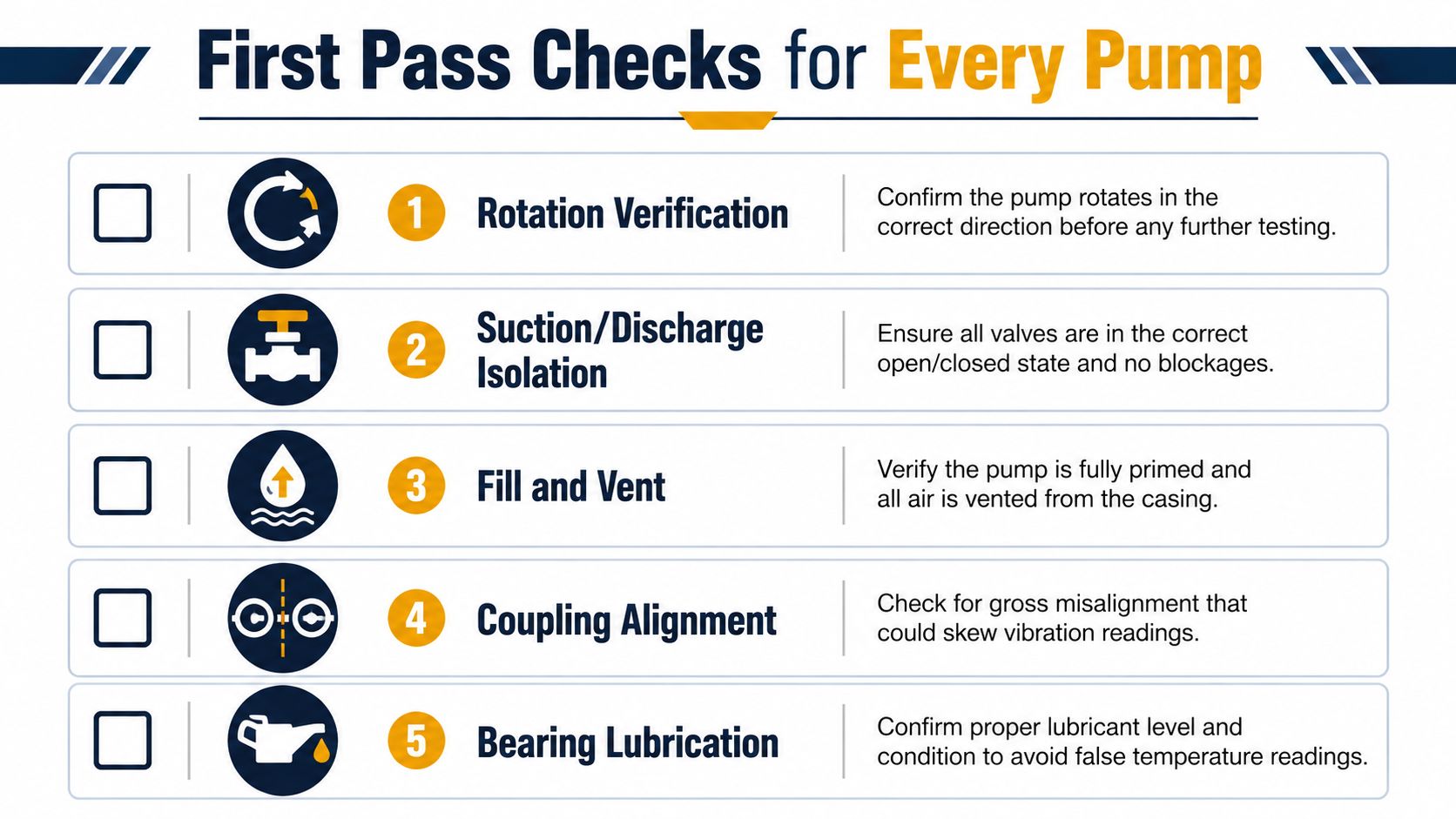
- Rotation Verification: Confirm the pump rotates in the correct direction before any further testing.
- Suction and discharge state: Make sure valves are in the correct position and no blockage is choking the system.
- Fill and vent: Verify the pump is fully primed and all air is vented from the casing.
- Coupling alignment: Check for gross misalignment that could distort vibration readings.
- Bearing lubrication: Confirm the lubricant level and condition so temperature readings aren't being skewed by avoidable friction.
The point of this sequence is discipline, not ceremony. A team that verifies rotation, prime, and curve position first can decide quickly whether a low-flow complaint is a suction issue, a control issue, or a pump issue. That saves time, and it protects the machine from unnecessary teardown.
equipment maintenance guidance for centrifugal pumps is worth keeping handy when a plant wants a structured maintenance checklist around these same first-pass checks.
Matching Hydraulic Failure Modes to Their Signatures
Hydraulic problems usually announce themselves before they destroy hardware, but the signals overlap if the crew listens only for “bad noise.” Cavitation, gas entrainment, recirculation, and dry running can all raise vibration or hurt performance, yet each one leaves a different pattern in the gauges, the sound, and the temperature trend. The job is to tie the symptom to the measurement that proves it.
Cavitation, gas, and recirculation don't sound the same
Cavitation happens when static pressure falls below vapor pressure and vapor bubbles collapse on the impeller. In the field, that often sounds like crackling or gravel in the casing, and the damage shows up later as pitting on the impeller surfaces. A suction-side check is the first move when the complaint includes low flow plus that noise.
Gas entrainment behaves differently. It lowers head, but it doesn't always produce the same sharp acoustic signature as cavitation. On a flotation or aerated process line, a rapid vibration increase after startup that later tapers off can point to air entrainment or recirculation, especially if the pump settles down after the system clears.
Recirculation usually shows up when the pump is being forced too far left on the curve. That's why the operating point matters. If the suction and discharge pressures are drifting more than 10% from design, or if the pump is acting unstable at low flow, the machine may be telling the crew that the system has moved it out of its comfortable range.
Thresholds turn symptoms into decisions
Field guidance gives useful trip points. Vibration above about 7.1 mm/s, bearing temperature above 80°C, and suction or discharge pressure deviations greater than 10% from design are all practical triggers for escalation. On a cooling-water pump serving a heat exchanger train, those thresholds help separate a pump that can be watched from one that should be inspected before it damages seals or bearings.
Decision point: A pump that crackles, heats up, and loses flow needs a suction-side check first. A pump that is noisy but stable at speed is a different problem from one that is unstable at startup and then settles.
Dry running is the most unforgiving case. It removes cooling, can overheat bearings, and quickly moves a minor problem into a stop-run condition. If the sound, heat, and flow all deteriorate together, the pump shouldn't stay online long enough to “see what happens.”
centrifugal pump cavitation causes and solutions is useful context when the symptom cluster points toward suction distress rather than mechanical wear.
Using Condition Monitoring to Confirm Mechanical Failure Modes
Once hydraulic causes are narrowed down, condition monitoring tells the crew what's failing mechanically and how fast it's progressing. The value isn't in collecting every signal available, it's in matching each tool to the failure mode it isolates. A pump in a paper mill, for example, may show the same heat rise whether the issue is misalignment, lubrication loss, or seal-chamber blockage, so the technician needs the right measurement at the right point.
Vibration, phase, and oil tell different stories
Vibration frequency analysis, often called FFT, separates common mechanical faults by pattern. Unbalance tends to build a dominant rotational component, misalignment shows characteristic harmonics, looseness creates broader, less tidy behavior, and impeller fouling can show up as a change in the running signature. If the overall level is rising but the pattern changes after a maintenance event, the spectrum is often more useful than the single alarm value.
Phase measurements matter when the question is coupling alignment versus a bent shaft. A coupling issue and a shaft issue can both produce vibration, but they don't behave the same way when phase relationships are compared. That's why a field tech should not stop at “high vibration” if the job is to protect the pump, not just record another alarm.
Oil analysis adds another layer. Wear particles, contamination, and trend changes tell the maintenance lead whether the bearings are being damaged by contamination, poor lubrication practice, or internal wear. That matters because the failure mode changes the corrective action.
Thermography, ultrasound, and current close the loop
An infrared scan is fast and useful on a pump skid because it can localize bearing-housing hot spots, seal-chamber heating, or cooling-blockage problems before damage becomes obvious. Ultrasound is also valuable, especially for air leaks, steam traps, and bearing lubrication checks, because it can catch a problem before temperature rises enough to trigger a shutdown. Motor current signature analysis helps when the electrical side is revealing a mechanical problem through the drive, and a motor phase current imbalance greater than 10% should trigger investigation.
A textile plant's transfer pump can show exactly why this mix of tools matters. The bearing housing may be warming, the current may be imbalanced, and the vibration trend may be changing slowly. No single reading proves the failure mode on its own, but together they tell the crew whether the issue sits in the coupling, the bearings, the impeller, or the suction system.
condition monitoring for centrifugal pumps fits naturally here because the value of monitoring is not the sensor itself, it's the decision it enables.
Field rule: Use one measurement to confirm the fault, not to decorate the work order.
Corrective Actions That Fix Root Causes Instead of Symptoms
The fix should match the fault, not the complaint. A pump that's cavitating doesn't want a new seal first. A pump with bearing distress doesn't need a face change until the housing, lubrication, and alignment story is understood. That's the difference between restoring function for a shift and restoring reliability for the next run cycle.
Hydraulic problems need suction-side corrections
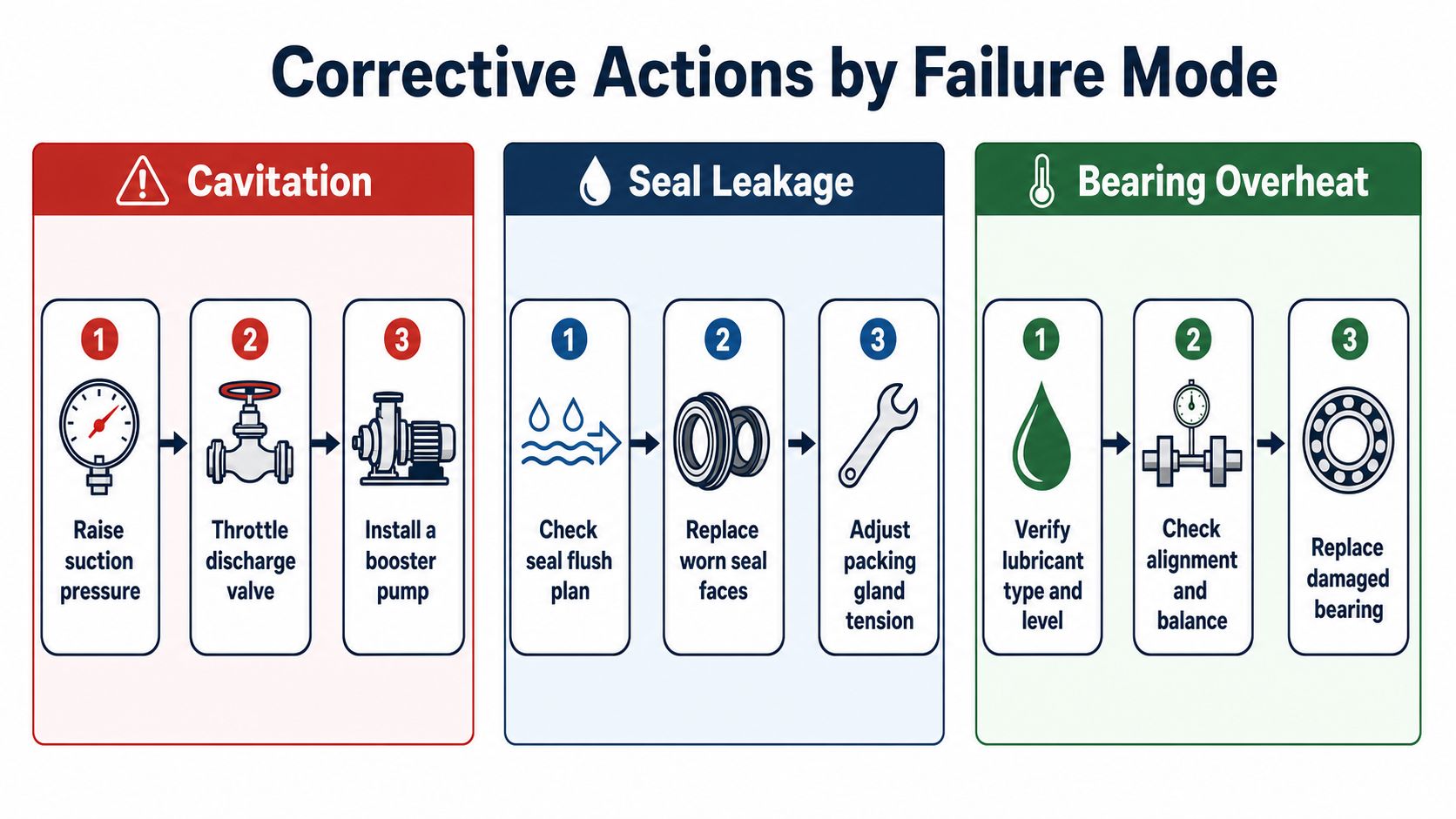
For cavitation and poor NPSH margin, the correction usually lives on the suction side. Clean the strainer, verify valve position, reduce suction losses, control fluid temperature where possible, or rework the suction line so the pump sees a healthier inlet condition. If the operating point is badly off target, adjusting flow or speed can be a short-term mitigation while permanent piping or control changes are planned.
Seal leakage deserves the same discipline. The right question is whether leakage is being driven by flush issues, solids, dry running, or shaft movement. If seal faces are wearing because the pump is unstable, a face replacement won't last. If the seal is being starved of proper flush, the team needs to fix the flush plan before the next seal goes in.
Mechanical fixes should restore geometry and cleanliness
For misalignment and soft-foot conditions, the action is laser alignment, baseplate correction, and proper grouting, not repeated bearing swaps. For bearing distress, contamination control, lubricant verification, and practice review come before part replacement. That's especially important in wet or dusty areas, where a clean bearing can be damaged quickly if breathers, seals, or handling practices are poor.
A pump that fails twice the same way is telling the crew that the system is still wrong.
Some plants also need short-term mitigation to keep production alive while the permanent fix waits for a planned stop. That can mean a temporary strainer change, a seal flush adjustment, or an operating-point move that reduces stress. The stop-run decision should be based on whether the pump is still protecting itself, or whether every extra minute is accelerating damage.
Building a Prioritized Inspection Checklist and Knowing When to Escalate
A crowded asset list creates a different problem than a single failed pump. The challenge becomes deciding which machine deserves attention first, and which recurring problem has crossed from maintenance work into a reliability program issue. That judgment needs a priority stack, not a queue based on who shouted loudest.
What to inspect first
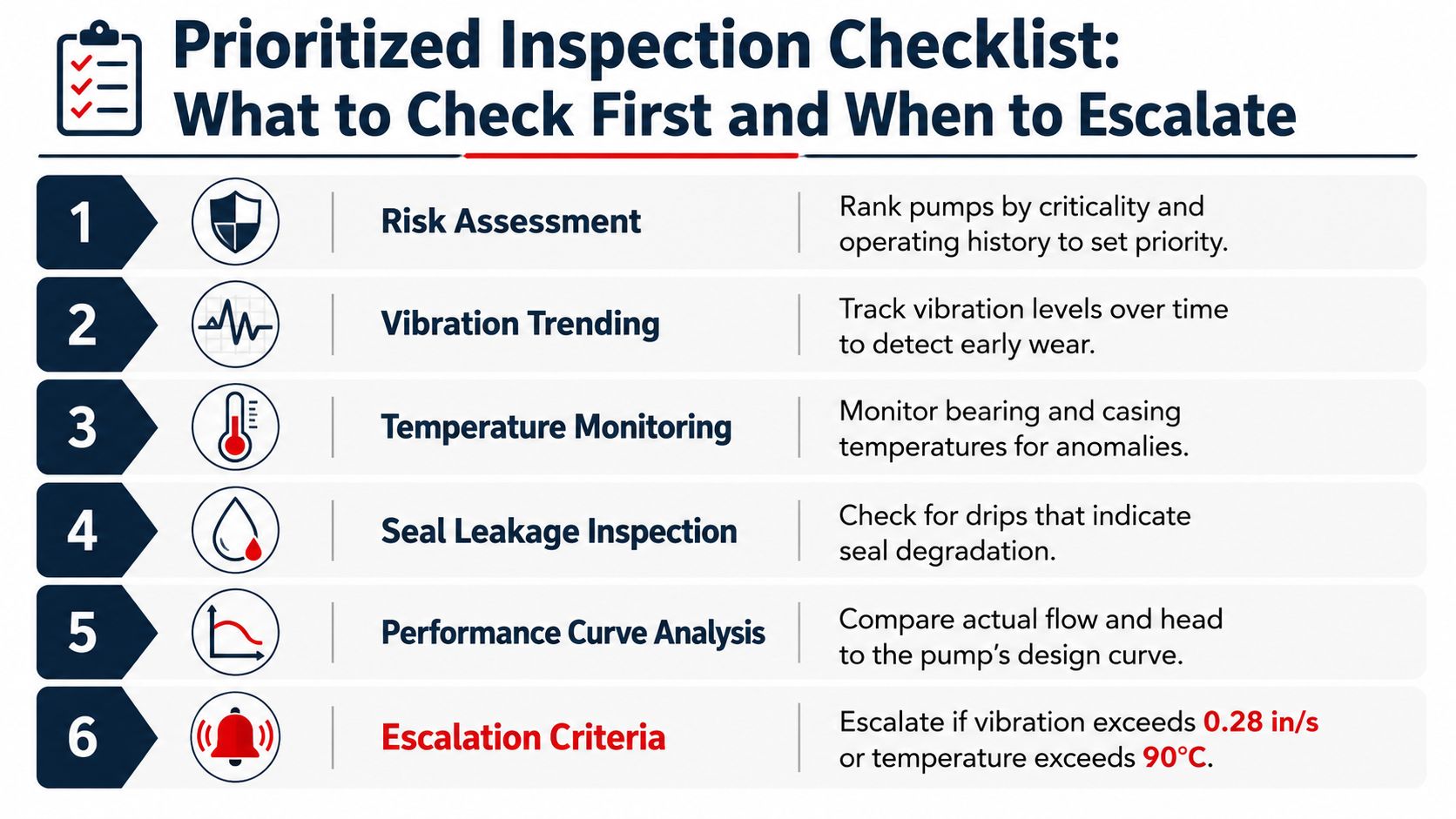
- Risk Assessment: Rank pumps by criticality and operating history so the most important assets get checked first.
- Vibration Trending: Track the pattern over time, because change from baseline often matters more than a single snapshot.
- Temperature Monitoring: Watch bearing and casing temperature for drift that points to friction, blockage, or lubrication loss.
- Seal Leakage Inspection: Treat drips and weeping as evidence, not background noise.
- Performance Curve Analysis: Compare actual flow and head to the pump's design curve so drift doesn't get mislabeled as random wear.
- Escalation Criteria: Treat repeated alarms, recurring failures, and operating drift as reasons to move beyond routine work.
A repeated seal failure on the same pump is usually not a seal-only problem. A bearing replacement that doesn't meaningfully extend service life often points to contamination, alignment, or operating-point stress. If vibration improves after a repair and then returns, the asset is telling the team that the root cause wasn't removed.
That's where escalation makes sense. If the pump keeps drifting outside the Preferred Operating Range because the process has changed, the maintenance team needs a reliability review, not another short-cycle repair. The right handoff should include trend data, operating history, seal history, bearing history, and the current curve comparison so the next analysis starts with real evidence.
guide to digital asset records is useful background for teams that need cleaner history before calling in deeper reliability support.
When the asset history is clean, escalation decisions get easier. When the records are messy, the same pump can consume months of labor without a durable fix. The practical answer is to centralize the trend data and stop treating recurring failures as isolated events.
Putting It Together and Getting a Free Reliability Assessment
The shortest path to better pump reliability is still the same three moves. Verify the duty point against the pump curve, trend vibration, temperature, and current against baseline, and stop treating seal leakage as a parts problem. Those three checks remove most of the guesswork from centrifugal pump troubleshooting and help the crew decide whether the pump needs attention, inspection, or a shutdown.
The teams that get ahead of recurring failures usually do one more thing well. They keep their asset records clean enough to show what changed before the failure, not just what failed after the fact. That's where a structured reliability program helps, especially in plants where pumps are tied directly to production, utilities, or batch timing.
equipment condition assessment for centrifugal pumps is the right next reference when the current maintenance cycle keeps repeating the same problem. Forge Reliability supports this work with condition monitoring, predictive maintenance, and reliability consulting for rotating equipment, including pumps, so teams can move from reactive repairs to a clear operating standard. For a plant that wants a no-cost reliability assessment, the next step is simple, get the pump history, the current trend data, and the operating curve ready, then talk with a specialist who can help turn those readings into a practical action plan.
Forge Reliability helps plants build a clearer pump reliability program, from condition monitoring to root cause work on recurring failures. If your team is still replacing seals, bearings, or impellers without breaking the cycle, visit Forge Reliability to request a free reliability assessment and start turning pump data into a maintenance plan that holds.