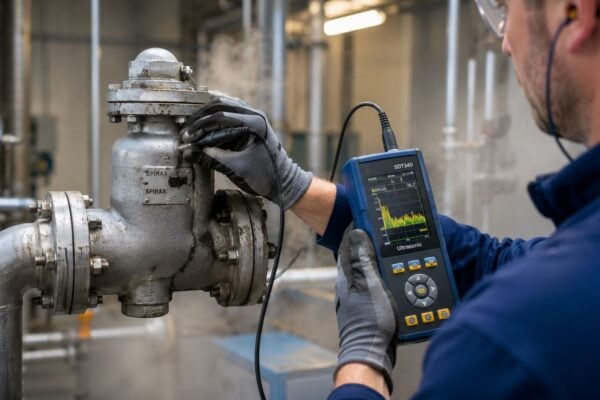
Unplanned downtime usually shows up the same way. A pump starts running hot on night shift, operations keeps it online because production is behind, vibration climbs, and by the time maintenance gets the call the failure has already spread from a bearing issue into seals, alignment, and lost throughput. The repair itself hurts, but the bigger damage comes from rushed labor, disrupted schedules, safety exposure, and the backlog that follows.
That's why the conversation about types of industrial maintenance matters. The wrong strategy creates waste in both directions. Run assets to failure and the plant absorbs chaos. Blanket everything with calendar-based PMs and the team burns labor and parts on work that didn't need to happen yet. The better answer is a hybrid model that matches the maintenance method to the asset, its failure modes, and the consequence of losing it.
Navigating these complex considerations is how reliability leaders earn their keep. The decision isn't whether one method is universally best. It's whether a redundant utility pump should be allowed to fail, whether a chlorine analyzer needs a strict interval, whether a critical compressor deserves online monitoring, and whether the plant has enough clean failure data to move beyond thresholds into analytics. For teams trying to prevent industrial pump downtime, those distinctions decide whether maintenance spend buys real risk reduction or just more activity.
Table of Contents
- 1. 1. Reactive Maintenance (Run-to-Failure)
- 1. 1. Reactive Maintenance (Run-to-Failure)
- 2. 2. Preventive Maintenance (PM)
- 4. 4. Condition-Based Maintenance (CBM)
- 5. 5. Predictive Maintenance (PdM)
- 6. 6. Prescriptive Maintenance (RxM)
- 7. 7. Reliability-Centered Maintenance (RCM)
- 8. 8. Failure Mode and Effects Analysis (FMEA)
- 8. 8. Failure Mode and Effects Analysis (FMEA)
- 8-Point Industrial Maintenance Comparison
- Building Your Hybrid Strategy From Data to Decision
1. 1. Reactive Maintenance (Run-to-Failure)
A noncritical sump pump fails, the standby starts, and production keeps running. In that case, reactive maintenance is a rational choice. A process pump on the only cooling-water header fails the same way, and the plant can lose throughput, pull in overtime labor, and turn a small repair into a larger outage. The method is the same. The consequence profile is not.
Reactive maintenance means the asset is allowed to run until functional failure, then the team repairs or replaces it. Used selectively, it can be the lowest-cost option. Used by default, it usually shifts cost out of the planning bucket and into downtime, expediting, and secondary damage.
Where reactive maintenance fits
Run-to-failure fits assets with four traits: low replacement cost, low safety and environmental consequence, short repair time, and either built-in redundancy or little operational impact if the item is down. Typical examples include disposable sensors, general-area lighting, small exhaust fans, and duplex pump systems where one unit can carry demand while the failed unit is changed during scheduled hours.
The decision should be economic, not cultural. If the failure is predictable, the repair is simple, and the business impact stays contained, reactive maintenance can outperform scheduled work. Teams often miss that point and argue method instead of consequence.
Use a simple screen:
- Does failure create a safety, quality, or environmental event?
- Does it stop production or constrain throughput?
- Can operators detect the failure quickly?
- Is there redundancy, bypass, or stored capacity?
- Will failure damage adjacent components?
If the answer to those questions stays favorable, run-to-failure is often justified. If not, the asset usually belongs in a preventive, condition-based, or predictive program. The distinction matters when comparing predictive vs preventive maintenance strategies across asset criticality, failure behavior, and data quality.
Reactive maintenance addresses obvious end-of-life failures well. It performs poorly against hidden failures, degradation failures, and defects that propagate into other components. A burned-out light bulb is one thing. A neglected bearing that takes out a shaft, coupling, and seal package is another.
The trade-off is straightforward. Reactive maintenance minimizes planning effort and avoids doing work too early. In return, the plant accepts schedule volatility, higher emergency labor cost, larger parts swings, and more variable uptime. On assets with low consequence, that trade can be acceptable. On constrained or single-point assets, it is expensive.
I use run-to-failure for components that are cheap to stock, fast to change, and operationally forgiving. I avoid it where failures hide, cascade, or trigger compliance exposure. That same logic applies outside process plants. A guide for Michigan property elevator upkeep makes the same underlying point in a different asset class. Once safety, uptime expectations, and regulatory risk rise, waiting for failure stops being a cost-saving strategy and starts becoming risk transfer.
1. 1. Reactive Maintenance (Run-to-Failure)
Reactive maintenance means the team does nothing until the asset fails, then responds to restore function. It's the simplest of the types of industrial maintenance, and it still has a place. The mistake is treating it like a plant-wide strategy instead of a selective business decision.
Industry use remains high. Reactive or run-to-failure maintenance is still used by 38% of maintenance professionals according to maintenance adoption data compiled by MaintainX. That doesn't make it efficient. It means many plants still carry more emergency work than they should.
Where reactive maintenance fits
Run-to-failure works when the asset is cheap, easily replaced, non-repairable, or protected by redundancy. An office lighting circuit is the classic example. In industry, a better example is a duplex water pump system where one pump can fail and the standby pump can carry the load while maintenance repairs the failed unit during normal hours.
The economics change completely when the asset is production-critical. Deloitte analysis summarized in the same maintenance performance overview shows organizations relying on reactive maintenance achieve less than 50% Overall Equipment Effectiveness, while more planned approaches perform better. That gap shows up on the floor as waiting time, unstable schedules, and repeated secondary damage.
Practical rule: Use reactive maintenance only when failure consequences are low, spares are available, and the asset's loss won't propagate into safety, quality, or throughput problems.
A failed motor starter on a redundant cooling tower fan may be a reasonable reactive event. A failed process pump seal in a chemical unit usually isn't. Once fluid loss, contamination, cleanup, and operator exposure enter the picture, the “saved” PM budget disappears fast.
- Best fit: Non-critical assets, consumables, and redundant equipment with clear fallback capacity.
- Poor fit: Bottleneck equipment, safety systems, environmental control assets, and machines where one failure damages adjacent components.
- Common failure trap: Teams classify an asset as non-critical, then discover during failure that procurement lead times or hidden dependencies make it far more critical than expected.
Reactive maintenance isn't free. It only postpones cost until the plant pays under the worst possible conditions.
2. 2. Preventive Maintenance (PM)

Preventive maintenance is scheduled work performed at fixed time or usage intervals. Think lubrication rounds, belt changes, calibration, filter replacement, inspection, and overhaul windows. For many plants, PM is still the backbone of the maintenance program because it's understandable, easy to schedule, and defensible for regulated or safety-critical assets.
That dominance shows up in both adoption and spending. Preventive maintenance commands the largest global market share at 43.6% in 2024 according to Grand View Research's industrial maintenance market report. In practice, that tracks with what plants manage well through a CMMS: recurring tasks tied to operating hours, calendar dates, or production counts.
What PM is good at
PM works best for known age-related failure modes and mandatory care tasks. Lubrication intervals, inspection of guards, relief device checks, analyzer calibration, and replacement of wear items with predictable life all belong here. It also works where a manufacturer interval is conservative but still acceptable because failure consequences are high.
The trade-off is over-maintenance. Bearings get replaced early. Gear oil gets changed on the calendar instead of by condition. Instruments get pulled from service even though they're stable. That's one reason many teams compare schedule-based work with a more targeted predictive vs preventive maintenance approach before expanding PM frequencies.
A municipal water treatment example makes the point. Annual recalibration of chlorine analyzers can be a sound PM task when compliance risk is high. But if technicians also verify performance through condition checks, some service calls can shift from rigid interval work toward data-based decisions, which protects both compliance and labor capacity. For vertical transport and similar regulated assets, fixed-interval service remains mandatory, which is why a guide for Michigan property elevator upkeep looks very different from a risk-based plant program.
PM prevents known problems well. It performs poorly when teams use it as a substitute for understanding actual failure behavior.
- Best fit: Safety-critical systems, regulated equipment, predictable wear parts, lubrication, and inspection tasks.
- Poor fit: Assets with highly variable duty cycles or failure modes that don't correlate well with elapsed time.
- Diagnostic support: PM gets stronger when technicians pair it with visual inspection, torque verification, alignment checks, and basic process data review.
Good PM is disciplined. Bad PM is just repetitive.
4. 4. Condition-Based Maintenance (CBM)
A pump train is running, production is on target, and the maintenance planner has a choice. Replace parts now because the calendar says so, or inspect the actual condition and spend labor where deterioration is real. Condition-based maintenance exists for that decision.
CBM uses measured asset condition to trigger work. The asset stays in service while technicians watch for indicators that show loss of function is developing. Oil condition, vibration, temperature, ultrasound, filter differential pressure, insulation resistance, and visual evidence all fit. The point is straightforward. Intervene because the machine is degrading, not because the date arrived.
For many plants, CBM is the first strategy that improves maintenance cost without adding the data science burden of a full predictive program. It works well when failure modes produce detectable warning signs and the plant has enough lead time to plan the job. That combination matters more than buzzwords.
What CBM actually looks like in the field
A gearbox in a pulp and paper mill is a good example. Quarterly oil analysis shows rising contamination, viscosity shift, or wear debris. The team schedules a filter change, breather replacement, seal repair, or oil change before the gearbox runs hot or starts damaging gears. The repair scope stays smaller because the defect was caught early.
A monthly vibration route on motors in a plastics facility works the same way. One machine moves from baseline into alert, with bearing frequencies or looseness indicators starting to rise. Maintenance can order parts, choose a shutdown window, and avoid turning a bearing change into a motor replacement and an unplanned line stop.
CBM also fits how plants already inspect equipment. A route can combine vibration, infrared scans, ultrasound, oil sampling, and operator observations into one field routine. Plants trying to standardize those inspections across sites usually need clear procedures, route discipline, and stronger operations and maintenance support programs before they need more sensors.
Where CBM pays back, and where it disappoints
CBM pays when the failure mode is progressive and detectable. Bearings, gearboxes, lubricated systems, electrical connections, steam traps, belts, fans, and some valves are common candidates. The return comes from avoiding unnecessary scheduled work on healthy assets while catching defects early enough to control labor, parts, and downtime.
It performs poorly on hidden failures and fast failure modes with little warning. A protective relay that fails undetected, an electronic component that dies without a measurable trend, or a brittle part that fractures suddenly may not give CBM enough signal to act. In those cases, teams still need functional testing, redesign, fixed-interval tasks, or a different strategy entirely.
Threshold setting is another trade-off. If alert limits are too tight, the plant creates nuisance work and burns technician time chasing normal variation. If limits are too loose, the team detects problems after damage has spread. Good CBM depends on baselines, asset criticality, known failure modes, and someone who can interpret what the readings mean in operating context.
- Best fit: Assets with measurable deterioration and enough warning time to plan intervention.
- Poor fit: Hidden failures, sudden breakage, or assets with weak correlation between condition indicators and functional loss.
- Common diagnostics: Vibration analysis, oil analysis, infrared thermography, ultrasound, motor testing, pressure and flow checks, and structured visual inspection.
- Main implementation requirement: Repeatable routes, alarm criteria, trained technicians, and a work process that turns findings into planned jobs.
CBM reduces waste from calendar-based work, but only if the plant can collect clean data and act on it before the defect becomes a breakdown.
Used well, CBM is less about adding technology and more about choosing the right assets, the right signals, and the right response window. That is why it often becomes the bridge between basic PM and a broader hybrid maintenance strategy.
5. 5. Predictive Maintenance (PdM)
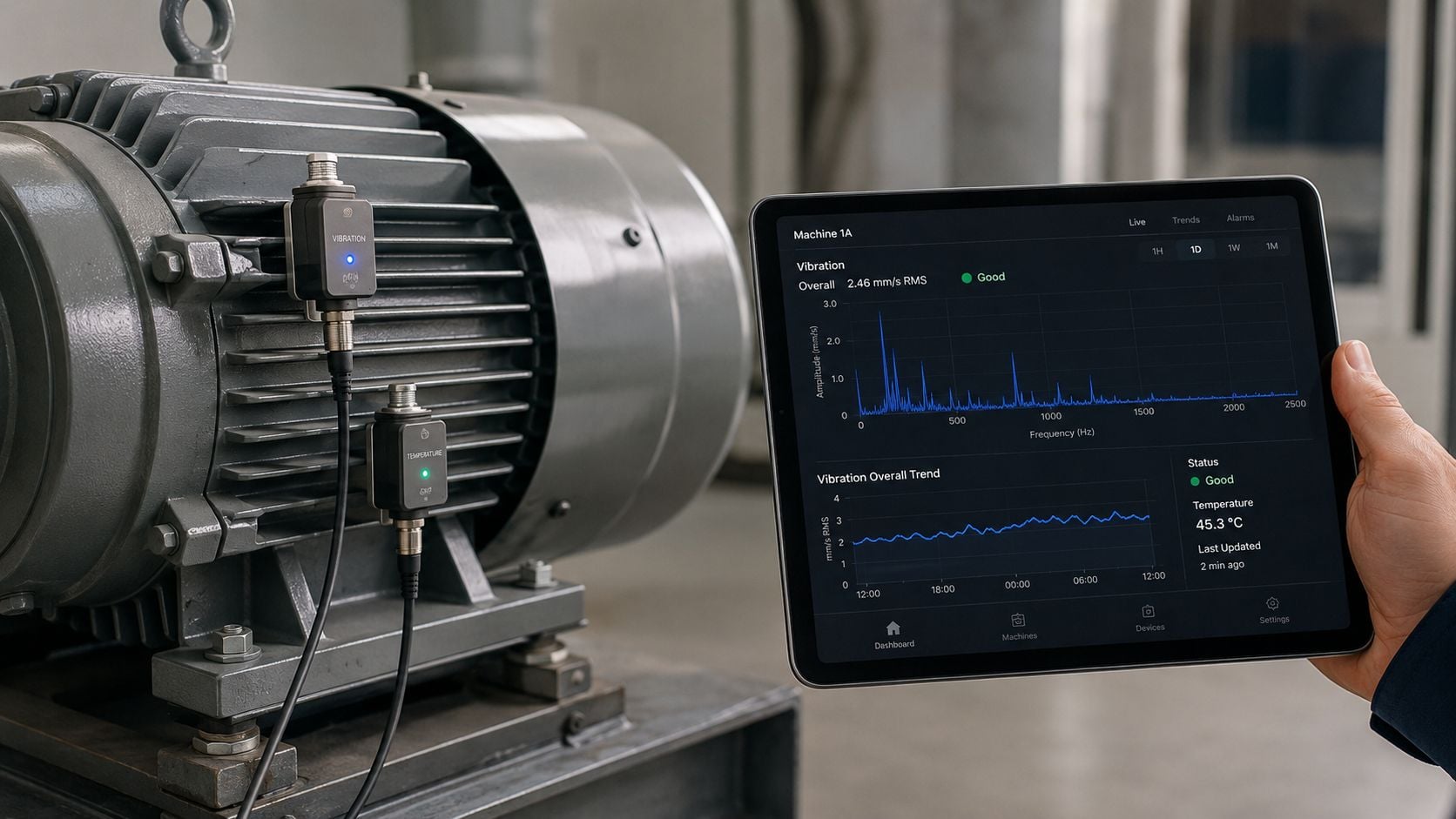
A compressor train starts showing a slight change in vibration phase on Tuesday. By Friday, bearing temperature is climbing, process variability is up, and the planner has no outage window left. That is the problem PdM is built to solve. It uses continuous or near-real-time data to estimate how a defect is progressing, so the team can intervene inside the failure window instead of reacting after the asset has already crossed into functional loss.
The distinction from CBM matters. CBM usually asks, "Has this parameter crossed an alarm limit during the last inspection route?" PdM asks, "How fast is the condition changing, what pattern does it match, and how much operating time remains before risk becomes unacceptable?" On the right assets, that difference improves schedule quality, parts staging, and production coordination.
PdM earns its keep on equipment with three characteristics: high consequence of failure, detectable degradation, and enough operating history or physics-based understanding to model deterioration. Common candidates include compressor trains, boiler feedwater pumps, critical fan systems, large gearboxes, turbines, and production bottleneck motors. A non-critical sump pump with cheap replacement cost rarely clears that bar.
Implementation is more demanding than periodic monitoring. Plants need reliable sensors, clean historian or edge data, asset hierarchy, failure coding, and analysts who can separate process variation from mechanical degradation. Teams also need a work process that turns a model output into a planned job. A prediction that sits in a dashboard has no value.
The trade-off is straightforward. PdM can reduce secondary damage, shorten outage scope, and improve maintenance timing, but only if the response window is real and the asset economics justify the overhead. On some systems, simple thresholds from CBM are enough. On others, especially fast-moving failures in critical rotating equipment, route-based data arrives too late to support a controlled repair. For a practical look at how analytics fit into that progression, this guide to predictive maintenance with machine learning is a useful reference.
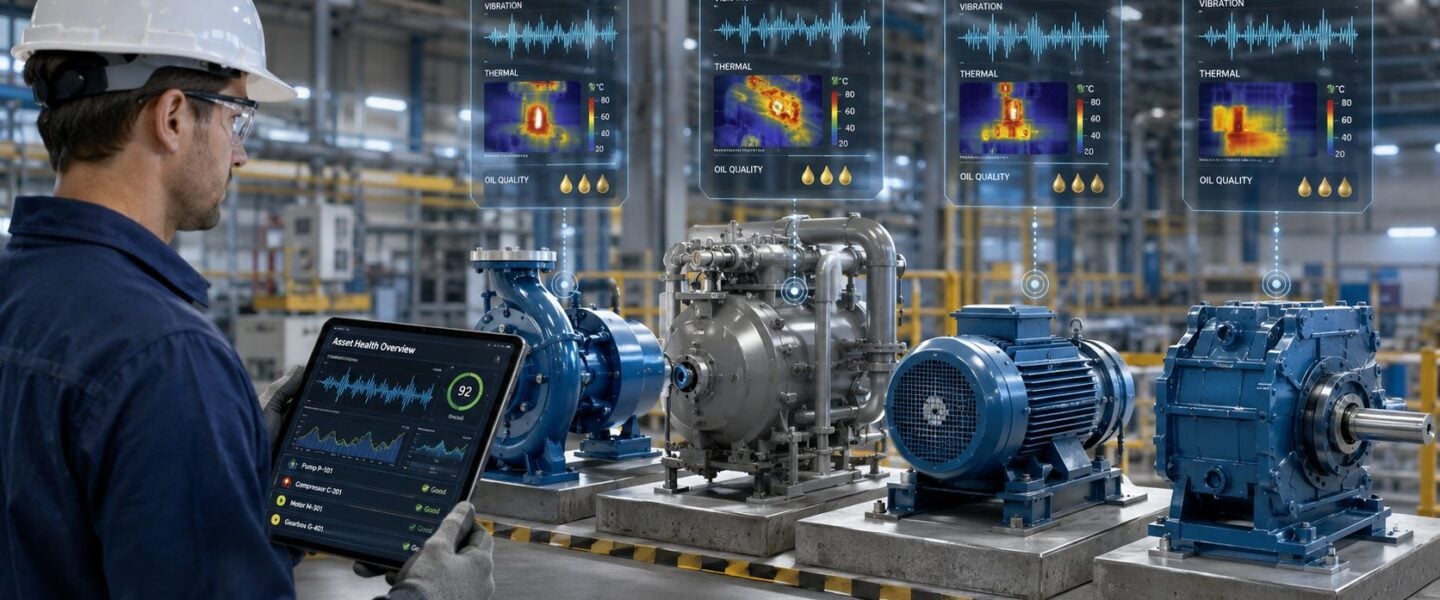
A refinery-style example makes the point. Continuous vibration, temperature, and motor current data on a critical pump train can show bearing defect growth well before operators hear noise or see a process upset. If the model also incorporates load, speed, and recent maintenance history, the reliability team can decide whether to run to the next planned outage, pull the spare into service, or intervene sooner to avoid shaft damage and collateral seal failure. The savings usually come from avoiding a forced outage and limiting repair scope, not from chasing every faint anomaly.
PdM also has failure modes of its own. Bad sensor placement creates bad predictions. Weak failure coding poisons the historical data set. Models built on unstable operating conditions can generate false confidence or nuisance alerts. I have seen sites buy sensors first, then discover they had no one accountable for validating alerts or changing the schedule. That is why PdM should be treated as an operational system, not a technology purchase.
- Best fit: High-criticality assets with measurable degradation, narrow failure windows, and strong business impact from unplanned loss.
- Poor fit: Low-cost assets, random hidden failures, or equipment with little correlation between available signals and actual functional failure.
- Common diagnostics: Continuous vibration, motor current signature analysis, oil debris monitoring, temperature trends, process variable correlation, and model-based anomaly detection.
- Failure modes addressed: Bearing degradation, lubrication breakdown, imbalance progression, misalignment development, cavitation-related damage, gear wear, rotor instability, and thermal or electrical drift that develops over time.
- Main implementation requirement: Trusted sensor data, historian access, labeled failure history, alert ownership, and planners who can act before the predicted window closes.
PdM is justified when better timing changes the business outcome. If the plant cannot act on the forecast, the model is interesting but not useful.
6. 6. Prescriptive Maintenance (RxM)
A turbine shows accelerating blade wear two weeks before a planned outage. Predictive maintenance can flag the trend and estimate the remaining window. Prescriptive maintenance goes one step further and recommends the best response, such as derating load, advancing the outage, ordering parts now, or holding operation within temporary limits based on production impact, safety exposure, and repair risk.
That distinction matters because the highest-cost maintenance decisions are usually not about detection. They are about choosing the least damaging action under time, labor, and production constraints.
RxM produces the most value where several valid responses exist and the wrong choice is expensive. Gas turbines, boiler feedwater pumps, compressor trains, mining conveyors, and process-critical utilities fit that profile. On those assets, the question is rarely "Is the machine degrading?" The harder question is "What should operations and maintenance do next, and what does each option cost?"
The catch is that prescriptive maintenance depends on decision logic, not just analytics. The plant needs failure modes tied to standard job plans, operating limits approved by engineering, spare lead times, outage rules, and a CMMS or planning process that can turn a recommendation into work. Sites that skip that foundation usually get polished recommendations that no one trusts or can execute. Teams building that logic often borrow the asset criticality and failure consequence structure used in reliability-centered maintenance implementation programs, because RxM needs clear decision criteria before software can rank options.
A power generation example makes the trade-off clear. If blade fatigue is progressing, the lowest immediate maintenance cost might be to keep running. That can also be the highest total business risk if a forced outage lands during peak demand, damages adjacent components, or creates a long parts delay. A prescriptive model should compare those outcomes against alternatives, such as temporary load reduction or an earlier controlled shutdown, and show why one action produces the best total result.
RxM is a poor fit when the plant still struggles with basic work identification, failure coding, or planner discipline. In that environment, recommendations become noise because the system lacks the operating context to judge which action is realistic.
- Best fit: High-consequence assets with multiple intervention choices, clear operating constraints, and enough business context to compare repair timing, production loss, and risk.
- Poor fit: Plants with weak CMMS data, undefined failure codes, no approved operating envelopes, or assets where the only practical response is simple replacement.
- Common inputs: Predicted failure window, process constraints, spare availability, labor capacity, outage schedule, production demand, consequence ranking, and root cause history.
- Failure modes addressed: Degradation patterns where action choice matters, such as turbine blade wear, compressor fouling progression, pump performance loss, thermal damage growth, lubrication starvation, and repeated faults with known operating workarounds.
- Main implementation requirement: Decision rules the plant agrees with before the alert arrives. That includes asset criticality, approved temporary limits, standard response playbooks, planner ownership, and feedback on whether the recommendation worked.
Prescriptive maintenance pays when better decisions reduce total business loss, not when the software simply adds another alert layer.
7. 7. Reliability-Centered Maintenance (RCM)
A pump trips on low flow, the standby unit starts late, and production loses an hour. The repair itself is routine. The larger problem is that the plant treated every task around that system the same way, even though the bearing, seal, driver, controls, and protective functions fail in different ways and carry different consequences. RCM fixes that decision error.
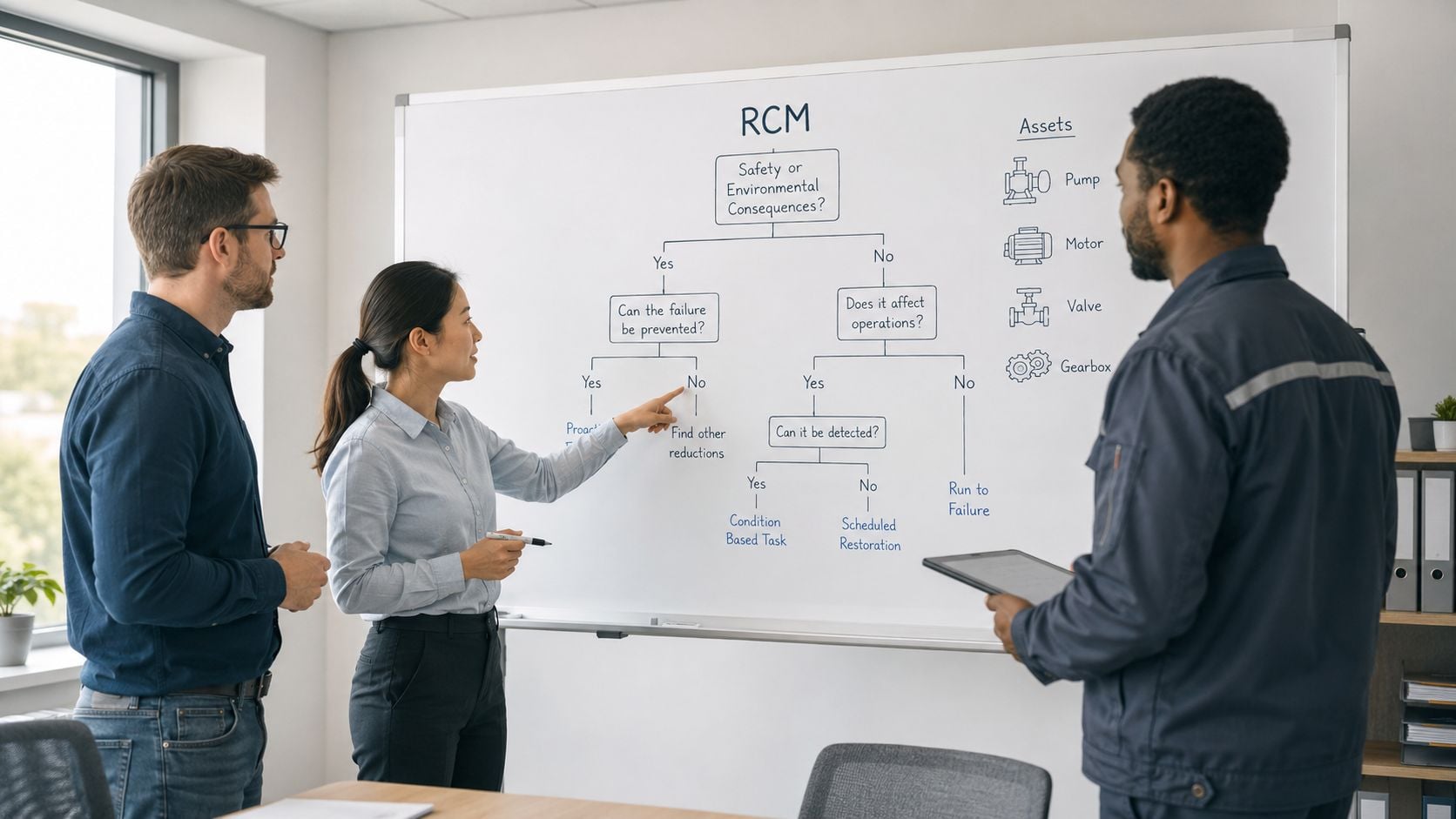
RCM is the framework used to decide which maintenance strategy fits each failure mode. It starts with the asset's required function, then asks how that function can fail, what happens if it does, and which task is worth doing. The value is not better terminology. The value is spending labor, inspection time, and monitoring budget where they reduce risk, while leaving low-consequence failure modes alone.
That matters because PM, CBM, PdM, and failure-finding are not interchangeable. A calendar task works for age-related wear. It wastes money on random electronic faults. Condition monitoring can catch bearing degradation early, but it will not prove that a standby shutdown interlock is still available when demanded.
RCM gives teams a consistent way to make those calls. A practical RCM review usually sorts tasks into time-directed work, condition-directed work, failure-finding for hidden functions, and deliberate run-to-failure where consequence is low and replacement is cheap. If you need a working model for that analysis, this reliability-centered maintenance implementation guide lays out the process in plant terms.
A refinery pump train shows why the method holds up. Bearing failure may justify vibration routes or online monitoring because the defect develops with a detectable P-F interval and the production consequence is high. Seal failures often need a different answer, such as installation controls, flush plan checks, and a planned corrective response with stocked parts, because many seal issues tie back to operating conditions or design detail rather than simple age. The standby protective device changes the consequence again. Its hidden failure may require scheduled proof testing, since waiting for condition data is not enough when the function only matters during an upset.
That is the trade-off RCM handles well. It does not ask for one maintenance program per asset. It asks for the lowest-cost task that can manage each meaningful failure mode.
- Best fit: Critical systems with multiple failure modes, protective layers, or operating consequences that vary by component, such as pump trains, compressors, packaging lines, boilers, and electrical distribution.
- Poor fit: Plants looking for a quick task list without failure data, operating context, or cross-functional input from maintenance, operations, and engineering.
- Failure modes addressed: Mixed populations of age-related wear, detectable degradation, hidden protective failures, human-error-induced faults, and low-consequence random failures.
- Main implementation requirement: Clear functional definitions, failure history, consequence ranking, and a team willing to challenge inherited PMs that add cost without reducing risk.
RCM pays back when it removes unnecessary work and strengthens coverage on the few failure modes that can hurt safety, throughput, or maintenance cost.
8. 8. Failure Mode and Effects Analysis (FMEA)
A line can look healthy right up to the shift when scrap spikes, a safety interlock trips, or a customer rejects product. FMEA helps teams get ahead of that moment by forcing a hard question: which failure modes create the most business risk, and which controls are weak enough that the plant will not catch them in time?
FMEA is an analysis method, not a maintenance execution method. It still belongs in any serious maintenance strategy because it ranks failure modes before teams spend money on PMs, sensors, redesigns, inspections, or spare parts. Severity, occurrence, and detectability give the team a common scoring structure. Its true value lies in the decision that follows. High-severity, hard-to-detect failures usually need stronger controls than another calendar task.
Plants that skip FMEA often inherit maintenance plans built around habit, OEM defaults, or whichever breakdown happened last.
How FMEA changes maintenance decisions
A good FMEA does more than produce a Risk Priority Number. It ties each failure mode to a practical response. That response might be a condition check, a design change, an operator control, a proof test, a spare strategy, or no action at all if the consequence is minor and the cost of intervention is not justified. The discipline is in matching the action to the failure mechanism rather than applying the same maintenance pattern across the asset class.
For maintenance leaders, the trade-off is straightforward. FMEA takes engineering time up front, usually from maintenance, operations, quality, and process owners. That effort pays back when it prevents money from going into low-value PMs and redirects attention to the few ways an asset can hurt safety, throughput, or product quality. Teams that rush the scoring exercise without clear failure definitions usually get paperwork, not better reliability.
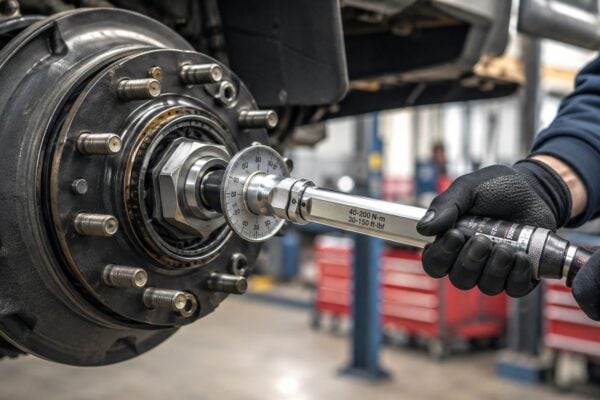
A bolting station on an assembly line shows the difference. One failure mode is incorrect torque. If detection depends on operator judgment, the risk is not managed by adding another lubrication PM to the tool. The better response may be a verified torque tool, a go/no-go check in the process, and an alarm or lockout when the required torque signature is missing. That is an FMEA-driven decision. It removes a human-error path and improves detectability at the point of failure creation, which usually has better ROI than post-process inspection.
For rotating equipment, the same logic applies differently. A gearbox failure mode such as lubricant contamination may justify oil analysis and better breather control. A coupling guard fastener backing out may call for assembly standard changes and torque marking, not vibration monitoring. FMEA is useful because it separates what can be found by inspection, what needs condition monitoring, and what should be engineered out.
A practical FMEA guide for maintenance teams helps standardize that workflow so rankings turn into task lists, design actions, and CMMS changes instead of staying in a worksheet.
- Best fit: New equipment introductions, chronic problem assets, quality-critical processes, safety-related systems, and assets with repeated failures that standard PM review has not fixed.
- Poor fit: Plants looking for a fast maintenance template without failure history, cross-functional input, or follow-through on engineering and procedural actions.
- Failure modes addressed: High-consequence single-point failures, human-error-driven process failures, weak-detection quality escapes, hidden control failures, and recurring defects with unclear root causes.
- Main implementation requirement: Clear system boundaries, agreed scoring criteria, failure mode descriptions specific enough to act on, and owners assigned to each mitigation.
FMEA pays back when the plant needs to decide where better detection, redesign, or targeted maintenance will reduce risk more effectively than doing more routine work.
8. 8. Failure Mode and Effects Analysis (FMEA)
FMEA is another analytical method rather than a maintenance execution type, but it belongs in any serious discussion of industrial maintenance because it turns vague reliability concerns into ranked, actionable risk. Teams identify failure modes, assess effects, estimate severity, occurrence, and detectability, then calculate a Risk Priority Number. The point isn't paperwork. The point is deciding what deserves engineering effort first.
When a plant skips this step, maintenance plans often mirror habit instead of risk.
How FMEA changes maintenance decisions
The formal rule is straightforward. FMEA uses a Risk Priority Number calculated as the product of severity, likelihood of occurrence, and detectability, and teams are instructed to prioritize the top 20% of RPNs for mitigation actions, according to LCE's FMEA guidance. Those mitigations should detect failure at the start of the potential failure curve or prevent it through redesign.
An automotive assembly example makes this concrete. A process FMEA on a critical bolting station may identify incorrect torque as a severe failure mode with poor detectability if operators rely on manual judgment. The right response may be neither more PM nor more inspection. It may be a poka-yoke torque tool that verifies completion and removes error opportunity from the process.
For rotating equipment, FMEA also helps narrow where maintenance effort should go. Four root causes, inadequate lubrication, normal wear and aging, improper installation or assembly, and contamination, account for about 75 to 80% of equipment failures, with inadequate lubrication alone responsible for 35 to 40%, according to Oxmaint's equipment failure analysis summary. That doesn't mean every asset needs the same task. It means many high-RPN items will cluster around lubrication control, contamination exclusion, installation quality, and early defect detection.
A practical FMEA resource for maintenance teams helps move those findings into PM revisions, CBM routes, design fixes, and spare parts decisions instead of leaving them in a spreadsheet.
- Best fit: New lines, chronic bad actors, repeated failures, and asset classes where the team needs risk visibility before redesigning maintenance.
- Strong outputs: Detection controls, redesign priorities, inspection points, lubrication standards, training needs, and spare strategy.
- Failure mode focus: Bearing distress, contamination ingress, misassembly, seal damage, lubrication breakdown, and process-induced overload.
FMEA works because it forces a plant to argue with evidence instead of opinion.
8-Point Industrial Maintenance Comparison
| Strategy | Implementation complexity | Resource requirements | Expected outcomes | Ideal use cases | Key advantages |
|---|---|---|---|---|---|
| Reactive Maintenance (Run-to-Failure) | Very low (no planning/schedules) | Minimal planned resources, high emergency spares and rapid-response labor | Unpredictable uptime, high unplanned downtime and repair costs | Low‑critical, redundant, or easily replaceable assets | Lowest upfront cost; simple to operate |
| Preventive Maintenance (PM) | Low–medium (fixed schedules, CMMS) | Scheduled labor, spare parts, CMMS, basic tooling | More predictable availability, reduced catastrophic failures vs reactive | Safety‑critical or compliance‑mandated equipment with predictable wear | Improves safety and budgeting; straightforward to implement |
| Corrective Maintenance | Medium (depends on planned vs unplanned) | Fault detection, planning capability, parts provisioning | Efficient when planned; can be emergency and costly if unplanned | Assets with detectable faults that can be deferred to scheduled windows | Targets specific problems; maximizes life when repairs are planned |
| Condition‑Based Maintenance (CBM) | Medium (route design, thresholds) | Handheld diagnostic tools, trained technicians, routine routes, CMMS | Data‑driven interventions, reduced over‑maintenance, earlier detection than PM | Medium‑critical assets where continuous monitoring is unaffordable | Lower cost than continuous PdM, bases work on actual condition |
| Predictive Maintenance (PdM) | High (continuous sensors + analytics) | Continuous sensors, connectivity, analytics platform, skilled analysts | Significant reduction in unplanned downtime; extended equipment life | High‑critical assets with high failure/consequence costs | Early fault detection, rich diagnostics, strong ROI on critical assets |
| Prescriptive Maintenance (RxM) | Very high (AI models + integrations) | Large datasets, AI/ML platforms, ERP/CMMS integration, expert staff | Optimized, context‑aware maintenance decisions and quantified tradeoffs | Complex systems where optimal tradeoffs between cost and production matter | Recommends optimized actions, reduces human error, maximizes ROI |
| Reliability‑Centered Maintenance (RCM) | High (workshops, logic trees) | Cross‑functional team time, failure data, facilitation, documentation | Asset‑by‑asset optimized strategy, reduced non‑value tasks, justified investments | Critical systems where consequence‑based prioritization is needed | Data‑driven strategy selection; aligns maintenance to business risk |
| Failure Mode and Effects Analysis (FMEA) | Medium–high (systematic analysis) | Cross‑functional team, data collection, scoring and documentation | Prioritized failure risks and targeted mitigation actions | New designs, complex processes, high‑risk or safety‑critical systems | Identifies failure modes proactively; supports RCM and compliance |
Building Your Hybrid Strategy From Data to Decision
No plant wins by picking one maintenance philosophy and applying it everywhere. The right answer is almost always a layered strategy built around asset criticality, dominant failure modes, detectability, and cost of consequence. That's the difference between a maintenance program that looks busy and one that improves reliability.
Start with the asset classes that create most of the plant's business risk. In many facilities, that means process pumps, compressors, critical motors, gearboxes, analyzers, and utilities that can stop production or create environmental exposure. Then ask four practical questions. What function does the asset serve, how does it fail, how early can the team detect that failure mode, and what happens if the plant does nothing until failure?
Those questions usually sort the strategy quickly. A non-critical redundant sump pump may be a rational run-to-failure candidate. A chlorine analyzer or protective function may need strict PM or failure-finding tasks because consequence matters more than component cost. A bank of medium-critical motors may fit route-based CBM with vibration, thermography, and lubrication checks. A bottleneck compressor train or high-energy pump deserves continuous PdM because the warning window and business consequence justify online monitoring.
This is also where RCM and FMEA earn their place. RCM decides the maintenance mix by consequence and task type. FMEA ranks the specific risks worth attacking first. Together, they keep the plant from spending heavily on low-value work while leaving high-consequence failure modes poorly managed.
A hybrid strategy also requires discipline in execution. PM tasks should exist because there is a clear failure mechanism or compliance requirement, not because “that's what's always been on the PM route.” CBM routes should have defined alert limits, response expectations, and technician ownership. PdM systems need alarm review, engineering validation, and planned work conversion. Prescriptive maintenance should wait until the plant has dependable data governance, clean asset history, and strong root cause practices.
For a practical example, consider a food and beverage plant with multiple centrifugal pumps, conveyors, refrigeration assets, and packaging motors. The plant might allow a redundant washdown utility pump to run to failure, keep regulatory calibration tasks on PM intervals, inspect conveyor drives with route-based CBM, place online vibration and oil analysis on the main refrigeration compressor, and use FMEA to attack recurring bearing contamination on packaging lines. That's a real maintenance strategy. It aligns effort with consequence.
The most important shift is cultural. Reliability improves when teams stop debating maintenance methods in the abstract and start tying each method to a specific asset and failure mode. The plant doesn't need more maintenance by default. It needs the right maintenance, applied deliberately, with evidence behind it.
Forge Reliability is one option for plants that want outside support in that work. The company provides predictive maintenance, condition monitoring, and reliability consulting built around techniques such as vibration analysis, oil analysis, thermography, ultrasound, motor current signature analysis, FMEA, and RCM. A no-cost reliability assessment is a practical first step for teams that want an external view of asset criticality, current maintenance mix, and the most useful next moves.
A free reliability assessment from Forge Reliability can help identify which assets should stay on PM, which belong on CBM or PdM, and where recurring failure modes are draining uptime. For plants that need a clearer maintenance strategy without adding guesswork, that assessment is a practical place to start.