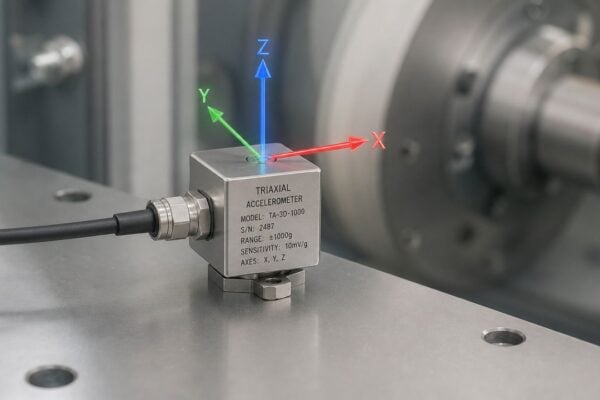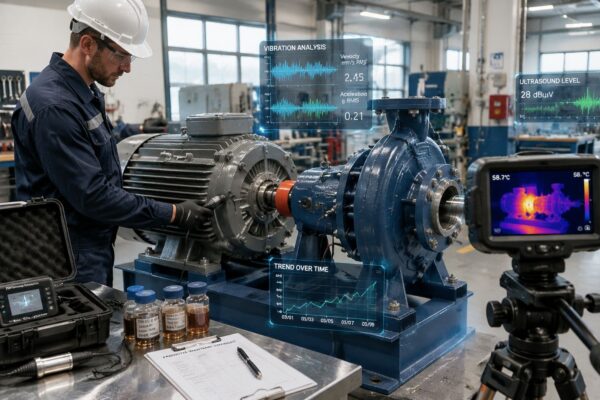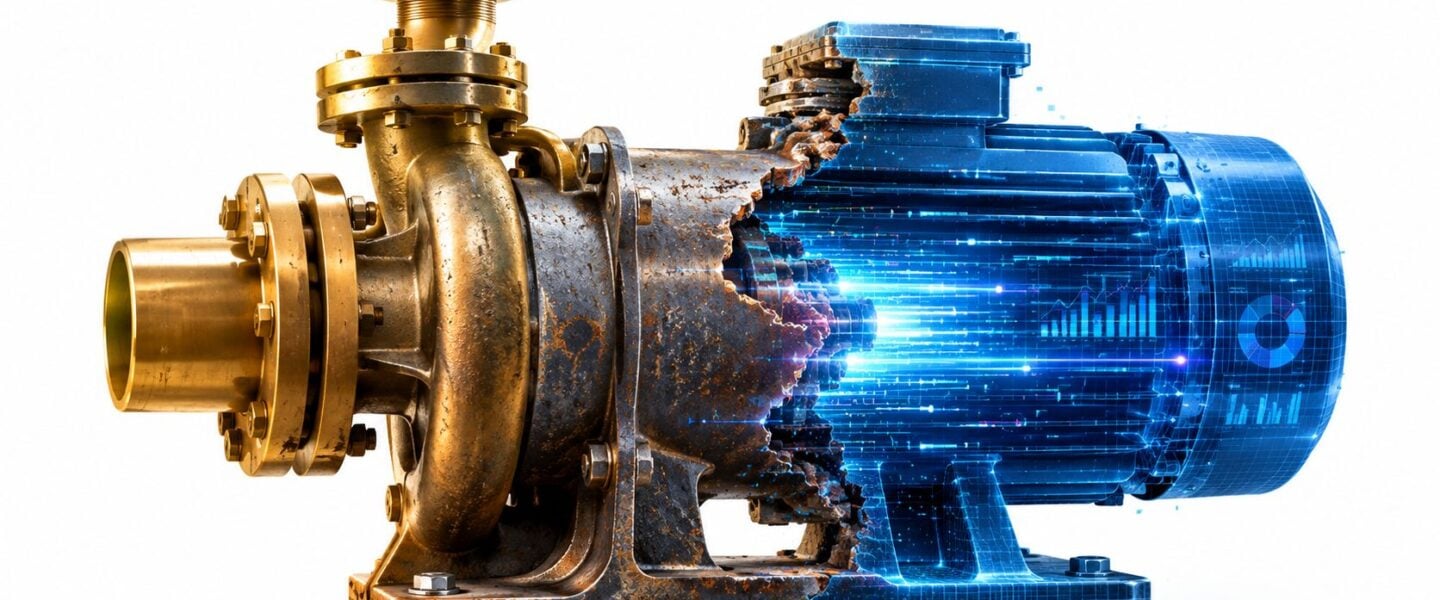
The capital planning meeting starts with a familiar statement: the pump is fully depreciated, so replacing it can wait. On the plant floor, the vibration route tells a different story. A rising 1× running-speed component, an emerging bearing defect frequency, contaminated oil, or a higher motor temperature may indicate that the machine is approaching a functional failure long before the fixed-asset register says its value has reached zero.
That conflict is the central risk in equipment life depreciation. Accounting depreciation allocates cost over an estimated useful life. Reliability engineering manages physical condition, failure probability, production exposure, and lifecycle cost. Those perspectives should inform each other, but neither should be mistaken for the other.
Table of Contents
- Understanding Equipment Life and Depreciation
- Core Depreciation Methods and Calculations
- Accounting Useful Life vs Physical Life
- The Economics of Replacement and Wear
- Integrating Depreciation with Maintenance Strategy
- Real-World Examples and Decision Rules
- Next Steps for Asset Lifecycle Management
Understanding Equipment Life and Depreciation
The pump that looks healthy on paper
Consider a centrifugal pump in a chemical process. Finance records a multi-year depreciation schedule, and the book value eventually becomes small or reaches its residual value. Operations still needs the pump to maintain flow, while maintenance sees seal leakage, coupling misalignment, and a gradual increase in vibration. The accounting record describes how the purchase cost has been allocated. It doesn't confirm that the pump is safe, efficient, or reliable.
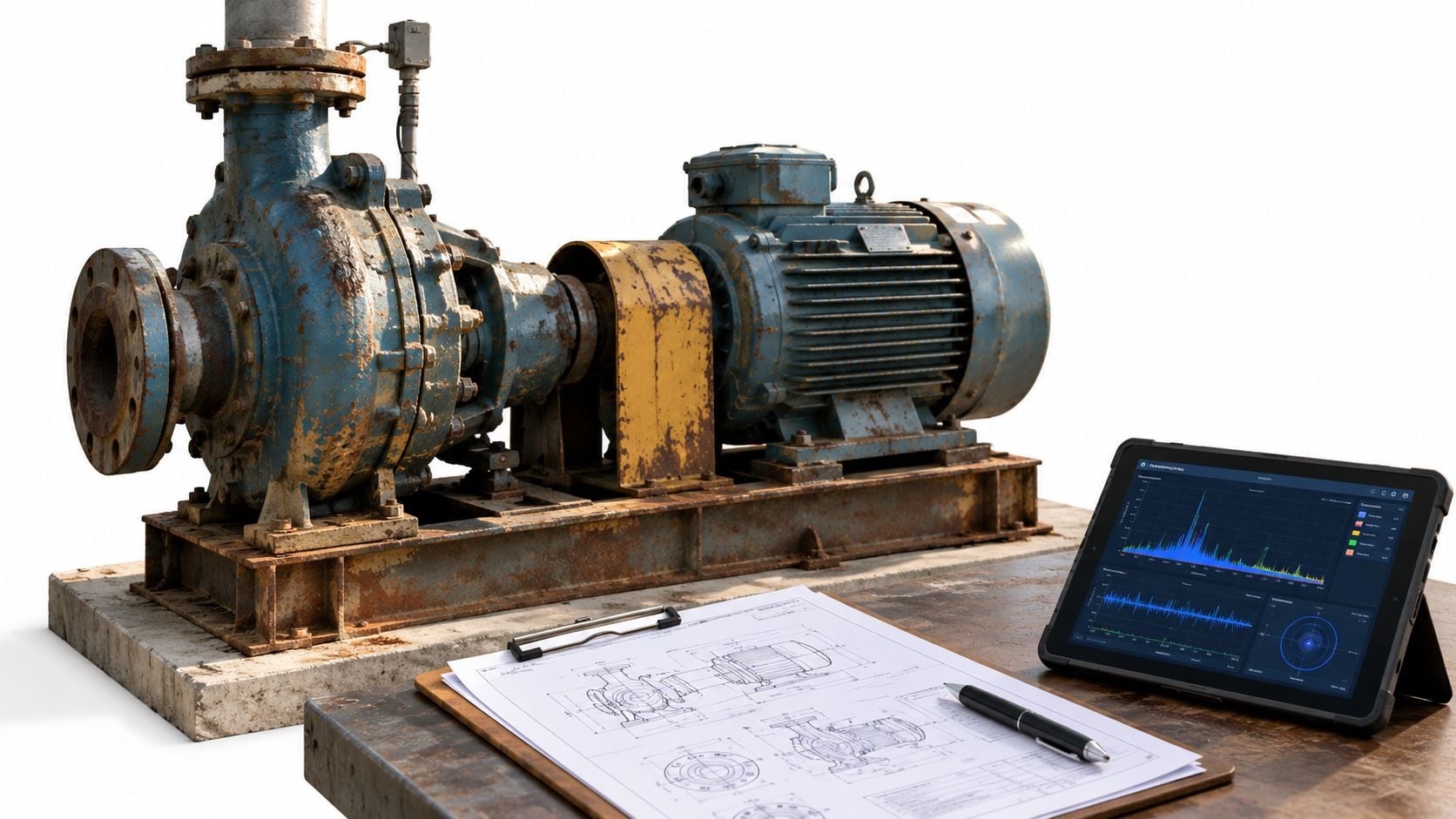
Depreciation is a non-cash cost that captures value loss associated with age, wear, and obsolescence. For industrial equipment, the economic relationship can be expressed as:
Economic depreciation = (initial cost + acquisition fees – salvage value) ÷ expected years of life
The two most sensitive inputs are generally the salvage value and the expected useful life, as explained in Penn State Extension's guidance on managing machinery and equipment. Change either assumption, and the annual expense, book value trajectory, and capital planning discussion change with it.
Three kinds of life
A reliability team should separate at least three ideas:
- Physical life is the period during which an asset can continue operating, possibly with repairs or refurbishment.
- Accounting useful life is the period over which the organization allocates the depreciable amount in its financial records.
- Economic life is the point at which ownership, maintenance, downtime, energy, and operating costs no longer justify continued use.
A motor can have little remaining book value but substantial productive capacity. A compressor can also have book value remaining while corrosion, rotor damage, obsolete controls, or repeated trips make replacement the more responsible decision. The correct question isn't whether the machine has been depreciated. It is whether its condition and total cost of ownership support continued operation.
This distinction prevents a common capital-planning error: treating a depreciation schedule as a condition assessment. A fixed-asset register should tell the plant what was purchased, when it was placed in service, and how its cost is being allocated. Inspection data, failure history, operating context, and lifecycle cost analysis should tell the plant whether the equipment still deserves production-critical duty.
Core Depreciation Methods and Calculations
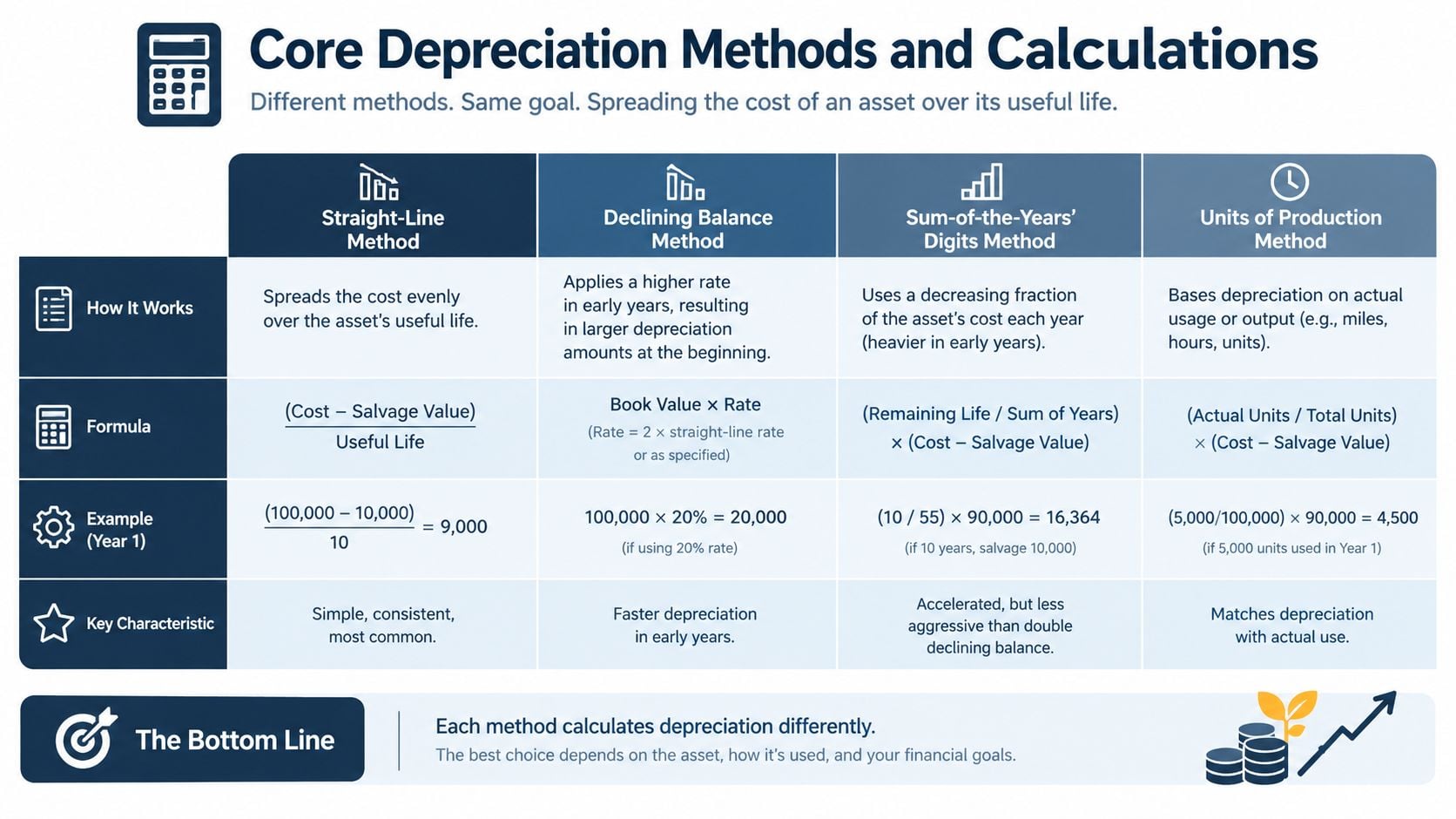
Finance may use different depreciation methods depending on accounting policy, tax requirements, and the way an asset is expected to deliver value. Reliability leaders don't need to own the ledger, but they do need to understand the assumptions behind it.
Straight-line depreciation
The straight-line method allocates the depreciable amount evenly across the estimated useful life:
Annual depreciation = (initial cost – salvage value) ÷ useful life
A useful-life example from MaintainX's equipment useful-life guidance uses an asset costing $38,000. With a 10-year useful life, annual depreciation is $3,800. If the estimated life is extended to 15 years, annual depreciation falls to about $2,533, a 33% reduction in annual depreciation expense.
That calculation doesn't prove the asset should remain in service. It shows how strongly the life assumption affects the financial schedule. If a finance team applies a generic life to a motor without considering load, starts, ambient temperature, alignment, lubrication, and duty cycle, the resulting expense may be consistent while the reliability forecast remains poor.
Declining balance and sum-of-the-years' digits
Declining-balance methods recognize more expense in earlier periods and less later. They may suit assets that lose value or efficiency quickly, but accelerated book or tax recognition still doesn't measure bearing condition, insulation aging, shaft wear, or control obsolescence.
The sum-of-the-years' digits method also accelerates expense, but it weights the allocation according to the asset's remaining life. Both methods can be valid accounting tools. Neither replaces condition monitoring.
Units of production
Units-of-production depreciation ties expense to actual use rather than elapsed calendar time. The basis might be production units, operating hours, load cycles, or another defensible measure:
Depreciation per unit = (initial cost – salvage value) ÷ expected total units
Period depreciation = depreciation per unit × units produced during the period
This method can better reflect a conveyor that runs intermittently or a pump whose runtime varies with seasonal demand. It requires trustworthy meter readings and a defensible estimate of total lifetime output. A CMMS asset register can preserve those readings, but the maintenance team still needs to validate whether output is the best proxy for wear.
For a broader accounting overview, Business Loan Warrior's depreciation of equipment guide can help finance and operations teams establish common terminology before reviewing plant-specific assumptions.
The practical rule is simple: use the method that reflects the financial purpose, then use reliability evidence to test the life assumption. Tax recovery periods can differ from accounting estimates, and neither necessarily equals the machine's economic life.
Accounting Useful Life vs Physical Life
What accounting standards actually describe
Useful life isn't necessarily the time until physical failure. IAS 16 defines it as either the period an asset is expected to be available for use or the number of production or similar units expected from it. The depreciable amount is allocated systematically over that useful life, and routine repair and maintenance don't eliminate the need to depreciate the asset.
For a chemical-plant pump, rebuilding the bearing housing or replacing the motor doesn't reset the entire machine's depreciation to zero. The repair may restore function, but the asset continues under its remaining useful-life framework unless the work qualifies as a separately recognized improvement under the organization's accounting policy.
The U.S. tax framework has its own starting point. IRS Publication 946 states that depreciable property must be owned, used in a business or income-producing activity, have a determinable useful life, and be expected to last more than one year. Depreciation begins when the asset is placed in service, not merely when it is purchased.
Why the same machine ages differently
A pump in a clean water application may experience gradual bearing fatigue and seal wear. The same pump design in chemical processing may face corrosion under insulation, aggressive fluid exposure, cavitation, thermal cycling, or ingress through a failed seal. A calendar-based estimate can't capture those differences without operating and condition data.
Factory equipment is commonly placed in a 10 to 15 year accounting-life range, while general machinery may be assigned 7 years under tax recovery systems and 10 years under accounting estimates, according to the useful-life discussion in Duke University's accounting policy. These periods are planning conventions, not promises about reliability. A machine may remain productive after its book value is largely depreciated, or it may become economically unsuitable before the schedule ends.
A maintenance manager should therefore bring evidence to the life review:
- Physical wear: corrosion, erosion, cracking, looseness, insulation degradation, and wall thinning.
- Operating stress: speed changes, starts and stops, load variation, temperature, pressure, contamination, and utilization.
- Functional obsolescence: unavailable controls, unsupported drives, poor energy performance, or safety limitations.
- Failure behavior: repeated corrective work, shorter intervals between failures, and increasing consequence severity.
Practical rule: A depreciation schedule can support a replacement budget, but it can't certify an asset for continued production duty.
The remaining useful life assessment approach gives reliability teams a useful way to frame the difference. Remaining useful life should be treated as a condition and risk estimate, not as the unused portion of an accounting schedule.
The Economics of Replacement and Wear
An asset's physical survival doesn't prove that continued operation is economical. Economic life ends when ownership and operating costs exceed the value of keeping the equipment in service. That point can arrive before a catastrophic failure, especially when repair work consumes labor, spares, contractor capacity, and production availability.
A fully depreciated pump may look attractive because its book value is low. That logic can be misleading. If the pump needs repeated seal replacements, alignment corrections, bearing changes, and emergency interventions, the plant may be paying for continued ownership through maintenance and lost production rather than through depreciation.
Compare the decisions, not the calendar
| Decision basis | Keep following the schedule | Override with reliability evidence |
|---|---|---|
| Primary signal | Book value and planned age | Condition, failure risk, and lifecycle cost |
| Typical blind spot | Misses accelerated degradation | Requires disciplined data and review |
| Pump example | Operates until a major failure | Replaces or rebuilds before risk becomes unacceptable |
| Capital effect | May defer spending too long | May justify earlier funding with documented exposure |
Repair costs also need interpretation. A major rebuild can restore a machine's function, but it doesn't automatically remove recurring design weaknesses. If a compressor continues to experience high discharge temperature, valve damage, oil carryover, or vibration after repeated interventions, the team should investigate root cause and compare the future cost of ownership with a replacement or redesign.
A lifecycle analysis should include:
- Direct maintenance cost, including parts, labor, contractors, and planned outage work.
- Downtime exposure, based on the production consequence of failure and the time needed to recover.
- Performance loss, such as reduced capacity, energy waste, unstable control, or poor product quality.
- Obsolescence risk, including unavailable components, unsupported controls, or unsafe operating limitations.
- Replacement timing, including engineering, procurement, installation, commissioning, and spare-parts requirements.
The maintenance cost reduction framework is relevant because cost reduction shouldn't mean postponing every capital request. It means separating justified maintenance from spending that only extends an unreliable configuration.
Capital planning also benefits from a structured funding discussion. While equipment funding tips for practice operators address a different industry, the underlying planning question is transferable: identify the operational need, compare funding paths, and connect the purchase decision to expected use. Industrial teams should adapt that discipline to production risk, lifecycle cost, and reliability evidence.
Integrating Depreciation with Maintenance Strategy
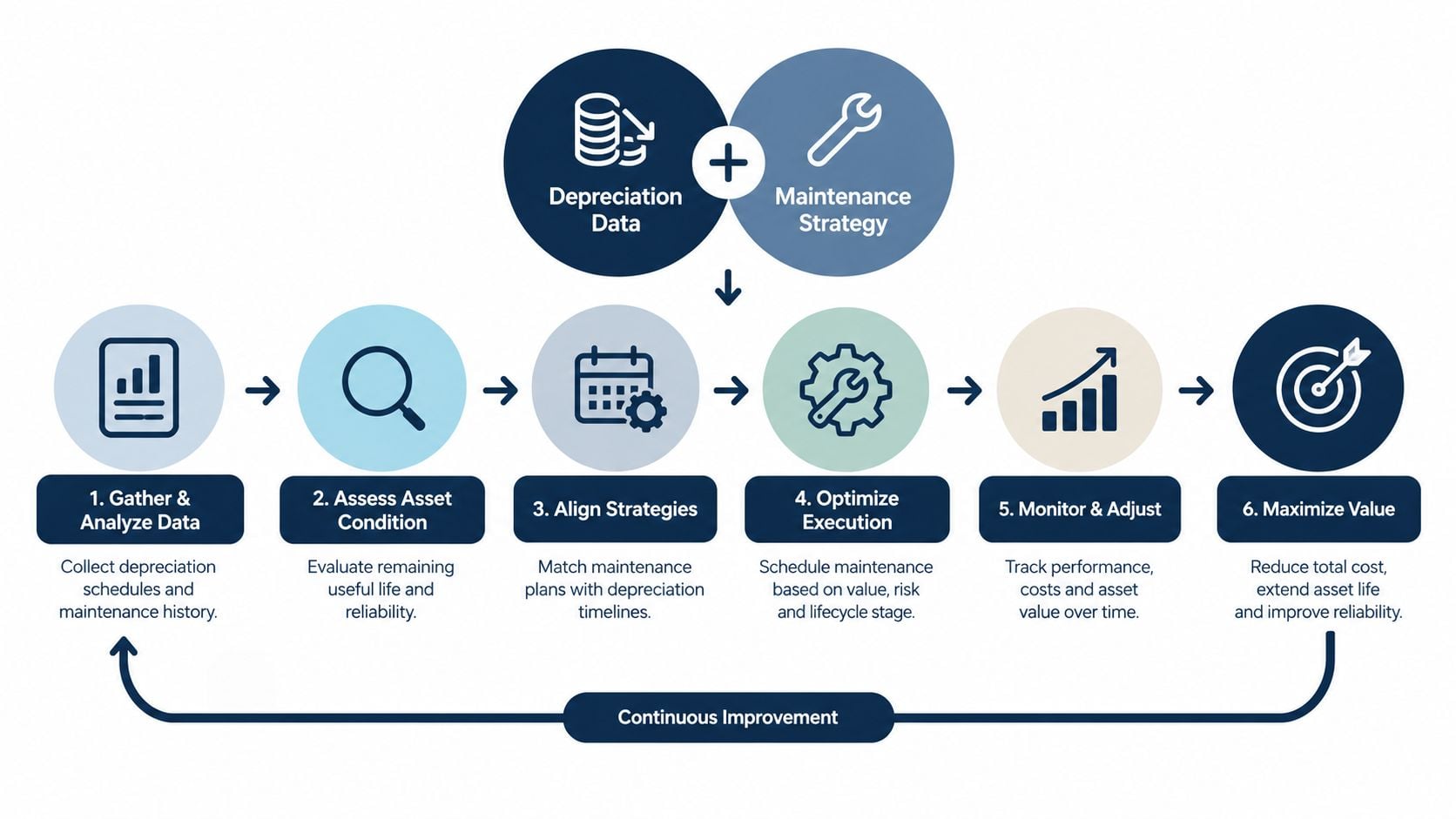
Depreciation becomes useful to maintenance when it is connected to the asset's actual history. A fixed-asset record that contains only purchase cost and an accounting life can't explain why a gearbox is deteriorating faster than expected or why a well-maintained motor may remain suitable for service.
Build one asset story
The CMMS and fixed-asset register should share a reliable asset identity. That identity connects the purchase record to commissioning, operating meters, work orders, inspection results, failure codes, and retirement status.
A workable review process looks like this:
- Confirm the baseline: Verify the asset tag, acquisition details, in-service date, configuration, and assigned accounting life.
- Capture actual duty: Record runtime, starts, load, production units, process conditions, and major operating changes.
- Classify failure modes: Use FMEA to identify what can fail, how it fails, what detects it, and what consequence follows.
- Measure condition: Apply vibration analysis to rotating equipment, oil analysis to lubrication and wear conditions, thermography to electrical and thermal anomalies, ultrasound to leaks and lubrication issues, and motor current analysis to electrical and rotor-related problems.
- Estimate risk: Combine condition severity, failure probability, consequence, lead time, and available redundancy.
- Review the decision: Ask whether the current depreciation life, salvage value, maintenance strategy, or capital date still reflects the evidence.
Condition-based maintenance provides the operational bridge. A vibration alarm on a motor-driven pump shouldn't automatically trigger replacement, but it should trigger diagnosis. The analyst needs to distinguish imbalance from misalignment, looseness, resonance, bearing damage, or hydraulic problems before assigning a capital consequence.
Use reliability methods to challenge assumptions
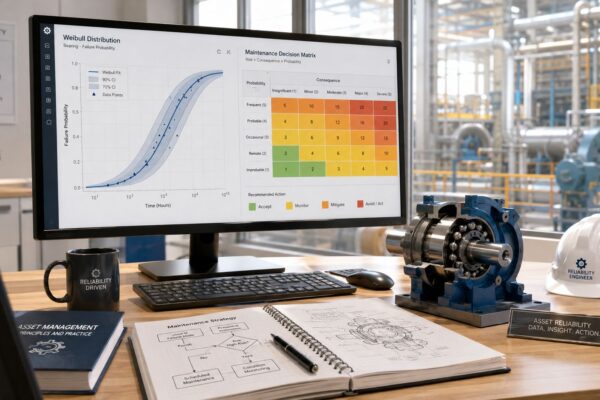
RCM, or reliability-centered maintenance, selects tasks according to function, failure mode, consequence, and detectability. FMEA structures the failure analysis. Weibull analysis uses failure-time data to characterize patterns such as early-life defects, random failures, or wear-out behavior.
These methods create a stronger argument than an age-based opinion. For example, a gearbox with stable condition trends, strong lubrication control, and no consequential failure pattern may support continued service despite low book value. A younger gearbox with repeated tooth damage caused by misalignment or overload may justify a redesign and earlier capital intervention.
A CMMS should also distinguish routine maintenance from a material improvement. A rebuilt pump may restore performance, while a capacity upgrade, major design change, or separately identifiable component may require a different accounting treatment. Finance should make the accounting determination, but maintenance must provide accurate scope, cost, commissioning, and condition records.
The useful-life review should be a joint meeting, not a spreadsheet handoff.
Forge Reliability delivers predictive maintenance, condition monitoring, reliability consulting, and asset-management support that can connect condition evidence with lifecycle cost analysis and capital planning. The value of that integration is not a new depreciation formula. It is a defensible decision about which assets need monitoring, overhaul, redesign, or replacement.
Real-World Examples and Decision Rules
A condition-based decision is easier to defend when it starts with a specific failure mode.
A process pump has a low book value and rising vibration. Spectrum data shows a pattern consistent with mechanical looseness, while oil analysis identifies contamination. The first action shouldn't be an automatic replacement. The team should inspect the baseplate, coupling, bearing housing, seals, and lubrication system, then determine whether the problem is a correctable installation or contamination issue. If the same failure returns after corrective work, the replacement case becomes stronger because the evidence points to a recurring reliability problem rather than a single defect.
A compressor presents a different risk. High discharge temperature, valve leakage, oil carryover, and frequent trips can reduce capacity while the machine remains technically operable. A capital request should compare the expected cost of continued interventions and production disruption with the cost and lead time of a replacement or major overhaul.
For a conveyor, units-of-production depreciation may be more informative than a purely calendar-based method when throughput changes substantially. The calculation can use recorded production units or operating hours, but the plant must also track the wear mechanisms that production alone may miss, such as belt mistracking, pulley lagging damage, bearing contamination, and repeated shock loading.
Decision rules for repair or replacement
- Repair first when the failure mode is understood, the intervention removes the cause, and post-maintenance condition verifies recovery.
- Escalate to capital review when corrective work repeats, failure intervals shorten, or the consequence of failure exceeds the available recovery plan.
- Replace or redesign when obsolescence, corrosion, safety exposure, or chronic performance loss makes continued operation uneconomical.
- Extend service deliberately when condition trends remain stable, spares and expertise are available, and lifecycle cost supports the decision.
Mean time between failure can help organize the failure history, but it shouldn't be treated as a replacement trigger by itself. The MTBF calculation guidance is most useful when paired with failure-mode detail, consequence analysis, operating exposure, and condition trends.
The strongest capital request doesn't say that an asset is old. It shows what is failing, how quickly the risk is changing, what production depends on the asset, what intervention has already been attempted, and why the proposed timing minimizes total cost.
Next Steps for Asset Lifecycle Management
Equipment life depreciation works when accounting assumptions and physical evidence stay connected. A pump's book value, vibration trend, seal history, process duty, and replacement lead time should support one lifecycle decision rather than several disconnected records.
Asset teams can also apply the same disciplined lifecycle thinking to other categories, including approaches intended to optimize IT asset ROI. For industrial machinery, asset lifecycle management should combine condition monitoring, failure analysis, capital planning, and CMMS governance.
A free reliability assessment can identify where depreciation schedules are masking rising failure risk, where maintenance spending is extending an uneconomical asset, and which critical pumps, compressors, motors, gearboxes, or conveyors need a defensible lifecycle decision.
Forge Reliability can review critical assets, condition-monitoring practices, failure history, and capital assumptions to connect maintenance evidence with replacement timing. Visit Forge Reliability to request a free reliability assessment and identify practical steps toward safer, more reliable equipment life planning.