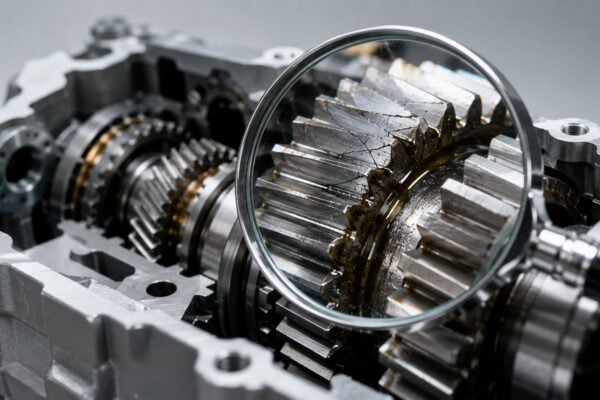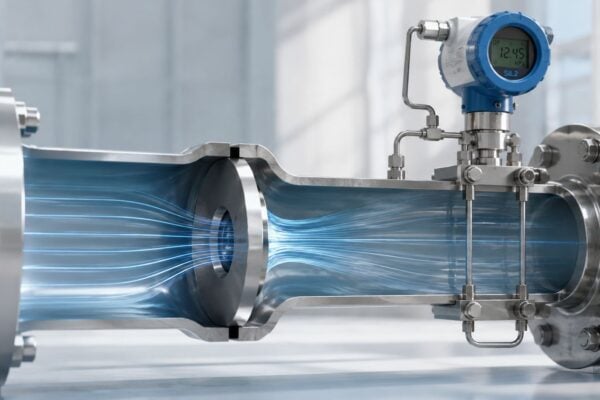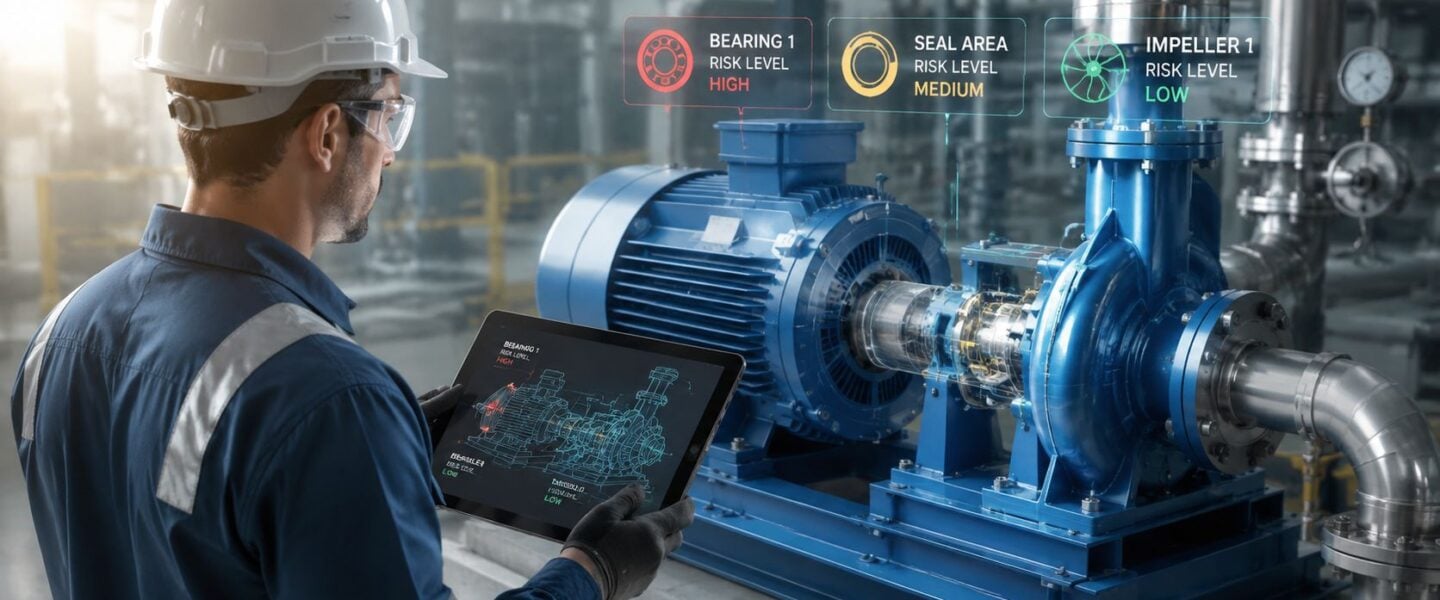
A plant can look stable right up until one critical pump, gearbox, or cooling fan slips out of service and the line starts stacking product, calls, and overtime. That's where FMEA maintenance earns its keep, not as a worksheet for auditors, but as a way to decide which failures deserve attention before they become a shift-ending problem.
Good teams use Failure Mode and Effects Analysis to turn scattered maintenance knowledge into a ranked action plan. The best versions of it also connect to live PdM signals and CMMS work orders, so the analysis doesn't die in a spreadsheet after the kickoff meeting.
Table of Contents
- Why FMEA Is the Foundation of Proactive Maintenance
- Assembling Your FMEA Team and Defining Scope
- Building and Scoring the FMEA Worksheet
- Prioritizing Actions Beyond the RPN Score
- Integrating FMEA with CMMS and Predictive Maintenance
- Verification Review and Continuous Improvement
Why FMEA Is the Foundation of Proactive Maintenance
A refrigerated process tunnel goes down during peak production, the product warms up, alarms stack, and the maintenance crew is suddenly chasing symptoms instead of causes. That's the kind of cascade FMEA is built to prevent, because it forces the team to name the likely failure modes before the asset fails on the floor.

What FMEA actually does
Failure Mode and Effects Analysis became a formal risk-analysis method in the 1940s, when the U.S. military developed it, and it later became a standard cross-functional tool for design, manufacturing, and maintenance teams (ASQ FMEA overview). In maintenance practice, the logic is still simple and useful, teams identify failure modes, rate severity on a 1-to-10 scale, and prioritize corrective actions using a Risk Priority Number, or RPN, calculated from severity, occurrence, and detectability.
That matters because maintenance managers don't need another meeting that produces a neat document and no action. They need a defensible way to say, “This gearbox failure gets the next inspection route, this seal leak gets thermal monitoring, and this low-consequence nuisance can wait.”
Practical rule: if the FMEA can't change a PM task, a spare-part decision, or a redesign discussion, it's not finished yet.
For plant operators, that ranking logic is the key value. It turns a long list of possible failures into a prioritized action plan, so reliability teams can focus on the highest-risk assets first instead of spreading labor evenly across everything. On high-downtime assets, that distinction is the difference between targeted prevention and generalized effort.
Why maintenance leaders care
FMEA also fits naturally with reliability-centered maintenance, because it helps define what should be inspected, what should be monitored, and which spare parts and procedures need to exist before failure occurs. On a packaging line, for example, a conveyor gearbox with lubrication loss, misalignment, and bearing wear won't get the same response once the team has mapped each failure mode to a specific action.
The internal path to stronger monitoring starts with condition-based thinking, which is why many plants pair FMEA work with a formal inspection strategy like condition-based maintenance. That keeps the discussion grounded in actual asset behavior, not calendar habit.
Assembling Your FMEA Team and Defining Scope
A useful FMEA session starts with the right people in the room, not a blank worksheet. On a food and beverage cooling tunnel, for example, the operator knows the nuisance alarms, the technician knows which bearings always run hot, and the supervisor knows which failures interrupt throughput fastest. The reliability engineer ties those observations to asset behavior, risk, and action.
Build the team around knowledge, not hierarchy
ASQ notes that FMEA is typically performed by a multidisciplinary team spanning design, manufacturing, quality, testing, reliability, maintenance, purchasing, and even suppliers or customers (ASQ FMEA overview). That's not corporate window dressing. It's how hidden failure modes surface, especially the ones that never show up in a drawing but appear every week on the plant floor.
A strong first-team mix usually includes:
- Operator input, because operators see drift, noise, smell, temperature change, and abnormal cycling before anyone else.
- Maintenance technician input, because technicians know what fails, what parts are awkward to replace, and what gets deferred.
- Reliability engineering input, because someone has to translate observations into failure modes, effects, and controls.
- Supervisor input, because maintenance priorities have to fit labor, shutdown windows, and production constraints.
The session works best when each person is asked for what they know directly. Operators should describe what “normal” sounds and looks like. Technicians should separate cause from effect. Supervisors should flag which tasks can realistically be executed during short stoppages.
A good FMEA workshop sounds less like a presentation and more like a controlled troubleshooting meeting.
Draw a tight boundary for the first study
The importance of scope is frequently underestimated. A first FMEA on a product cooling tunnel should stop at the tunnel, its drive system, fan motors, bearings, sensors, and controls that directly affect cooling performance. It should not expand into the entire cold-chain network, the production scheduler, or the corporate capital plan.
That discipline matters because broad scope produces shallow analysis. A focused scope, by contrast, lets the team trace a real chain, such as fan motor overheating leading to reduced airflow, product temperature drift, and a quality hold.
A useful test for scope is simple. If the team can't name the asset's boundaries, normal operating function, and likely failure consequences in one working session, the study is too broad. The first win should be a manageable system with clear downtime exposure, not an attempt to map the whole plant at once.
A plant manager can use a simple one-point lesson format to keep the session practical, and a one-point lesson example can help turn field knowledge into a repeatable FMEA input without overcomplicating the workshop.
Building and Scoring the FMEA Worksheet
A useful worksheet row starts with function, not failure. On a multi-stage centrifugal pump in a cooling or transfer service, the function might be to move liquid at the required flow and pressure without leaking, cavitating, or tripping. Only after that function is clear does the team define failure modes such as bearing failure due to contamination, seal leakage, impeller wear, or coupling misalignment.
One row, fully worked
For a pump bearing failure due to contamination, the row should track the logic in order.
- Function, transfer process fluid reliably.
- Failure mode, bearing fails because contaminants enter the lubricant.
- Effect, vibration rises, the pump trips, flow drops, and the downstream process loses cooling or feed.
- Cause, poor sealing, bad lubrication practice, dirty handling, or failed contamination control.
- Current controls, routine greasing, vibration checks, oil analysis, seal inspection, or operator rounds.
- Action, tighten contamination control, improve lubrication practice, add monitoring, or revise the PM interval.
That sequence keeps the row from turning into a grab bag of symptoms. It also makes the action defensible, because the team can see whether the proposed fix addresses the cause, the detection problem, or the consequence.
Practical insight: if the cause statement sounds like an effect, the row isn't finished yet.
Score severity, occurrence, and detection consistently
The score is where many teams drift into opinion. A good scoring conversation keeps three questions separate. Severity asks how bad the effect is if the failure happens. Occurrence asks how often that cause is likely to show up under current controls. Detection asks how likely current controls are to catch it before the failure reaches the process.
Here's a simple scoring rubric for plant use.
| Score | Severity (Effect on Safety/Operations) | Occurrence (Likelihood of Cause) | Detection (Ability of Current Controls to Detect) |
|---|---|---|---|
| 1 | No meaningful effect on operation or safety | Rare under current conditions | Almost certain to detect early |
| 2 | Very minor nuisance, no production impact | Very uncommon | Very easy to detect |
| 3 | Minor process disturbance, quick recovery | Uncommon | Usually detectable in routine checks |
| 4 | Noticeable operational disruption, limited impact | Below average frequency | Detectable with standard controls |
| 5 | Moderate loss of function or quality | Occurs occasionally | Sometimes detected, sometimes missed |
| 6 | Significant downtime risk or quality risk | Repeats under known conditions | Detection is inconsistent |
| 7 | Major process interruption or serious repair burden | Happens often enough to matter | Hard to detect before functional loss |
| 8 | High operational or safety consequence | Frequent under the current setup | Detection is poor |
| 9 | Severe safety, environmental, or production consequence | Very frequent without stronger controls | Very difficult to detect in time |
| 10 | Catastrophic consequence | Expected to occur without intervention | Essentially undetectable before failure |
On a gearbox, for example, a lubrication breakdown might score high on occurrence if the plant has a history of poor lubrication discipline, while shaft damage caused by the same issue may score higher on severity because it takes the asset down completely. The point is consistency, not perfection.
Prioritizing Actions Beyond the RPN Score
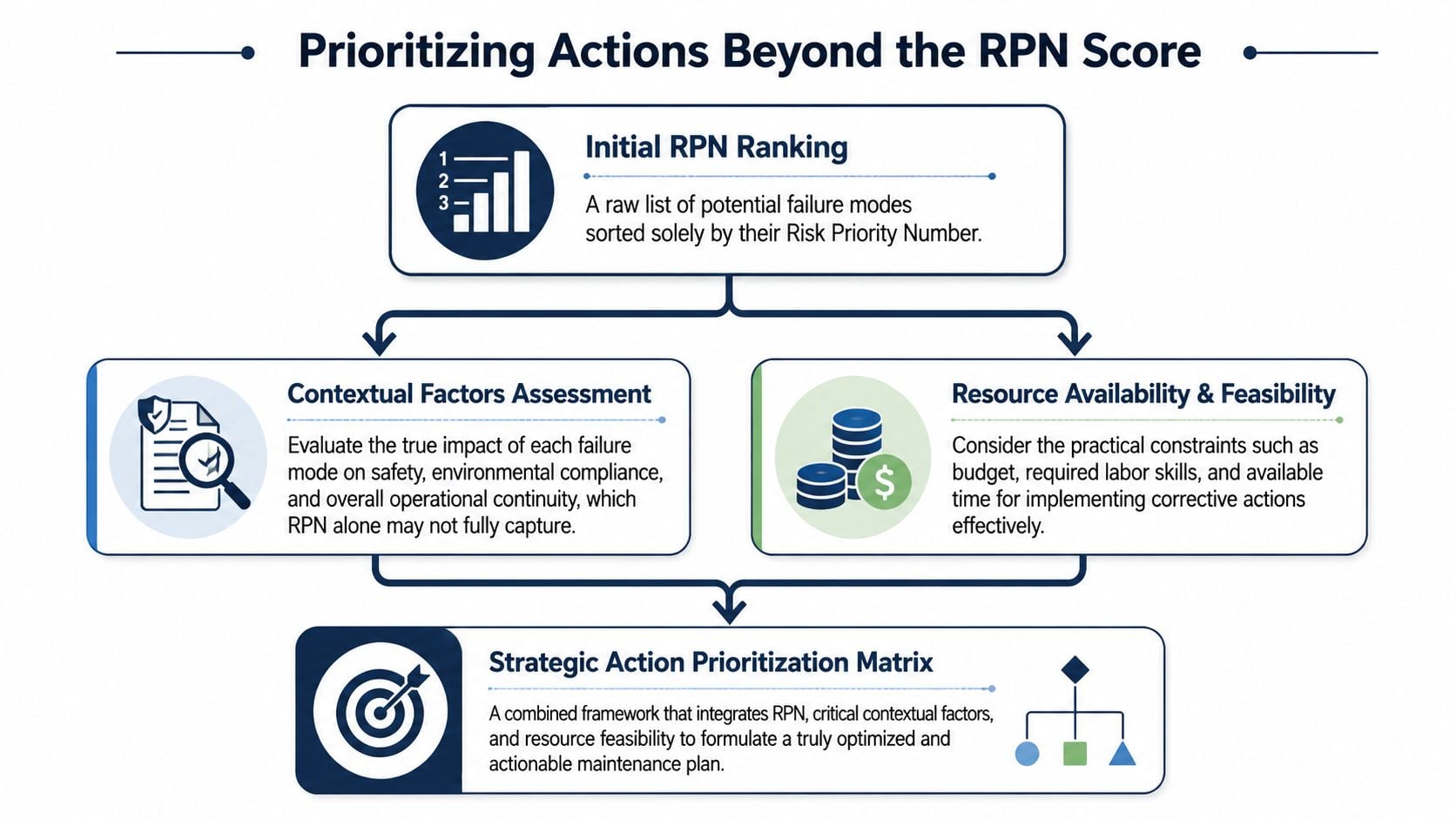
Sorting by RPN looks clean, but it can hide the failures that matter most. A low-RPN failure on a safety-critical guard, hidden interlock, or emergency shutdown component may deserve attention long before a higher numeric score on a noncritical utility pump.
Why the number alone can mislead
Guidance from maintenance practitioners says high-severity assets should be prioritized regardless of whether their RPN is low, and severity should come first, then severity-occurrence combinations, rather than blindly ranking by RPN. That approach fits plant reality better than a spreadsheet ranking that treats all consequences as equal.
A good example is a boiler feed pump in a power or process plant. A nuisance bearing issue with modest production effect may rank below a relief-device failure that remains dormant until the process is already exposed. The second issue can't be hidden behind a lower number just because occurrence and detection ratings soften the RPN.
Match the fix to the failure mode
The better question is not “What has the highest RPN?” but “What action reduces risk most effectively?” In practice, the answer usually falls into one of three buckets.
- PM task revision, when the failure mode is well understood and a better inspection, lubrication, or test interval can intercept it.
- Predictive monitoring, when early signs are measurable, such as vibration for bearing wear, ultrasound for lubrication issues, or thermography for overheating components.
- Redesign, when the failure mode is severe, recurring, or poorly detectable, and maintenance tasks can't realistically lower the risk enough.
High severity wins over a neat ranking whenever the consequence is downtime, safety exposure, or a hidden failure path.
A low-RPN failure with poor detectability can still justify immediate action if the outcome is unacceptable. That's especially true for equipment where one miss can shut down a line or create a safety event. The decision should reflect plant consequence, not just arithmetic.
For teams that want a structured way to separate numeric ranking from actual maintenance priorities, the logic behind risk priority numbers helps turn the worksheet into an action review, not just a scorecard. Forge Reliability also offers FMEA work as part of broader reliability consulting, which is one practical way to translate the analysis into a plant-ready plan.
Integrating FMEA with CMMS and Predictive Maintenance
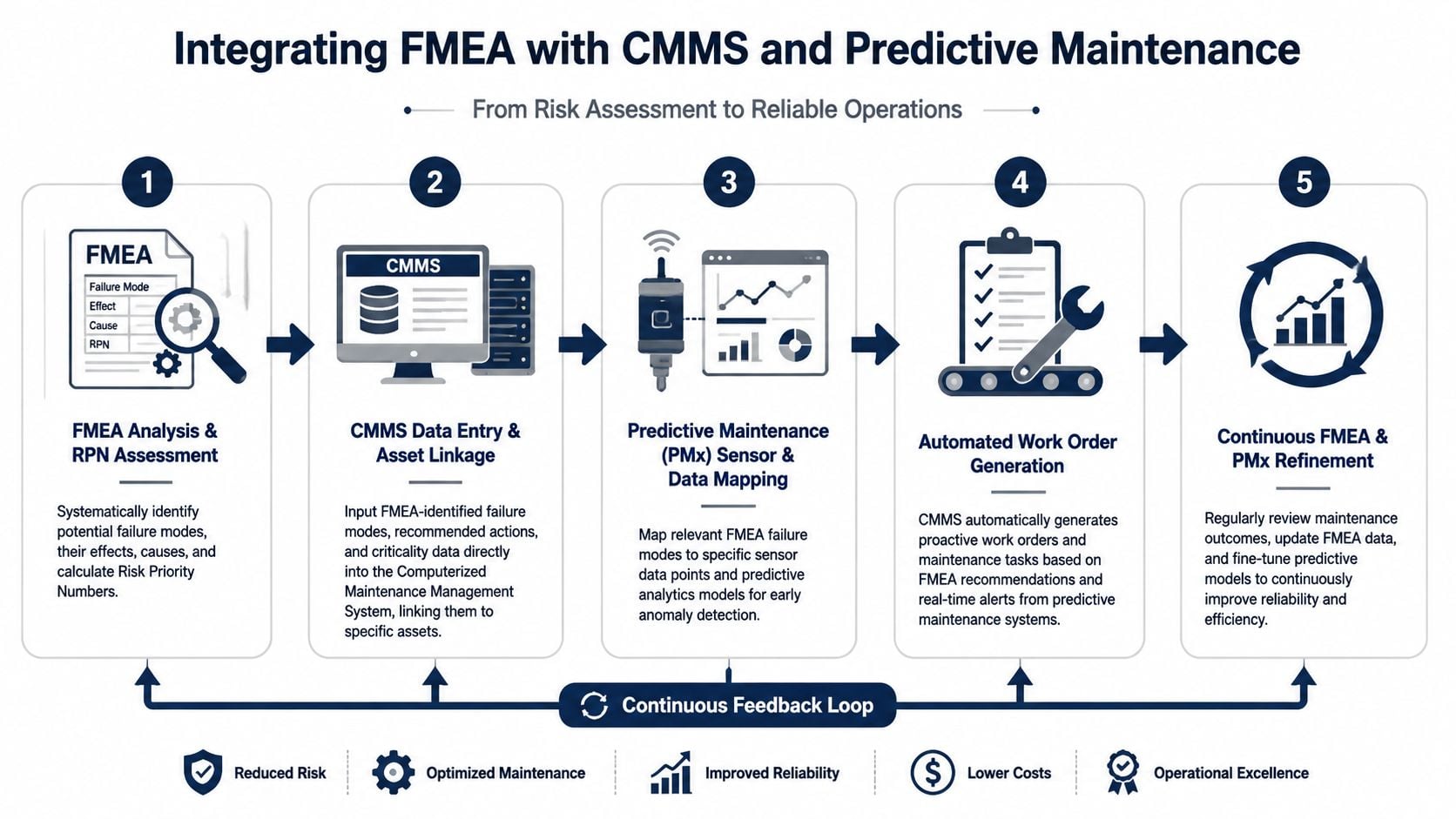
An FMEA that stays in a spreadsheet has already started to decay. The useful version connects the failure modes to the CMMS, the PM library, and the monitoring routes that technicians use on the floor.
Push the analysis into daily work
The first step is to translate each high-priority row into a specific maintenance object. On a motor-driven pump, that might mean adding a lubrication task, revising a bearing inspection route, or flagging a critical spare in the bill of materials. Once the action exists in the CMMS, it can be assigned, closed, and reviewed like any other work.
The next step is to connect the FMEA to live condition data. If vibration data shows early bearing distress, that should influence the Occurrence and Detection ratings on the next review. If thermography consistently spots hot motor terminals before failure, detection is stronger than the original worksheet suggested.
Best practice: if a sensor or inspection route repeatedly proves that a failure mode is easier to catch than expected, the FMEA should be updated, not left untouched.
That feedback loop is what makes the analysis living instead of static. It also helps planners decide whether a failure mode belongs in a fixed-interval PM, a condition-based route, or a redesign conversation.
Keep the data tied to the asset
A practical CMMS setup links each failure mode to the specific asset, the action, and the reason for the action. That means the work order history tells the next team why the task exists, not just that it exists. It also prevents the common problem where a critical spare gets buried in a generic inventory list and only gets noticed after the failure.
A clear asset-management structure supports this work, which is why CMMS asset management should sit close to the FMEA output, not in a separate binder. On a packaging line, that can be the difference between a bearing change done on schedule and a surprise outage caused by a missing part.
The result is a closed loop. FMEA defines risk, PdM validates whether the risk is rising or falling, and CMMS execution turns the decision into work.
Verification Review and Continuous Improvement
An FMEA should age with the asset, not sit on a shared drive as a frozen snapshot. One industrial maintenance guide recommends using three years of historic data where possible for the initial FMEA, then reassessing the equipment one year after full implementation to measure the value delivered by the maintenance program (LCE maintenance guide). That creates a real review cycle instead of a one-time workshop.
Recheck what the plant actually learned
The review should start with whether the action worked. If a bearing issue was supposed to be controlled by vibration checks, the team should look for trend changes, fewer repeat repairs, or better detection timing. If the repair history still shows repeated intervention, the original action was probably too weak.
That review also belongs next to root cause failure analysis, because recurring failures should feed the FMEA back through a structured cause review, not just another work order closeout. The stronger the RCA discipline, the more accurate the next FMEA becomes.
Use the review to sharpen the model
A useful annual review asks three things. Did the failure mode happen? Did the controls catch it earlier than before? Did the action reduce the operational consequence enough to justify keeping it?
For teams studying process capability, a broader quality view can help frame how stable the process really is, and read LC Proto's Cpk guide can be useful when the FMEA touches product variation or process consistency. That kind of context matters in plants where quality drift and equipment drift overlap.
The ultimate benefit is cultural. When maintenance, operations, and reliability treat FMEA as a living review cycle, the plant stops guessing and starts learning from each failure and near miss. The worksheet becomes a decision system, and the maintenance manager gets a clearer answer on where risk is progressing.
A free reliability assessment from Forge Reliability can help a maintenance team turn its first FMEA into a practical action plan, connect it to CMMS workflows, and identify which failure modes deserve condition monitoring, PM changes, or redesign before the next outage does the deciding.